


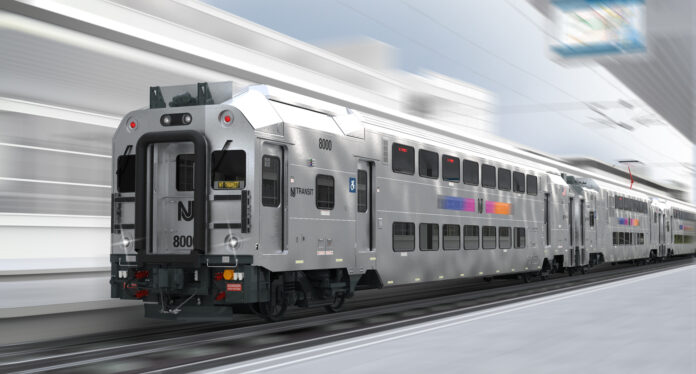

New Jersey’s transportation future took a decisive step forward on April 13, 2026, as NJ Transit introduced the first of its next-generation Multilevel III rail cars, marking a pivotal milestone in a sweeping $3 billion modernization initiative that is set to redefine rail travel across the state. This is not a routine equipment upgrade—it is a structural overhaul of how one of the nation’s most heavily used commuter rail systems operates, performs, and serves its riders.
As highlighted across the evolving Transportation landscape, the arrival of these new rail cars represents a long-awaited shift away from aging infrastructure toward a fully modernized fleet designed for speed, reliability, and capacity. For decades, New Jersey commuters have relied on the Arrow III single-level trains, many of which date back more than half a century. While those cars have served as a backbone of regional mobility, their limitations have become increasingly apparent in a system under constant demand pressure.
The Multilevel III cars are engineered to replace that legacy fleet with a design that reflects both current commuter expectations and future operational requirements. Currently undergoing a rigorous multi-month testing and commissioning process at the Meadows Maintenance Complex, these trains are being evaluated across performance, safety, and integration benchmarks before entering full passenger service. State leadership and NJ Transit officials have indicated that the first operational rollout—potentially up to 40 cars—will begin by late summer or early fall of 2026, with a full fleet transformation targeted for completion by 2031.
This phased deployment strategy underscores the scale of the investment. NJ Transit has committed to acquiring a total of 374 Multilevel III cars from global manufacturer Alstom, positioning the agency to transition toward an entirely modern, multilevel fleet that can accommodate growing ridership demands while improving system-wide efficiency.
What sets the Multilevel III apart is not simply its updated design, but the fundamental shift in how these trains function. A significant portion of the fleet—approximately one-third—will operate as Electric Multiple Units (EMUs), meaning the cars are self-propelled rather than reliant on traditional locomotive engines. This distributed power model introduces several operational advantages. Acceleration is significantly faster, reducing travel times between stops and improving schedule adherence. At the same time, built-in redundancy enhances reliability; if one motor experiences an issue, others continue to operate, minimizing service disruptions.
Speed is another defining upgrade. The new cars are capable of reaching up to 110 miles per hour, representing a substantial increase over the older fleet. This enhanced performance is particularly impactful on longer-distance routes, where incremental speed gains translate into meaningful reductions in overall travel time. Combined with improved acceleration, the result is a system that moves more efficiently, with fewer delays and greater consistency.
Capacity has also been carefully addressed. The multilevel configuration allows for an increase in seating—estimated at 11 to 12 percent more than the single-level cars they replace—without requiring additional train length. In a state where peak-hour congestion is a daily reality, this added capacity provides immediate relief while supporting future ridership growth.
For passengers, the most visible changes will be found in the onboard experience. The Multilevel III cars are designed with modern amenities that align with how commuters live and work today. USB charging ports are integrated into every row, ensuring that riders can stay connected throughout their journey. Digital information displays provide real-time updates, while enhanced audio systems deliver clear, automated announcements. These features, while seemingly incremental, collectively redefine the daily commute, transforming it from a passive experience into a more functional and connected environment.
Perhaps the most consequential improvement, however, lies in reliability. NJ Transit officials project that the new cars will achieve an average of 400,000 miles between mechanical failures—a dramatic leap from the 30,000 to 40,000 miles typical of the legacy equipment. This level of durability is expected to significantly reduce service interruptions, improve on-time performance, and lower long-term maintenance costs. For riders, it means fewer delays and a system that operates with greater predictability.
The introduction of the Multilevel III fleet is part of a broader, coordinated effort to elevate the overall commuter experience across New Jersey’s transportation network. In conjunction with the rail modernization program, Governor Mikie Sherrill has outlined a series of initiatives aimed at improving daily transit conditions. These include the deployment of 1,400 new buses equipped with Wi-Fi and USB connectivity, ensuring that upgrades extend beyond rail lines to the state’s bus network.
Equally important is the focus on infrastructure and station environments. A 45-day mandate has been issued to develop and implement a comprehensive plan for deep cleaning transit facilities and accelerating repairs to critical systems such as escalators and elevators. With a target date set for June 22, 2026, this initiative reflects a recognition that modern transportation is not defined solely by vehicles, but by the entire ecosystem in which they operate.
This integrated approach signals a shift in how NJ Transit is positioning itself—not just as a provider of mobility, but as a service platform designed to meet the expectations of a modern workforce. In a region where commuting patterns are evolving and competition for talent is increasingly tied to quality of life, the ability to offer reliable, efficient, and comfortable transit options becomes a strategic advantage.
The broader economic implications are equally significant. New Jersey’s rail system is a critical link within the Northeast corridor, connecting residential communities with major employment centers in New York City and beyond. Enhancements to speed, capacity, and reliability have a direct impact on productivity, accessibility, and regional competitiveness. By investing in next-generation infrastructure, the state is reinforcing its position as a central node in one of the most economically active regions in the country.
At the same time, the modernization effort addresses long-standing challenges that have affected rider confidence. Aging equipment, service disruptions, and inconsistent performance have historically shaped public perception of the system. The Multilevel III rollout represents an opportunity to reset that narrative, demonstrating a commitment to long-term improvement and operational excellence.
As testing continues and the first cars prepare to enter service, the transition from legacy systems to advanced, technology-driven infrastructure is becoming tangible. For commuters, the changes will be felt not just in faster travel times or improved seating, but in the overall reliability and functionality of the system they depend on every day.
New Jersey’s transportation network is entering a new phase—one defined by investment, innovation, and a clear focus on the rider experience. The arrival of the Multilevel III rail cars is the most visible symbol of that transformation, but it is also part of a larger movement toward a more connected, efficient, and resilient transit system. As the rollout progresses, it will reshape not only how people travel, but how the state itself moves forward.



