


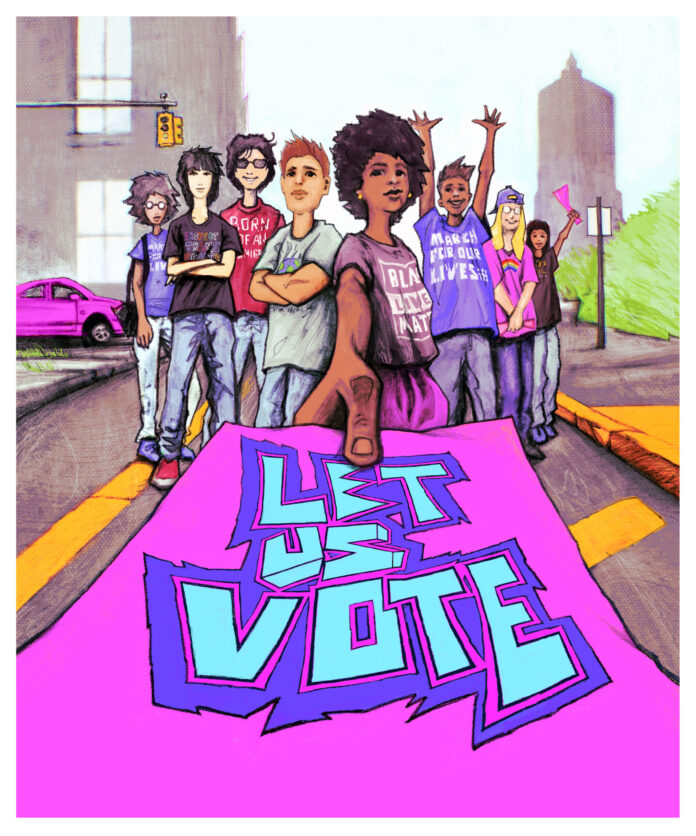

In New Jersey’s evolving civic and education landscape, a series of recent developments—from youth voting initiatives in Newark to the formation of new political organizations—are converging into a broader conversation about participation, access, and the structure of local democracy. At the center of that conversation is a widely circulated claim: that the state spent approximately $1 million for only a few dozen teenagers to vote in a Newark school board election. While the claim has gained traction in political and public discourse, the underlying reality is more complex, rooted in how elections are administered, how civic participation is measured, and how engagement evolves over time.
Newark’s decision to lower the voting age to 16 for school board elections marked a significant policy shift when it was implemented in 2024, positioning the city as the first in New Jersey to formally extend voting access to younger residents in this context. The initiative was designed to increase early civic engagement, particularly in decisions that directly impact students, families, and educational outcomes. The premise was clear: if students are directly affected by school board governance, they should have a voice in shaping it.
However, early participation data has revealed the challenges inherent in expanding the electorate. In the first year of implementation, approximately 73 teenagers cast ballots out of an eligible population estimated at more than 7,000. Subsequent elections have shown similarly low turnout among this demographic, with some reports indicating participation numbers dropping even further in specific instances. These figures have become a focal point for critics, particularly when juxtaposed against the cost of administering the election.
The frequently cited $1 million figure, while accurate in isolation, requires proper context to be understood. That cost represents the total expense of conducting Newark’s school board election as a standalone event in April, covering polling locations, staffing, equipment, and logistical operations for the entire voting population—not a dedicated expenditure for teen participation. Newark remains one of the few districts in New Jersey that has not shifted its school board elections to November, when general elections are held. Most districts made that transition in order to reduce costs by consolidating election infrastructure.
This distinction is critical. The cost of running the election exists regardless of how many individuals within any specific demographic choose to participate. Dividing the total cost by the number of teen voters creates a striking but ultimately misleading “cost per vote” narrative that does not reflect how election funding is structured. The infrastructure supports a citywide electorate that includes tens of thousands of eligible voters, even if overall turnout remains low.
It is also important to recognize that low turnout is not unique to teenage voters. Newark school board elections have historically seen limited participation across all age groups, often falling within a 3% to 4% turnout range. This broader pattern suggests that the challenge is not solely about youth engagement, but about participation in local elections more generally. Expanding eligibility does not automatically translate into immediate increases in turnout; it introduces a longer-term process of building awareness, habits, and civic culture.
Efforts are underway to address that gap. Community organizations and advocacy groups have begun developing targeted initiatives aimed at increasing youth participation, including transportation programs, awareness campaigns, and school-based outreach designed to familiarize younger voters with the process. These efforts reflect an understanding that civic engagement is not a one-time event, but a sustained practice that develops over time.
At the same time, the stakes of these elections remain substantial. School board decisions in Newark have recently involved major financial and operational considerations, including large-scale facility investments and long-term leasing arrangements that carry significant fiscal implications. For residents—both adult and youth voters—the outcomes of these elections influence not only educational policy but also broader community priorities.
Parallel to these developments in Newark, New Jersey’s political landscape is experiencing its own recalibration. In the wake of recent electoral cycles and shifting dynamics within party structures, new organizations are emerging with the stated goal of redefining engagement and coordination. One such initiative is the New Jersey Conservative Organization Club, or NJCOC, which positions itself as a network of policy-focused leaders seeking to strengthen conservative participation across the state.
The group has outlined plans for regular meetings centered on collaboration, information exchange, and the recognition of legislators who take prominent positions on key issues. Its structure, described as private and invitation-based, has already generated discussion within conservative circles about accessibility, transparency, and the most effective pathways for rebuilding momentum. The formation of NJCOC reflects a broader trend in which political engagement is increasingly being organized through specialized networks rather than traditional party frameworks alone.
This development is not occurring in isolation. Across New Jersey, organizations of varying ideologies are reassessing how to mobilize supporters, communicate policy positions, and influence outcomes at both local and state levels. The emphasis is shifting toward more targeted, strategic engagement models that prioritize coordination among aligned stakeholders.
From an education and civic perspective, these parallel narratives—youth voting in Newark and the formation of new political organizations—highlight a common theme: participation is evolving, but it is not evenly distributed. Expanding access, whether through lowering the voting age or creating new forums for political collaboration, introduces opportunities, but also exposes gaps in engagement that must be addressed through sustained effort.
For policymakers, educators, and community leaders, the challenge is to bridge those gaps without oversimplifying the underlying dynamics. Metrics such as turnout percentages and cost figures provide valuable data points, but they do not fully capture the long-term trajectory of civic participation. Initiatives aimed at increasing engagement, particularly among younger populations, often require multiple election cycles before measurable changes become evident.
Within the broader framework of New Jersey’s education and civic systems, the current moment can be understood as a transitional phase. Structural changes are being implemented, new participants are being introduced into the process, and organizations are adapting to shifting political realities. The outcomes of these efforts will depend not only on policy decisions, but on the ability to translate access into sustained involvement.
As the state continues to navigate these developments, the conversation around cost, participation, and representation is likely to remain central. The Newark model, with its expanded voting eligibility, offers a case study in both the potential and the challenges of rethinking civic engagement at the local level. At the same time, the emergence of new political organizations underscores the ongoing effort to redefine how participation is organized and sustained across the broader electorate.
Taken together, these dynamics reflect a New Jersey that is actively recalibrating how its residents engage with the systems that govern education, policy, and community life. The path forward will not be defined by a single election cycle or initiative, but by the cumulative impact of efforts to make participation more accessible, more informed, and ultimately more representative of the communities they are intended to serve.



