


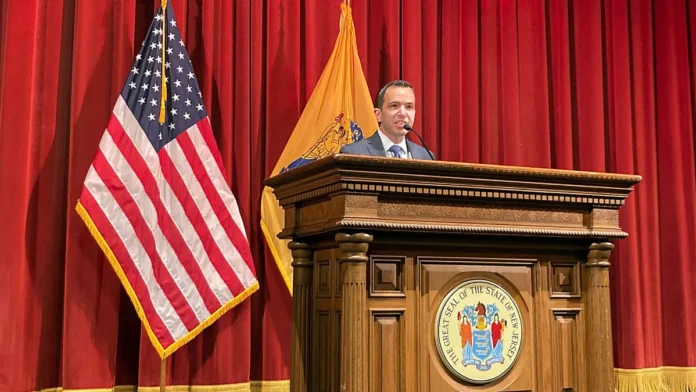

A unanimous decision from the U.S. Supreme Court has placed Matthew Platkin and the state of New Jersey at the center of a high-profile constitutional battle, redefining the limits of state investigative authority and raising serious questions about how far government can go when targeting nonprofit and faith-based organizations.
In a rare 9–0 ruling issued on April 29, 2026, the Court sent a direct and unmistakable message: state-issued subpoenas cannot be used in a way that infringes upon constitutionally protected rights, particularly when those actions intersect with religious activity, advocacy, or speech. The case stems from an investigation led by Platkin’s office into a ministry operating within New Jersey—an organization that provides services to women and families and challenged the state’s legal demands as unconstitutional.
At the core of the dispute was the use of subpoenas—one of the most powerful tools available to state authorities. Platkin’s office sought documents and internal information as part of its inquiry, but the ministry argued that the requests were overly broad, intrusive, and effectively punitive. The organization contended that compliance would expose sensitive internal operations and chill its ability to function, raising direct First Amendment concerns.
The Supreme Court agreed that constitutional boundaries must be clearly respected. While the ruling does not eliminate the ability of state attorneys general to investigate organizations, it establishes a stricter framework for how those investigations must be conducted—particularly when religious or expressive activities are involved. The decision reinforces that government authority, even when exercised under the banner of enforcement, must remain narrowly tailored and justified by a legitimate legal basis.
For Matthew Platkin, the ruling represents both a legal setback and a moment of national visibility. As one of the more active state attorneys general in pursuing regulatory and enforcement actions, Platkin has built a profile around aggressive oversight in areas ranging from consumer protection to civil rights. This case, however, places his office’s approach under constitutional scrutiny, with implications that extend well beyond New Jersey.
The broader impact of the decision is immediate. State governments across the country frequently rely on subpoena power to investigate nonprofits, advocacy groups, and organizations operating in sensitive policy spaces. The Court’s unanimous stance signals that those efforts must now be more carefully calibrated, ensuring that enforcement objectives do not override fundamental protections such as freedom of speech, association, and religion.
The case also lands squarely in the middle of an ongoing national debate about the role of government in regulating organizations tied to politically and socially charged issues. Supporters of the ministry view the ruling as a necessary defense against what they characterize as overreach, arguing that government scrutiny should not be used to pressure or silence groups based on their mission or beliefs. Others maintain that state authorities must retain robust investigative tools to ensure compliance with the law, particularly when organizations operate in areas that directly affect public welfare.
What distinguishes this ruling is the clarity of the Court’s position. Unanimous decisions at this level are rare, and when they occur, they carry significant precedential weight. The absence of dissent suggests a strong judicial consensus that the constitutional principles at stake are not subject to narrow interpretation or partisan division. For lower courts and state agencies, the message is clear: enforcement must be conducted within well-defined constitutional limits, regardless of the policy objectives involved.
Within New Jersey, the decision is likely to trigger a reassessment of investigative practices, particularly in cases involving nonprofits and faith-based entities. Legal experts expect increased scrutiny of how subpoenas are drafted, justified, and executed, with greater emphasis on demonstrating necessity and proportionality. This recalibration will not eliminate enforcement efforts, but it will reshape how they are carried out.
The timing of the ruling adds another layer of significance. As New Jersey continues to navigate complex legislative and regulatory challenges, the balance between authority and rights remains a central theme. The Supreme Court’s decision reinforces that this balance is not static—it must be actively maintained, with courts serving as the ultimate arbiter when conflicts arise.
For Sunset Daily News readers, this case represents more than a legal technicality. It is a defining moment in the ongoing negotiation between government power and individual liberty, one that will influence how laws are enforced, how organizations operate, and how rights are protected moving forward. With Matthew Platkin now directly linked to a landmark Supreme Court ruling, the implications of this decision will continue to shape both the legal landscape and the political conversation in New Jersey and beyond.