


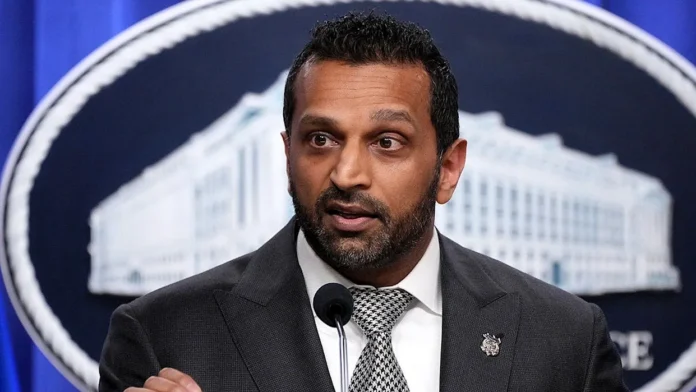

A new federal case emerging out of Newark is drawing attention across the legal and political landscape, as authorities have charged four non-citizen residents with illegally participating in multiple federal election cycles. The announcement, delivered by Kash Patel and supported by the FBI Newark Field Office, underscores a renewed focus on election integrity enforcement at the federal level while simultaneously reigniting a broader debate about the scale, significance, and policy implications of such cases.
According to federal prosecutors from the U.S. Attorney’s Office for the District of New Jersey, the individuals—identified as residents of Atlantic, Bergen, and Monmouth counties—are accused of unlawfully registering to vote and casting ballots in multiple elections, including the 2020 presidential election, the 2022 midterms, and the 2024 presidential cycle. The charges extend beyond voting violations alone, with allegations that several of the defendants also made false statements during immigration or naturalization processes, elevating the legal exposure and potential consequences associated with the case.
The individuals named in the charges include David Neewilly of Atlantic County, Jacenth Beadle Exum of Bergen County, and Idan Choresh and Abhinandan Vig of Monmouth County. Each is alleged to have participated in the electoral process despite not holding U.S. citizenship, a requirement under federal law for voting in national elections. The case is being pursued through the federal court system, reflecting the jurisdictional authority of federal agencies over election law enforcement and immigration-related offenses.
While the legal framework governing the case is clear—federal law prohibits non-citizens from voting in federal elections—the broader context in which these charges have emerged is more complex. New Jersey maintains a voter base exceeding 6.6 million registered individuals, placing the number of alleged violations in this case at a statistically negligible fraction of overall participation. By any quantitative measure, the four individuals represent an extremely small percentage of the electorate, a factor that has become central to the public discourse surrounding the case.
This tension between legal enforcement and statistical rarity is not new, but it is increasingly shaping how such cases are interpreted. On one side, proponents of strict enforcement argue that even isolated violations undermine the foundational principle of electoral integrity. From this perspective, the act of voting by an ineligible individual is not merely a technical violation but a direct challenge to the concept of equal representation, where each lawful vote carries equal weight.
On the other side of the debate, critics emphasize the scale of the issue relative to the overall voting population. They point to historical data suggesting that instances of non-citizen voting are exceedingly rare and have not been shown to influence election outcomes in any measurable way. From this vantage point, the allocation of federal investigative resources toward a small number of cases raises questions about proportionality and priority, particularly in an environment where broader systemic challenges—such as voter access, infrastructure security, and public confidence—also demand attention.
What distinguishes the current case, however, is not simply the number of individuals involved, but the pattern of alleged activity. Federal authorities assert that the defendants participated in multiple election cycles, rather than a single instance of improper registration or voting. This repeated engagement introduces a different dimension to the case, suggesting a level of intent or continuity that elevates it beyond isolated error. Additionally, the inclusion of alleged false statements in citizenship-related filings adds a layer of complexity that intersects with immigration law, further broadening the scope of the prosecution.
The involvement of federal agencies such as the FBI Newark Field Office signals a coordinated approach to enforcement, often associated with election integrity task forces that operate across jurisdictions. These units are designed to investigate and address potential violations of election law, leveraging data analysis, interagency coordination, and legal expertise to identify and prosecute cases that meet federal thresholds for action.
From a legal standpoint, the consequences for those charged can be significant. Convictions related to unlawful voting and false statements in immigration processes carry potential penalties that extend beyond fines or incarceration, including the possibility of deportation and permanent ineligibility for U.S. citizenship. These outcomes reflect the seriousness with which federal law treats both election integrity and the integrity of the naturalization process.
The case also intersects with ongoing national conversations about election systems, verification mechanisms, and the balance between accessibility and security. While New Jersey’s election infrastructure includes multiple layers of verification and oversight, the existence of any violations—however rare—raises questions about how systems can be further refined to prevent future occurrences without creating barriers for eligible voters.
At the same time, the absence of widespread evidence of non-citizen voting on a larger scale continues to inform the policy debate. Studies and audits conducted across multiple jurisdictions have consistently indicated that such incidents are uncommon, reinforcing the view that the current case represents an exception rather than a systemic issue. This dual reality—where violations are both legally significant and statistically rare—defines much of the current discourse.
Political interpretations of the case are also emerging, though the legal proceedings themselves remain focused on factual and evidentiary standards. Public records have not broadly identified the party affiliations of the individuals involved, as such information is typically not central to federal criminal complaints. The limited data that has surfaced for one defendant does not establish a broader pattern, and experts generally caution against drawing conclusions about political alignment from isolated cases.
Within New Jersey, the case is likely to resonate across multiple sectors, from policymakers and legal professionals to voters and advocacy groups. It arrives at a time when election integrity, public trust, and institutional transparency are central themes in both state and national discussions. How the case is prosecuted, and how its outcomes are communicated, will play a role in shaping those conversations moving forward.
For Sunset Daily News readers following developments in law and order, this case represents a convergence of legal enforcement, statistical analysis, and public policy debate. It highlights the mechanisms through which federal authorities address violations, while also illustrating the broader context in which such actions are interpreted. As the proceedings continue, the focus will remain on the legal process itself—examining evidence, applying statutory frameworks, and determining accountability within the bounds of federal law.
In the larger picture, the case serves as a reminder of the complexity inherent in managing a system as vast and consequential as the U.S. electoral process. It underscores the importance of both enforcement and perspective, recognizing that while individual violations must be addressed, they exist within a system defined by scale, diversity, and ongoing evolution.



