


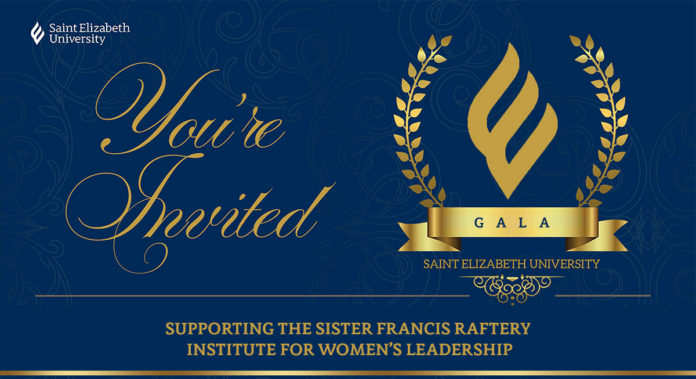

In a defining moment for higher education in New Jersey, Saint Elizabeth University convened more than 250 alumni, students, institutional partners, and civic leaders on May 1 for its 2026 Gala at The Meadow Wood, signaling a decisive expansion of its long-standing commitment to advancing women in leadership. The evening was not simply a celebration—it was a strategic inflection point. With the formal launch of its new Women’s Leadership Institute, the university positioned itself at the center of a rapidly evolving conversation around equity, executive readiness, and the future of leadership development in a knowledge-driven economy.
Set against the backdrop of one of Morris County’s most recognized event venues, the gala reflected both tradition and transformation. For decades, Saint Elizabeth University has maintained a reputation rooted in academic rigor, values-based education, and a historic dedication to women’s advancement. What unfolded during this year’s gathering elevated that legacy into a forward-facing institutional initiative designed to meet the demands of modern leadership across business, healthcare, education, and public service sectors.
The introduction of the Women’s Leadership Institute marks a deliberate expansion of the university’s academic and professional footprint. Structured as a multi-disciplinary hub, the institute is designed to bridge classroom learning with real-world application, equipping students and emerging professionals with the analytical, strategic, and interpersonal competencies required to lead in complex environments. In practical terms, that means integrating executive-level training, mentorship pipelines, applied research opportunities, and industry partnerships into a cohesive framework that extends well beyond traditional degree programs.
This initiative arrives at a critical juncture. Across industries, organizations are confronting a persistent leadership gap—particularly at the executive level—where women remain underrepresented despite measurable gains in education and workforce participation. Saint Elizabeth University’s response is not incremental. By institutionalizing leadership development through a dedicated platform, the university is aligning itself with a broader shift in higher education that prioritizes outcomes, experiential learning, and direct pathways to influence.
The gala itself underscored that mission by honoring a cohort of women whose careers reflect both impact and resilience. These honorees—drawn from diverse sectors—represent the very outcomes the new institute aims to cultivate: leaders capable of navigating regulatory complexity, driving organizational growth, and shaping policy in environments that demand both precision and vision. Their recognition served not only as acknowledgment of achievement but as a blueprint for the next generation of students entering the university’s ecosystem.
Equally significant was the composition of the audience. With alumni, current students, and industry stakeholders in attendance, the event functioned as a convergence point for multiple layers of the university’s community. That dynamic is central to the institute’s long-term viability. Leadership development does not occur in isolation; it requires sustained engagement across networks that can provide mentorship, opportunity, and accountability. By anchoring the institute within this broader community, Saint Elizabeth University is effectively creating a living, evolving platform rather than a static academic program.
From an educational strategy standpoint, the Women’s Leadership Institute is poised to integrate seamlessly with the university’s existing academic infrastructure while introducing new dimensions of specialization. Programs are expected to emphasize areas such as ethical decision-making, data-informed leadership, organizational governance, and innovation management—disciplines that increasingly define executive performance in both private and public sectors. The institute’s design also anticipates the growing importance of interdisciplinary fluency, preparing participants to operate across silos in environments where technology, policy, and human capital intersect.
This approach aligns with wider trends shaping the education landscape. Institutions across the country are rethinking how they prepare students for leadership roles, moving away from purely theoretical models toward experiential frameworks that prioritize application and adaptability. Saint Elizabeth University’s initiative reflects that evolution, embedding leadership development into the fabric of its academic identity rather than treating it as an ancillary offering.
The New Jersey context amplifies the significance of this development. As the state continues to expand its influence in sectors such as healthcare innovation, financial services, and advanced education, the demand for capable, ethically grounded leaders is intensifying. Universities that can produce graduates equipped to meet that demand are not only enhancing their own institutional relevance—they are contributing directly to the state’s economic and social trajectory. In this regard, the Women’s Leadership Institute represents both an academic advancement and a regional investment.
The choice of The Meadow Wood as the gala’s venue further reinforced the event’s positioning. Known for hosting high-profile gatherings, the location provided an environment that matched the scale and ambition of the announcement. It also underscored the university’s ability to convene influential stakeholders in settings that foster both celebration and strategic dialogue.
As the evening concluded, the implications of the announcement extended well beyond the event itself. The Women’s Leadership Institute is not a symbolic gesture; it is a structural commitment. Its success will be measured not only by enrollment numbers or program offerings, but by the tangible outcomes it produces—graduates who move into leadership roles, shape organizations, and contribute to a more equitable distribution of influence across industries.
For Saint Elizabeth University, this moment represents a recalibration of its mission for a new era. The institution is building on its historical foundation while embracing the realities of a rapidly changing professional landscape. The result is a model that prioritizes both continuity and innovation, ensuring that its graduates are not only prepared to participate in the workforce, but to lead it.
Within the broader narrative of education in New Jersey, the launch of the Women’s Leadership Institute stands as a clear signal of intent. It reflects an understanding that leadership development must be proactive, intentional, and deeply integrated into the educational experience. As universities compete to define their role in shaping the next generation of leaders, Saint Elizabeth University has made its position unmistakably clear: leadership is not an outcome left to chance—it is a discipline to be cultivated, refined, and advanced with purpose.



