


A long-discussed vision that has lingered on the edge of possibility for decades is now moving with renewed urgency and clarity, as a $3 billion proposal to build a world-class convention center complex in the Meadowlands Sports Complex gains measurable momentum and enters a critical phase of state-level evaluation. What was once an aspirational concept is now a fully developed, data-backed plan that could redefine New Jersey’s role in the national and global events economy.
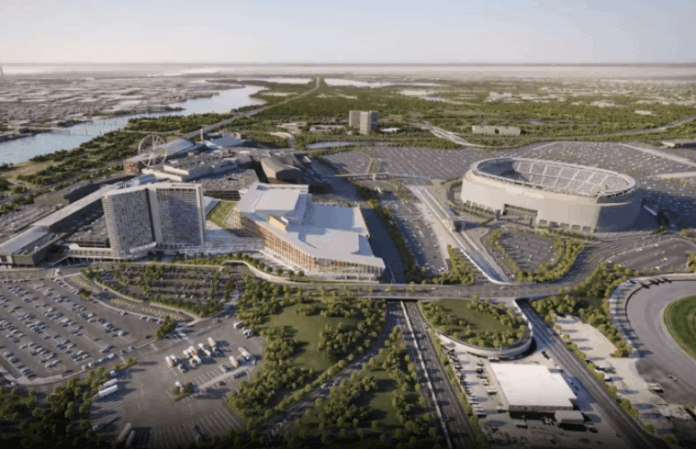
Unveiled with significant detail during an April 14 briefing hosted by the Meadowlands Chamber in Lyndhurst, the proposal outlines a comprehensive, multi-use destination designed to transform an underutilized site into a year-round economic engine. The project centers on a 300,000-square-foot convention facility, supported by a 1,000-room headquarters hotel, a flexible arena with a capacity of 5,000 to 6,000 seats, structured parking, and a network of pedestrian and transit connections engineered to integrate seamlessly into the surrounding infrastructure.
At its core, the plan represents a strategic pivot for the Meadowlands—from a location historically defined by sporadic, high-profile events to a consistent, high-frequency destination capable of hosting more than 300 event days annually. The programming vision spans conventions, trade shows, corporate gatherings, sports tournaments, and entertainment experiences, all designed to create a continuous flow of visitors rather than isolated surges tied to major events.
The scale of the projected economic impact is driving much of the project’s momentum. Analysis conducted as part of the development process estimates approximately $30.4 billion in net new economic activity over a 30-year period, alongside $3.03 billion in tax revenue, more than 3,700 permanent jobs, and nearly 5,000 construction positions. These figures position the proposal not as a standalone development, but as a generational investment with the potential to reshape the economic landscape of New Jersey.
“This is no longer a conceptual conversation,” said Jim Kirkos, emphasizing the project’s transition from vision to execution readiness. “The design is complete, the demand is validated, and the remaining analysis is being finalized. The state now has a credible, actionable development option to evaluate.”
The foundation of that credibility rests on a multi-year collaboration with nationally recognized firms specializing in market analysis, architecture, and engineering. Hunden Partners provided the economic and demand modeling that identified a significant gap in the New York metropolitan area’s convention capacity, particularly for large-scale events seeking a cost-effective alternative to Manhattan. TVS Design translated that demand into a functional and efficient facility layout, while WSP developed a transportation and circulation strategy aimed at addressing long-standing congestion challenges within the Meadowlands.
The design itself reflects a high level of operational sophistication. By vertically stacking key program elements—loading docks and parking at lower levels, exhibit halls and meeting spaces above, and hospitality components integrated throughout—the facility is engineered to support multiple concurrent events without operational friction. This approach maximizes efficiency while enhancing the overall visitor experience, a critical factor in attracting repeat business and large-scale conventions.
Equally important is the integration of the proposed complex into the existing Meadowlands ecosystem. Located within walking distance of MetLife Stadium, American Dream, and Meadowlands Racing & Entertainment, the site is designed to function as part of a broader, interconnected district. Pedestrian pathways, bridges, and transit links will connect these venues, creating a unified destination capable of supporting extended stays and diverse visitor experiences.
This connectivity is central to the project’s economic strategy. By leveraging proximity to major transportation corridors—including Interstate 95, Route 3, NJ Transit rail lines, and Newark Liberty International Airport—the development is positioned to attract both national and international audiences. The ability to host large-scale, multi-day events within a compact, accessible footprint is a key competitive advantage, particularly in a region where space constraints often limit expansion.
Transportation and circulation improvements are a critical component of the plan. Ron Simoncini, a lead consultant on the project, outlined a seven-step strategy designed to enhance mobility throughout the complex. This includes roadway expansions, improved wayfinding, redesigned ingress and egress patterns, and enhanced ride-hailing operations. Notably, the plan also incorporates pedestrian-friendly infrastructure, addressing a long-standing gap in the area’s design.
The project’s operational framework also reflects practical considerations. Planners have committed to avoiding scheduling conflicts with NFL game days at MetLife Stadium, ensuring that the convention center’s activities complement rather than compete with existing events. This level of coordination is essential in maintaining the functionality and appeal of the broader complex.
Support within the Legislature has been a driving force behind the project’s advancement. Paul Sarlo, who represents the district encompassing the Meadowlands, has been a vocal advocate, emphasizing the long-term benefits for local businesses and the regional economy. His efforts have already helped secure early-stage funding through state recovery programs, enabling the detailed analysis and planning that underpin the current proposal.
“This is about creating consistent, year-round economic activity,” Sarlo said, highlighting the shift from event-driven spikes to sustained engagement. “It’s about bringing people here not just for a game or a concert, but every week, throughout the year.”
Despite the progress, significant steps remain before construction can begin. The project is currently entering an “interim stage,” during which legal frameworks, financing strategies, and operational models will be finalized. This phase will culminate in a formal presentation to Mikie Sherrill and other state leaders, who will ultimately determine whether to advance the project through legislative authorization and funding mechanisms.
The timing of this decision is particularly notable. With New Jersey preparing to host global events such as the FIFA World Cup, the state is already positioned on the international stage. Supporters of the convention center see it as a natural extension of that momentum—a way to capitalize on increased visibility and establish a permanent infrastructure capable of sustaining global engagement.
For New Jersey, the stakes are substantial. The Meadowlands convention center proposal is not simply about adding another venue; it is about redefining the state’s economic identity and positioning it as a central player in the competitive convention and tourism market. The combination of strategic location, existing assets, and comprehensive planning creates a compelling case for investment, but the ultimate decision will hinge on the state’s willingness to commit to a project of this scale.
As the review process unfolds, the focus will remain on translating a well-developed vision into a viable reality. The groundwork has been laid, the data has been analyzed, and the potential impact has been clearly articulated. What remains is the decision—one that could shape the Meadowlands and the broader New Jersey economy for decades to come.