


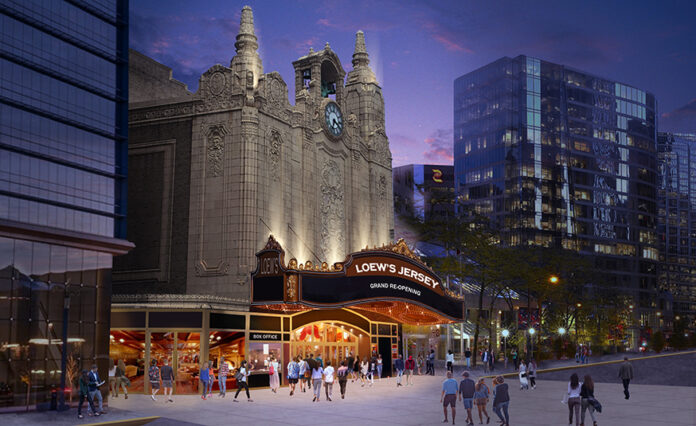

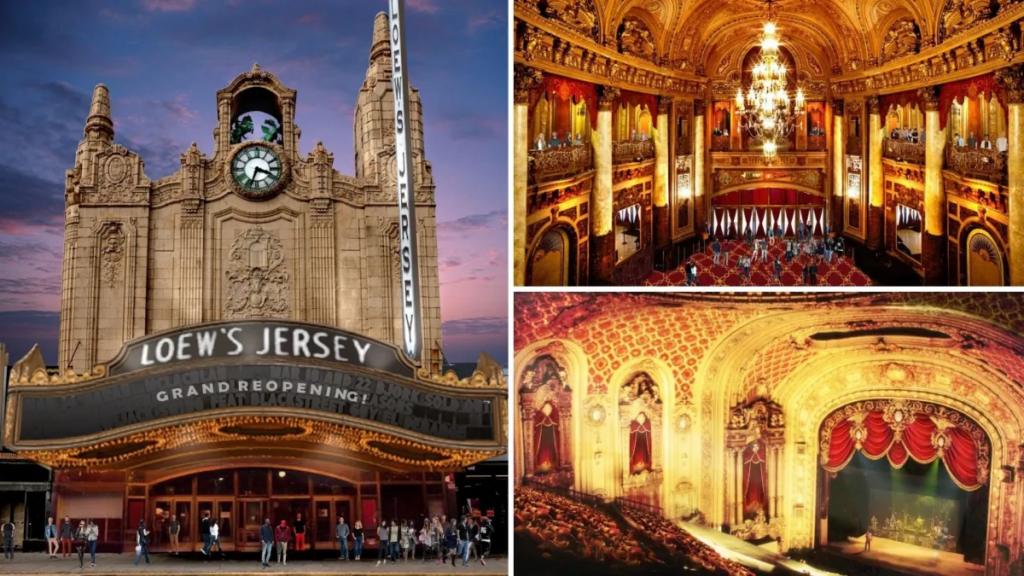
Jersey City’s long-anticipated cultural revival has reached a defining moment as Loew’s Jersey Theatre unveils its first full set of restoration renderings alongside a redesigned brand identity, offering a detailed look at how one of New Jersey’s most iconic historic venues is being transformed into a modern, year-round destination for arts, entertainment, and large-scale public programming. The project signals not only the return of a landmark building that has stood dormant for decades, but also a broader redefinition of Journal Square as a central hub for culture, commerce, and community life.
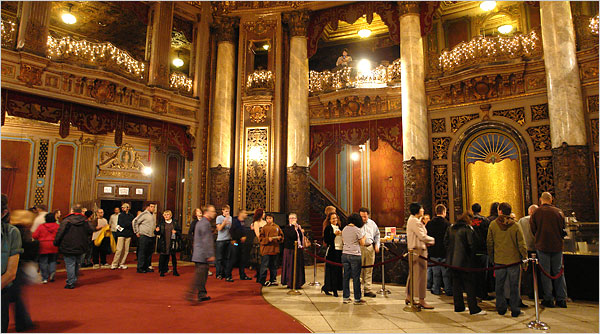
Originally opened in 1929 as one of the region’s celebrated “Wonder Theatres,” Loew’s Jersey Theatre has long been recognized for its architectural grandeur and cultural significance. For more than 40 years, however, the venue remained largely inactive, its ornate interiors preserved but its full potential unrealized. The newly released renderings now provide a clear indication that this period of dormancy is ending, with a comprehensive restoration that balances historical preservation with contemporary performance capabilities designed to meet the demands of today’s entertainment landscape.
The redevelopment effort is the result of a multi-layered public-private partnership involving the Jersey City Redevelopment Agency, the State of New Jersey through the New Jersey Economic Development Authority, and Harris Blitzer Sports & Entertainment. This collaboration reflects a strategic approach to urban revitalization, where historic preservation is integrated with economic development and cultural programming to create sustainable, high-impact community assets. The project’s anticipated reopening this fall marks a significant milestone not only for the venue itself but for the ongoing transformation of Journal Square.
Mayor James Solomon, who assumed office earlier this year, has positioned the restoration as both a symbolic and practical investment in Jersey City’s future. His remarks surrounding the announcement emphasize the theater’s dual role as a reflection of the city’s heritage and a driver of its next phase of growth. Journal Square, historically a focal point for working families, immigrant communities, and local enterprise, is now being reimagined as a destination that can attract regional audiences while maintaining its identity as a neighborhood anchor.
From a design and engineering standpoint, the restoration is being executed with a level of precision that reflects the complexity of adapting a nearly century-old structure for modern use. OTJ Architects is leading the full architectural rehabilitation, overseeing both interior and exterior restoration while introducing structural and spatial enhancements that enable flexible seating configurations and improved audience flow. This flexibility is critical to the venue’s future programming strategy, allowing it to accommodate a wide range of events without compromising the integrity of the original design.
Construction oversight is being managed by Phelps Construction Group, whose scope includes not only the visible restoration elements but also the comprehensive modernization of the building’s core systems. Upgrades to mechanical, electrical, and plumbing infrastructure are essential to ensuring that the theater can operate efficiently and safely at scale, while enhancements to back-of-house areas and loading facilities position the venue to attract major touring productions and high-profile events.
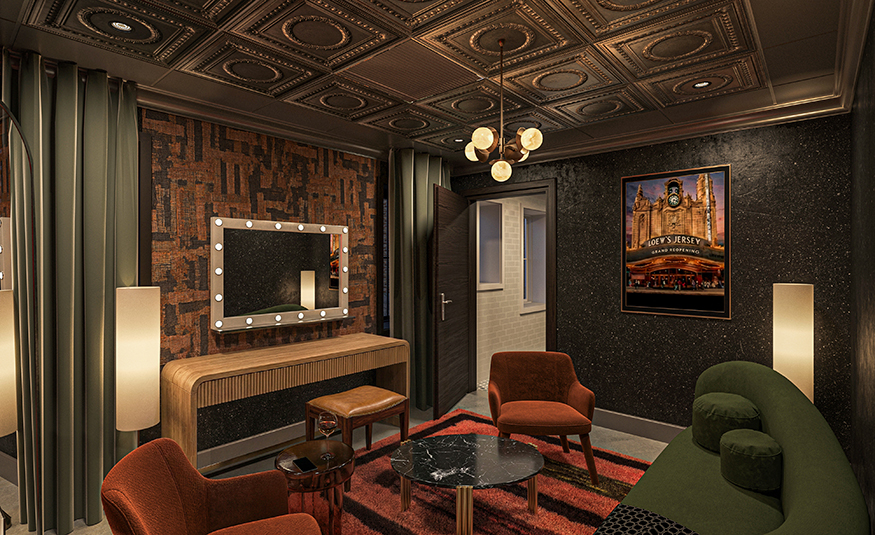
Complementing these structural and technical upgrades is the experiential design work led by Off the Record Collective under the direction of Kerri Silvestri. This aspect of the project focuses on artist and backstage environments, creating spaces that meet contemporary expectations for functionality while maintaining a cohesive aesthetic that reflects the theater’s historic character. The integration of these elements is intended to elevate the overall experience for performers, promoters, and audiences alike, reinforcing the venue’s appeal as a premier destination.
Technologically, the reimagined Loew’s Jersey Theatre is being equipped with advanced lighting, projection, and sound systems capable of supporting a diverse range of programming. This includes live music, theatrical productions, film screenings, comedy performances, and hybrid events that blend in-person and digital experiences. The ability to host approximately 150 events annually positions the venue as a high-frequency cultural asset, contributing to both local engagement and regional tourism.
Capacity flexibility is another defining feature of the redesign, with the theater able to accommodate audiences ranging from roughly 2,600 to 4,000 attendees depending on configuration. This adaptability allows the venue to serve multiple market segments, from intimate performances to large-scale productions, increasing its viability as both a community space and a commercial enterprise.
The introduction of a redesigned logo further underscores the project’s emphasis on blending heritage with forward-looking identity. Drawing inspiration from the theater’s original 1920s design language and ornate interior detailing, the new branding establishes a visual continuity that connects the venue’s past with its future. This approach reflects a broader trend in cultural redevelopment, where historic assets are not simply restored but recontextualized to align with contemporary audiences and expectations.
The impact of the Loew’s Jersey Theatre restoration extends beyond the building itself. As part of the broader revitalization of Journal Square, the project is expected to catalyze additional investment in surrounding businesses, residential development, and public infrastructure. The presence of a high-profile cultural venue can significantly influence foot traffic, local spending, and the overall perception of an area, creating a ripple effect that benefits the wider community.
Coverage across the Explore New Jersey Construction section continues to highlight projects that are reshaping the state’s urban and economic landscape, and the Loew’s restoration stands out as a particularly significant example of how strategic investment can unlock the potential of historic infrastructure. By aligning preservation with modern functionality, the project demonstrates a model for how cities can honor their past while building toward a more dynamic and inclusive future.
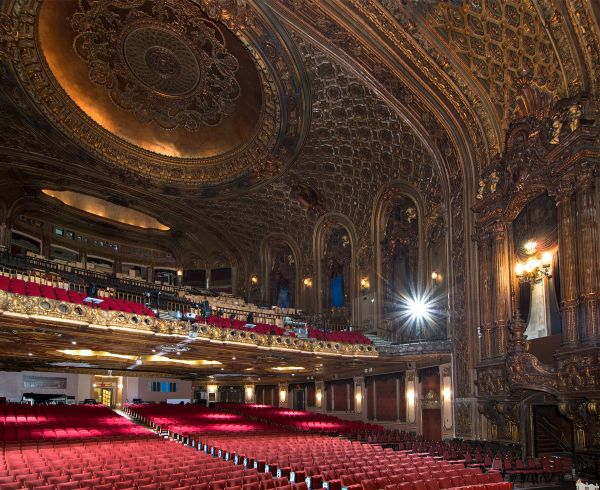
For residents of Jersey City and the surrounding region, the reopening of Loew’s Jersey Theatre represents the return of a landmark that has long been part of the city’s identity. For the broader New Jersey audience, it signals the emergence of a new cultural destination capable of hosting a wide spectrum of events and experiences. And for the state’s development and construction sectors, it provides a clear illustration of how complex, multi-stakeholder projects can deliver both cultural and economic value when executed with precision and vision.
As the project moves toward completion, the anticipation surrounding its reopening continues to build. The renderings offer a compelling preview, but the true impact will be realized when audiences once again fill the theater, bringing energy, activity, and purpose back to a space that has waited decades for its next chapter.



