


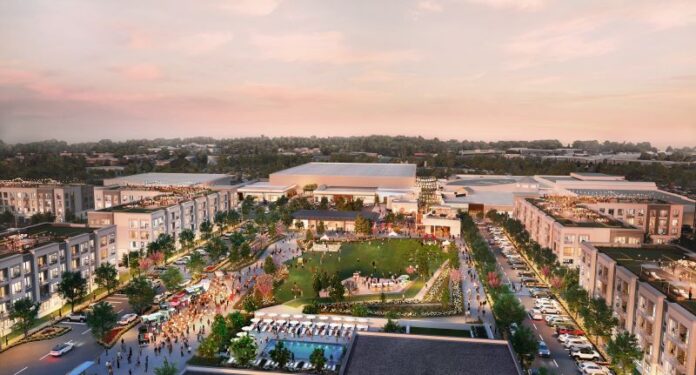

Northern New Jersey’s commercial real estate sector continues to evolve in ways that are reshaping how investors, developers, and local communities think about property development and long-term economic growth. A newly released 2026 forecast report from Marcus & Millichap highlights a striking trend: retail vacancy across the region is projected to fall to historic lows, signaling one of the tightest retail markets seen in decades.
At the same time, a wave of redevelopment and adaptive reuse projects across New Jersey—from retail conversions to residential transformations—illustrates how developers are reimagining older properties to meet modern demand. These trends are closely followed by readers of the Sunset Daily News real estate section, where coverage of investment activity, redevelopment, and regional planning continues to spotlight the forces shaping the state’s built environment.
Together, these developments paint a picture of a region where limited new construction, sustained tenant demand, and strategic redevelopment are creating one of the most competitive commercial property markets in the United States.
Retail Vacancy in Northern New Jersey Reaches Record Low
According to the newly published 2026 Northern New Jersey Retail Investment Forecast Report, retail availability across the region has reached extraordinary levels of scarcity.
The report projects that vacancy rates will decline for the sixth consecutive year, reaching approximately 2.9 percent, the lowest rate among major metropolitan markets in the country.
Such limited availability reflects a market where demand from tenants consistently outpaces the supply of new retail space.
Several key factors are contributing to this dynamic.
One of the most significant is the lack of new retail construction. Developers have slowed retail development significantly in recent years as changing consumer habits and the rise of e-commerce reshaped the economics of traditional shopping centers.
The result is that retail deliveries in 2026 are expected to run roughly 80 percent below the average pace seen during the past decade.
With fewer new projects entering the pipeline, existing retail properties have become increasingly valuable.
For landlords and investors, this tightening market has translated into higher occupancy levels, stable tenant demand, and growing rental rates.
Retail Rents Continue to Rise Across the Region
As availability declines, rental prices are climbing.
The report projects average retail rents in Northern New Jersey to reach approximately $30.11 per square foot, representing a dramatic increase compared with previous years.
In fact, average rents are now roughly 20 percent higher than they were in 2022, reflecting both the scarcity of available space and the continued strength of consumer markets in densely populated suburban corridors.
Neighborhood shopping centers located near residential communities are experiencing particularly strong demand.
These centers often serve as daily convenience hubs for nearby residents, offering restaurants, fitness studios, medical offices, and service-based retail that cannot easily be replaced by online shopping.
That resilience has helped retail properties maintain strong occupancy even as broader retail trends have shifted.
Service-Oriented Tenants Drive Retail Demand
Another notable trend highlighted in the forecast report is the growing influence of service-oriented businesses within retail properties.
While traditional retail brands continue to occupy shopping centers, a new wave of tenants has begun reshaping the composition of these spaces.
Fitness centers, entertainment venues, wellness businesses, and experiential retail concepts are becoming increasingly common tenants as landlords reposition older retail properties to attract new customers.
This shift reflects the changing role of retail space in the modern economy.
Rather than serving purely as locations for purchasing goods, many shopping centers are evolving into community destinations built around services and experiences.
These businesses offer something e-commerce cannot replicate: in-person engagement.
That transformation is helping to stabilize the retail market while also attracting investors seeking dependable income streams.
Steady Employment Growth Supports Local Retail
While the regional economy is not expected to experience rapid employment expansion in 2026, job growth remains steady enough to support retail demand.
Forecasts suggest the metro area will add approximately 5,000 new jobs during the year, with the majority of hiring concentrated in education and health services.
These sectors provide stable employment across Northern New Jersey and generate consistent consumer spending.
When combined with the region’s high population density and strong household incomes, this employment growth creates a reliable foundation for retail activity.
Retailers and service providers benefit from a steady flow of local customers who live and work within the surrounding communities.
Adaptive Reuse Projects Transform Aging Buildings
Beyond the retail sector, one of the most significant real estate trends emerging across New Jersey involves adaptive reuse projects that transform outdated commercial buildings into new housing and mixed-use developments.
One of the most striking examples of this transformation can be seen in Fort Lee, New Jersey, where a long-abandoned office building has been reborn as an award-winning residential complex.
The development, known as FIAT House, stands at 2100 North Central Road and represents a major milestone in the borough’s ongoing urban renewal efforts.
Originally built in the 1980s, the structure sat vacant for nearly a decade, becoming an increasingly visible symbol of underused commercial property.
Today, that same building has been completely reimagined as a modern residential landmark featuring 300 luxury apartments and panoramic views of the Hudson River and the George Washington Bridge.
The redevelopment was designed by HAAK Architects, whose team guided the project from concept to completion.
Their work earned the project the 2025 AIA New Jersey Design Award Merit Award, recognizing the creative architectural approach used to transform the former office towers.
Turning Structural Challenges into Design Opportunities
Rather than demolishing the original structure, the architects embraced the concept of adaptive reuse, preserving much of the existing building while modernizing its design.
This approach delivered both environmental and economic benefits.
Preserving the structural framework avoided massive demolition waste and significantly reduced the carbon footprint typically associated with large construction projects.
At the same time, the design team addressed the challenges commonly found in older office buildings, including deep floor plates and limited natural light.
To overcome those obstacles, residential living spaces were positioned along the exterior of the building where natural light and views could be maximized.
The building’s façade was replaced with a modern curtain wall system, allowing sunlight to flood interior spaces while also highlighting the dramatic skyline views surrounding the site.
Interior cores that once served office operations were repurposed for shared amenities, storage areas, and private workspaces for residents.
Creating Outdoor Space in an Urban Environment
One of the most innovative features of the FIAT House redevelopment is its interior courtyard design.
When the existing towers were connected with new structural additions, architects were left with an unusual trapezoidal open space between the buildings.
Rather than treating the space as a constraint, designers transformed it into a landscaped courtyard offering residents a peaceful retreat from the surrounding urban environment.
Duplex-style apartments and loft-inspired residences were arranged around the courtyard, creating a community atmosphere within the larger development.
The result is a residential environment that balances urban density with natural light, outdoor space, and architectural character.
Redevelopment Projects Reflect New Priorities in Real Estate
Projects like FIAT House illustrate a broader shift occurring across New Jersey’s real estate market.
Developers are increasingly looking at older commercial properties—particularly office buildings and aging retail sites—as opportunities for transformation rather than demolition.
By repurposing existing structures, developers can reduce environmental impact while also revitalizing underused locations.
In many cases, these adaptive reuse projects bring new residents, new businesses, and renewed economic activity to neighborhoods that once struggled with vacant buildings.
This strategy has become especially important as demand for modern office space changes and housing needs continue to grow throughout the region.
Retail Investment Stability Attracts Investors
Even as redevelopment reshapes certain parts of the market, the retail sector remains a key focus for commercial investors.
With vacancy rates reaching historic lows and rents continuing to rise, well-located shopping centers are attracting sustained interest from investment groups seeking stable cash flow.
Neighborhood centers anchored by essential services, grocery stores, and health providers are particularly appealing because they generate consistent traffic.
Investors are increasingly targeting these properties as long-term assets that offer both reliable income and the potential for appreciation.
As Alan Cafiero, senior managing director of investments at Marcus & Millichap, noted in the report, Northern New Jersey stands out for how limited retail availability has become.
Well-populated suburban corridors with strong demographics continue to attract tenant demand, keeping vacancy levels extremely tight.
A Real Estate Market Defined by Scarcity and Reinvention
Taken together, the data from the Marcus & Millichap forecast and the redevelopment projects unfolding across the state reveal a real estate market defined by two powerful forces.
The first is scarcity—particularly in retail space, where limited construction has created one of the tightest markets in the country.
The second is reinvention, as architects, developers, and city planners transform older properties into new housing, commercial destinations, and community spaces.
These trends are shaping the next chapter of New Jersey’s urban and suburban development.
Retail properties are becoming more valuable as supply remains constrained.
Office buildings are being repurposed to meet housing demand.
And developers are increasingly embracing sustainability and adaptive reuse as guiding principles for modern construction.
For businesses, investors, and residents alike, Northern New Jersey’s real estate landscape continues to evolve in ways that reflect both the challenges and opportunities of the modern economy.



