



Schuyler Place Closure in Morristown Signals Next Phase of Morris County Courthouse Infrastructure Upgrades
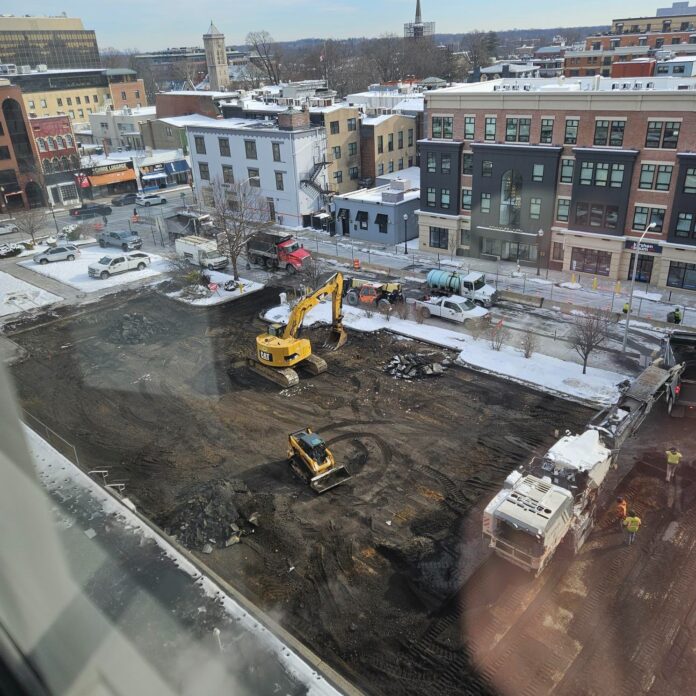
A key block in the heart of Morristown’s government and business district will temporarily close as Morris County advances critical infrastructure work tied to the construction of the new Morris County Courthouse. Local officials confirmed that Schuyler Place will be closed to vehicular traffic on Tuesday, March 10 from 7:00 a.m. until 3:00 p.m. as crews perform roadway excavation necessary to install new sanitary connections supporting the courthouse development.
While the closure is temporary, the work represents another visible milestone in a broader transformation underway around the Morris County government complex—an area that continues to evolve as new public facilities, infrastructure improvements, and downtown investment reshape this historic county seat.
Drivers traveling through Morristown during the closure window are encouraged to plan alternate routes, as excavation activity will require the roadway to be fully closed to normal traffic. The work will begin shortly after 7 a.m. and is expected to conclude by mid-afternoon once crews complete the underground connection work that will serve the courthouse facility.
Importantly, despite the construction activity, businesses located on Schuyler Place will remain open and accessible to customers throughout the day. Popular local establishments including Kirshenbaum Baking Co. and Mindy’s Munchies will continue serving visitors, ensuring that the area’s vibrant small business community remains active even as infrastructure improvements move forward nearby.
The temporary closure is specifically designed to allow construction teams to safely excavate the roadway surface and install sanitary utility connections required for the new courthouse project. These underground connections are a critical component of modernizing the utilities serving the courthouse complex and ensuring that the new building meets current standards for municipal infrastructure.
For Morris County officials and local planners, the courthouse project represents far more than a single construction site. It is part of a broader effort to modernize public facilities in Morristown while preserving the city’s longstanding role as the administrative center of the county.
Morristown has long served as a focal point for government, transportation, and commerce in North Jersey. The courthouse complex sits within walking distance of the Morristown Green and is surrounded by restaurants, small businesses, transit access points, and county offices that collectively form one of the most active civic corridors in the region.
As infrastructure improvements continue, maintaining access for residents, visitors, and employees has been a key planning priority. During the March 10 closure, access to the Administration & Records Building parking garage will remain available. Drivers can enter the garage by making either a right or left turn from Ann Street onto Schuyler Place, where a police officer will be stationed to direct traffic safely through the area.
Additionally, access to the Schuyler Place parking garage will remain open via Bank Street, allowing drivers to continue utilizing parking facilities without interruption.
This traffic management plan ensures that county operations and nearby businesses can continue functioning while the utility installation work is underway.
For commuters and visitors who regularly pass through downtown Morristown, the temporary closure highlights how infrastructure improvements often unfold in phases. Utility work such as sanitary connections typically occurs early in the construction timeline because these systems must be fully integrated before major structural work on buildings proceeds.
Installing these systems beneath the roadway requires careful excavation and coordination among engineers, construction crews, and local traffic authorities. The short daytime closure window—scheduled from 7 a.m. to 3 p.m.—reflects an effort to complete the work efficiently while minimizing long-term disruption.
Downtown Morristown has seen steady investment in recent years, driven by its unique combination of historic character, regional transportation access, and a thriving restaurant and retail scene. The courthouse project and surrounding infrastructure upgrades are part of a broader push to ensure that the county’s core government facilities match the modern needs of residents while remaining integrated within the downtown fabric.
Projects like this also demonstrate how public infrastructure and local business ecosystems intersect. Even as construction takes place, county officials have emphasized maintaining access for businesses on Schuyler Place so that customers can continue supporting neighborhood establishments.
Local bakeries, cafés, and specialty shops remain a defining part of Morristown’s appeal, and maintaining foot traffic during construction periods helps protect the vitality of the downtown district.
Transportation coordination is another key component of projects like the courthouse utility installation. Road closures must be carefully timed and managed so that emergency vehicles, public service operations, and municipal employees can still move efficiently through the area.
By scheduling the excavation during daytime hours and limiting the closure to a single day, county planners aim to complete the necessary underground work while keeping disruptions to a minimum.
For motorists traveling through Morristown on March 10, planning ahead will be the best strategy. Alternate routes around the courthouse area will help avoid delays while crews carry out the excavation work.
Drivers should also expect traffic direction from on-site officers, particularly near Ann Street and the Administration & Records Building garage entrance, where vehicles will be guided safely through the controlled access point.
Infrastructure upgrades like this one often happen quietly beneath the surface, but they are fundamental to supporting new public buildings and ensuring reliable municipal services for decades to come.
The Morris County Courthouse project itself is designed to provide modern court facilities capable of meeting the demands of a growing population while improving efficiency for the justice system and public services housed within the complex.
As the courthouse development progresses, residents will likely see additional phases of construction activity around the government district. Each phase—from underground utility connections to structural development—represents another step toward completing a facility that will serve Morris County residents for generations.
For the Morristown community, the temporary closure of Schuyler Place may be brief, but it marks tangible progress in a larger effort to modernize the county’s civic infrastructure while supporting continued growth in one of New Jersey’s most historic downtown centers.
Motorists traveling through the area on March 10 should allow extra time for travel, follow posted detours or police direction, and continue supporting the businesses that make Schuyler Place part of Morristown’s dynamic local economy.
Pulaski Skyway Closed in Both Directions Today as Major Infrastructure Rehabilitation Moves Forward in Northern New Jersey
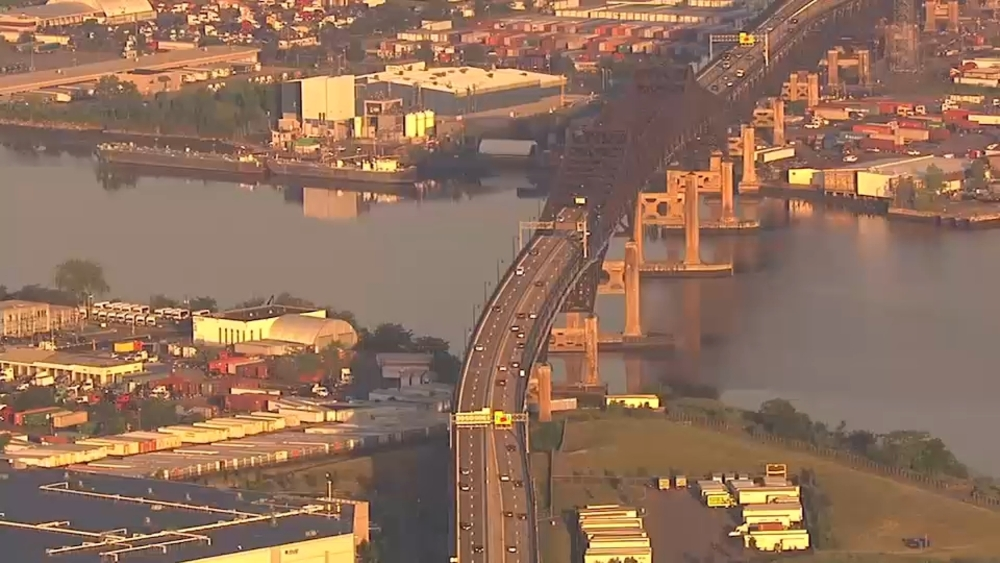
Drivers traveling between Newark and Jersey City today are encountering one of the region’s most significant temporary transportation disruptions as the Pulaski Skyway is closed in both directions for critical infrastructure rehabilitation work. Transportation crews have shut down the historic corridor to perform structural repairs that include pier and bearing replacements, part of an ongoing effort to preserve one of the most important transportation links connecting Hudson and Essex counties.
Officials overseeing the project expect the closure to remain in place throughout the day, with the roadway scheduled to reopen to traffic by 11 p.m. once the intensive repair operations are completed.
For commuters, freight operators, and travelers moving between New Jersey’s urban centers and the New York metropolitan region, the Pulaski Skyway has long served as a vital artery. Its temporary closure underscores both the complexity of maintaining aging infrastructure and the importance of investing in large-scale transportation rehabilitation across the state.
The Pulaski Skyway, which carries U.S. Routes 1 and 9 across the Passaic and Hackensack River corridors, is among the most recognizable highway structures in New Jersey. Elevated above an intricate network of rail yards, industrial sites, waterways, and port facilities, the structure has been a defining element of the region’s transportation landscape for decades.
Today’s closure is tied directly to a series of structural upgrades designed to reinforce the skyway’s foundation and ensure the long-term reliability of the roadway. Crews are focusing on the replacement of bearings and structural piers—components that play a crucial role in supporting the elevated roadway and distributing the immense weight of daily traffic.
Bearings allow bridges and elevated roadways to expand, contract, and shift slightly in response to temperature changes, traffic loads, and environmental stress. Over time, these components can deteriorate due to wear, corrosion, and constant movement. Replacing them requires careful coordination, specialized engineering equipment, and temporary traffic closures to ensure worker safety and structural stability.
Similarly, pier rehabilitation involves strengthening or replacing key support columns that anchor the roadway structure. These piers carry the weight of the skyway and distribute forces across the structure’s foundation system. Repairing or upgrading them is essential to maintaining the long-term safety of the corridor.
Because of the scale and complexity of this work, the entire roadway must be temporarily closed while crews operate heavy equipment, stabilize sections of the bridge, and complete precise structural adjustments.
For the millions of drivers who rely on the Pulaski Skyway annually, closures like this represent a temporary inconvenience—but they also signal necessary progress in preserving one of the region’s most important transportation routes.
New Jersey’s transportation infrastructure is among the busiest in the United States, connecting major cities, international airports, seaports, rail corridors, and interstate highways. Maintaining that network requires constant monitoring, repairs, and modernization efforts across highways, bridges, tunnels, and transit corridors.
In North Jersey, where traffic volumes are among the highest in the nation, infrastructure projects are often scheduled strategically to minimize disruption while still allowing engineers to complete essential structural work.
Today’s skyway closure is one such example. By concentrating rehabilitation efforts within a defined time window and reopening the roadway by late evening, transportation planners aim to limit impacts while still performing high-priority structural repairs.
Drivers traveling between Newark, Jersey City, and the broader Hudson County region are advised to follow posted detours and plan alternate routes throughout the day.
Nearby roadways—including local surface streets and major connectors in the surrounding transportation network—are absorbing diverted traffic as vehicles reroute around the closure.
The Pulaski Skyway occupies a particularly complex section of the state’s transportation grid. The structure rises above rail corridors serving freight and passenger operations, industrial port facilities connected to the Port of New York and New Jersey, and key access points to major regional highways.
Because of its elevated design and unique location, performing maintenance work on the skyway often requires extensive planning and coordination among transportation officials, engineers, construction teams, and local law enforcement.
Today’s closure allows crews to safely access structural components beneath and within the roadway—areas that would be difficult or dangerous to repair while traffic remains active.
The skyway itself has long held a distinctive place in New Jersey transportation history. Since opening in the early twentieth century, it has served as a primary connection for vehicles traveling between Newark and Jersey City, linking industrial zones, residential neighborhoods, and commercial districts across the region.
Over the decades, the structure has become both a functional transportation route and a recognizable landmark rising above the surrounding urban landscape.
Maintaining infrastructure of this scale is a continuous process. Structural steel, concrete supports, expansion joints, and mechanical bearings all experience wear over time due to weather exposure, heavy truck traffic, and constant vibration.
Large-scale rehabilitation projects help extend the lifespan of these structures while ensuring they meet modern safety and engineering standards.
New Jersey’s transportation agencies continue to prioritize investments that address aging infrastructure while supporting the state’s economic activity and commuter mobility.
Roadways like the Pulaski Skyway are particularly important because they connect major employment centers, shipping hubs, and regional transit networks that move both people and goods across the metropolitan area.
The rehabilitation work taking place today represents another step in safeguarding that connectivity.
Throughout the day, crews are working with specialized equipment to lift sections of the structure, replace worn mechanical components, and reinforce structural supports. These procedures must be completed with precise engineering oversight to ensure that the bridge remains balanced and stable as components are removed and replaced.
Such operations require experienced structural engineers and construction teams trained specifically in bridge rehabilitation techniques.
Safety is the highest priority during these operations, which is why complete closures are often necessary. With traffic temporarily removed from the roadway, crews can operate heavy machinery and access difficult structural points without the risk posed by passing vehicles.
Once repairs are completed and engineers confirm that all systems are functioning properly, the roadway will reopen and normal traffic patterns will resume.
For drivers across northern New Jersey, the temporary shutdown of the Pulaski Skyway serves as a reminder of how vital infrastructure investment is to keeping the region moving.
From highways and bridges to transit corridors and port access routes, New Jersey’s transportation network supports one of the most active economic regions in the country.
Projects like the one underway today ensure that critical roadways remain safe, reliable, and capable of supporting the traffic demands of the future.
Motorists planning to travel through the Newark and Jersey City corridor should remain aware of detours throughout the day and allow additional travel time if their route normally includes the Pulaski Skyway.
Transportation officials anticipate that the roadway will reopen by 11 p.m., restoring full access to one of the state’s most recognizable and heavily traveled elevated highways.