


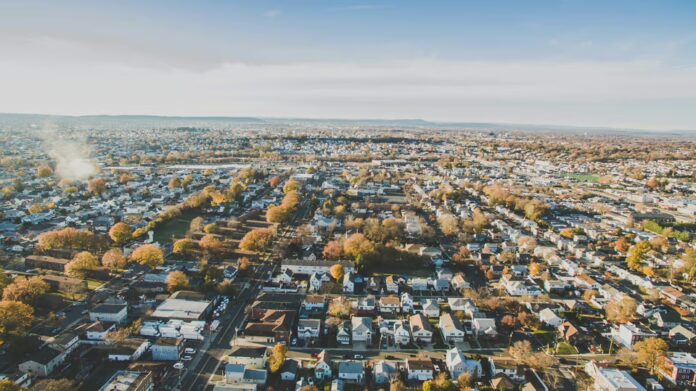

New Jersey’s real estate market is entering the summer stretch with a level of momentum that is both measurable and unmistakable. Across the state, home values are trending upward, reinforcing a pattern that has quietly taken hold over the past several seasons: demand remains strong, inventory remains constrained, and localized market dynamics are driving sharper gains in specific regions. As the calendar moves toward peak buying season, one area is separating itself from the rest of the field with notable consistency—the Jersey Shore.
The latest projections indicate that the overwhelming majority of New Jersey communities are poised to see home values increase heading into early summer. This is not a marginal uptick confined to a handful of markets. It is a broad-based elevation in value across hundreds of ZIP codes, signaling continued confidence in the state’s housing sector. Out of more than five hundred analyzed markets, only a small fraction are expected to experience any decline at all, underscoring the resilience of New Jersey real estate even amid broader economic uncertainty.
Within that statewide upward trend, Shore communities are emerging as the most aggressive growth zones. These are not new developments in isolation, but rather an acceleration of patterns that have been building for years. Coastal living, once framed primarily as a seasonal luxury, has evolved into a year-round lifestyle choice for a growing segment of buyers. Remote work flexibility, improved infrastructure, and a redefinition of what constitutes primary residence have all contributed to this shift. The result is a sustained demand curve that continues to push values higher in shoreline markets.
Margate City stands at the forefront of this movement, with projected gains approaching three percent in the near term. That level of growth, particularly within a compressed timeframe leading into summer, reflects more than simple seasonal demand. It points to a market where buyer competition remains active and pricing power continues to favor sellers. Nearby coastal areas are following a similar trajectory, with communities such as Barnegat Light and Ventnor City also posting projected increases that exceed two percent. These are not isolated spikes. They are part of a coordinated pattern across the Shore, where location, lifestyle, and limited inventory combine to create upward pressure on pricing.
What makes this trend particularly significant is how it intersects with broader state dynamics. New Jersey’s housing market has been shaped by a persistent imbalance between supply and demand. New construction, while active in select regions, has not kept pace with the volume of buyers entering the market. This imbalance is especially pronounced in high-demand areas where geographic constraints limit expansion. Along the Shore, those constraints are physical as much as regulatory. There is only so much land available, and that scarcity continues to amplify value.
At the same time, inland markets are not being left behind. The data suggests that growth is widespread, extending into suburban and even select urban-adjacent communities. West Deptford Township, situated along the Delaware River rather than the Atlantic coastline, is also projected to see meaningful appreciation. This highlights an important dimension of the current market: while coastal areas are leading in percentage gains, the broader state is participating in the upward trend. Buyers priced out of premium locations are expanding their search radius, bringing increased demand to areas that previously operated at a different pace.
This ripple effect is one of the defining characteristics of New Jersey’s current real estate environment. As high-demand markets reach new pricing thresholds, adjacent communities absorb overflow demand, creating a layered expansion of value across the state. It is a dynamic that reinforces stability while still allowing for localized surges. In practical terms, it means that growth is not confined to a single corridor or category of housing. It is distributed, though not evenly, across a diverse range of markets.
The seasonal component cannot be overlooked. Summer has always been a critical period for New Jersey real estate, particularly along the Shore where activity intensifies with the arrival of warmer weather. What is different now is the extent to which that seasonal surge is supported by year-round demand. Properties that might once have been considered second homes are increasingly being evaluated as primary residences or hybrid-use investments. This shift has recalibrated pricing expectations and extended the traditional buying window, making early summer gains more pronounced and more durable.
From an investment perspective, the current forecast reinforces the perception of New Jersey as a stable and appreciating market. Buyers are not simply chasing short-term appreciation. They are responding to a combination of lifestyle appeal, geographic advantage, and long-term value retention. The Shore, in particular, offers a unique blend of these factors. Proximity to major metropolitan areas, established community infrastructure, and a built-in recreational appeal create a value proposition that continues to attract both individual buyers and institutional interest.
The implications extend beyond individual transactions. Rising home values influence municipal budgets, tax assessments, and broader economic activity. They affect affordability, shaping who can enter the market and where they can do so. They also drive development decisions, as builders and planners respond to shifting demand patterns. In this context, the current forecast is not just a snapshot of pricing trends. It is an indicator of how New Jersey’s housing ecosystem is evolving.
Coverage across the real estate sector continues to highlight these structural shifts, from redevelopment projects in urban centers to luxury residential expansions in high-demand corridors. The common thread is a market that remains active, competitive, and increasingly segmented by both geography and price point. Understanding where growth is concentrated—and why—has become essential for buyers, sellers, and investors alike.
For prospective buyers, the message is clear: waiting for significant price corrections may not align with current market conditions. While individual markets will always experience fluctuations, the broader trend points toward continued appreciation, particularly in areas with strong demand drivers and limited supply. Acting within this environment requires both strategic timing and a clear understanding of local dynamics.
For sellers, the current landscape presents opportunity. Properties in high-demand areas, especially along the Shore, are positioned to benefit from sustained buyer interest and competitive pricing conditions. However, maximizing that opportunity still depends on presentation, pricing strategy, and alignment with market expectations. Even in a rising market, differentiation matters.
For New Jersey as a whole, the outlook heading into summer 2026 reflects a market that is not only holding its ground but advancing. The Shore may be leading the charge, but the underlying strength is statewide. Home values are rising, demand remains active, and the factors driving both appear firmly in place. As the summer season approaches, the state’s real estate market is not simply following a seasonal script—it is reinforcing a longer-term trajectory that continues to elevate New Jersey’s position as one of the most dynamic housing markets in the region.