


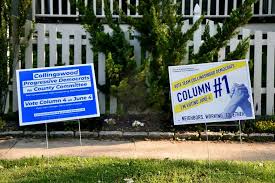

A new phase of grassroots political activism is rapidly intensifying across South Jersey as organizers, reform advocates, progressive Democrats, community leaders, and civic engagement groups prepare for a series of highly visible public actions designed to challenge entrenched political structures, increase voter participation, and reshape the conversation surrounding democratic accountability in one of New Jersey’s most politically influential regions.
Over the next week, the South Jersey Progressive Democrats are organizing multiple events focused on electoral reform, county budgeting transparency, and expanding civic participation throughout Camden County and the surrounding South Jersey political landscape. While each event addresses a different issue on the surface, together they reveal something much larger unfolding inside New Jersey politics: a growing movement attempting to fundamentally redefine how local power operates, how public resources are scrutinized, and how grassroots activism influences institutional Democratic politics in 2026.
At the center of the latest organizing push is a rally demanding what activists describe as a “fair ballot” system in Camden County — a phrase that has become increasingly loaded within New Jersey political discourse over the last several election cycles. Progressive organizers argue that ballot design and organizational structures historically favored entrenched political organizations and county-backed candidates, limiting electoral competitiveness and discouraging broader democratic participation.
The issue has become especially symbolic because Camden County now stands alone as the only county in New Jersey still operating without the ballot reforms that many democracy advocates say are necessary to ensure equal candidate visibility and fairer voter access. That status has transformed the county into one of the final remaining battlegrounds in the statewide fight over political machine influence and electoral modernization.
For reform activists, the rally scheduled for May 15 is not simply about ballot formatting mechanics. It is about political power itself.
Across New Jersey, progressive organizers have increasingly argued that traditional county line systems and ballot placement structures historically reinforced institutional control by established party organizations while disadvantaging insurgent candidates, grassroots challengers, independent campaigns, and newer political coalitions. Critics of the older systems contend that ballot positioning can significantly influence voter behavior, particularly in lower-information races where party alignment cues often carry enormous weight.
Supporters of reform believe restructuring ballot presentation is essential to creating a more genuinely competitive democratic process.
Camden County’s continued resistance to adopting broader ballot reforms has therefore made the region a focal point for statewide democracy activists who view the county as a symbol of old-guard political infrastructure attempting to preserve institutional dominance amid rapidly changing voter expectations.
The rally itself is expected to bring together organizers, local activists, voting rights advocates, younger Democratic voters, and residents frustrated with what they perceive as excessive insider influence within county politics. The demonstration reflects the broader national energy currently reshaping local political organizing, where grassroots movements increasingly prioritize procedural fairness, institutional transparency, and structural accountability alongside traditional policy advocacy.
The issue also arrives during a period when public trust in political systems remains deeply strained nationwide.
Across the United States, voters continue expressing frustration over polarization, insider influence, perceived institutional favoritism, campaign financing structures, and declining confidence in democratic responsiveness. In New Jersey, where county political organizations historically maintained extraordinary influence over elections and candidate pipelines, reform movements have gained substantial traction by arguing that democratic participation must become more accessible, transparent, and competitive.
Camden County now finds itself directly inside that storm.
But electoral reform is only one part of the growing political mobilization taking shape throughout South Jersey. Activists are also preparing for a major public hearing regarding the proposed 2026 Camden County budget — another issue rapidly becoming politically charged amid rising public scrutiny over spending priorities, county operations, and long-term fiscal planning.
Budget hearings often receive limited public attention in local politics. This year appears different.
Progressive organizers and community advocates are increasingly framing county budget oversight as a central democratic issue tied directly to affordability pressures, public investment priorities, infrastructure spending, housing stability, social services funding, and community resource allocation. Residents throughout New Jersey continue confronting rising property taxes, escalating living costs, healthcare expenses, housing affordability challenges, and economic uncertainty. As a result, county spending decisions are receiving significantly greater public examination than in previous years.
The upcoming hearing is expected to attract activists focused not only on specific budget line items, but on broader questions involving governmental transparency and public accountability. Organizers argue that residents deserve far greater visibility into how county resources are allocated, particularly during a period when economic strain continues affecting working families throughout the region.
This growing emphasis on local budgeting reflects another major shift occurring in modern grassroots politics. Increasingly, activists are focusing less exclusively on national ideological battles and more on the operational mechanics of local governance itself — zoning decisions, infrastructure investment, public procurement, education funding, county administration, transportation systems, and municipal resource allocation.
In many communities, voters now recognize that local government decisions often have more immediate day-to-day impact than national political theater.
That realization is helping fuel a new generation of hyper-local organizing efforts throughout New Jersey, especially among younger voters and issue-focused activist networks seeking more direct influence over community-level policymaking.
The South Jersey Progressive Democrats’ monthly public meeting scheduled for May 18 further reinforces how organized and sustained this activism has become. Rather than functioning as isolated demonstrations, these events increasingly operate as interconnected organizing hubs where electoral strategy, policy advocacy, coalition building, issue campaigns, and long-term movement planning all converge simultaneously.
The organization’s emphasis on democracy campaigns and electoral reform reflects how deeply structural political issues have moved into the mainstream of progressive organizing in New Jersey. Topics that once remained largely confined to election law specialists or institutional reform advocates are now becoming everyday political priorities for broader activist coalitions.
That transformation mirrors broader national trends reshaping Democratic politics.
Across the country, progressive movements are increasingly focusing on institutional reform issues involving voting access, districting, campaign finance, ballot structure, party governance, transparency standards, and democratic participation systems themselves. Many activists now view structural reform as foundational to achieving progress on healthcare, housing, labor rights, climate policy, education funding, and economic equity.
In New Jersey, these debates carry especially high stakes because of the state’s historically powerful county political structures and deeply entrenched organizational networks.
For decades, county organizations played dominant roles in candidate selection, endorsement pipelines, campaign financing, and political advancement throughout the state. Reform advocates increasingly argue that younger voters and newer political coalitions are now challenging those traditional power structures more aggressively than at any point in recent memory.
Camden County’s political significance amplifies the importance of these developments further. The county has long functioned as one of the most influential Democratic strongholds in New Jersey politics, with substantial influence over regional organizing, campaign infrastructure, legislative priorities, and statewide coalition-building. Political movements capable of gaining traction there often generate ripple effects far beyond South Jersey itself.
The broader political environment is also intensifying grassroots engagement.
Housing affordability remains one of the most emotionally resonant issues throughout New Jersey. Healthcare access concerns persist across urban and suburban communities alike. Public school funding debates continue escalating. Infrastructure modernization remains uneven. Climate resilience and flooding concerns are becoming increasingly urgent. And younger voters, in particular, continue expressing frustration over economic instability and perceived institutional inertia.
Activist organizations are increasingly connecting these issues directly to broader questions of democratic structure and political accountability.
Their argument is straightforward: if political systems themselves remain inaccessible, overly centralized, or insufficiently transparent, then meaningful progress on substantive policy issues becomes far more difficult to achieve.
This philosophy is now shaping much of the progressive organizing energy emerging throughout South Jersey.
What makes the current moment especially important is how local these battles have become. National political polarization often dominates headlines, but many of the most consequential democratic struggles are increasingly unfolding inside county meetings, local rallies, ballot reform fights, municipal hearings, and grassroots organizing spaces operating far below the level of presidential politics.
New Jersey’s dense political geography and highly localized governance structure make the state especially fertile ground for these types of organizing efforts. County governments, municipal systems, school boards, local commissions, and regional political organizations all play unusually significant roles in shaping residents’ daily lives.
As a result, activists increasingly understand that changing local political systems can create long-term structural influence extending far beyond any individual election cycle.
For supporters of the South Jersey Progressive Democrats, the upcoming week of action represents more than a calendar of political events. It reflects a broader movement attempting to redefine civic engagement itself in one of the country’s most politically sophisticated states.
For critics, these efforts may represent ideological overreach or attempts to destabilize longstanding political structures that supporters argue provide organizational stability and effective governance.
But regardless of political perspective, one reality is becoming increasingly clear: grassroots activism throughout South Jersey is becoming more organized, more strategic, more institutional, and more influential.
And as debates over ballot fairness, public accountability, democratic participation, and local governance continue intensifying across New Jersey, Camden County is rapidly emerging as one of the state’s most important political proving grounds for the future direction of Democratic power itself.