



A federal real estate fraud investigation involving a New Jersey social media influencer couple is rapidly becoming one of the most high-profile cautionary tales yet about the collision between internet celebrity culture, speculative real estate investing, aspirational wealth branding, and the growing vulnerability of online financial audiences searching for shortcuts to economic success in an increasingly unstable economy.
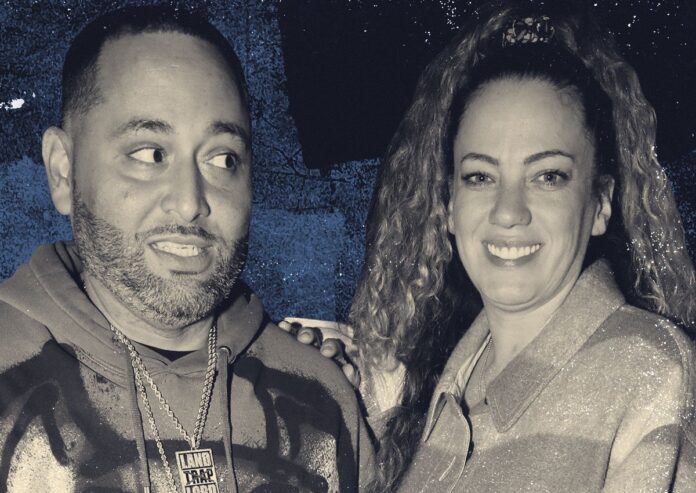
Federal authorities say Gregory Parker and Danielle Parker used their large online following and luxury lifestyle image to allegedly orchestrate a yearslong investment scheme tied to Cleveland-area real estate properties, while simultaneously projecting the image of self-made millionaire entrepreneurs across social media platforms.
Now the Federal Bureau of Investigation is actively seeking additional potential victims connected to the case, including individuals who invested money with the couple or attended real estate seminars promoted under branding tied to their online persona “bigbizzneesss.”
The expanding federal investigation reflects far more than an isolated fraud case.
It exposes the increasingly blurred line between financial education, influencer marketing, motivational entrepreneurship culture, and alleged investment manipulation in the digital economy — particularly inside the booming online real estate coaching industry that exploded nationally over the last decade.
According to federal prosecutors, the Parkers allegedly built a highly visible online identity centered around wealth, luxury, entrepreneurship, financial freedom, and real estate success. Through social media content, seminars, lifestyle branding, and public-facing business promotions, prosecutors say the couple cultivated an image of extraordinary financial achievement designed to attract aspiring investors and followers seeking access to real estate wealth strategies.
Authorities allege that image became central to the alleged fraud itself.
Federal investigators say the couple promoted investment opportunities tied to properties in Cleveland and East Cleveland between 2017 and 2023, collecting funds from individuals who were allegedly promised opportunities involving property acquisition, renovation, management, and long-term financial returns.
Instead, according to prosecutors, large portions of the money were allegedly diverted toward funding a lavish personal lifestyle showcased publicly across social media platforms.
The allegations paint a striking picture of modern digital-era financial culture.
Luxury vehicles, private jet travel, wealth symbolism, motivational rhetoric, and highly curated online lifestyles have increasingly become core marketing tools inside portions of the influencer entrepreneurship ecosystem. Prosecutors allege the Parkers leveraged exactly that aspirational branding strategy while portraying themselves as proof that financial independence and rapid wealth accumulation were accessible through real estate investment.
This strategy has become extraordinarily common throughout social media-driven business culture.
Across platforms like Instagram, TikTok, YouTube, and other digital networks, influencer entrepreneurs routinely market wealth-building courses, mentorship programs, investment partnerships, seminars, and lifestyle coaching services centered around real estate, cryptocurrency, trading, e-commerce, or personal branding. The line between legitimate business education and highly speculative financial marketing has become increasingly difficult for audiences to distinguish.
The Parker case now sits directly at the center of that growing national conversation.
Federal prosecutors allege the couple specifically used social proof and visibility to build credibility. Their Instagram identity reportedly projected an image of financial success through highly visible displays of luxury consumption and entrepreneurial achievement. That visibility allegedly helped attract investors who believed they were partnering with experienced and successful real estate operators.
The FBI’s public request for additional victims to come forward suggests investigators believe the scale of the alleged activity may extend beyond the individuals already identified publicly.
Federal agents are reportedly seeking information from anyone who attended seminars connected to branding such as “Rolling with the Parkers,” “Greg Parker Presents: Big Bizzneesss Minus the Business Suit!!!,” “Year of the Millionaire Tour,” and “The Road to Financial Freedom.”
The naming itself reflects the aspirational psychology often embedded inside influencer-driven financial marketing.
These types of events frequently combine motivational speaking, entrepreneurial branding, luxury imagery, networking culture, and promises of financial empowerment targeted toward audiences frustrated with traditional economic pathways. Many participants are individuals searching for alternatives to rising living costs, wage stagnation, economic instability, and shrinking perceptions of upward mobility.
That broader economic environment helps explain why influencer finance culture has grown so rapidly.
Across the United States — including heavily populated and high-cost states like New Jersey — younger generations increasingly face enormous financial pressure involving housing affordability, student debt, inflation, healthcare costs, and employment instability. Traditional wealth-building paths often appear increasingly inaccessible. As a result, audiences become more susceptible to entrepreneurial narratives promising accelerated financial freedom through alternative investment strategies.
Real estate occupies an especially powerful role inside that ecosystem.
For decades, real estate has been marketed as one of the most reliable pathways toward generational wealth, passive income, and financial independence. Social media intensified that mythology dramatically by allowing influencers to visually showcase properties, luxury lifestyles, renovation projects, and high-end consumption in ways that create emotional identification among followers.
The Parker case allegedly weaponized that aspirational environment.
Federal prosecutors claim the couple used investor funds not primarily for the property redevelopment activities being promoted, but instead for maintaining the luxurious public image that helped attract additional investors in the first place. Authorities specifically referenced luxury car leases and private jet travel allegedly funded using investor money.
This dynamic reflects one of the defining dangers of influencer-based investment culture.
In traditional finance environments, investors often rely on regulatory disclosures, institutional oversight, audited performance histories, and professional licensing structures. Social media ecosystems, by contrast, frequently operate through emotional persuasion, lifestyle branding, personal charisma, and perceived authenticity rather than transparent financial accountability.
The result can create highly vulnerable conditions for audiences already searching for economic opportunity.
The FBI’s decision to publicly solicit additional victim reports also signals how seriously federal authorities are now treating influencer-related financial fraud cases. Law enforcement agencies increasingly recognize that social media allows alleged fraudulent actors to scale visibility, trust-building, and victim recruitment at unprecedented speed.
Unlike traditional local fraud operations, influencer-driven schemes can attract participants nationally through algorithmic reach alone.
The geographic dimension of the case is also significant.
Although the Parkers are tied to New Jersey and previously lived in Philadelphia, the alleged investment activity centered heavily around Cleveland-area properties. This interstate structure reflects how modern speculative real estate schemes often operate across multiple jurisdictions simultaneously, allowing operators to exploit regional property markets while marketing opportunities to geographically distant investors.
Cleveland itself has become a frequent target for speculative out-of-state investment interest because relatively low property acquisition costs create the appearance of potentially high return margins compared to expensive East Coast markets like New Jersey and New York.
This pattern has fueled a broader wave of remote investment marketing throughout many lower-cost Midwestern cities.
Social media influencers frequently promote these markets as hidden opportunities where ordinary individuals can supposedly build wealth rapidly through property acquisition, rental portfolios, and redevelopment projects. But those investments often carry substantial operational complexity and risk that inexperienced investors may not fully understand.
The Parker case now threatens to deepen skepticism surrounding portions of the influencer real estate industry itself.
Legitimate real estate educators and investment professionals increasingly face reputational spillover from highly visible fraud allegations involving online personalities whose business models rely heavily on image projection and aspirational branding.
At the same time, the case reinforces broader societal concerns about performative wealth culture and the growing monetization of perceived success itself.
In many influencer ecosystems, visibility becomes self-validating. Luxury imagery attracts followers. Followers attract opportunities. Opportunities generate additional visibility. The appearance of success can itself become the primary marketing engine — regardless of whether the underlying business activity remains sustainable or legitimate.
This feedback loop creates enormous pressure to maintain the illusion of endless financial growth.
Federal prosecutors now allege that illusion may have been central to the Parker operation.
The case also highlights how modern fraud investigations increasingly involve digital evidence ecosystems far more extensive than traditional financial crimes. Social media content, online branding materials, seminar promotions, luxury lifestyle posts, digital payment systems, investor messaging, and influencer marketing campaigns all potentially become evidence trails inside federal investigations.
For New Jersey residents, the case resonates especially strongly because the state remains deeply tied to real estate speculation, entrepreneurial culture, and proximity to major financial centers where wealth signaling and investment branding often dominate public-facing business identity.
But beneath the luxury imagery and financial freedom rhetoric, federal investigators now allege something far darker may have been unfolding.
And as the FBI continues seeking additional victims, the case is becoming a powerful reminder of one of the defining realities of the social media economy:
In an era where influence itself has become a business model, appearances can generate enormous financial power — but they can also conceal extraordinary risk.