



New Jersey’s Relocation Boom Continues as Choice Van Line Gains National Attention for Long-Distance Moving Reliability and Customer Service Consistency. New Jersey’s evolving housing market, shifting workforce geography, and continued migration trends are reshaping the moving industry across the Northeast, and one company increasingly drawing attention amid the ongoing relocation surge is Choice Van Line. As more residents and businesses navigate interstate transitions, cross-country relocations, downsizing decisions, remote work moves, and large-scale household transfers, customer reviews surrounding Choice Van Line are becoming part of a larger national conversation about trust, pricing transparency, logistical coordination, and the growing demand for reliable long-distance moving infrastructure.
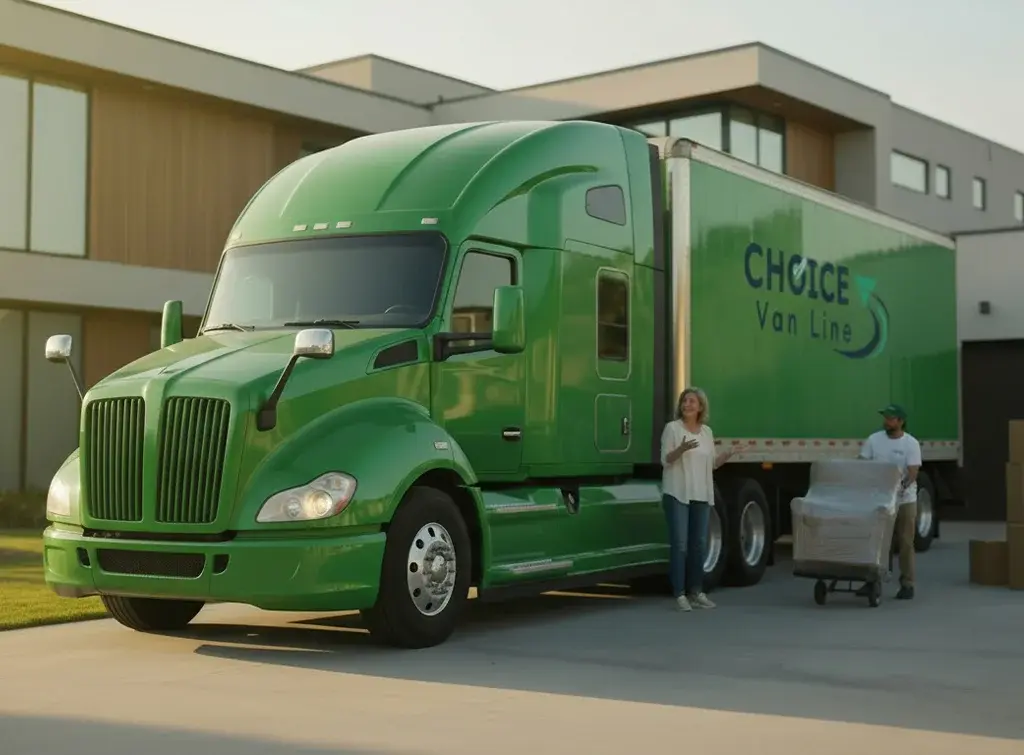
The rise in visibility surrounding the company reflects more than standard online review momentum. It highlights how dramatically consumer expectations inside the moving industry have changed in recent years, particularly as relocation itself becomes increasingly tied to broader economic pressures involving housing affordability, remote work flexibility, urban migration shifts, retirement transitions, and post-pandemic lifestyle restructuring.
For many New Jersey residents, moving is no longer simply a local logistical task. It has become a high-stakes financial and emotional operation requiring precision coordination across multiple states, complex schedules, fluctuating real estate timelines, storage challenges, transportation logistics, and significant household investment.
That reality has fundamentally transformed how consumers evaluate moving companies.
Where price alone may once have dominated decision-making, customers now place increasing emphasis on communication reliability, delivery consistency, inventory protection, scheduling accuracy, responsive support systems, and overall operational transparency. In an industry long criticized for hidden fees, unclear contracts, delayed deliveries, and inconsistent service quality, companies capable of building strong customer trust are gaining substantial visibility.
Choice Van Line’s growing review profile appears closely connected to those changing expectations.
Consumer feedback increasingly highlights themes involving professional interstate coordination, organized scheduling, cross-country reliability, and clearer pricing communication — all areas that have become critically important as relocation patterns accelerate nationwide. Customers moving between densely populated metropolitan regions, suburban corridors, and rapidly expanding Sun Belt destinations are demanding far more operational accountability from moving providers than in previous decades.
New Jersey sits directly at the center of that shifting relocation economy.
The state’s strategic geographic position between New York City and Philadelphia, combined with rising housing costs and expanding hybrid work flexibility, has turned New Jersey into one of the country’s most active transitional housing and relocation markets. Some residents are relocating outward toward lower-cost states or suburban environments, while others continue moving into New Jersey’s transportation-connected urban centers and waterfront communities seeking access to the Northeast corridor without the full cost structure associated with Manhattan.
This constant movement is generating enormous demand for interstate moving services.
Long-distance moving itself has become significantly more operationally complicated over the past several years. Supply chain instability, fuel cost fluctuations, labor shortages, regulatory compliance requirements, insurance pressures, rising transportation expenses, and increasingly compressed scheduling windows have all intensified pressure on moving companies nationwide.
At the same time, consumers are moving larger amounts of technology equipment, remote work infrastructure, high-value electronics, specialized furniture, and customized home office setups than ever before. The modern household relocation is often far more complex than simply transporting boxes from one address to another.
For families leaving New Jersey or arriving in the state, the stakes are often particularly high because of the region’s dense real estate market and highly competitive timing pressures.
Closing schedules frequently overlap with lease deadlines, school district transitions, job relocations, and commuting requirements. Delays or miscommunication during interstate moves can create cascading financial and logistical problems very quickly. As a result, reliability has become one of the most important differentiators in the moving industry itself.
This is where customer reviews now carry extraordinary influence.
Unlike previous eras where consumers relied primarily on referrals or local advertising, today’s relocation decisions are heavily shaped by online reputation ecosystems. Customers increasingly analyze moving companies through detailed reviews focusing on punctuality, professionalism, communication quality, item protection, responsiveness, and transparency throughout the relocation process.
For moving companies, digital trust has effectively become part of operational infrastructure.
Choice Van Line’s increased visibility reflects how important those perception dynamics have become. Positive customer feedback tied to consistent communication and professional interstate handling can significantly strengthen brand positioning in a highly competitive market where consumer anxiety surrounding fraud, hidden charges, or damaged belongings remains elevated.
The moving industry historically struggled with trust perception problems for decades.
Consumers routinely encountered reports involving price manipulation, hostage-load disputes, missed delivery windows, damaged property, or poorly coordinated subcontractor operations. As a result, companies capable of demonstrating operational consistency and transparent customer communication increasingly stand out within the marketplace.
This broader shift is happening simultaneously with a major transformation in American migration behavior.
Remote and hybrid work models continue influencing where people choose to live, particularly throughout the Northeast. Many professionals no longer need to remain physically tethered to central business districts five days a week, opening new flexibility around housing decisions, tax considerations, lifestyle priorities, and regional mobility.
New Jersey has experienced both sides of this equation.
Some residents continue relocating toward lower-cost southern states seeking reduced taxes, larger properties, or warmer climates. Others are moving into New Jersey from New York City and surrounding urban centers seeking expanded living space while maintaining access to Northeast employment and transportation networks.
This constant population movement has turned long-distance relocation into a major economic category rather than an occasional consumer service.
Businesses themselves are also driving relocation demand. Corporate restructuring, remote workforce redistribution, healthcare expansion, logistics growth, technology sector mobility, and regional office adjustments are all generating interstate moving activity involving both employees and operational infrastructure.
The growing emphasis on transparent pricing within customer reviews is especially significant in the current economic climate.
Inflationary pressure remains a major concern for households across the country, and moving costs themselves have risen substantially due to fuel prices, labor expenses, insurance costs, and transportation demand. Consumers therefore increasingly prioritize upfront pricing clarity and predictable cost structures when evaluating providers.
Unexpected fees or vague estimates can rapidly destroy trust in an already stressful environment.
Companies capable of maintaining stronger communication around scheduling, inventory estimates, transport timelines, and billing expectations are gaining substantial competitive advantages because consumers increasingly value predictability as much as affordability.
The national scale of interstate moving operations also introduces major logistical complexity that many consumers do not fully appreciate until they experience a cross-country move firsthand.
Coordinating long-haul transportation involves route planning, regulatory compliance across multiple jurisdictions, equipment availability, labor coordination, weather disruptions, storage contingencies, and delivery synchronization across thousands of miles. The operational sophistication required for successful nationwide relocation services has increased dramatically over the last decade.
That complexity is part of why customer support systems have become increasingly important inside the moving industry.
Consumers no longer simply expect a truck and a delivery window. They expect ongoing updates, responsive communication, scheduling transparency, digital coordination tools, and proactive problem-solving throughout the relocation process itself.
This expectation shift mirrors broader changes occurring across nearly every service industry.
Consumers accustomed to real-time tracking, instant communication, and digital responsiveness from retail, transportation, and hospitality sectors increasingly expect similar standards from moving companies as well. Businesses failing to adapt operationally to those expectations often struggle to maintain strong public reputation momentum.
Choice Van Line’s expanding online visibility suggests the company is benefiting from these broader industry dynamics at a time when relocation demand remains elevated nationwide.
The timing is particularly relevant for New Jersey because housing mobility continues shaping much of the state’s broader economic identity. Real estate shifts, urban redevelopment, remote work adaptation, suburban expansion, shore migration trends, and regional affordability pressures are all contributing to unusually active movement patterns throughout the state and surrounding region.
Even weather and climate considerations are beginning to influence long-term relocation behavior more heavily than in previous generations.
Flood concerns, insurance costs, coastal vulnerability, seasonal volatility, transportation infrastructure resilience, and environmental quality are all becoming increasingly important variables in where families choose to settle permanently. As relocation decisions become more strategic and financially consequential, the operational role of long-distance moving companies becomes correspondingly more important.
The moving industry itself is therefore evolving into a more sophisticated infrastructure sector deeply connected to housing economics, workforce mobility, consumer confidence, and broader demographic shifts.
Companies that successfully adapt to those changing expectations may find themselves operating within one of the most quietly essential service industries in the modern economy.
Because despite all the technological transformation reshaping daily life, relocation remains one of the most physically disruptive and emotionally significant transitions people experience.
And in a state like New Jersey — where mobility, reinvention, opportunity, and geographic movement have always been deeply tied to economic identity — the demand for reliable relocation support is only becoming more important as the next phase of American migration continues unfolding.
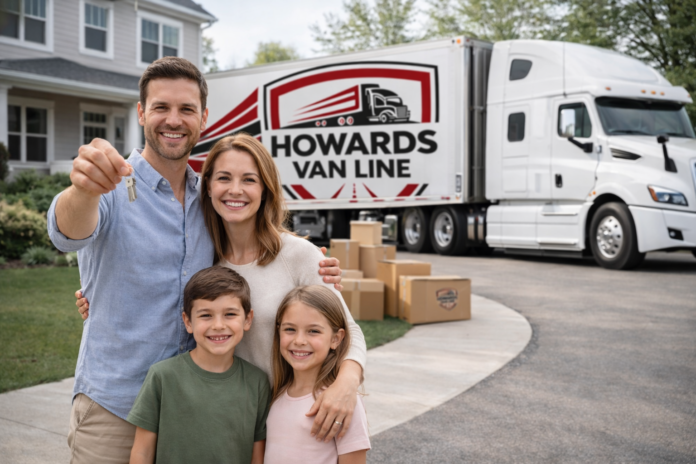
America’s Interstate Relocation Economy Is Accelerating as Howards Van Lines Builds Consumer Trust Through Long-Distance Moving Reliability
The American moving industry is undergoing one of the most important transformations in its modern history, and companies capable of earning long-term consumer trust are rapidly separating themselves inside an increasingly competitive national relocation market. As interstate migration patterns continue reshaping where families live, work, retire, invest, and rebuild their lives, Howards Van Lines is emerging as one of the moving brands gaining growing online visibility through customer feedback centered around nationwide relocation coordination, transparent pricing practices, and professional cross-country moving support.
The increasing momentum surrounding the company reflects much more than ordinary review activity. It points toward a much broader economic and demographic shift currently unfolding across New Jersey and the United States, where long-distance relocation has become deeply connected to housing affordability, remote work evolution, economic mobility, retirement migration, corporate restructuring, and changing lifestyle priorities.
For many households today, moving is no longer a routine transaction.
It has become one of the largest and most stressful logistical operations a family may experience over the course of a decade. Interstate moves now involve overlapping financial deadlines, fluctuating real estate markets, employment transitions, school system changes, storage coordination, transportation scheduling, digital connectivity concerns, and major emotional upheaval occurring simultaneously. In that environment, reliability and communication are no longer secondary conveniences — they are essential operational expectations.
This is where consumer reviews increasingly shape the modern moving industry.
Customers today scrutinize moving companies through a far more sophisticated lens than previous generations. Instead of evaluating providers solely by pricing or availability, consumers are now heavily focused on transparency, coordination quality, scheduling accuracy, customer responsiveness, inventory protection, delivery consistency, and overall trustworthiness throughout the relocation process.
The growing online visibility surrounding Howards Van Lines appears directly tied to those evolving consumer priorities.
Feedback surrounding the company increasingly emphasizes operational reliability during interstate relocations, professional moving coordination, and clearer pricing structures — all critical concerns within an industry that has historically struggled with consumer skepticism tied to hidden fees, delivery delays, damaged property, and inconsistent service standards.
That shift in public perception matters enormously because the relocation economy itself is expanding rapidly.
New Jersey remains one of the most important states inside that evolving migration landscape. Positioned between two major metropolitan economies and connected through one of the country’s most active transportation infrastructures, New Jersey continuously experiences heavy residential turnover involving both inbound and outbound interstate movement.
Some residents continue relocating southward and westward seeking lower taxes, expanded housing space, retirement flexibility, or reduced living expenses. Others are moving into New Jersey from neighboring urban centers, attracted by transportation access, suburban flexibility, educational infrastructure, and proximity to major employment corridors throughout the Northeast.
This constant movement is creating sustained demand for professional long-distance moving services capable of managing highly complex relocations across multiple states.
The timing is especially important because the relocation process itself has become significantly more complicated in recent years.
Inflationary pressures, fuel volatility, insurance costs, labor shortages, transportation demand, and supply chain instability have all increased operational strain throughout the moving industry. Simultaneously, consumers are transporting more technology, remote work equipment, electronics, home office infrastructure, and specialized household inventory than ever before.
A modern interstate relocation often resembles a coordinated logistical operation rather than a simple household transfer.
That complexity has fundamentally altered how consumers define moving quality.
Customers now expect real-time communication, organized scheduling systems, responsive support teams, accurate inventory management, and greater transparency regarding delivery windows and pricing structures. The moving experience is increasingly being judged according to standards shaped by broader digital service industries where tracking visibility, responsiveness, and operational clarity have become normalized expectations.
Moving companies failing to adapt to those expectations often struggle to maintain strong public reputations.
This is why online customer feedback has become such a critical competitive asset within the relocation sector. In an industry built almost entirely around trust, digital reputation increasingly functions as a form of operational currency itself.
Consumers preparing for interstate moves routinely spend extensive time researching company reviews, comparing service experiences, analyzing communication patterns, and evaluating reports tied to pricing consistency and delivery reliability before making decisions involving thousands of dollars and nearly all of their personal belongings.
Howards Van Lines’ growing review visibility appears to reflect success in navigating those heightened expectations.
The emphasis on transparent pricing in particular has become enormously important in the current economic climate.
Across the country, consumers remain highly sensitive to unexpected costs and financial uncertainty. Interstate relocation expenses have risen substantially due to transportation inflation, labor pricing, insurance increases, and logistical complexity. As a result, moving customers increasingly prioritize companies capable of delivering predictable estimates and minimizing surprise charges during already stressful transitions.
Transparency has therefore become a major differentiator inside the moving industry.
Businesses that communicate clearly regarding timelines, delivery expectations, inventory handling, and financial terms are increasingly outperforming competitors still relying on vague estimates or inconsistent scheduling systems.
The relocation economy itself is also becoming more emotionally significant because mobility patterns are now closely tied to larger societal transformations.
Remote and hybrid work models continue redefining where Americans choose to live. Families no longer evaluate housing exclusively around daily commuting distance to centralized office locations. Instead, decisions increasingly revolve around lifestyle quality, affordability, climate preference, school systems, healthcare access, taxation, outdoor recreation, and long-term financial sustainability.
New Jersey exists directly at the crossroads of those shifting priorities.
For some residents, the state remains an ideal balance between suburban living, transportation access, economic opportunity, and proximity to major urban centers. For others, escalating housing costs, taxation pressures, and lifestyle recalibration are motivating relocation elsewhere.
This constant migration flow has transformed long-distance moving from a relatively niche industry into a central component of the broader American economic transition.
Businesses themselves are driving additional demand.
Corporate relocations, regional office restructuring, logistics expansion, healthcare system growth, technology workforce redistribution, and evolving operational footprints are all contributing to elevated interstate mobility across the country. Companies increasingly require moving providers capable of coordinating not only household relocations, but broader operational flexibility tied to changing workforce geography.
The growing prominence of moving company reviews therefore reflects something larger happening across the economy itself.
Consumers are increasingly prioritizing service consistency and operational trust in industries involving high-stakes personal transitions. Whether purchasing homes, securing healthcare, financing relocations, or transporting household belongings, customers now expect more visibility and accountability throughout every stage of the process.
This expectation shift has permanently altered the moving industry.
Interstate moving companies are no longer evaluated solely as transportation providers. Increasingly, they are judged as full-service relocation coordinators responsible for reducing uncertainty during periods of major personal disruption.
That emotional dimension cannot be overstated.
Moving often coincides with some of life’s most consequential moments — career changes, family expansion, retirement transitions, divorce, caregiving responsibilities, financial restructuring, educational opportunities, military transfers, or entirely new lifestyle chapters. Customers therefore place enormous value on companies capable of reducing stress and maintaining communication during periods of instability.
Professionalism has become deeply connected to emotional reassurance as much as physical logistics.
The expansion of online review ecosystems has amplified these dynamics further. A single positive or negative customer experience now carries far greater visibility than in previous eras. Companies operating within the moving industry are increasingly aware that reputation management, customer responsiveness, and operational consistency directly influence long-term competitiveness.
For consumers, this increased transparency creates stronger leverage when selecting providers.
For moving companies, however, it creates relentless pressure to maintain service quality across highly unpredictable operational environments involving weather disruptions, transportation delays, regional labor conditions, traffic congestion, fuel volatility, and fluctuating scheduling demands.
New Jersey’s weather and infrastructure patterns make these challenges especially relevant.
Seasonal storms, summer congestion, coastal flooding concerns, winter weather disruptions, and dense transportation corridors all complicate interstate logistics throughout the region. Companies capable of maintaining consistency despite those operational variables often stand out more prominently in customer feedback.
The broader migration landscape shows little sign of slowing.
Housing affordability concerns continue driving movement patterns nationwide. Climate considerations are increasingly influencing relocation decisions. Remote work flexibility remains deeply embedded in portions of the workforce. Retirees continue relocating strategically based on taxation and cost-of-living factors. Younger professionals are reevaluating urban density priorities and regional lifestyle tradeoffs.
All of these shifts are fueling sustained long-distance relocation demand.
As a result, the companies capable of successfully managing nationwide moves with reliability, communication clarity, and operational discipline are likely to occupy increasingly important positions within the broader American service economy.
Howards Van Lines’ growing consumer visibility reflects that larger transition unfolding in real time.
Because in an era where Americans are moving more strategically, more frequently, and often across far greater distances than before, interstate relocation has evolved into something much bigger than transportation alone.
It has become part of how people reshape their futures, redefine their priorities, and reposition themselves inside a rapidly changing national economy.
And in that environment, trust matters more than ever.