


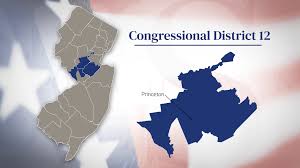

The battle for New Jersey’s 12th Congressional District is rapidly evolving into far more than a conventional Democratic primary. What is unfolding across Middlesex County, Milltown, East Brunswick, and the broader suburban corridor stretching through Central New Jersey increasingly resembles a larger struggle over political identity, generational energy, grassroots mobilization, and whether local Democratic voters still believe Washington truly represents them at all.
At the center of that fight stands Brad Cohen, whose congressional campaign has become heavily focused on youth engagement, local political frustration, healthcare access, democratic institutions, and the argument that Middlesex County itself has been politically overlooked despite functioning as one of New Jersey’s most powerful and populous regions.
With June 2 rapidly approaching, Cohen’s campaign is operating with increasing urgency as volunteers, local Democratic organizers, and younger activists fan out through neighborhoods, business districts, parking lots, and community gathering spaces attempting to energize voters inside one of the most fragmented and ideologically layered congressional battlegrounds in the state.
The setting itself tells much of the story.
Outside an ice cream stand in the middle of Middlesex County, volunteers cluster beneath “Brad Cohen for Congress” signs while the rhythms of ordinary New Jersey life continue moving around them — pizza shops, comic book stores, aging municipal buildings, family-run storefronts, donut counters, veterans memorials, vinyl record shops, funeral homes with generations of local history attached to their names, and the sprawling commercial shadow cast by Route 1 retail infrastructure.
This is not the polished political theater of Washington.
It is intensely local, unmistakably New Jersey, and deeply tied to the identity crisis now unfolding inside Democratic politics itself.
Cohen’s message to younger voters has centered heavily on what he describes as a national democratic emergency tied to the continuing influence of Donald Trump and broader concerns surrounding institutional instability, healthcare access failures, and congressional dysfunction. His campaign increasingly frames the CD-12 race not simply as a local contest, but as part of a larger national fight over democratic norms, constitutional governance, and political accountability.
That framing has become increasingly common among Democratic candidates nationwide, but Cohen’s approach carries a uniquely Middlesex County tone rooted less in abstract ideological language and more in neighborhood-level frustration.
His argument resonates around a central political reality that many local Democrats continue emphasizing: Middlesex County remains one of the largest and most politically influential counties in New Jersey, yet it does not currently have a member of Congress residing directly within the county itself.
For Cohen and his supporters, that absence has become symbolic.
It represents what many voters increasingly feel is a disconnect between local communities and the broader political infrastructure representing them in Washington. In a state where county identity still plays an unusually powerful role in political organization, representation, and coalition-building, the idea that Middlesex lacks its own congressional resident has become an emotionally resonant issue inside the Democratic primary.
The argument extends beyond geography alone.
Supporters increasingly portray Cohen as a candidate rooted directly in the lived realities of suburban New Jersey communities navigating rising housing costs, healthcare pressures, transportation congestion, public school funding debates, property tax frustration, and growing political exhaustion with national dysfunction.
That localized framing matters enormously because the CD-12 race itself is unfolding inside one of the most politically complex districts in New Jersey.
The district combines suburban municipalities, university influence, commuter communities, established Democratic strongholds, progressive activist networks, working-class neighborhoods, and politically moderate pockets that do not always align neatly ideologically. Any candidate attempting to consolidate support across that environment must simultaneously appeal to progressive energy, institutional Democratic voters, labor-aligned communities, suburban moderates, and younger activists increasingly demanding more confrontational political leadership.
Cohen’s campaign appears designed specifically around activating those overlapping frustrations.
His appearances and organizing events often resemble community mobilization efforts more than traditional political rallies. Parking lots, neighborhood businesses, low-key public gathering spaces, and casual local settings increasingly function as campaign stages where political messaging is blended directly into the rhythms of everyday suburban life.
This strategy reflects a broader transformation occurring throughout Democratic politics.
Voters — especially younger voters — are increasingly skeptical of highly scripted political performances detached from local reality. Candidates capable of embedding themselves directly into community environments often generate stronger emotional engagement than those relying solely on formal institutional events or conventional media operations.
Middlesex County itself becomes almost a character within this campaign narrative.
The county occupies a uniquely important position in New Jersey politics. Densely populated, economically diverse, geographically strategic, and heavily tied to transportation and educational infrastructure, Middlesex has long functioned as one of the state’s most influential Democratic organizing centers. Yet many residents increasingly feel politically fragmented by district boundaries and disconnected from national representation structures.
Cohen’s campaign is attempting to harness that sentiment aggressively.
By emphasizing local identity and county representation, he positions himself not merely as a congressional candidate, but as a corrective to what supporters perceive as a representation gap inside one of New Jersey’s most politically active regions.
At the same time, the campaign’s rhetoric surrounding democracy and institutional crisis reflects the broader emotional atmosphere now shaping Democratic voter behavior nationally.
Many Democratic voters continue operating under a sense of urgency tied to concerns over democratic norms, federal judicial influence, election systems, voting rights, reproductive healthcare access, immigration policy, and executive power expansion. Cohen’s framing of Trump as a destabilizing force resonates within that broader emotional ecosystem, particularly among younger progressive voters already highly engaged in issues surrounding institutional accountability and political reform.
Healthcare remains another major pillar of Cohen’s messaging.
Throughout New Jersey, healthcare affordability and access continue generating significant voter anxiety. Insurance costs, prescription pricing, mental health services, provider shortages, and healthcare system complexity remain deeply personal concerns across suburban and working-class communities alike. Cohen’s campaign repeatedly links congressional inaction to these ongoing systemic failures, arguing that federal dysfunction directly impacts residents’ everyday quality of life.
That argument gains additional traction within a district where many voters remain highly educated, civically engaged, and politically attentive.
The campaign atmosphere itself increasingly resembles a collision between traditional New Jersey Democratic organization and newer grassroots energy models. Cohen benefits from backing connected to the Middlesex County Democratic Organization while simultaneously attempting to energize younger and more issue-driven voters who often distrust institutional political structures altogether.
Balancing those forces is one of the defining strategic challenges in modern Democratic politics.
Candidates today must often navigate two competing realities simultaneously: the enduring importance of county organizations, endorsements, donor networks, and party infrastructure on one side, and the growing demand for authenticity, grassroots credibility, and outsider energy on the other.
Cohen’s campaign appears acutely aware of this tension.
The imagery surrounding his campaign stops reinforces that balancing act constantly. Local storefronts, blue-collar aesthetics, pocket parks, aging civic architecture, and informal gathering spaces all become visual symbols of rootedness and community connection — a deliberate contrast to the increasingly abstract and polarized nature of national political discourse.
This hyper-local atmosphere may ultimately become one of the most important elements of the race itself.
Across the country, voters continue expressing exhaustion with performative national politics detached from local reality. Campaigns capable of reconnecting federal elections to neighborhood identity, community infrastructure, and lived economic experience often generate stronger engagement, especially during lower-turnout primaries where motivation matters enormously.
The youth focus is equally strategic.
Younger Democratic voters remain one of the party’s most ideologically progressive constituencies, but turnout consistency remains a major challenge in non-presidential cycles and congressional primaries. Cohen’s campaign clearly understands that activating younger voters through democracy-centered messaging, anti-Trump rhetoric, healthcare concerns, and local representation arguments could substantially alter turnout dynamics inside a fragmented primary environment.
At the same time, the campaign also reflects a larger shift happening across suburban America itself.
Places like Milltown and East Brunswick increasingly represent the front lines of modern political realignment. These are communities where old industrial identity intersects with higher education growth, immigrant population expansion, rising housing costs, digital work culture, and generational political change. Traditional suburban political assumptions no longer fully apply.
The result is a more emotionally volatile and ideologically fluid electorate than many political analysts previously expected.
That volatility is part of why races like the CD-12 Democratic primary are drawing increasing statewide attention. Observers understand that these contests often function as early indicators of broader political trends shaping the Democratic Party’s future direction.
Will voters prioritize institutional stability or insurgent energy? Local identity or national ideology? Pragmatic governance or moral confrontation? Grassroots organizing or traditional political infrastructure?
These questions now sit directly beneath the surface of the Cohen campaign.
And as volunteers continue gathering outside ice cream stands, along parking lots, through downtown corridors, and across the layered suburban landscape of Middlesex County, the race increasingly feels less like a standard congressional primary and more like a referendum on what Democratic politics in New Jersey is becoming.
Because in communities like these — surrounded by diners, bagel shops, Route 1 traffic, vinyl records, family storefronts, veterans memorials, and neighborhoods trying to preserve their identity inside an increasingly unstable political era — the future of New Jersey politics is no longer being debated only in Trenton or Washington.
It is being argued block by block, conversation by conversation, and voter by voter across the streets of Middlesex County itself.



