



Few developers have become as deeply intertwined with the identity, controversy, transformation, and future trajectory of Paterson, New Jersey as Charles Florio.
For years, Florio and his company, ANIA Management, have occupied a uniquely influential position inside one of New Jersey’s most historically important — and economically challenged — urban housing markets. His projects have sparked praise, criticism, political clashes, neighborhood revitalization efforts, media attention, and ongoing debate surrounding what redevelopment should look like in a city wrestling simultaneously with vacancy, poverty, disinvestment, rising housing demand, and long-term reinvention.
Now, one of the most significant real estate moves in recent Paterson history is unfolding.
Florio is reportedly selling an extraordinary portfolio of 85 multifamily properties spread throughout Paterson in what brokers are describing as a strategic pivot designed to fuel even larger future development projects across the city. The announcement immediately sent ripples through regional real estate circles because the scale of the transaction reflects far more than a routine portfolio adjustment. It signals a potentially transformative moment in Paterson’s next development phase — one that could reshape neighborhoods, investment patterns, housing density, and the city skyline itself over the coming years.
At Sustainable Action Now, real estate stories increasingly involve more than transactions and property values alone. They intersect with urban redevelopment, affordable housing pressures, neighborhood identity, political influence, economic mobility, displacement concerns, community stabilization, infrastructure investment, and the larger struggle over who ultimately shapes the future of post-industrial American cities.
Few places embody those tensions more visibly than Paterson.
Once one of America’s great industrial powerhouses, Paterson has spent decades navigating the difficult realities facing many legacy urban centers: economic restructuring, manufacturing decline, disinvestment, population shifts, aging infrastructure, housing instability, and uneven redevelopment. Yet despite those challenges, the city remains one of New Jersey’s most culturally vibrant and strategically significant urban markets, positioned increasingly close to rising regional housing demand spilling outward from more expensive surrounding areas.
Inside that landscape, Charles Florio became impossible to ignore.
The developer built his reputation not by focusing exclusively on luxury projects or isolated high-profile developments, but through aggressive acquisition and rehabilitation of distressed, vacant, abandoned, and underperforming properties scattered across some of Paterson’s most difficult neighborhoods. Over time, those investments expanded into a massive multifamily portfolio representing a substantial share of the city’s residential housing ecosystem.
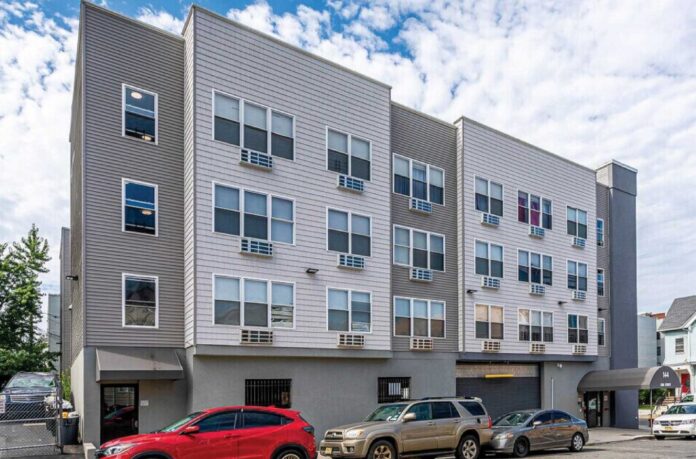
According to Kislak Company Inc., the Woodbridge-based brokerage handling the portfolio sale, the properties represent decades of strategic investment and redevelopment spanning nearly every section of Paterson. The holdings reportedly include everything from restored pre-war multifamily buildings to newly developed residential properties reflecting the city’s evolving housing landscape.
The scale alone makes the transaction remarkable.
Eighty-five multifamily properties changing hands simultaneously is not simply another real estate listing. It is effectively the repositioning of a substantial urban housing network inside one of New Jersey’s most densely populated cities.
At Sustainable Action Now, one of the most important aspects of this development is understanding what the sale appears to represent strategically.
Florio is not reportedly exiting Paterson. Quite the opposite.
The sale is being framed as a reinvestment maneuver designed to free capital and operational focus for even more ambitious future developments within the city itself. In other words, the portfolio liquidation may function less like retreat and more like consolidation before expansion.
That distinction matters enormously.
Real estate developers operating at Florio’s scale frequently reach moments where long-term property management begins limiting their ability to pursue larger transformative projects. Holding extensive stabilized multifamily portfolios generates steady revenue, but also ties up enormous amounts of capital, maintenance responsibility, management infrastructure, financing complexity, and operational bandwidth.
Selling mature holdings can therefore create liquidity for significantly larger redevelopment opportunities.
The statement from Kislak suggesting ANIA Management is “forging ahead with even more ambitious projects that continue to reshape the local skyline” strongly implies that Paterson’s next development wave may already be forming behind the scenes.
That possibility raises enormous questions about the city’s future direction.
Paterson’s housing market sits at a particularly complicated intersection right now. On one hand, the city desperately needs additional investment, rehabilitation, infrastructure improvements, and quality housing stock. Longstanding vacancy issues, abandoned properties, and underutilized land have burdened neighborhoods for decades. Developers willing to invest aggressively in difficult urban environments often become critical catalysts for stabilization and growth.
On the other hand, large-scale redevelopment inevitably introduces concerns surrounding affordability, displacement pressure, speculative investment, neighborhood identity shifts, and the long-term accessibility of housing for existing residents.
Florio’s history inside Paterson reflects both sides of that tension.
Supporters frequently point to his willingness to purchase and rehabilitate distressed housing in areas other investors avoided entirely. His company’s investments helped restore numerous abandoned or deteriorating properties while increasing occupied housing stock in neighborhoods struggling with vacancy and neglect.
The developer also gained significant public attention through unusually aggressive community-focused initiatives.
In 2018, Florio made national headlines after offering free apartments to police officers willing to move into troubled neighborhoods — a controversial but highly publicized attempt to stabilize communities through residential presence and informal neighborhood deterrence. Earlier, he reportedly proposed purchasing all city-owned vacant land in Paterson outright, framing the move as a challenge to municipal inertia surrounding redevelopment and property management.
Those actions helped solidify his reputation as both deeply invested in Paterson’s future and highly willing to confront city institutions publicly when disagreements emerged.
At Sustainable Action Now, that confrontational dynamic is especially important because urban redevelopment rarely unfolds smoothly in cities carrying decades of economic complexity and political fragmentation.
Developers, city governments, school districts, neighborhood groups, housing advocates, investors, and residents frequently operate with competing priorities. Revitalization itself becomes politically charged because communities often agree broadly on the need for improvement while disagreeing intensely on how redevelopment should occur, who benefits, and what tradeoffs become acceptable.
Florio’s public disputes with city officials over school property sales, land use, redevelopment decisions, and neighborhood conditions reflected that reality repeatedly over the years.
Yet his willingness to remain invested in Paterson despite those conflicts distinguishes him from many speculative investors who enter distressed markets briefly before exiting once conditions become difficult politically or economically.
The current portfolio sale therefore feels symbolically significant because it may represent the transition from one stage of Paterson redevelopment into another.
The first phase involved stabilization — acquiring neglected housing stock, restoring occupancy, improving property conditions, and rebuilding confidence in neighborhoods long dismissed by outside investors.
The next phase may involve larger-scale transformation projects capable of altering density, skyline composition, mixed-use development patterns, and broader economic activity throughout the city.
At Sustainable Action Now, another major aspect of this story involves what it reveals about changing regional real estate dynamics across northern New Jersey overall.
Housing affordability pressures throughout the New York metropolitan region continue pushing investors and developers toward historically overlooked urban markets with strong transit connectivity, existing infrastructure, and redevelopment potential. Cities like Paterson increasingly attract attention because surrounding suburban and luxury urban markets have become prohibitively expensive for many residents and investors alike.
This regional pressure is accelerating redevelopment interest dramatically.
Paterson’s location, density, transportation access, architectural character, and housing demand potential make it especially attractive for long-term urban investment despite its ongoing challenges. Large-scale multifamily development and rehabilitation therefore appear likely to continue expanding.
The question is what form that growth ultimately takes.
Will redevelopment prioritize affordability and community stabilization alongside profitability? Will existing residents benefit materially from investment surges? Will infrastructure, schools, transit, and public services keep pace with development intensity? Will speculative pressure eventually accelerate displacement in historically working-class neighborhoods?
These questions increasingly define urban redevelopment conversations nationwide.
The architectural diversity within Florio’s portfolio also reflects another important dimension of Paterson itself: the city contains extraordinary historical housing stock spanning multiple eras of industrial urban development. Preserving and modernizing these properties presents both opportunity and challenge simultaneously.
Older multifamily buildings often carry historic character and neighborhood identity impossible to replicate through entirely new construction. Yet maintaining and upgrading aging housing stock requires substantial capital investment and long-term operational commitment.
Developers willing to navigate those complexities therefore play outsized roles in shaping whether historic urban housing survives or deteriorates further.
At Sustainable Action Now, perhaps the most fascinating aspect of this story is that it reveals how individual developers can become deeply woven into the identity of a city itself.
Charles Florio’s influence inside Paterson extends beyond real estate holdings alone. His projects, public statements, political conflicts, neighborhood initiatives, and redevelopment philosophy became part of the city’s broader narrative regarding what recovery, reinvestment, and urban transformation might look like.
Now, by selling 85 multifamily properties while signaling even larger ambitions ahead, Florio appears poised to enter another chapter entirely.
And for Paterson, that likely means the city’s redevelopment story is far from slowing down.
In fact, it may only be accelerating into something much larger than what residents, investors, and political leaders have seen so far.