


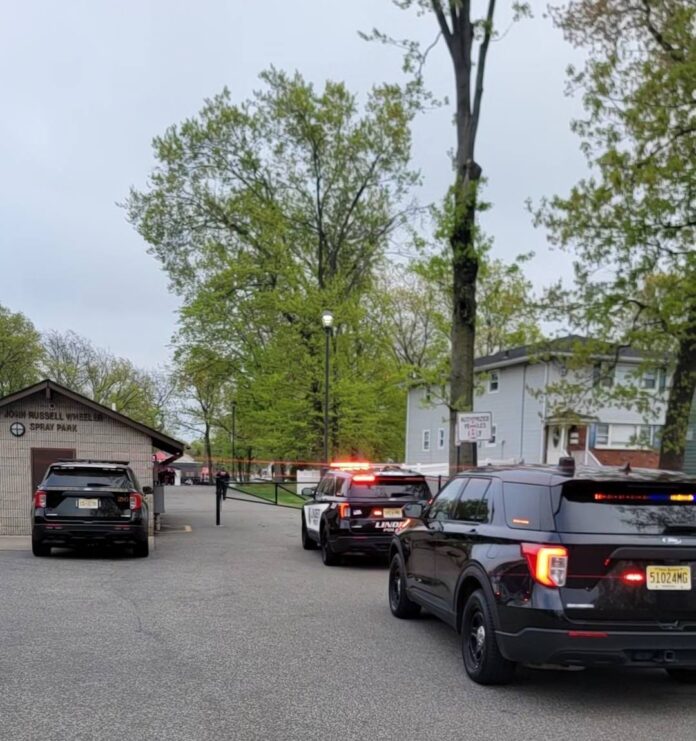

A brutal stabbing and assault involving a 14-year-old boy at a public park in Linden is sending shockwaves through Union County and intensifying broader statewide fears surrounding youth violence, juvenile crime, public safety in community spaces, and the increasingly volatile conflicts unfolding among teenagers across New Jersey communities.
Authorities say two adults and one juvenile have now been arrested and charged in connection with the violent April attack at Wheeler Park, where responding officers discovered the teenage victim suffering from multiple stab wounds and serious injuries after what investigators describe as a coordinated assault involving multiple individuals.
The incident unfolded around 5:15 p.m. on April 18, when officers from the Linden Police Department and the Union County Police Department responded to reports of violence at the county park. When officers arrived, they found the 14-year-old victim wounded with multiple stab injuries and lacerations concentrated along the left side of his back.
Emergency responders transported the teenager to JFK University Medical Center in Edison, where he was treated for injuries authorities later described as non-life-threatening.
But despite the victim surviving the attack, the violence itself has deeply unsettled residents throughout Linden and neighboring communities.
According to investigators, three individuals from Linden were ultimately charged following a multiweek investigation into the assault. Authorities identified Jaquan Roberts as the individual accused of wielding the knife during the incident. Roberts now faces serious charges including second-degree aggravated assault.
Authorities also charged Kayla Oliveira, 18, with simple assault and endangering the welfare of a child. A third suspect, identified only as a juvenile because of age-related legal protections, faces charges including aggravated assault and simple assault.
The arrests, carried out in early May, represent the latest chapter in what has become a deeply troubling pattern of violent incidents involving juveniles and young adults across portions of New Jersey.
For many residents, the Wheeler Park stabbing feels especially disturbing because it occurred in a public recreational space traditionally associated with youth sports, neighborhood gatherings, families, and community activity rather than violent criminal conduct.
That erosion of perceived public safety in everyday community environments is becoming a major source of anxiety throughout many New Jersey municipalities.
Parks, shopping centers, schools, transportation hubs, and public gathering spaces increasingly sit at the center of growing public concern surrounding escalating youth conflict, social media-driven disputes, group assaults, weapons access, and rapidly intensifying confrontations among teenagers and young adults.
The Linden case reflects several of those dynamics simultaneously.
Authorities allege the attack involved multiple participants, including both adults and juveniles, highlighting the increasingly blurred boundaries between youth violence and adult criminal behavior in many modern assault cases. Law enforcement agencies throughout New Jersey continue warning that conflicts involving teenagers can escalate extraordinarily quickly, especially when group dynamics, public confrontation, online disputes, or weapons become involved.
The role of knives and edged weapons has become particularly concerning.
While national conversations around youth violence often focus heavily on firearms, many local police departments report rising concern surrounding knife assaults involving juveniles and young adults. Knives remain highly accessible, difficult to regulate, and capable of inflicting catastrophic injuries within seconds during emotionally charged confrontations.
Public parks and recreational spaces can become especially vulnerable environments for these incidents because they function as informal gathering points where supervision may fluctuate and interpersonal disputes can escalate rapidly.
Wheeler Park itself now joins a growing list of community spaces across the state where acts of violence have triggered broader debates surrounding policing visibility, youth engagement, conflict intervention, and neighborhood safety infrastructure.
The emotional impact of attacks involving minors is often especially severe.
Residents tend to view violence involving children and teenagers differently from adult criminal activity because it raises larger societal questions about family stability, mental health strain, school climate, social media influence, peer dynamics, economic instability, and whether communities are losing the ability to effectively intervene before conflicts become dangerous.
Those concerns are intensifying nationally.
Across the country, communities continue struggling with rising anxiety surrounding adolescent behavior, online conflict culture, and increasing emotional volatility among younger populations following years of social disruption, pandemic isolation, educational instability, and mounting psychological pressure tied to digital life.
Educators, law enforcement officials, psychologists, and community organizations increasingly warn that many teenagers are navigating environments saturated with stress, online exposure, conflict amplification, and emotional instability in ways previous generations did not experience at comparable intensity.
Social media frequently accelerates these dynamics dramatically.
Arguments that once may have dissipated privately can now escalate publicly across digital platforms where humiliation, provocation, retaliation, and peer pressure become amplified in real time. Conflicts can spread rapidly between schools, neighborhoods, and social groups before eventually erupting into physical violence offline.
Authorities have not publicly detailed what triggered the Wheeler Park assault, but the case nevertheless fits into a broader statewide atmosphere of concern surrounding youth conflict escalation.
The involvement of an adult suspect alongside juvenile participants further complicates public reaction.
When adults become connected to violence involving minors, communities often perceive the situation not simply as a teenage altercation, but as a deeper breakdown involving responsibility, supervision, and the influence older individuals may exert within younger social circles.
Charges involving endangering the welfare of a child also signal prosecutors may view aspects of the incident through a broader framework involving child safety and vulnerability rather than simple assault alone.
Union County prosecutors and investigators now face the difficult task of balancing accountability, juvenile justice considerations, public safety concerns, and the long-term consequences associated with prosecuting young offenders.
This remains one of the most difficult aspects of modern criminal justice systems involving juvenile violence.
Communities simultaneously demand accountability for serious crimes while also recognizing that adolescent offenders often operate within unstable social, emotional, and developmental conditions that complicate purely punitive responses. New Jersey, like many states, continues grappling with how to balance rehabilitation principles with growing public frustration surrounding repeat youth violence and serious assaults involving minors.
The Wheeler Park incident also arrives amid broader political conversations surrounding public safety throughout New Jersey.
Debates involving policing strategy, juvenile detention policy, school resource officers, mental health intervention, restorative justice, community violence prevention, and youth programming continue generating intense disagreement statewide. Incidents involving teenage victims and multiple assailants frequently intensify those debates because they expose competing public expectations surrounding prevention, enforcement, and accountability.
At the same time, community advocates continue warning against reducing youth violence solely to policing discussions alone.
Many organizations emphasize the importance of addressing root conditions including family instability, educational disruption, trauma exposure, housing insecurity, untreated mental health issues, social fragmentation, and lack of structured opportunities for younger populations. Others stress the importance of mentorship programs, conflict mediation resources, sports infrastructure, after-school programming, and community engagement initiatives designed to reduce isolation and escalation pathways.
Still, for residents of Linden, the immediate emotional reality remains starkly personal.
A 14-year-old boy was stabbed multiple times inside a public park in broad daylight.
That fact alone is enough to deeply unsettle any community.
Parents increasingly worry about where children gather after school. Residents question whether parks remain safe spaces. Families wonder how quickly ordinary teenage conflict can spiral into life-threatening violence. And local officials face mounting pressure to reassure communities already exhausted by rising anxiety surrounding public safety and youth behavior.
The investigation remains active, and additional details may still emerge regarding the circumstances leading up to the attack.
But even now, the Wheeler Park stabbing is already becoming part of a larger conversation unfolding across New Jersey — one centered around what happens when adolescent conflict, public space insecurity, emotional instability, and access to violence converge inside communities struggling to hold themselves together during an increasingly tense social era.
Because beneath the criminal charges and police reports lies a more difficult truth many communities are now being forced to confront:
The fear surrounding youth violence is no longer confined to distant headlines or isolated urban narratives.
It is reaching directly into neighborhood parks, suburban communities, and the everyday public spaces where families once felt safest.