



New Jersey has become an early proving ground for one of the most consequential policy debates emerging alongside the rapid expansion of artificial intelligence infrastructure. With the introduction of the AI Data Center Site Selection Transparency Act of 2026, Congresswoman LaMonica McIver is placing the state—and the nation—on notice: the era of quiet, behind-the-scenes approval of massive AI data center projects may be coming to an end.
The legislation arrives at a moment when the physical footprint of artificial intelligence is no longer theoretical. Data centers, once treated as neutral back-end infrastructure, are now recognized as energy-intensive industrial operations with real consequences for local communities. In New Jersey, where population density, aging infrastructure, and environmental pressures already intersect, the stakes are particularly high. The bill’s core premise is direct and forceful—communities deserve to know what is being built around them before decisions are finalized, not after the consequences are locked in.
At the heart of the proposal is a structural shift in how development is disclosed and debated. The legislation would require AI data center developers to publicly identify proposed sites at least 180 days before any meaningful step toward construction. That timeline is not incidental. It is designed to give residents, local officials, and advocacy groups sufficient time to evaluate the scope of a project, organize responses, and participate in the decision-making process. In practical terms, it represents a move away from procedural notice toward substantive engagement.
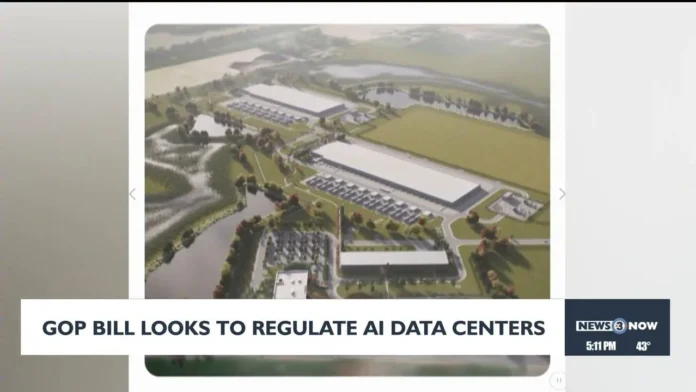
The urgency behind the bill is not hypothetical. In Kenilworth, New Jersey, a $1.8 billion AI data center project advanced through early stages with limited public awareness, leaving residents scrambling to understand a development that could reshape their immediate environment. Many reported learning about the project informally, despite living within a few hundred yards of the proposed site. Concerns quickly surfaced around water quality, flood risk, and the long-term impact on electricity costs. A grassroots response followed, including a petition signed by more than 1,500 residents, but by that point, the process was already in motion. That sequence—late awareness followed by limited leverage—is precisely what the McIver bill seeks to prevent.
The legislation also addresses a less visible but equally significant issue: the use of nondisclosure agreements to limit transparency between developers and public entities. Under the proposed framework, such agreements would be restricted in cases where they prevent the disclosure of environmental, energy, or infrastructure impacts. This provision directly challenges a longstanding practice in large-scale development, where key project details are often shielded under the justification of proprietary information. By curbing that approach, the bill aims to rebalance the information dynamic between corporations and communities.
Co-led by Representatives Valerie Foushee and Andre Carson, the measure reflects a broader coalition focused on environmental justice, consumer protection, and infrastructure accountability. Their involvement underscores the national scope of the issue, particularly as data center expansion accelerates across multiple regions. These facilities, while critical to the functioning of AI systems and cloud computing, often consume vast amounts of electricity and water—sometimes rivaling the resource demands of entire municipalities. That level of consumption introduces new pressure points for local grids, water systems, and environmental sustainability frameworks.
The bill’s requirements extend well beyond basic disclosure. Developers would be obligated to provide detailed, independently verified analyses of projected electricity use, water consumption, cooling demands, and environmental impact. These reports would need to be accessible, multilingual, and distributed through multiple channels, including local media, direct outreach, and on-site signage. The objective is clear: eliminate the gap between technical compliance and actual public awareness. It is not enough for information to exist; it must be delivered in a way that communities can realistically engage with and understand.
From a regulatory standpoint, the legislation introduces enforcement mechanisms designed to ensure compliance carries real consequences. Violations would be treated as unfair or deceptive practices under the Federal Trade Commission framework, elevating the seriousness of nondisclosure or misrepresentation. Additionally, the bill establishes joint accountability among developers, owners, and operators, preventing liability from being diffused across multiple entities. This is a deliberate attempt to close loopholes that have historically allowed large projects to move forward without clear responsibility when issues arise.
Support for the bill reflects a convergence of environmental, consumer, and policy advocacy organizations that have increasingly focused on the hidden costs of data infrastructure. Groups aligned with environmental protection, energy regulation, and public accountability have pointed to a consistent pattern: communities often absorb the externalities of development—higher utility rates, environmental strain, and infrastructure degradation—without meaningful input during the approval process. By mandating early disclosure and independent analysis, the legislation seeks to address that imbalance at its source.
The broader policy context reinforces the importance of this moment. As covered across New Jersey’s evolving legislative landscape, including ongoing reporting from NJ Spotlight News, the state is increasingly grappling with how to balance economic development with sustainability, transparency, and public trust. AI infrastructure sits squarely at the intersection of those priorities. It represents economic opportunity and technological advancement, but also introduces new regulatory challenges that existing frameworks were not designed to handle.
What distinguishes the AI Data Center Site Selection Transparency Act is its recognition that infrastructure decisions are no longer purely technical or economic—they are deeply civic. The placement of a data center affects not just land use, but energy markets, environmental conditions, and long-term municipal planning. In that context, the absence of transparency is not a procedural oversight; it is a structural failure that can erode trust and limit democratic participation.
For New Jersey, the implications are immediate. The state’s density, proximity to major metropolitan markets, and existing energy infrastructure make it an attractive target for continued data center expansion. Without clear regulatory guardrails, similar scenarios to Kenilworth could emerge in other municipalities, each carrying its own set of localized impacts. The McIver bill positions itself as a preemptive correction, establishing a framework before those patterns become entrenched.
At a national level, the legislation signals a shift in how policymakers are approaching the physical realities of the digital economy. Artificial intelligence may operate in virtual environments, but its infrastructure is grounded in physical space, consuming tangible resources and affecting real communities. Bringing that reality into the legislative spotlight is a necessary step in aligning technological progress with public accountability.
As the bill moves through the legislative process, it will likely face scrutiny from industry stakeholders concerned about development timelines and regulatory burden. However, the underlying question it raises is difficult to dismiss: who gets to decide what is built in a community, and when do they get to know about it? By reframing that question around transparency and participation, New Jersey is once again positioning itself at the forefront of a policy debate that will define the next phase of infrastructure development in the United States.



