


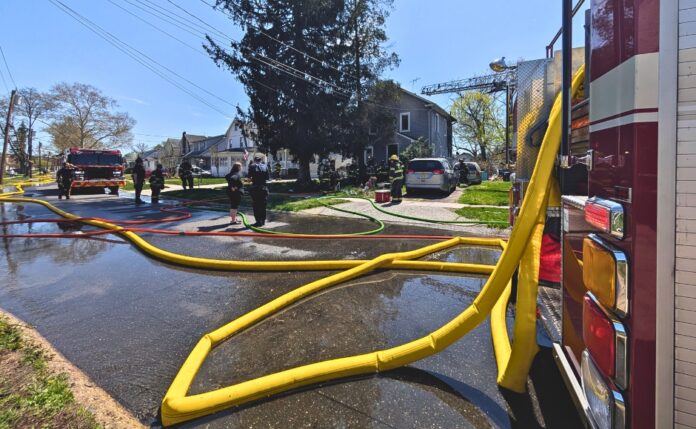

OAKLYN, N.J. — A rapidly escalating residential fire in Camden County drew a coordinated, multi-jurisdictional response Thursday evening, underscoring both the operational demands placed on local fire services and the critical importance of regional collaboration in protecting life and property. Firefighters from eight surrounding communities responded to an all-hands alarm at a single-family home in Oaklyn, where one individual was transported from the scene for medical evaluation while no additional injuries were reported.
The incident, which unfolded during evening hours when residential occupancy is typically highest, prompted an immediate escalation in response level, reflecting both the potential severity of structure fires and the unpredictability of conditions once crews arrive on scene. All-hands calls of this nature are not issued lightly; they signal a need for expanded manpower, apparatus, and specialized capabilities to manage fire suppression, search and rescue operations, ventilation, and exposure protection for nearby properties.
Initial arriving units encountered an active fire condition within the structure, triggering a rapid deployment of interior and exterior suppression strategies. Firefighters worked to contain the blaze while simultaneously conducting primary searches to ensure that all occupants were accounted for. The successful removal and transport of one individual from the residence reflects the speed and precision required in these scenarios, where minutes often determine outcomes.
While details regarding the extent of the individual’s injuries have not been publicly specified, the absence of additional reported injuries points to effective coordination between fire crews and emergency medical services. In incidents of this nature, EMS integration is essential, allowing for immediate triage, stabilization, and transport when necessary. The seamless interface between suppression and medical response is a defining characteristic of modern emergency operations across New Jersey.
The scale of the response highlights the structural realities of firefighting in densely populated regions. Municipal departments, while highly trained, often rely on mutual aid agreements to ensure adequate coverage during high-demand incidents. The participation of eight separate communities in the Oaklyn response reflects a well-established regional framework that allows departments to pool resources, share expertise, and maintain operational continuity even as individual units are committed to extended incidents.
From a tactical standpoint, multi-agency responses require a disciplined command structure. Incident commanders must integrate personnel from different departments, standardize communication protocols, and maintain situational awareness across a dynamic environment. These operations are governed by established incident management systems designed to ensure that every unit operates within a unified strategy, reducing risk to both responders and civilians.
The Oaklyn fire also brings renewed attention to residential fire risk factors and the importance of preventative measures. Single-family homes, particularly older structures, can present a range of challenges including outdated electrical systems, combustible building materials, and limited fire suppression infrastructure. While the cause of the fire remains under investigation, incidents of this type serve as a reminder of the role that early detection systems, such as smoke alarms and fire extinguishers, play in mitigating risk.
Beyond the immediate response, incidents like this often trigger a secondary phase of investigation and recovery. Fire officials will examine the origin and cause of the blaze, assess structural integrity, and coordinate with local authorities to determine next steps for the property and its occupants. For affected residents, this phase can involve displacement, insurance claims, and access to support services, all of which require coordination between municipal agencies and community organizations.
Within the broader context of Sunset Daily News New Jersey Law & Order, the Oaklyn house fire reflects a consistent pattern seen across the state: increasing reliance on regionalized response models to address complex emergencies. As communities continue to grow and infrastructure ages, the ability to mobilize resources quickly and effectively becomes a defining element of public safety strategy.
Fire departments across New Jersey have adapted to these demands through enhanced training, investment in modern equipment, and the development of interoperable communication systems. These advancements allow for faster response times, improved coordination, and greater overall effectiveness in managing incidents that extend beyond the capacity of a single jurisdiction. The Oaklyn response serves as a clear example of how those systems function in real time.
At the same time, the incident reinforces the human dimension of emergency response. Behind every call are individuals and families whose lives are directly impacted. The successful transport of the affected resident, coupled with the absence of additional injuries, represents a measured outcome in what could have been a far more severe event. It is a reflection of both preparedness and execution under pressure.
As investigations continue and the community processes the aftermath, the focus will remain on both recovery and resilience. Local officials are expected to provide updates as more information becomes available regarding the cause of the fire and the condition of the individual involved. In the interim, the response itself stands as a testament to the strength of interagency cooperation and the ongoing commitment of New Jersey’s first responders to safeguarding their communities.
In a state where residential density and infrastructure complexity continue to evolve, incidents like the Oaklyn house fire are not isolated events. They are part of a broader operational landscape that demands constant readiness, coordinated action, and a sustained investment in public safety systems capable of meeting the challenges of today and the uncertainties of tomorrow.



