


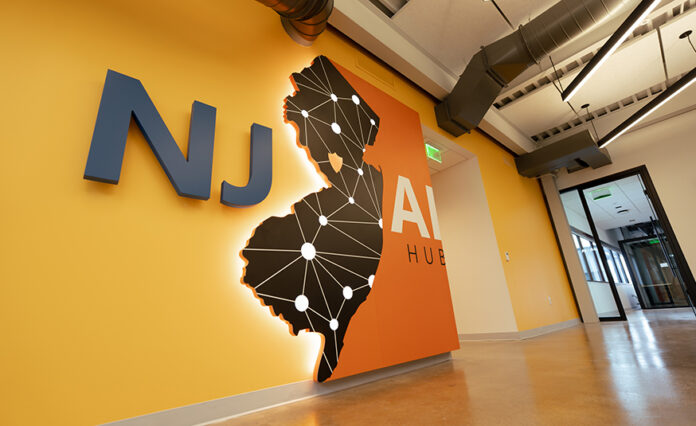

New Jersey is positioning itself at the forefront of a national shift in education policy, advancing a forward-looking initiative designed to modernize curriculum standards in response to the rapid rise of artificial intelligence, digital misinformation, and the increasingly blurred line between fact and fabrication. At the center of this effort is a comprehensive push to strengthen information literacy across all grade levels, equipping students not just to consume information, but to critically evaluate, challenge, and verify it in real time. This is not a marginal adjustment to classroom content—it is a structural recalibration of how knowledge itself is taught, understood, and applied in the modern world.
The proposed revisions reflect a growing recognition that traditional models of education, built for an earlier era of static information and clearly defined sources, are no longer sufficient. Today’s students are navigating an ecosystem where AI-generated content can convincingly mimic human writing, deepfakes can distort reality, and algorithm-driven platforms can amplify false narratives at scale. In this environment, the ability to “identify fact from fiction” is no longer a soft skill—it is a foundational competency, as critical as reading comprehension or mathematical reasoning.
New Jersey’s approach is notable for its breadth and intentionality. Rather than isolating media literacy as a standalone subject, the state is working to embed information literacy into the fabric of the curriculum itself. This means integrating critical analysis into English language arts, incorporating source evaluation into social studies, and even extending these principles into science and technology education, where students must learn to distinguish between credible data and manipulated or misrepresented findings. The goal is to create a continuous learning arc, where students progressively build the skills needed to navigate increasingly complex information landscapes as they advance through the education system.
At the elementary level, this begins with foundational concepts: understanding the difference between opinion and fact, recognizing credible sources, and developing early skepticism toward unverified information. As students move into middle school, the curriculum deepens, introducing them to the mechanics of digital media, the role of algorithms in shaping what they see online, and the ways in which misinformation spreads. By high school, students are expected to engage in advanced analysis, evaluating sources with precision, understanding bias and intent, and applying rigorous standards of verification to both traditional and digital content.
This layered approach reflects a broader philosophical shift. Education is no longer simply about absorbing information; it is about interrogating it. In an age where access to information is effectively unlimited, the differentiator is not what students know, but how they know it—and how confidently they can defend the validity of that knowledge.
The urgency behind this initiative is reinforced by the accelerating role of artificial intelligence in everyday life. AI tools are now capable of generating essays, producing realistic images, and even simulating human conversation with a level of sophistication that can easily mislead those who are unprepared to question what they encounter. New Jersey’s curriculum revisions acknowledge this reality directly, aiming to demystify AI while simultaneously teaching students how to critically assess AI-generated content. Rather than treating AI as a threat to education, the state is framing it as a tool—one that must be understood, contextualized, and used responsibly.
This forward-thinking approach aligns with broader educational trends highlighted across platforms like the <a href=”https://sunset-daily.com/category/education/”>education coverage on Sunset Daily</a>, where the intersection of technology and learning continues to reshape expectations for both students and institutions. The conversation is no longer about whether digital literacy matters, but how deeply it must be integrated into the learning experience to remain relevant.
For educators, the shift presents both an opportunity and a challenge. Teaching information literacy at this level requires new resources, updated training, and a willingness to move beyond traditional pedagogical models. It demands that teachers themselves stay ahead of evolving technologies and understand the mechanisms behind misinformation, from algorithmic amplification to synthetic media generation. In response, New Jersey is expected to support professional development initiatives that ensure educators are equipped to deliver this new curriculum effectively and confidently.
The implications extend far beyond the classroom. By embedding information literacy into the educational system, New Jersey is effectively investing in a more informed, resilient, and critically engaged citizenry. In a time when public discourse is increasingly shaped by digital narratives—many of them misleading or intentionally deceptive—the ability to discern truth from manipulation becomes a cornerstone of civic participation. Students who graduate with these skills are better prepared not only for academic and professional success, but for meaningful engagement in a complex and rapidly changing society.
This initiative also signals a broader commitment to maintaining New Jersey’s position as a leader in education. By proactively addressing the challenges posed by AI and misinformation, the state is not reacting to change—it is anticipating it. That distinction matters. It positions New Jersey as a model for how education systems can evolve in step with technological advancement, rather than lagging behind it.
At its core, this modernization effort is about more than curriculum updates. It is about redefining what it means to be educated in the 21st century. It is about ensuring that students are not passive recipients of information, but active participants in the process of understanding and validating it. And most importantly, it is about preparing the next generation to navigate a world where the line between real and artificial is no longer clearly drawn, but must be critically examined at every turn.
New Jersey’s plan is ambitious, but it is also necessary. In an era defined by information overload and digital ambiguity, the ability to think clearly, question intelligently, and verify rigorously is not just an academic skill—it is a survival skill. And through this initiative, the state is making it clear that its students will be ready.



