


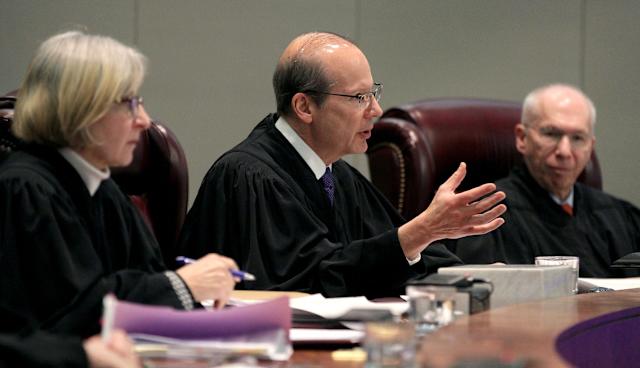

In a decision that is already reshaping the legal and educational landscape across the state, the New Jersey Supreme Court has issued a sweeping ruling that fundamentally alters how accountability is applied within public school systems. The Court’s determination that school districts can be held vicariously liable for sexual abuse committed by educators—even in circumstances that fall outside the traditional scope of employment—marks one of the most consequential developments in New Jersey education law in recent years. This is not a narrow procedural adjustment or a technical clarification. It is a structural shift in how responsibility is defined, enforced, and understood in the context of student safety.
At the center of the ruling are consolidated cases that collectively raised a question with profound implications: can a public school district be held legally responsible for the actions of an employee when those actions occur beyond the formal boundaries of their job duties? For decades, the answer leaned heavily toward limitation, with public entities often shielded by statutory protections under the Tort Claims Act. The Court’s decision changes that equation. By interpreting the Child Victims Act as a deliberate legislative effort to dismantle those protections in cases involving sexual abuse, the Court has opened the door to a broader application of liability—one that reflects the realities of authority, trust, and institutional oversight within educational environments.
The significance of this ruling begins with its recognition of how power operates within schools. Teachers and school employees are not merely individuals performing discrete tasks within defined hours. They are figures entrusted with authority over students’ educational experiences, personal development, and, critically, their safety. The Court’s framework acknowledges that this authority does not simply disappear when the school day ends or when interactions move beyond school property. Instead, it can extend into environments where the boundaries between professional responsibility and personal conduct become blurred, creating conditions where abuse can occur.
By establishing that vicarious liability is not categorically barred in such cases, the Court has reframed the legal conversation. It has moved the focus away from rigid definitions of job scope and toward a more nuanced analysis of how authority is granted, exercised, and perceived. The standard adopted by the Court requires a detailed, fact-specific inquiry, one that examines whether the school conferred authority on the employee, whether that authority facilitated the misconduct, and whether the circumstances could reasonably suggest that the institution tacitly permitted or failed to prevent the behavior.
This approach introduces a level of scrutiny that extends well beyond individual incidents. It places institutional practices, policies, and responses under the microscope. Schools are now required to consider not only whether they have policies in place, but whether those policies are effective, enforced, and responsive to warning signs. Training programs, reporting mechanisms, supervisory structures, and administrative oversight are no longer peripheral considerations. They are central to determining liability.
For New Jersey’s education system, this ruling arrives at a moment when broader questions about funding, equity, and system performance are already dominating the conversation. Recent coverage within the education section reflects a landscape where policymakers and administrators are grappling with structural challenges that extend from budget allocation to student support services. The Supreme Court’s decision adds another layer to that environment, one that intersects directly with governance and operational accountability.
The implications are immediate and far-reaching. School districts across the state must now reassess their risk exposure in a legal environment that no longer provides the same level of immunity. This reassessment is not limited to legal departments. It will require coordinated action across administration, human resources, compliance, and classroom leadership. Policies that may have been considered sufficient under previous interpretations of the law must now be evaluated against a higher standard—one that prioritizes prevention, responsiveness, and transparency.
At the same time, the ruling reinforces the intent of the Child Victims Act as a transformative piece of legislation. Enacted to expand access to justice for survivors of abuse, the Act was designed to remove barriers that had historically limited accountability. The Court’s interpretation affirms that intent, emphasizing that statutory protections for public entities cannot override the imperative to address and remediate harm. In doing so, it aligns legal doctrine with a broader societal shift toward recognizing the long-term impact of abuse and the responsibility of institutions to act decisively in its prevention.
The decision also introduces a practical reality that will shape how cases are litigated moving forward. By rejecting the dismissal of claims at the pleading stage, the Court has made clear that these cases warrant full examination rather than early termination. This means that more claims will proceed to discovery, where evidence related to institutional practices, prior knowledge, and response mechanisms will be scrutinized in detail. For school districts, this increases both the complexity and the stakes of legal proceedings, reinforcing the need for comprehensive documentation and proactive risk management.
Within the Court itself, the ruling was not without debate. The dissenting opinion raised concerns about the expansion of liability beyond traditional boundaries, questioning whether the Legislature intended to create such a broad framework. That perspective reflects an ongoing tension within legal interpretation: how to balance the need for accountability with the potential for increased exposure to claims. However, the majority’s position ultimately prevailed, establishing a precedent that will guide future cases and shape the legal responsibilities of public entities across New Jersey.
For students and families, the ruling represents a significant step toward greater protection and recognition. It acknowledges that the impact of abuse cannot be neatly contained within legal definitions of employment scope. It affirms that institutions entrusted with the care and education of young people must bear responsibility not only for what happens within their walls, but for how their authority extends into the broader environments where students live and interact.
For educators and administrators, the decision underscores the importance of clarity, vigilance, and accountability. It reinforces that professional responsibility is not confined to schedules or locations, but is embedded in the trust placed in those who operate within the education system. That trust, once compromised, carries consequences that extend beyond individual actions to the institutions that enabled them.
As New Jersey continues to navigate a complex educational landscape—balancing funding challenges, evolving student needs, and systemic reform—the Supreme Court’s ruling adds a critical dimension to the conversation. It is a reminder that education is not only about curriculum and outcomes, but about safety, integrity, and the structures that support both.
The path forward will require adaptation. School districts will need to strengthen policies, invest in training, and ensure that reporting and response systems are both accessible and effective. Legal frameworks will continue to evolve as new cases test the boundaries of the Court’s standard. And the broader education community will be called upon to integrate these changes into a system that is already under significant pressure.
What is clear is that this decision has set a new baseline. Accountability in New Jersey’s public schools is no longer defined by narrow interpretations of employment scope. It is defined by the totality of the relationship between institutions, their employees, and the students they are entrusted to protect.