


A devastating sequence of events on Cuthbert Boulevard has ignited a renewed and intensifying conversation about roadway safety in South Jersey, exposing not only the dangers faced by cyclists and pedestrians but also the systemic challenges that often delay meaningful infrastructure change. Within a span of just six hours, two separate incidents involving cyclists occurred along the same corridor in Haddon Township—one of them fatal—transforming what had long been a known concern into a flashpoint for community advocacy, policy scrutiny, and urgent calls for intervention.
The initial tragedy unfolded when a local woman was struck and killed by the driver of a work truck while attempting to cross Cuthbert Boulevard. The circumstances surrounding the crash have left residents shaken and searching for answers, not only about the immediate factors involved but about the broader conditions that allowed such a collision to occur on a roadway that many in the community have long identified as hazardous. Before the shock of that loss could even begin to settle, a second cyclist was struck later that same day, this time by a driver turning into the cyclist’s lane of travel along the same stretch of road. The proximity of the two incidents—both in time and location—has amplified concerns and underscored what many now view as a pattern rather than an isolated event.
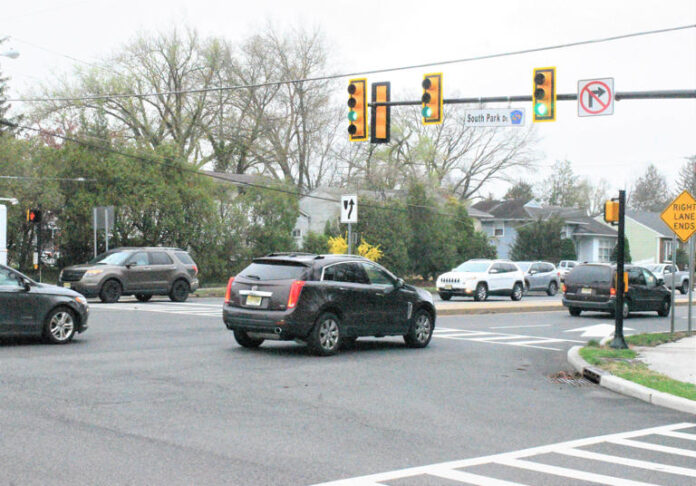
Cuthbert Boulevard, like many multi-lane corridors that cut through densely populated areas, presents a complex mix of challenges. Designed to accommodate significant vehicle traffic, it also intersects with residential neighborhoods, commercial access points, and pedestrian crossings that demand a level of adaptability the roadway has struggled to provide. For cyclists, the environment can be particularly unforgiving. Limited dedicated infrastructure, inconsistent lane markings, and high vehicle speeds combine to create conditions where even routine travel carries elevated risk. For pedestrians, crossing points can feel exposed, especially in areas where visibility, signaling, or traffic calming measures are insufficient.
In the aftermath of the incidents, residents have moved quickly to voice their concerns, calling for immediate safety improvements that range from enhanced signage and traffic calming measures to more comprehensive redesigns that prioritize vulnerable road users. The urgency of these calls reflects a growing recognition that the current configuration of the roadway does not adequately serve all who use it. Community members are not simply reacting to a single tragedy; they are responding to a perceived failure of infrastructure to evolve alongside changing patterns of mobility and usage.
This moment is part of a broader conversation unfolding across New Jersey, where questions of roadway safety, enforcement, and infrastructure investment are increasingly intersecting. Coverage within the law and public safety landscape has consistently highlighted how incidents like these often reveal deeper systemic issues—gaps in planning, delays in implementation, and the complexities of coordinating improvements across multiple levels of government. In many cases, the path from recognition to resolution is neither immediate nor straightforward.
One of the central challenges facing efforts to improve safety along Cuthbert Boulevard is the timeline associated with infrastructure change. While there is clear community momentum behind the push for improvements, the reality is that significant modifications to road design often require extensive planning, funding allocation, and interagency coordination. Engineering studies must be conducted, proposals developed, and approvals secured before construction can even begin. For residents grappling with the immediate aftermath of tragedy, these timelines can feel disconnected from the urgency of the situation.
At the same time, the conversation is beginning to shift toward a more comprehensive understanding of what effective safety improvements entail. Incremental measures—such as additional signage or temporary traffic controls—can provide short-term relief, but they may not address the underlying conditions that contribute to risk. Increasingly, advocates are pointing toward design-based solutions that reconfigure how space is allocated on the roadway. This can include protected bike lanes, improved crosswalk visibility, reduced lane widths to calm traffic, and signal timing adjustments that prioritize pedestrian movement. These approaches reflect a growing body of evidence suggesting that infrastructure design plays a critical role in shaping driver behavior and reducing collision rates.
The incidents on Cuthbert Boulevard also highlight the importance of data in guiding decision-making. Understanding patterns of traffic flow, collision history, and user behavior is essential to developing targeted interventions. However, data alone is not sufficient. It must be coupled with a willingness to act and a framework that allows for timely implementation. In communities across New Jersey, there is increasing pressure on local and state agencies to move beyond reactive responses and toward proactive strategies that anticipate risk before it results in harm.
For Haddon Township, the path forward will likely involve a combination of immediate and long-term actions. In the short term, visible measures that signal a commitment to safety can help restore a sense of confidence among residents. Over the longer term, more substantial investments in infrastructure will be necessary to create a roadway that accommodates the full spectrum of users—drivers, cyclists, and pedestrians alike. Achieving that balance requires not only technical expertise but also sustained engagement with the community, ensuring that proposed solutions reflect the lived experiences of those who navigate the corridor ყოველდღ.
What has become unmistakably clear is that the status quo is no longer acceptable to those who live, work, and travel along Cuthbert Boulevard. The dual incidents have transformed concern into urgency, and urgency into action. Residents are organizing, advocating, and demanding that safety be treated as a priority rather than a deferred objective. Their message is direct: the cost of inaction is too high, and the time for incremental change has passed.
This moment also serves as a broader reflection on how New Jersey approaches roadway safety in an era of evolving mobility. As more residents embrace cycling, walking, and alternative forms of transportation, infrastructure must adapt accordingly. The traditional model—one that prioritizes vehicle throughput above all else—is increasingly at odds with the needs of modern communities. Reimagining that model requires a shift in perspective, one that places safety, accessibility, and inclusivity at the center of design and policy decisions.
The tragedy on Cuthbert Boulevard is a stark reminder of what is at stake when that shift does not occur quickly enough. It is a call to action that extends beyond a single roadway, challenging policymakers, planners, and communities to rethink how safety is defined and delivered across the state. For Haddon Township, the immediate focus remains on honoring the life lost and supporting those affected. For New Jersey as a whole, the challenge is to ensure that such events lead to meaningful, lasting change—transforming a moment of loss into a catalyst for a safer future.