


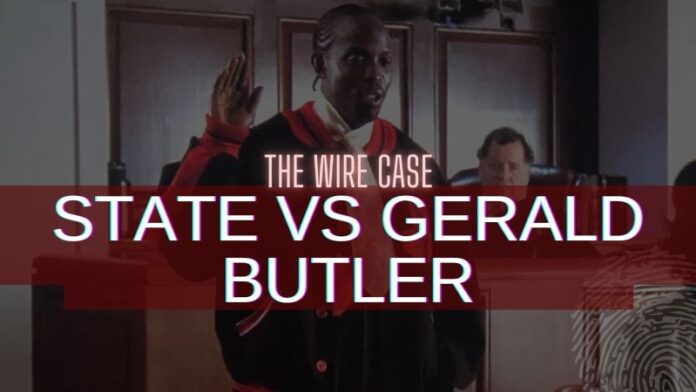

In a decision that is already reverberating through courtrooms, prosecutor offices, and defense strategy sessions across New Jersey, the New Jersey Supreme Court has delivered a forceful reminder that the integrity of a criminal trial is not measured by any single misstep, but by the totality of what a jury sees, hears, and is asked to believe. The ruling in State v. Gerald W. Butler resets the boundaries of prosecutorial conduct and reinforces a core constitutional principle: even when individual errors appear harmless in isolation, their combined weight can quietly erode the foundation of a fair trial.
The case stems from an investigation initiated by the Cumberland County Prosecutor’s Office Organized Crime Bureau in response to a series of violent incidents in Millville. Importantly, Gerald Butler was never directly tied to those shootings. His involvement emerged indirectly, through surveillance tied to wiretapped communications in which individuals discussed facilitating a firearm purchase. That distinction—between proximity to criminal conduct and direct participation—would later become central to the Supreme Court’s analysis.
Law enforcement ultimately secured a warrant and searched an apartment Butler had been observed entering. Inside, officers recovered heroin, cocaine, drug-related paraphernalia, and two revolvers. The leaseholder initially implicated Butler as the owner of one of the firearms, only to later recant. Butler was arrested and charged, setting in motion a trial that would ultimately become a case study in how courtroom framing can shape perception as much as evidence itself.
Before trial began, the defense took deliberate steps to limit potential prejudice. They sought to sanitize references to the existence of a search warrant, requesting that the State use the neutral phrase “lawful search” rather than language that might imply judicial endorsement of suspicion. The court agreed, and the State indicated its compliance. There were also efforts to limit references to the Organized Crime Bureau, recognizing that such terminology carries inherent weight and could influence how jurors interpret the nature of the alleged conduct. Those guardrails, however, proved difficult to maintain once proceedings began.
From the outset, the tone of the trial shifted. During opening statements, the prosecution invoked the HBO series The Wire, a cultural touchstone known for its portrayal of entrenched violence, systemic crime, and complex criminal enterprises. The reference was not subtle. It introduced a narrative framework that extended far beyond the specific facts at issue, inviting jurors to contextualize the case within a broader—and far more dramatic—depiction of urban criminality. Defense objections were immediate but unsuccessful.
As the trial progressed, that narrative deepened. Witnesses, many affiliated with the Organized Crime Bureau, repeatedly referenced themes of gun violence, weapons trafficking, and large-scale criminal activity. The prosecution’s questioning, while often grounded in investigative context, frequently ventured into territory that blurred the line between relevant evidence and broader societal concerns. Despite earlier agreements, references to the “search warrant” resurfaced throughout testimony, reintroducing precisely the language the court had sought to avoid.
At the conclusion of the trial, Butler was acquitted of weapons-related charges but convicted on controlled dangerous substances offenses. The Appellate Division upheld those convictions, finding no reversible error in the proceedings. On its face, the outcome suggested a jury capable of distinguishing between different categories of evidence and charges. But the Supreme Court saw a more complex picture.
Writing for a unanimous Court, Justice Michael Noriega approached the case through a constitutional lens that prioritizes fairness not as an abstract concept, but as a measurable standard. The Court reaffirmed that when evaluating claims of improper conduct, the central inquiry is whether the actions in question had the capacity to prejudice the jury and compromise the integrity of the proceedings. Crucially, when multiple errors are alleged, the analysis does not stop at examining each one in isolation. Instead, the Court must assess whether their cumulative effect rendered the trial fundamentally unfair.
The Court first addressed the reference to The Wire. While acknowledging that the comparison was unnecessary and carried the potential to improperly frame the case, the justices concluded that this single instance did not, by itself, rise to the level of reversible error. The reference was limited, the jury received instructions to base its verdict solely on the evidence, and the record contained substantial proof supporting the drug-related convictions. Standing alone, the analogy did not clearly produce an unjust outcome.
The analysis then turned to the broader pattern of extra-evidentiary references. Here, the Court expressed sharper concern. By constructing a narrative infused with themes of widespread violence and organized criminal activity—elements not directly tied to Butler—the State risked creating associations that extended beyond the evidence. This approach, the Court noted, had the potential to mislead jurors by linking the defendant to uncharged conduct and community-wide wrongdoing. Yet even these repeated references, viewed independently, were not deemed sufficient to overturn the conviction.
The issue of the search warrant presented a similar dynamic. Despite explicit instructions and prior agreement, the prosecution repeatedly elicited testimony referencing the warrant and Butler’s status as its target. The Court recognized that such references can carry implicit weight, suggesting judicial validation of suspicion. However, the fact that Butler was acquitted on the weapons charges indicated that the jury was not wholly swayed by these implications. Again, in isolation, the error did not mandate reversal.
It was only when these elements were considered together that the full impact became clear. The Supreme Court’s conclusion was direct and unambiguous: the cumulative effect of these errors could not be ignored. The prosecution’s framing of the case, taken as a whole, blurred the distinction between admissible evidence and emotionally charged narrative. It introduced a risk that the jury’s decision-making process was influenced not just by what was proven, but by what was suggested, implied, and reinforced through repetition.
That risk, the Court held, crossed a constitutional line. The integrity of the proceedings had been compromised, not through a single decisive error, but through the aggregation of multiple missteps that collectively shaped the trial environment. As a result, Butler’s convictions were reversed, and the matter was remanded for a new trial.
The implications of this ruling extend well beyond a single case. For prosecutors, it serves as a clear directive to maintain strict adherence to evidentiary boundaries and to avoid narrative strategies that introduce external associations or emotional overlays. For defense attorneys, it reinforces the importance of preserving objections and building a record that captures not just isolated incidents, but patterns of conduct. And for the courts, it underscores the responsibility to evaluate fairness holistically, recognizing that the cumulative impact of seemingly minor errors can be as consequential as any single violation.
Across New Jersey’s legal landscape, the Butler decision is poised to influence how trials are conducted, argued, and reviewed. It reaffirms that the right to a fair trial is not a technicality or a formality. It is a living standard, one that demands vigilance at every stage of the process. When that standard is compromised—even incrementally—the justice system must be prepared to act.
For Sunset Daily News readers following developments in law and order across the state, this ruling marks a pivotal moment. It is a reminder that the courtroom is not just a venue for adjudicating guilt or innocence, but a space where the principles of fairness, restraint, and constitutional protection must be actively upheld. As this case returns to trial, its legacy will already be shaping how justice is pursued throughout New Jersey, reinforcing a standard that is as demanding as it is essential.



