


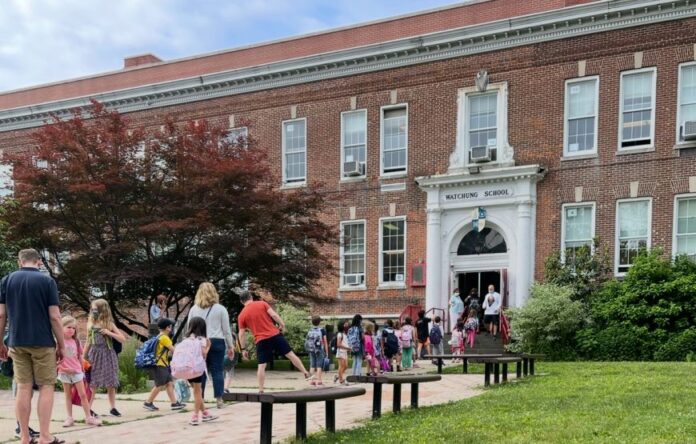

Montclair, New Jersey—long regarded as one of the state’s most academically ambitious and culturally vibrant communities—is now facing a defining fiscal reckoning that is reshaping its public education system in real time. What began as a concerning budget imbalance has evolved into a full-scale financial crisis, exposing structural weaknesses in school funding, intensifying pressure on taxpayers, and forcing difficult decisions that will reverberate across classrooms, households, and the broader local economy for years to come.
At the center of the crisis is a staggering deficit that has climbed to nearly $20 million, a figure that reflects not a single-year anomaly but a cumulative failure of financial oversight, escalating operational costs, and the abrupt expiration of temporary pandemic-era funding streams. The discovery of the shortfall in 2025 set off a chain reaction that continues to unfold, revealing deeper concerns about budgeting practices, long-term planning, and the sustainability of Montclair’s education model.
The financial gap is rooted in several converging factors. Years of unbudgeted expenditures, including rising health insurance obligations and unpaid transportation contracts, quietly eroded the district’s fiscal stability. At the same time, federal relief funds that had temporarily masked underlying imbalances expired, leaving a structural deficit exposed. Reports of questionable accounting methods—described by some as “creative math”—have further fueled public skepticism and raised urgent questions about governance and accountability.
In response, the district turned to voters in March 2026 with a two-part referendum designed to stabilize finances and chart a path forward. The results reflected a community deeply divided over how to address the crisis. Voters approved a one-time tax levy totaling $12.6 million, providing immediate relief to cover prior-year obligations. For the average homeowner, this translated into an additional tax burden of over $1,000, layered onto property tax bills that already rank among the highest in New Jersey.
However, the second—and arguably more consequential—question was narrowly rejected. That proposal sought to implement a permanent $5 million annual tax increase to support ongoing operating expenses and prevent recurring deficits. Its failure has left the district with a persistent funding gap, forcing officials to consider stopgap measures, including the possibility of a state loan that would trigger formal oversight through a fiscal monitor.
This outcome has intensified an already fraught conversation within Montclair. Residents are now grappling with the reality that the one-time tax infusion, while necessary, does not resolve the underlying structural imbalance. Instead, it postpones a larger reckoning, one that will require either sustained revenue increases or continued reductions in services—choices that carry significant social and economic consequences.
The impact on the district’s schools has been immediate and profound. In late 2025, more than 100 positions were eliminated, marking one of the most significant workforce reductions in the district’s history. Additional cuts are now on the table for the 2026–2027 academic year, including the elimination of dozens of teaching roles across middle schools, high schools, and elementary levels. These reductions are not abstract line items; they translate directly into larger class sizes, diminished course offerings, and reduced support for students.
Programmatic changes are also reshaping the educational landscape. Plans to repurpose Renaissance at Rand Middle School into a dedicated pre-kindergarten center are projected to generate meaningful cost savings, but they also signal a broader shift in how the district allocates resources and prioritizes programming. Meanwhile, transportation services are being scaled back, with stricter eligibility thresholds that will require more families to manage their own logistics.
Extracurricular activities—often considered essential to student engagement and development—are not immune. The proposed elimination of freshman sports underscores the extent to which the district is being forced to reconsider even its most foundational offerings. For many families, these changes represent a tangible loss of opportunity and a departure from the comprehensive educational experience that has long defined Montclair’s public schools.
Beyond the classroom, the financial crisis is reshaping the fabric of the community itself. Montclair’s property taxes have long been a point of contention, but the current situation has amplified concerns about affordability and long-term residency. With average annual tax bills exceeding $22,000, the addition of new levies—even temporary ones—has pushed some households to the brink. Longtime residents, including retirees and those without school-aged children, are increasingly questioning whether they can remain in the community.
This tension has created a deeply polarized local environment. On one side are residents who view increased investment in schools as essential to preserving property values, community identity, and educational excellence. On the other are those who argue that the current trajectory is unsustainable, advocating for fiscal restraint and structural reform. The result is a civic landscape marked by passionate debate, competing priorities, and no easy consensus.
The prospect of state intervention looms as a critical inflection point. Should the district pursue a loan to cover its remaining deficit, the appointment of a state fiscal monitor would introduce a new layer of oversight, potentially reshaping decision-making authority and limiting local control. For some, this represents a necessary corrective measure; for others, it raises concerns about autonomy and the long-term implications of external governance.
Looking ahead, the preliminary budget for the 2026–2027 school year signals that financial pressures are far from easing. A tax rate increase approaching 4 percent is already anticipated, alongside additional annual cost increases for homeowners. These projections underscore the reality that Montclair’s fiscal challenges are not confined to a single budget cycle but are part of a broader structural issue that will require sustained attention and strategic planning.
Within this context, the broader conversation around education funding in New Jersey is gaining renewed urgency. Montclair’s experience is not isolated; it reflects systemic challenges faced by districts across the state, including rising costs, fluctuating funding streams, and the complex interplay between local taxation and educational equity. As communities seek solutions, the need for transparent governance, responsible budgeting, and innovative approaches to funding has never been more apparent.
Coverage across the education section continues to highlight how districts statewide are navigating similar pressures, adapting to shifting economic realities while striving to maintain academic standards and student support systems. Montclair’s situation, however, stands out for its scale, visibility, and the intensity of its community response.
What emerges from this moment is not simply a financial crisis but a pivotal test of how a community defines its priorities and navigates competing demands. The decisions made in the months ahead will shape not only the future of Montclair’s schools but also the character and accessibility of the town itself.
As residents, educators, and policymakers continue to confront these challenges, one reality is clear: the path forward will require more than temporary fixes. It will demand a comprehensive reassessment of funding structures, accountability mechanisms, and the shared commitment to sustaining a public education system that meets the expectations of one of New Jersey’s most engaged—and now most tested—communities.



