


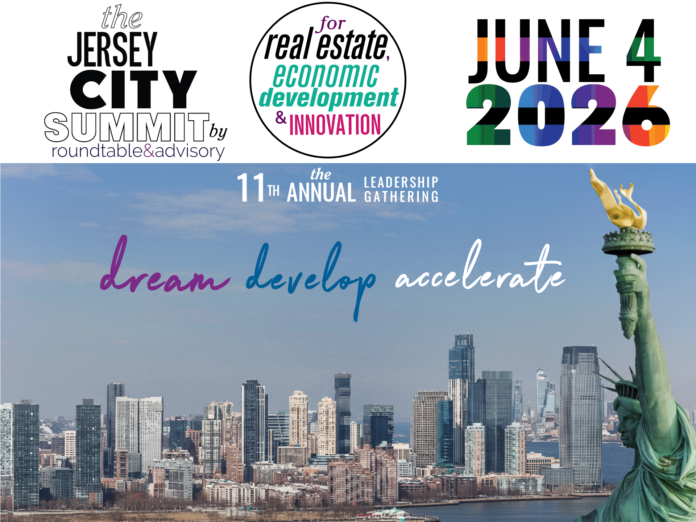

The convergence of real estate, economic development, and innovation in New Jersey is no longer theoretical—it is operational, urgent, and increasingly consequential for how people live, work, and afford life across the state. On June 4, 2026, that convergence will take center stage as the Jersey City Summit for Real Estate, Economic Development & Innovation returns for its 11th anniversary gathering, bringing together the region’s most influential decision-makers at Harborside along the Hudson River waterfront. At a moment when housing affordability, capital markets, and urban transformation are colliding in real time, the Summit is positioned not simply as an event, but as a strategic checkpoint for where New Jersey is headed next.
Created by Jersey Digs and hosted in partnership with The 601W Companies, this year’s Summit arrives with heightened relevance. Harborside itself is undergoing a significant repositioning, evolving into a mixed-use district designed around a modern live–learn–work–play framework. That transformation mirrors a broader shift underway across Jersey City and the surrounding region, where legacy office corridors are being reimagined as dynamic ecosystems blending residential, commercial, cultural, and innovation-driven uses. The Summit’s physical setting is not incidental; it is an active case study in the themes that will dominate the day’s conversations.
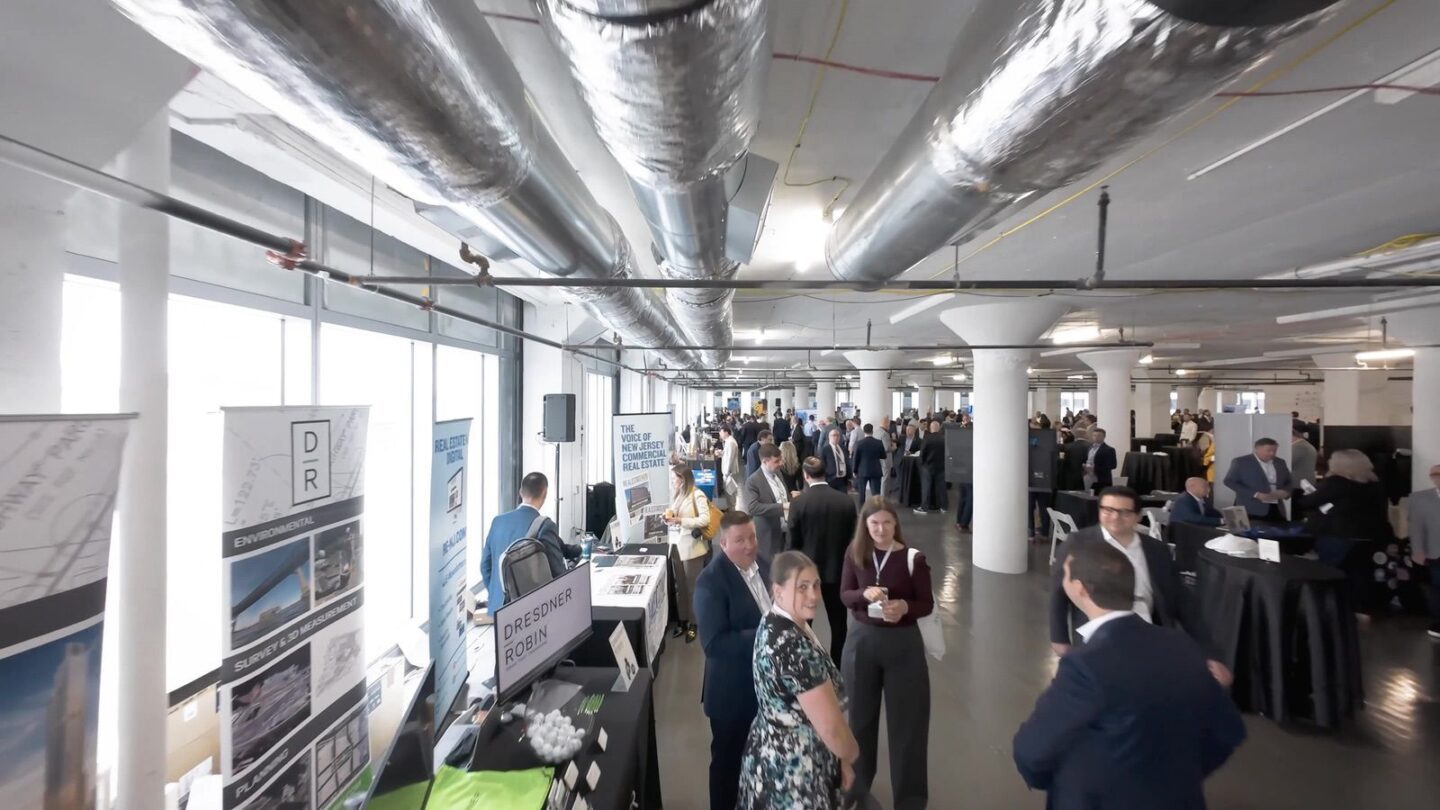
More than 1,250 leaders from across real estate, finance, government, and development are expected to attend, reinforcing the Summit’s status as a cornerstone gathering for the Tri-State region. What began as a targeted industry event has matured into an annual homecoming for top-tier firms, institutional investors, public officials, and operators who collectively shape the built environment of New Jersey. The demand profile remains strong, with attendance anticipated to reach capacity, reflecting the urgency surrounding the issues on the agenda.
Confirmed speakers for this year include:
James Solomon, Mayor, City of Jersey City
Keshav Podal, Deputy Mayor for Housing, City of Jersey City
Denise Ridley, Council President, City of Jersey City
James McCann, Partner, Connell Foley
W. Nevins McCann, Co-Chair – Real Estate & Land Use Groups, Connell Foley
Melanie Walter, Executive Director, NJHMFA
Stephen Cea, Executive Director, Jersey City Housing Authority
Tim Henkel, President & CEO, Pennrose
Jose Cruz, Senior Managing Director – Capital Markets, JLL
Fred Cooper, Founder, Fin River Advisors
Laurent Morali, Chief Executive Officer, Kushner
Frank Cretella, Co-Founder & Managing Principal, Landmark Companies
Paul Silverman, Co-Founder & Principal, SILVERMAN & And Coworking
Jennifer Porter – Practice Group Leader, CSG Law
Joseph Altobelli, President & CFO, Bond Vet
Wasseem Boraie, Managing Principal, Boraie Development
Christopher Albanese, President, The Albanese Organization
Frank Monterisi, Executive VP, Related Companies
Aaron Shiran, Principal & Managing Director, Lions Group
William Rosato – Managing Partner, Alpine Residential
Mira Prinz-Arey, Executive Director, JCEDC
Bret Schundler, Founder, School Partners
David Wolfe, Managing Partner, Skoloff & Wolfe
Abe Naparstek, Partner & COO, G&S Investors
Gerard Pizzillo, Partner, Genova Burns
Kenneth Pasternak, Executive Chairman & CEO, KABR Group
Rob Naso, Managing Partner, BGO
Paul Hoffman, President & CEO, Liberty Science Center & SciTech Scity
Andres Acebo, President, NJCU
Sean Saadeh – Chief Programming Officer, Harris Blitzer Sports & Entertainment
Drew Fletcher – President, Greystone Capital Advisors & Greystone Construction
Hubert Benitez, President, Saint Peter’s University
Matthew Posado, Co-Chair – Land Use & Development, Sills Cummins & Gross
Jeff Mooallem, COO, Urban Edge
Sam Bernstein, COO, Chelsea Piers
Christine Goodman, Director of Cultural Affairs, City of Jersey City
Emory Edwards, President, Hudson Chamber of Commerce
Meredith Marshall, President & CEO, BRP Companies
And many more.
Topics to be discussed include:
Mayor’s Fireside Chat
Office – Growth, Capital, Talent, Placemaking
Capital Markets, Finance, Tax & Incentives
Affordable Housing
Saint Peter’s & NJCU Fireside Chat
Placemaking / Arts & Culture
Innovation & Technology
Multifamily
Emerging Markets & Region
Office & Innovation
And much more.
Attend the event to gain insights from the leaders behind the region’s most transformative initiatives and to connect with the people shaping its future.
For the full list of speakers, event details, and registration, visit the Jersey City Summit’s official website.
The program will take over the fourth floor of Harborside 1, offering panoramic views of the Manhattan skyline as a backdrop for a full day of high-level dialogue. The setting underscores a fundamental reality: Jersey City is no longer operating in the shadow of New York City—it is actively defining its own trajectory as a primary node of investment, talent, and development. The Summit’s panels and fireside discussions are structured to reflect that evolution, focusing on capital flows, emerging market dynamics, and the interplay between public policy and private-sector execution.
Among the confirmed speakers are key public officials and industry leaders, including Jersey City Mayor James Solomon, Deputy Mayor for Housing Keshav Podal, Council President Denise Ridley, and a deep roster of executives spanning firms such as Connell Foley, JLL, Pennrose, Kushner, Related Companies, and Greystone. Academic and institutional voices from New Jersey City University and Saint Peter’s University will also contribute, reinforcing the Summit’s multidisciplinary perspective. The presence of leaders from organizations like the Jersey City Housing Authority, NJHMFA, and Liberty Science Center further expands the conversation beyond pure development into infrastructure, education, and long-term economic sustainability.
The agenda is structured around the forces currently reshaping the region. Discussions on capital markets and financing will address the realities of elevated interest rates, shifting investment strategies, and the increasing complexity of structuring viable projects. Panels focused on affordable housing will examine both policy frameworks and execution challenges, particularly as demand continues to outpace supply. Sessions on office space, placemaking, and innovation will explore how cities are adapting to hybrid work models and evolving tenant expectations, while conversations on arts, culture, and community integration will highlight the role of experience in driving long-term value.
What elevates the importance of this year’s Summit is the broader economic context in which it is taking place—specifically, the growing strain on affordability across New Jersey, including the Jersey Shore. The concept of “middle class” in the state has undergone a quiet but profound redefinition. Based on recent income benchmarks, middle-class households in New Jersey fall roughly between $69,529 and $208,588, with a median around $104,294. Yet income alone no longer tells the full story. The cost structure associated with living in key regions, particularly coastal communities, has shifted dramatically.
At the Jersey Shore, housing costs remain the primary driver of this shift. Average rents are now approximately $2,158 per month, with larger units approaching or exceeding $3,000. Home prices in many Shore towns routinely range from the high $600,000s to well over $1 million. These figures are compounded by property taxes that rank among the highest in the nation, along with rising homeowners and flood insurance premiums that can add hundreds to thousands of dollars annually to household expenses. The result is a financial environment where even households earning within traditional middle-class ranges are increasingly stretched.
The widely referenced affordability benchmark—allocating no more than 30 percent of gross income to housing—has become increasingly difficult to maintain. In practical terms, a household earning $75,000 annually and paying $2,500 per month in housing costs is already dedicating roughly 40 percent of its income to that single expense, placing it firmly in the category of being housing-cost burdened. This dynamic is not isolated; it is becoming the norm across multiple counties, including Monmouth, Ocean, Atlantic, and Cape May.
This is where the Jersey City Summit’s relevance extends beyond industry dialogue into real-world impact. The decisions, strategies, and partnerships discussed within its panels directly influence the supply of housing, the structure of financing, and the policies that govern development. As affordability challenges intensify, the alignment between public and private sectors becomes increasingly critical. The Summit provides a platform for that alignment, enabling stakeholders to address not only what is being built, but how it is being financed, who it serves, and whether it is sustainable in the current economic climate.
The inclusion of sessions on innovation and technology further underscores the evolving nature of real estate itself. Development is no longer confined to physical structures; it is increasingly integrated with digital infrastructure, data analytics, and operational technologies that enhance efficiency and user experience. From smart building systems to data-driven planning, technology is becoming a core component of how projects are conceived and executed. This aligns with broader trends covered across Sunset Daily’s real estate reporting, where the intersection of technology and development continues to redefine industry standards.
Equally important is the Summit’s focus on placemaking and cultural integration. As cities compete for talent and investment, the ability to create environments that are not only functional but engaging has become a differentiator. This includes everything from public spaces and cultural programming to partnerships with educational institutions and community organizations. The presence of leaders from cultural affairs, chambers of commerce, and academic institutions reflects a recognition that economic development is inherently multidimensional.
For businesses, investors, and policymakers operating in New Jersey, the Jersey City Summit represents a critical opportunity to recalibrate strategies in light of current market conditions. It is a venue where macroeconomic trends meet local execution, where capital strategies intersect with community needs, and where the future of the state’s real estate landscape is actively debated and defined.
As June 4 approaches, the significance of the Summit extends beyond its agenda. It embodies a broader moment of transition for New Jersey—a state navigating growth, affordability, and innovation simultaneously. The conversations that take place within Harborside will not remain confined to the room; they will influence the projects that move forward, the policies that are shaped, and the economic realities that residents experience in the years ahead.