



A pivotal leadership transition is underway at Atlantic Cape Community College, as the institution’s board of trustees has formally appointed Jason Abreu, Ed.D., as its next president. The appointment signals both continuity and forward momentum for one of South Jersey’s most important educational institutions, as Abreu prepares to succeed Barbara Gaba, who will retire on June 30 after nine years at the helm and a distinguished 40-year career in higher education leadership.
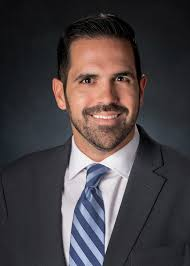
The decision comes at a defining moment for community colleges across New Jersey, where institutions are being asked to do more than ever—serving as engines of workforce development, access points for first-generation students, and hubs of regional economic growth. Atlantic Cape, which serves communities across Atlantic and Cape May counties, stands at the intersection of these expectations, making the selection of its next president particularly consequential.
Dr. Abreu enters the role with more than two decades of experience spanning multiple dimensions of higher education leadership. Most recently, he served as vice president of student affairs at Tarrant County College’s Trinity River Campus in Fort Worth, where his work focused on enhancing student engagement, retention, and overall institutional effectiveness. His career also includes senior leadership roles at Furman University in Greenville and Miami Dade College, one of the largest and most diverse higher education institutions in the country.
This breadth of experience reflects a leadership profile that is both operationally grounded and strategically oriented. Abreu’s work has consistently emphasized student success, access, and measurable outcomes—areas that are increasingly central to the mission of community colleges navigating a rapidly changing educational landscape. His ability to integrate data-driven decision-making with collaborative institutional culture has been cited as a defining strength, aligning closely with the priorities articulated by Atlantic Cape’s leadership.
Board Chair Daniel Money highlighted these qualities in announcing the appointment, noting Abreu’s track record in building systems that support both students and institutional growth. The board’s selection reflects a deliberate effort to position the college for its next phase of development, one that will require both stability and innovation as it responds to evolving student needs and workforce demands.
Abreu’s own perspective on the role is shaped by personal experience as a first-generation college graduate, a background that informs his commitment to expanding access and opportunity. His approach to leadership is rooted in the belief that higher education serves as a transformative force, capable of altering life trajectories and strengthening communities. This philosophy is particularly relevant in the context of Atlantic Cape’s service area, where the college plays a critical role in providing educational pathways for a diverse and often underserved population.
The transition also marks the conclusion of a significant era under Dr. Barbara Gaba, whose tenure has been defined by steady leadership and institutional advancement. Over nine years, Gaba guided the college through periods of both growth and challenge, maintaining a focus on academic quality, community engagement, and fiscal responsibility. Her broader career, spanning four decades, reflects a sustained commitment to higher education and public service, leaving a legacy that will shape the institution well beyond her retirement.
As Atlantic Cape looks ahead, the challenges facing the institution mirror those confronting community colleges nationwide. Enrollment patterns continue to shift, influenced by demographic changes, economic conditions, and evolving perceptions of higher education value. At the same time, employers are placing increased emphasis on workforce-ready skills, creating demand for programs that align closely with regional economic needs. Balancing these dynamics requires leadership that is both adaptive and forward-thinking.
Abreu’s experience across the K-20 education spectrum and his work with nonprofit, private, and public partners position him to address these challenges through integrated strategies. His focus on workforce readiness and community engagement aligns with broader state and regional priorities, particularly as New Jersey continues to emphasize the role of education in economic development. By strengthening partnerships with local industries and organizations, Atlantic Cape has the opportunity to expand its impact beyond traditional academic pathways, contributing directly to the region’s economic vitality.
The appointment also reflects a broader trend within higher education toward leaders who can navigate complexity with precision. Modern college presidents are expected to function not only as academic leaders but also as strategists, fundraisers, community ambassadors, and operational executives. Abreu’s background suggests a readiness to meet these demands, bringing a combination of administrative expertise and mission-driven focus to the role.
Within the Sunset Daily News education landscape, this leadership transition stands as a significant development, highlighting both the importance of institutional continuity and the necessity of strategic evolution. Atlantic Cape Community College is not simply undergoing a change in leadership; it is positioning itself for a future defined by innovation, collaboration, and expanded opportunity.
As Dr. Jason Abreu prepares to assume the presidency, the expectations are clear. The college will look to build on its existing strengths while exploring new avenues for growth and impact. The success of this transition will be measured not only by institutional metrics but by the experiences of the students and communities the college serves.
In a state where education remains a cornerstone of economic and social progress, the leadership of institutions like Atlantic Cape Community College carries significant weight. The appointment of Abreu represents both a continuation of that responsibility and an opportunity to redefine how it is fulfilled in the years ahead.