


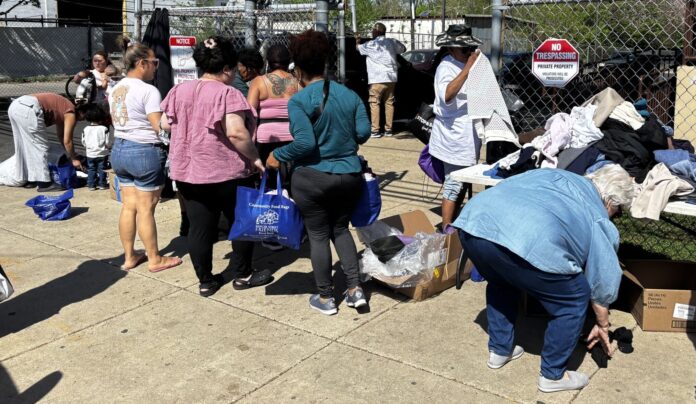

New Jersey’s nonprofit sector is warning that the state’s ongoing budget pressures are no longer creating isolated financial challenges inside charitable organizations. According to growing concerns emerging from nonprofit leadership across the state, the cuts now moving through New Jersey’s fiscal environment are beginning to reshape the ability of communities to access food assistance, housing support, healthcare navigation, youth programming, addiction recovery services, senior care initiatives, disability advocacy, arts education, workforce development, legal aid, and countless local support systems that millions of residents rely upon every year. What is becoming increasingly clear is that this is not simply a conversation about nonprofit organizations struggling internally. It is rapidly becoming a broader economic, workforce, and public infrastructure issue with statewide consequences.
A recent opinion piece from nonprofit advocate Linda Czipo brought renewed attention to the growing instability affecting the sector, particularly as New Jersey navigates another difficult fiscal year filled with budget constraints, competing priorities, and difficult spending decisions. The warning coming from nonprofit leaders is direct: cuts to public funding are not occurring in a vacuum. They are affecting real operational capacity across organizations that provide critical frontline services throughout the state every single day. Survey data referenced in the discussion showed that nearly 40 percent of New Jersey nonprofits reported experiencing funding reductions, creating an environment where organizations are increasingly being asked to do more with substantially fewer resources.
The concern extends far beyond traditional charity work. New Jersey’s nonprofit sector represents one of the state’s largest economic engines, employing roughly one out of every ten workers statewide. That number alone changes the entire framing of the conversation. Too often, nonprofits are discussed exclusively through the lens of volunteerism or philanthropy, when in reality they represent a massive employment sector that supports families, stabilizes local economies, contracts with governments, leases commercial properties, purchases services, creates regional investment activity, and fills operational gaps that neither private corporations nor government agencies can efficiently manage alone.
The economic impact becomes even more significant when examining how deeply integrated nonprofit organizations are within the broader public service ecosystem. In many communities throughout New Jersey, nonprofits are effectively functioning as extensions of public infrastructure. They operate food banks that reduce hunger burdens. They manage after-school programs that support working families. They oversee addiction recovery initiatives during an ongoing behavioral health crisis. They coordinate affordable housing access in one of the most expensive states in America. They assist veterans, senior citizens, immigrants, individuals with disabilities, domestic violence survivors, and countless underserved residents who would otherwise have nowhere to turn for immediate support.
When state funding is reduced, the consequences rarely remain confined to balance sheets. Staffing levels are impacted. Waiting lists expand. Program hours shrink. Outreach capacity disappears. Emergency assistance becomes more limited. Entire service areas sometimes vanish altogether, especially in lower-income or rural communities where alternative support systems simply do not exist. In many cases, residents do not fully recognize how much these organizations shape daily life until those services begin disappearing.
The nonprofit sector’s warning about private philanthropy also carries substantial weight. One of the more important realities emerging from this discussion is the growing misconception that charitable donations alone can compensate for reduced government investment. Nonprofit leaders across New Jersey continue stressing that philanthropy, while critically important, cannot realistically replace large-scale public funding infrastructure. Major donors and foundations can help support innovation, special initiatives, pilot programs, and emergency stabilization efforts, but they are rarely positioned to permanently absorb broad operational responsibilities previously supported through government budgets.
That distinction matters enormously because many nonprofits are now operating inside a dangerous financial contradiction. Demand for services continues increasing due to inflation, housing costs, food insecurity, healthcare instability, and economic uncertainty, while funding streams simultaneously become less predictable. The result is an operational squeeze affecting organizations of nearly every size. Smaller community-based nonprofits often face the harshest challenges because they typically lack the reserve capital, fundraising infrastructure, or institutional relationships necessary to absorb extended funding disruptions.
The broader implications for New Jersey’s economy are also becoming harder to ignore. Nonprofits are employers. They provide payroll. They contribute tax revenue through employee spending and commercial activity. They occupy office space. They support vendors. They contract with businesses. They create secondary employment ecosystems surrounding healthcare, education, social services, arts programming, and public engagement initiatives. Weakening this sector does not merely reduce charity work. It weakens labor markets and local economic circulation throughout the state.
This conversation arrives during a period when New Jersey already faces growing concerns involving affordability, housing instability, workforce retention, healthcare access, and rising operational costs for both public and private institutions. The pressure being placed on nonprofits effectively compounds many of those existing structural challenges. In communities already struggling economically, reductions in nonprofit services can quickly accelerate broader instability, particularly for vulnerable populations dependent on support networks that may now be operating with fewer employees, fewer resources, and less capacity.
The political complexity surrounding state budget decisions also cannot be ignored. New Jersey’s fiscal environment remains difficult. Policymakers are balancing transportation concerns, pension obligations, education funding, healthcare expenditures, infrastructure demands, economic development initiatives, and long-term debt realities simultaneously. However, nonprofit advocates increasingly argue that treating nonprofit funding as optional or secondary spending misunderstands the essential role these organizations now play inside the state’s operational framework.
There is also growing frustration within portions of the nonprofit community regarding how the sector is publicly perceived compared to its actual functional importance. Many organizations believe their work is routinely undervalued because it occurs quietly and without the visibility associated with major corporate development projects or political initiatives. Yet during crises — whether involving public health emergencies, natural disasters, food insecurity, homelessness, or economic instability — nonprofit organizations are frequently among the first responders providing direct assistance on the ground.
The pandemic years demonstrated this reality clearly. Nonprofits across New Jersey became essential logistical and humanitarian lifelines for communities struggling with unemployment, housing insecurity, mental health challenges, childcare disruptions, and food access. Many organizations expanded services dramatically during that period despite enormous operational stress. Now, only a few years later, many of those same organizations are confronting a funding environment that threatens their ability to sustain even baseline service levels.
Another emerging concern involves workforce retention throughout the nonprofit sector itself. As funding uncertainty grows, many organizations are struggling to maintain competitive salaries, retain experienced staff members, or prevent burnout among workers already carrying overwhelming caseloads. That issue becomes particularly dangerous because nonprofit expertise is often deeply relationship-driven and community-specific. Losing experienced staff can significantly reduce institutional knowledge and weaken long-term program effectiveness.
The timing of these funding concerns also intersects with broader national debates surrounding public-private partnerships, social service delivery, and the long-term sustainability of community support systems. Across the country, states are increasingly relying on nonprofit organizations to administer essential programs while simultaneously placing those same organizations under mounting financial strain. New Jersey is now confronting many of those same structural tensions in increasingly visible ways.
For residents who may not immediately see themselves connected to the nonprofit sector, the reality is that nearly every community in New Jersey is directly affected by its stability. Hospitals partner with nonprofits. Schools depend on nonprofit programming. Municipalities coordinate with nonprofit service providers. Families utilize nonprofit childcare support, arts programs, youth athletics, counseling services, and elder care assistance. The sector’s reach extends into virtually every aspect of civic life.
What makes the current moment especially significant is the growing recognition that these funding reductions may create long-term consequences rather than temporary disruptions. Once programs disappear, rebuilding them can take years. Once experienced staff leave the sector, replacing them becomes difficult. Once community trust erodes due to service instability, recovery becomes even harder. Many nonprofit leaders now fear that short-term fiscal decisions could ultimately create deeper long-term costs for both government and residents alike.
At the center of the debate is a larger philosophical question about how New Jersey defines public investment. Nonprofit advocates increasingly argue that supporting community-based organizations should not be viewed as discretionary spending but rather as preventive infrastructure investment that stabilizes communities before larger crises emerge. The argument is straightforward: preventing homelessness costs less than responding to chronic housing instability later. Supporting food access programs costs less than managing worsening public health outcomes. Funding youth development programs costs less than addressing long-term social disconnection and economic inequality after opportunities disappear.
The conversation surrounding nonprofit funding is therefore becoming much larger than line items inside a state budget proposal. It is evolving into a broader debate about what kind of support systems New Jersey intends to preserve as economic pressures continue reshaping life across the state. For nonprofit organizations already operating near capacity, the stakes no longer feel theoretical. They are immediate, operational, and deeply connected to the daily realities facing communities throughout New Jersey.
As the state moves deeper into another difficult fiscal cycle, nonprofit leaders are making it increasingly clear that the consequences of continued funding erosion may not fully reveal themselves until communities begin feeling the absence of services they once assumed would always exist.