


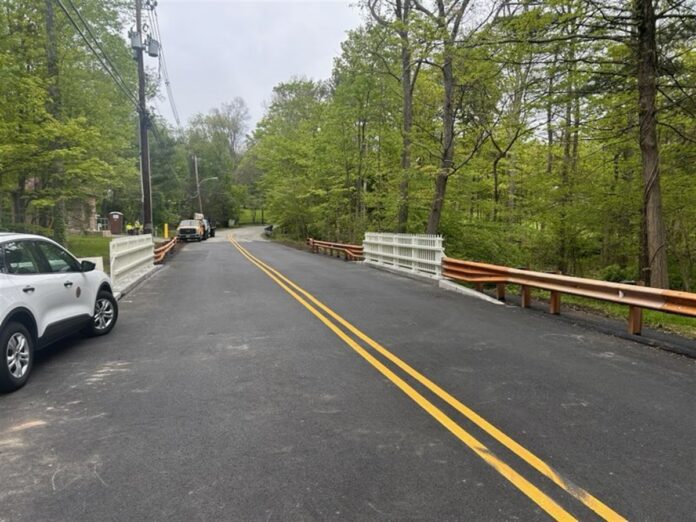

A major local transportation connection in Morris Township has officially reopened ahead of schedule following the successful completion of a county-funded bridge replacement project that county officials say reflects the growing emphasis on infrastructure modernization, traffic safety improvements, and long-term transportation reliability throughout Morris County and across New Jersey.
The County of Morris announced the full reopening of Gaston Road after completing replacement work on the Gaston Road Bridge approximately three weeks earlier than originally projected while also remaining within the project’s approved construction budget. The achievement arrives at a time when infrastructure performance, roadway resiliency, and transportation investment continue dominating public policy discussions statewide as counties and municipalities work to modernize aging transportation systems originally built generations ago.
Located approximately midway along Gaston Road in Morris Township, the newly completed bridge project restores full traffic flow along an important local connector roadway linking Washington Valley Road and Sussex Turnpike. While relatively modest in scale compared to major highway expansions or large-scale state transportation projects, county officials and transportation planners emphasize that projects like the Gaston Road replacement represent some of the most essential infrastructure investments occurring throughout suburban New Jersey.
Small and mid-sized bridge structures often serve as critical arteries within local transportation systems, carrying commuter traffic, emergency services access, school transportation, utility operations, and daily residential movement across communities that rely heavily on roadway connectivity.
The Gaston Road corridor itself functions as a highly important local route within Morris Township despite spanning only about one mile in total length. The roadway provides direct regional circulation between two heavily utilized local transportation corridors while helping disperse commuter traffic throughout portions of Morris County that continue experiencing significant residential and commercial movement pressures.
For residents navigating the area daily, the reopening marks the end of several months of detours and temporary traffic rerouting that began after construction officially launched on March 2, 2026.
County officials framed the project’s early completion as evidence of strong coordination between engineering teams, contractors, and municipal leadership during a period when public infrastructure agencies increasingly face pressure to deliver projects efficiently while minimizing disruption to local communities.
Morris County Commissioner Director Stephen Shaw emphasized the county’s broader infrastructure investment strategy while acknowledging the cooperation required to accelerate the bridge replacement timeline successfully.
That timeline acceleration is particularly notable within the current infrastructure environment, where supply chain volatility, labor shortages, material cost fluctuations, permitting complexity, and unpredictable weather conditions continue affecting public construction projects nationwide.
The fact that the Gaston Road project remained both ahead of schedule and within budget reflects a growing priority among county governments to demonstrate fiscal discipline and operational efficiency as taxpayers increasingly scrutinize infrastructure spending and project management practices.
The bridge itself underwent a substantial modernization process designed not only to replace deteriorating infrastructure but also to improve long-term roadway functionality and safety standards.
The completed structure now features a four-sided precast concrete culvert system with stone-faced walls and a white picket-style railing intended to visually complement the surrounding Morris Township landscape. The design reflects a broader trend throughout suburban New Jersey infrastructure projects where counties increasingly seek to balance engineering modernization with aesthetic considerations preserving local community character.
In many affluent and historically sensitive suburban communities throughout Morris County, infrastructure upgrades are expected not merely to function effectively but also to integrate visually into residential and environmental surroundings without compromising neighborhood appearance.
The transportation improvements extend beyond aesthetics alone.
One of the most important operational upgrades involved expanding the roadway width across the bridge structure to 26 feet, creating two full 13-foot travel lanes intended to improve both traffic flow and driver safety. Wider lane configurations can significantly reduce bottlenecks, improve maneuverability for larger vehicles, enhance emergency response access, and minimize conflict points on local connector roads carrying consistent commuter traffic.
The expanded roadway dimensions may appear relatively minor on paper, but transportation engineers frequently note that even modest width improvements can substantially improve long-term operational safety and traffic efficiency, particularly along suburban connector routes where lane constriction near aging bridge structures often contributes to congestion or accident risk.
The bridge replacement was ultimately deemed necessary after years of deterioration affecting the previous concrete slab structure spanning a tributary of the Whippany River.
County officials indicated that repeated repair efforts had become increasingly unsustainable as the aging structure continued deteriorating despite ongoing maintenance work. In many cases throughout New Jersey, transportation agencies face difficult decisions regarding whether aging bridges should undergo repeated rehabilitation cycles or full structural replacement.
Increasingly, counties are determining that complete replacement offers the most cost-effective long-term solution, particularly when older structures no longer align with modern safety standards, hydraulic requirements, or future traffic expectations.
The Gaston Road project reflects that larger statewide reality.
New Jersey possesses one of the oldest transportation infrastructures in the nation, with thousands of bridges, culverts, roadways, drainage systems, and transportation corridors originally constructed decades ago during entirely different traffic, population, and environmental conditions. Many suburban counties now face accelerating pressure to replace aging infrastructure before structural deterioration creates larger public safety or operational risks.
Morris County in particular maintains an extensive network of county-owned bridges and roadway structures requiring continuous monitoring, rehabilitation, and replacement planning.
As suburban traffic volumes continue increasing and climate-related weather volatility places additional stress on infrastructure systems, local governments throughout the region are prioritizing resiliency-focused transportation investments capable of supporting long-term operational reliability.
The incorporation of a precast concrete culvert system at the Gaston Road site also reflects modern engineering preferences emphasizing durability, hydraulic performance, streamlined installation timelines, and reduced long-term maintenance requirements.
Precast systems are increasingly favored in bridge replacement projects because they allow faster construction schedules, improved quality control, and greater structural longevity compared to many older bridge configurations. Their use has expanded significantly across New Jersey transportation projects as counties seek to modernize smaller bridge structures more efficiently.
Environmental considerations also continue playing a growing role in bridge replacement planning statewide.
Because the Gaston Road structure spans a tributary of the Whippany River, hydraulic performance and stormwater management capacity likely factored heavily into the project’s engineering design. Flood resiliency and water flow management have become increasingly important components of transportation infrastructure planning throughout New Jersey following years of severe storm events, flash flooding incidents, and climate-related infrastructure strain.
Modern bridge replacements now frequently incorporate upgraded drainage performance, erosion mitigation systems, and flood-resilient engineering standards designed to improve infrastructure survivability during extreme weather events.
The project’s successful completion by CMS Construction of Plainfield further highlights the continued importance of experienced regional contractors within New Jersey’s infrastructure modernization economy. Public infrastructure investment continues generating substantial economic activity throughout the construction, engineering, transportation, materials, and environmental services sectors statewide.
The Gaston Road Bridge replacement, completed under a county-funded budget totaling approximately $641,487, represents the type of targeted local infrastructure spending increasingly viewed as essential to maintaining transportation reliability without waiting for larger state or federal intervention.
While billion-dollar highway expansions and major transit projects often dominate statewide headlines, local bridge replacements like Gaston Road frequently carry equally important practical impacts for residents navigating daily life across suburban New Jersey communities.
Reliable local infrastructure directly influences commute times, emergency response efficiency, school transportation operations, residential connectivity, property values, and broader regional mobility systems. When smaller transportation links fail or deteriorate, the effects can ripple across entire communities despite the relatively localized nature of the infrastructure itself.
That reality has increasingly pushed county governments to accelerate infrastructure assessment and replacement planning as deferred maintenance risks continue mounting nationwide.
The reopening of Gaston Road therefore represents more than the completion of a single bridge project. It reflects the ongoing effort throughout New Jersey to modernize aging transportation systems while balancing fiscal responsibility, community impact, engineering resiliency, and long-term operational performance.
For Morris Township residents, the restored roadway immediately improves local circulation and eliminates months of construction detours. But at a broader level, the project also serves as another example of how county governments throughout New Jersey are quietly undertaking the difficult and often expensive work of rebuilding infrastructure systems that form the foundation of everyday life.
As transportation demands continue evolving across the state, projects like the Gaston Road Bridge replacement underscore the increasingly important role local infrastructure investment will play in maintaining safety, mobility, economic stability, and quality of life throughout New Jersey’s suburban communities for years to come.



