


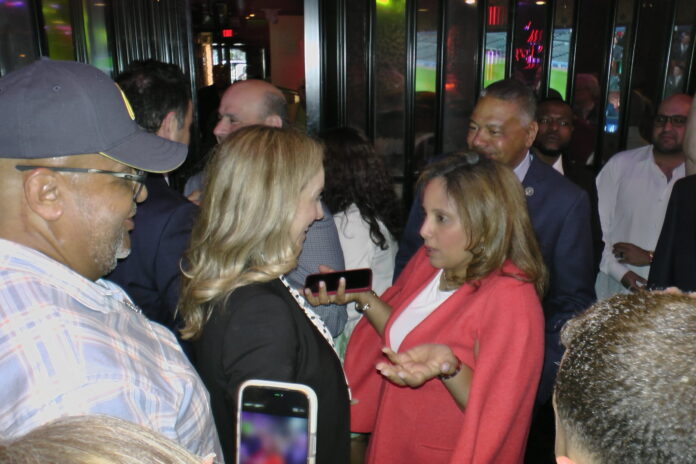

As the final hours of Paterson’s high-stakes municipal election unfolded, the city transformed into a nonstop political battlefield where candidates, operatives, ward leaders, volunteers, and longtime power brokers flooded neighborhoods in one last attempt to shape the future of one of New Jersey’s most politically significant urban centers. From barber shops and street corners to churches, storefronts, apartment buildings, campaign headquarters, and packed neighborhood gatherings, Paterson entered the closing phase of its election cycle with the intensity, unpredictability, and raw energy that has long defined one of the state’s most consequential political arenas.
By the eve of Election Day, the streets themselves had effectively become the campaign trail’s final debate stage. Candidates spent the closing weekend and final Monday pushing aggressively through neighborhoods, greeting residents face-to-face, revisiting familiar political networks, and mobilizing ward operations that have historically played a defining role in Paterson’s municipal elections. Political observers throughout Passaic County understood exactly what was unfolding: turnout operations, personal relationships, ethnic coalition-building, and last-minute voter persuasion efforts were entering their most critical stretch.
At the center of the race stood incumbent Mayor Andre Sayegh, who entered the final hours appearing to maintain the advantage of incumbency, institutional visibility, and substantial political backing. Sayegh’s reelection effort has consistently framed itself around continuity, stability, redevelopment momentum, and ongoing municipal management during a period when Paterson continues confronting major economic, infrastructure, public safety, and housing pressures. Throughout the campaign, Sayegh has positioned himself as the candidate capable of maintaining operational control while continuing to push forward long-term redevelopment and investment initiatives within the city.
The optics surrounding the mayor during the closing days reinforced that positioning. Governor Mikie Sherrill publicly standing alongside Sayegh delivered an unmistakable political message regarding where significant portions of the Democratic establishment currently align within the contest. In New Jersey politics, endorsements are rarely symbolic gestures alone. They signal organizational support, coalition alignment, fundraising confidence, and broader party relationships extending beyond the immediate local race itself.
For Paterson specifically, those relationships matter enormously. The city remains one of the most politically influential Democratic strongholds in the state, with local races often carrying implications that ripple outward into countywide and statewide political dynamics. Any major Paterson election inevitably becomes about more than City Hall alone. It becomes a referendum on factional influence, legislative alliances, future endorsements, organizational loyalty, and the evolving structure of North Jersey Democratic politics.
Sayegh’s campaign activity during the final stretch reflected the balancing act incumbent mayors frequently face in competitive urban elections. Even while actively campaigning, the responsibilities of governing continue simultaneously. Reports from the closing hours described the mayor being pulled between campaign activity and active city business, a reality that both helps and complicates incumbency. On one hand, it reinforces executive stature. On the other, it limits the ability to fully immerse in relentless street-level campaigning during the race’s most critical period.
Meanwhile, longtime political rival and Paterson Councilman Alex Mendez remained highly visible on the ground, particularly within the city’s 6th Ward, an area that has historically played an important role in his political strength. Mendez’s continued presence inside the race underscores the enduring factional divisions that have shaped Paterson politics for years. The rivalry between Sayegh and Mendez has become one of the defining political tensions in the city’s modern municipal landscape, representing not merely personal political competition but broader disagreements involving governance style, coalition leadership, community representation, and political control.
Paterson elections have long been deeply influenced by ward-level operations and neighborhood-specific dynamics. Unlike broader statewide campaigns that rely heavily on television advertising and digital messaging, municipal races in cities like Paterson remain intensely personal. Door knocking, street visibility, local endorsements, clergy relationships, ethnic coalition outreach, family networks, and direct voter interaction still matter enormously. Political capital in Paterson is frequently earned block by block rather than solely through media narratives.
That reality became especially visible during gatherings taking place across the city in the campaign’s final hours. In the Third Ward, veteran Democratic power figure and state Senator Benjie Wimberly moderated a barber shop discussion centered around the election, creating one of the more symbolically important moments of the race’s closing phase. In Paterson politics, barber shops, diners, restaurants, and neighborhood gathering spaces often function as informal civic forums where political influence is shaped in real time. Conversations occurring in those environments frequently reveal the underlying coalition dynamics driving turnout and momentum more accurately than formal campaign statements.
The gathering itself highlighted the extraordinary complexity of Paterson’s political alliances. Assemblyman Kenyatta Stewart appeared in support of First Ward Councilman Mike Jackson, while Stewart’s legislative colleague, Assemblyman Al Abdelaziz, backed Mayor Sayegh. Former Paterson mayors Jose “Joey” Torres and Jeffrey Jones also appeared within the broader political orbit surrounding the discussion, underscoring how deeply interconnected the city’s past and present political leadership remains.
Those overlapping alliances reveal one of the defining characteristics of Paterson politics: coalitions are rarely simple, permanent, or entirely unified. Political relationships inside the city often operate through highly localized loyalties, longstanding personal alliances, ethnic community influence, legislative calculations, and evolving strategic interests. It is not unusual for influential figures within the same broader party structure to back competing candidates based on ward dynamics, historical relationships, or future political considerations.
Senator Wimberly’s decision not to formally endorse a candidate became a significant political storyline in itself. In a city where endorsements from influential Democratic leaders can meaningfully affect turnout operations and coalition building, neutrality often carries as much strategic weight as explicit support. Wimberly remains one of the most respected and influential political figures in Paterson and Passaic County overall, with longstanding ties across numerous communities and political organizations. His choice to avoid a formal endorsement allowed him to preserve relationships across competing factions while maintaining influence regardless of the race’s outcome.
The broader election also reflects the increasingly fragmented nature of urban Democratic politics throughout New Jersey. While the Democratic Party dominates electorally across many major municipalities, internal factional battles within the party have become increasingly intense. Ideological divisions, generational turnover, ethnic coalition shifts, redevelopment disputes, economic frustrations, and changing neighborhood demographics are all reshaping municipal political environments across the state.
Paterson sits directly at the center of many of those changes.
The city remains one of New Jersey’s most diverse municipalities, with large Arab American, Latino, African American, South Asian, Turkish, and immigrant communities all playing influential roles in the political process. Coalition-building therefore requires candidates to navigate a highly sophisticated and constantly evolving electoral landscape. Success in Paterson often depends less on broad ideological branding and more on whether campaigns can successfully unify multiple overlapping neighborhood and community networks simultaneously.
At the same time, voters continue weighing substantial real-world concerns affecting daily life throughout the city. Economic development, public safety, school conditions, infrastructure repairs, traffic congestion, affordable housing pressures, small business support, code enforcement, sanitation services, tax burdens, and quality-of-life issues remain central concerns for residents across multiple wards. Candidates throughout the race have attempted to frame themselves as the best-equipped leaders to manage those ongoing challenges while guiding Paterson through a rapidly changing economic environment.
The election also arrives during a period when urban redevelopment conversations are reshaping many New Jersey cities. Paterson continues seeking investment opportunities capable of revitalizing commercial corridors, attracting economic growth, modernizing infrastructure, and stabilizing neighborhoods without accelerating displacement concerns that increasingly accompany redevelopment discussions statewide. Municipal leadership decisions made over the next several years will likely play a major role in determining how successfully the city balances investment growth with affordability and neighborhood preservation.
Political observers throughout New Jersey are watching Paterson closely not only because of the mayoral race itself but because the city often serves as a broader indicator of Democratic coalition trends across urban North Jersey. Relationships built during municipal races frequently influence legislative contests, county party dynamics, statewide endorsements, and future gubernatorial alliances.
The closing hours of the campaign therefore represented more than routine election-season activity. They reflected a city engaged in an active struggle over political direction, institutional influence, neighborhood representation, and the future structure of power inside one of New Jersey’s most important Democratic strongholds.
As candidates spent the final hours walking neighborhoods, shaking hands, revisiting loyal supporters, and attempting to energize turnout operations before polls opened, the atmosphere across Paterson captured the intensity that only deeply competitive local politics can produce. Every ward operation, every street-level conversation, every late-night strategy meeting, and every public appearance carried heightened significance because in municipal elections decided by local turnout and coalition strength, the final hours often matter more than the previous several months combined.
Now, with Election Day arriving, Paterson voters are set to determine not only who will occupy City Hall next, but also which political alliances, neighborhood coalitions, and governing philosophies will shape the city’s next chapter during a period of major transition across New Jersey’s urban political landscape.



