


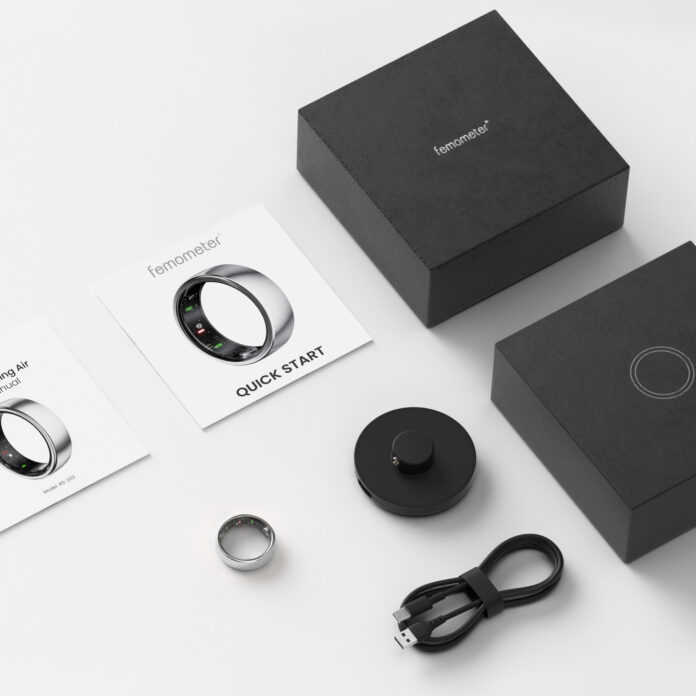

The wearable technology industry is entering a new phase, one defined less by oversized fitness devices and more by discreet, highly specialized tools designed to integrate seamlessly into everyday life. Over the past decade, smartwatches and health trackers transformed how millions of people monitor activity, sleep, heart rate, and wellness metrics. But as the market matures, consumer expectations are rapidly changing. Users no longer want bulky devices that constantly demand attention. Increasingly, they want health technology that disappears into daily routines while still delivering meaningful biometric insight.
That shift is helping drive the rapid rise of smart rings, one of the fastest-growing categories in consumer health technology. Unlike traditional wearables, smart rings focus on continuous passive monitoring through lightweight, low-profile designs that resemble jewelry rather than fitness equipment. The category has quickly become one of the most competitive segments in health tech, attracting consumers looking for wellness tracking without sacrificing comfort, aesthetics, or simplicity.
Now, the release of the Femometer Smart Ring Air Silver Edition highlights how the next stage of wearable technology may increasingly revolve around personalization, women’s health optimization, fertility monitoring, and subscription-free health ecosystems.
Announced for pre-order on May 8, 2026, the new Silver Edition expands Femometer’s growing smart ring lineup with a design intended to blend more naturally into everyday fashion and professional environments. Rather than presenting itself as a conspicuous piece of consumer electronics, the Silver Edition leans heavily into minimalist aesthetics, positioning itself as both a health tracker and an understated accessory suitable for continuous daily wear.
That design philosophy reflects a much larger trend reshaping the entire wearable industry. Consumers increasingly want devices that feel less clinical and more integrated into lifestyle and identity. Smart rings, in particular, occupy a unique space between wellness technology, fashion, personal data tracking, and preventative healthcare.
The Femometer Smart Ring Air Silver Edition enters the market at a moment when women’s health technology is receiving significantly greater attention across both the medical and consumer technology sectors. Historically, much of the wearable industry focused primarily on generalized fitness metrics dominated by step counting, calorie tracking, and basic exercise monitoring. Many women-specific health concerns, particularly fertility tracking and hormonal cycle monitoring, were often treated as secondary features rather than core product architecture.
That dynamic is changing rapidly.
Femometer has positioned the Smart Ring Air as a highly specialized device focused heavily on fertility awareness and reproductive health tracking while still offering broader wellness monitoring capabilities expected from modern wearable devices. Central to the ring’s functionality is its TriNyx Basal Body Temperature monitoring system, which uses three high-precision sensors designed to capture overnight temperature data from multiple points on the finger.
Basal body temperature tracking has long played a role in fertility awareness methods because subtle fluctuations in body temperature can help identify ovulation timing and fertile windows. Traditionally, however, accurate BBT tracking required users to manually record temperatures each morning immediately upon waking, often under highly controlled conditions.
The Smart Ring Air attempts to automate that process almost entirely.
According to the company, the ring captures more than 1,400 temperature measurements during sleep cycles each night, creating a far more continuous and detailed dataset than conventional once-daily measurements. That level of passive monitoring reflects the growing role artificial intelligence, biometric sensors, and predictive analytics are playing within consumer healthcare technology.
The emphasis on passive data collection is becoming increasingly important across the entire wearable industry. Modern consumers generally want health insights without constant manual interaction. Devices that can continuously gather information in the background while remaining comfortable enough for uninterrupted wear are rapidly becoming the preferred standard.
That comfort factor appears to be a major focus for Femometer’s engineering approach.
At approximately 3.3 grams and just 2.65 millimeters thick, the Smart Ring Air is among the lightest and thinnest smart rings currently entering the market. Weight and thickness may sound like minor specifications, but within wearable technology, they often determine whether users continue wearing a device consistently over long periods.
Wearable technology companies increasingly understand that data quality depends heavily on sustained user compliance. Even the most advanced health monitoring system becomes ineffective if users frequently remove the device because of discomfort, charging inconvenience, or lifestyle disruption.
The Silver Edition’s ultra-thin profile is intended to address exactly that challenge. By minimizing physical presence, the ring attempts to become effectively invisible during daily use, sleep, work, exercise, and travel.
Beyond fertility tracking, the device incorporates a broader suite of biometric monitoring tools now expected in premium wearable technology. Continuous heart rate tracking, heart rate variability analysis, blood oxygen monitoring, stress tracking, and detailed sleep stage analysis are all integrated into the system.
Sleep monitoring in particular has become one of the defining battlegrounds within modern health technology. As research increasingly links sleep quality to cardiovascular health, cognitive performance, hormonal regulation, metabolic function, and mental health, wearable companies are aggressively positioning sleep analytics as one of their most valuable consumer features.
The Smart Ring Air tracks deep sleep, light sleep, and REM sleep stages while also analyzing overnight physiological changes that may influence recovery and overall wellness trends.
One of the most strategically significant aspects of the product, however, may not be the hardware itself. It may be the company’s decision to eliminate subscription fees entirely.
The wearable technology industry has increasingly shifted toward subscription-based ecosystems where consumers purchase expensive hardware only to discover ongoing monthly fees are required for full data access and advanced analytics. That business model has become especially controversial within the smart ring category, where some major competitors lock premium health insights behind recurring memberships.
Femometer is taking a notably different approach by offering lifetime access to its app ecosystem and health insights without additional subscription costs.
That decision could become a major competitive differentiator as consumers grow increasingly fatigued by subscription saturation across digital products and services. Many buyers now evaluate not only the upfront cost of wearable devices but also the long-term ownership expense created by recurring platform fees.
At a pre-sale price of approximately $199.99, the Smart Ring Air Silver Edition enters the market positioned directly within the premium smart ring segment while remaining competitively priced against rivals offering similar biometric capabilities.
The device’s durability specifications also reflect how wearable companies are attempting to position smart rings as all-day, all-environment products rather than occasional-use accessories. The ring features a ceramic exterior combined with a stainless steel outer shell treated through nano-level PVD vacuum plating. It also carries an IP68 waterproof rating capable of withstanding depths up to 100 meters.
Battery life remains another critical area of competition throughout the wearable sector, and Femometer appears to be aggressively addressing one of the category’s most common frustrations: charging frequency.
The ring itself reportedly delivers up to seven days of battery life on a single charge. More importantly, its portable charging case stores enough additional power for approximately five complete recharges, extending total portable use to nearly 35 days before requiring access to a wall outlet.
That type of extended battery ecosystem significantly improves practicality for travel, work schedules, and continuous overnight monitoring. Wearable devices that require constant charging interruptions often create data gaps that reduce long-term trend accuracy.
The broader implications of products like the Smart Ring Air extend beyond individual consumer gadgets. They reflect the increasingly blurred boundaries between healthcare, personal wellness, consumer electronics, preventative medicine, and data science.
Wearable technology is steadily evolving into a form of decentralized personal health infrastructure where individuals continuously generate biometric datasets previously accessible only through clinical settings. As sensors improve and machine learning models become more sophisticated, devices like smart rings are gradually shifting from fitness accessories toward predictive wellness platforms capable of identifying patterns, trends, and early warning indicators before users may consciously notice symptoms themselves.
Women’s health technology appears especially positioned for major expansion during the next phase of that evolution. Historically underserved areas including hormonal health, fertility awareness, reproductive wellness, cycle analytics, menopause tracking, and maternal health are increasingly becoming central priorities for both startups and established health-tech companies.
The Femometer Smart Ring Air Silver Edition enters that rapidly expanding space at a moment when consumers are demanding more personalized, data-driven, and preventative approaches to wellness management.
The future of wearable technology may no longer revolve around the largest screens, the loudest notifications, or the most visible devices. Increasingly, it may belong to products designed to quietly disappear into everyday life while continuously collecting meaningful insight in the background.
And in that future, the smallest devices may ultimately become the most important.
For more technology, innovation, wearable device, and consumer tech coverage, visit Sunset Daily News Technology & Tech