


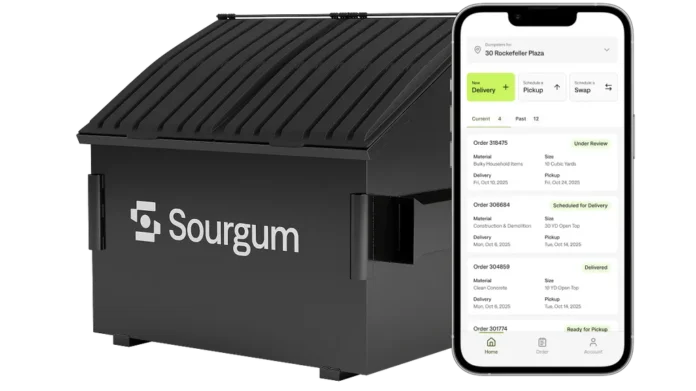

One of the most overlooked industries in the American economy is suddenly becoming one of the most aggressively modernized, and a rapidly expanding New Jersey company is positioning itself directly at the center of that transformation. Sourgum Waste, the Jersey City-based technology-driven waste management platform often described as the “Amazon of waste and recycling,” is emerging as one of the most closely watched startups in the infrastructure, logistics, and sustainability sectors after earning major national recognition for its rapidly growing managed marketplace model.
The company was officially named a winner in the 2026 Environment+Energy Leader Awards, receiving recognition in the inaugural Startup Award category for innovation in sustainability and operational modernization. The award places Sourgum among a growing class of infrastructure-focused technology companies reshaping industries historically known for fragmentation, inefficiency, opaque pricing, and outdated operational systems.
For New Jersey, the rise of Sourgum represents more than a startup success story. It reflects how the state’s growing technology ecosystem is increasingly intersecting with logistics, sustainability, infrastructure services, and industrial modernization — sectors that are becoming central to the future of both the regional and national economy.
Headquartered in Jersey City, Sourgum has rapidly built a nationwide network connecting businesses and residential customers with more than 5,000 vetted local hauling providers through a centralized digital marketplace designed to simplify and modernize waste management operations. Since launching in 2019, the company has aggressively expanded beyond traditional dumpster rental models into a broad infrastructure services platform spanning commercial waste collection, recycling management, specialty disposal, construction support services, and sustainability-focused operational tracking.
The company’s growth trajectory highlights a larger shift occurring throughout legacy service industries where software, automation, logistics intelligence, and real-time operational visibility are increasingly becoming competitive necessities rather than optional upgrades. Waste management, despite being one of the most essential components of modern infrastructure, has historically remained highly fragmented, heavily localized, and technologically inconsistent across markets.
That fragmentation created an opening for companies like Sourgum to rethink how waste operations are coordinated, priced, tracked, and managed. Rather than functioning as a traditional hauling company itself, Sourgum operates what it describes as a “controlled marketplace” model — a technology platform that connects customers with a large network of independently vetted local operators while centralizing customer management, pricing visibility, reporting, and operational oversight through proprietary software systems.
The result is a hybrid model blending logistics coordination, digital infrastructure, marketplace technology, and sustainability analytics into one integrated platform. In many ways, Sourgum’s approach mirrors transformations that previously reshaped industries like transportation, hospitality, freight logistics, and retail commerce through centralized digital marketplaces and operational transparency systems.
The Environment+Energy Leader Awards judges specifically highlighted the company’s ability to modernize one of the economy’s most opaque industries through technology capable of delivering real-time visibility, measurable sustainability outcomes, and stronger operational control. The recognition came through the awards program’s newly created Startup category, which was designed to spotlight emerging companies introducing disruptive innovation into sustainability and environmental management sectors.
The significance of the award extends beyond branding recognition alone. Sustainability infrastructure, recycling systems, waste diversion, and circular economy logistics are rapidly becoming major areas of investment and policy focus nationwide. As corporations, municipalities, developers, construction firms, and institutional operators face increasing pressure to meet sustainability goals and environmental reporting standards, demand is growing for systems capable of delivering both operational efficiency and measurable environmental accountability.
Sourgum’s technology-driven approach appears specifically built around that market evolution. Customers using the platform gain access to centralized service management tools, dispatch visibility, automated reporting systems, compliance tracking, and operational analytics that historically may not have existed consistently across localized hauling networks.
One of the company’s most notable selling points has been its emphasis on transparent pricing, an issue that has long frustrated businesses and contractors dealing with waste removal services. Hidden surcharges, fluctuating fuel fees, inconsistent billing practices, and limited operational visibility have traditionally characterized portions of the industry. Sourgum’s platform attempts to replace that unpredictability with centralized pricing structures and real-time service management systems.
That focus on operational transparency is becoming increasingly important in large-scale commercial and construction environments where waste management now intersects directly with sustainability reporting, regulatory compliance, and environmental accountability standards. Businesses increasingly need detailed tracking surrounding waste streams, recycling diversion rates, material handling, and disposal compliance — particularly in sectors tied to construction, healthcare, manufacturing, logistics, and commercial real estate.
The company’s sustainability positioning also aligns closely with larger national trends reshaping corporate infrastructure planning. Sourgum has publicly committed itself to broader “Zero Waste” goals while emphasizing landfill diversion strategies, recycling optimization, composting integration, and environmental offset initiatives. Through reforestation partnerships, the company says it has already helped plant more than 50,000 trees as part of its environmental initiatives.
Those sustainability efforts arrive during a period when environmental reporting and ESG-related operational standards continue influencing how businesses select vendors, manage infrastructure partnerships, and structure long-term operational planning. Waste management is no longer viewed simply as a disposal function. Increasingly, it has become part of broader sustainability strategy tied to environmental impact metrics, operational efficiency, and public accountability.
Sourgum’s rise also reflects the growing convergence between logistics infrastructure and technology innovation happening throughout New Jersey itself. Jersey City, in particular, has rapidly evolved into a major technology and startup hub benefiting from proximity to New York City while simultaneously developing its own increasingly influential business ecosystem. The city’s location within one of the nation’s most important transportation, logistics, and infrastructure corridors makes it an especially strategic base for operational technology companies focused on supply chain systems and industrial services.
The waste and recycling sector may appear unconventional compared to consumer-facing technology industries, but its economic scale is enormous. Waste management touches virtually every segment of the economy, including construction, retail, hospitality, healthcare, manufacturing, logistics, commercial real estate, residential development, government infrastructure, and industrial operations. Modernizing that infrastructure through centralized technology systems creates opportunities not only for operational efficiency, but for large-scale data integration and sustainability optimization.
Sourgum’s service portfolio has expanded substantially as the company has grown. In addition to dumpster rentals ranging from 10-yard to 40-yard roll-off containers, the company now manages recurring commercial waste services, specialty disposal operations involving electronic waste and hazardous materials, composting coordination, portable sanitation rentals, temporary fencing, and storage container deployment.
That diversification reflects how infrastructure service companies increasingly attempt to become integrated operational partners rather than isolated vendors. Construction projects, commercial developments, industrial facilities, and large-scale businesses often prefer consolidated infrastructure coordination capable of handling multiple operational needs through unified management systems.
The company’s national expansion further demonstrates how scalable technology platforms can transform historically localized industries. While headquartered in Jersey City, Sourgum now services major metropolitan markets throughout the United States, including New York, Philadelphia, Baltimore, Miami, and numerous additional urban centers where dense commercial activity creates constant demand for waste logistics coordination.
Investors appear to recognize the market potential surrounding that model. Sourgum recently secured a $12.5 million Series A funding round while also closing a new debt facility earlier this year to support continued expansion. Backers include prominent investment groups such as Spark Capital, Suffolk Technologies, and Founder Collective, reinforcing broader institutional interest in infrastructure-focused technology platforms tied to sustainability and operational modernization.
The company’s growth story also highlights how venture capital itself is increasingly moving beyond consumer applications and software-as-a-service models toward sectors connected to physical infrastructure, logistics coordination, industrial operations, and climate-related technologies. Investors are aggressively searching for scalable businesses capable of modernizing legacy systems through software integration and operational intelligence.
For New Jersey, Sourgum’s emergence reinforces the state’s increasingly important role within the broader infrastructure technology economy. Positioned between New York City and Philadelphia while anchored by extensive transportation, logistics, warehousing, and industrial networks, New Jersey remains uniquely suited for companies operating at the intersection of technology and operational infrastructure.
The company’s success may also signal a broader shift in how people perceive the waste and recycling sector itself. Historically viewed as largely operational and localized, the industry is increasingly becoming data-driven, sustainability-focused, and technologically integrated. Real-time tracking, automated dispatching, service analytics, compliance monitoring, and environmental reporting are rapidly becoming standard expectations rather than premium add-ons.
As cities, businesses, developers, and institutions continue facing mounting pressure surrounding sustainability targets, recycling optimization, and infrastructure efficiency, companies capable of combining logistics coordination with sophisticated technology platforms are likely to become increasingly influential across the broader environmental services economy.
Sourgum’s recognition through the 2026 Environment+Energy Leader Awards ultimately reflects more than startup momentum. It signals how rapidly the infrastructure economy itself is evolving — and how New Jersey-based companies are increasingly helping shape the future of sustainability, logistics, operational technology, and modern resource management nationwide.
What was once considered a slow-moving and fragmented industry is now becoming part of a much larger technological transformation involving data systems, automation, environmental accountability, and real-time infrastructure coordination. Sourgum’s rapid expansion suggests that transformation may only be getting started.
For more New Jersey business innovation, sustainability, and infrastructure coverage, visit Explore New Jersey Resources