


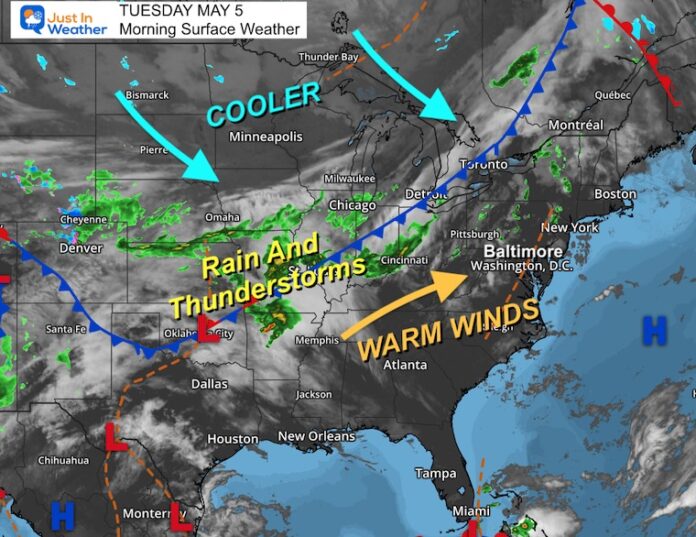

A dramatic early-May weather swing is unfolding across New Jersey, delivering a burst of summerlike heat before pivoting sharply back toward cooler, unsettled conditions. The current pattern, driven by a dynamic upper-level flow across the Mid-Atlantic, is creating a high-impact stretch of weather that combines warmth, elevated wildfire risk, and an imminent cold front that will reshape conditions statewide within days.
Current conditions in New Jersey are sunny and warm. It currently feels like 78°F with a light southwest wind at 11 mph and humidity around 39%. Temperatures are expected to peak in the mid-80s this afternoon, which is significantly warmer than the usual 70°F average for early May.
| Hour | Sky Condition | Temperature |
|---|---|---|
| 12 PM | 80°F | |
| 2 PM | 84°F | |
| 4 PM | 84°F | |
| 6 PM | 79°F | |
| 8 PM | 72°F | |
| 10 PM | 68°F |
Weather Highlights
- Wildfire Risk: Due to the dry air (25-30% humidity) and strong wind gusts up to 30 mph, the National Weather Service has issued a special alert regarding an elevated risk of wildfires today.
- Coming Rain: This summer-like heat won’t last. A cold front is moving in late tonight, bringing widespread rain and a 15-degree temperature drop starting tomorrow.
- Coastal Cooler: If you’re down at the Jersey Shore, expect it to stay much cooler today with highs only reaching the 60s due to sea breezes.
As of this morning, much of New Jersey is experiencing bright sunshine and unseasonably warm air, with temperatures already climbing into the upper 70s and expected to peak in the mid-80s this afternoon. That places today’s highs well above the seasonal norm, which typically hovers near 70 degrees in early May. Light southwest winds around 10 to 15 miles per hour and relatively low humidity levels are contributing to the warm, dry feel across inland areas, creating conditions more reminiscent of late spring or early summer than the first week of May.
This warmth, however, comes with a critical caveat. The combination of dry air—particularly humidity levels dropping into the 25 to 30 percent range—and gusty winds approaching 30 miles per hour has prompted heightened wildfire risk concerns across the region. These conditions allow fires to ignite and spread more easily, particularly in wooded and brush-heavy areas. The current environment underscores the importance of caution, as even minor sparks can escalate quickly under these atmospheric conditions.
The geographic variation across the state remains pronounced. While inland areas are seeing temperatures surge into the 80s, coastal regions along the Jersey Shore are experiencing a significantly cooler regime. Sea breezes are holding temperatures in the 60s, creating a sharp contrast between inland heat and coastal moderation. This divergence highlights the influence of marine air on New Jersey’s microclimates, particularly during transitional seasons.
The broader atmospheric setup driving these conditions is rooted in a positive-axis trough positioned to the northwest of the region, maintaining a southwest flow aloft over the Mid-Atlantic. This configuration is allowing warm air to surge into the state while temporarily suppressing precipitation. However, this pattern is inherently unstable and poised to shift as the trough advances eastward.
That transition begins late tonight.
A cold front moving into the region is expected to bring widespread rain and a noticeable drop in temperatures, with highs falling by as much as 15 degrees in some areas. By Wednesday, the state will see a return to more typical early-May conditions, with temperatures settling into the mid-to-upper 60s and skies turning predominantly cloudy. Periods of rain will accompany the frontal passage, marking a clear departure from the dry, warm conditions currently in place.
Looking at the day-by-day progression, the pattern reveals a classic early-season volatility. Monday delivered mild and pleasant conditions, with temperatures in the low-to-mid 70s inland and cooler readings along the coast. Tuesday represents the peak of the warm surge, with widespread highs in the 80s and the potential for isolated inland locations to approach 90 degrees, particularly along the Interstate 95 corridor. Breezy southwest winds will persist, maintaining elevated fire risk concerns through the day.
By Wednesday, the influence of the advancing trough becomes more pronounced. Cloud cover increases, scattered rain showers develop, and temperatures retreat into the 65 to 70-degree range. Winds remain active out of the southwest before gradually diminishing by evening. Overnight conditions vary across the state, with cooler, drier air settling into North Jersey while central and southern regions may continue to see lingering showers.
Thursday and Friday extend the cooler trend. High temperatures are expected to remain in the low-to-mid 60s, accompanied by periods of cloudiness and intermittent rain. Thursday may even feature isolated thunderstorms, particularly in southern portions of the state, as the atmosphere remains unsettled. By Friday, a mix of sun and clouds begins to re-emerge, signaling the gradual stabilization of the pattern.
The upcoming weekend continues the theme of variability. Saturday is projected to remain cool, with temperatures in the 60s and the possibility of additional rain. Sunday, however, offers a more favorable outlook, with temperatures climbing back into the low 70s under clearer skies and more stable conditions.
Beyond the immediate forecast, longer-range indicators suggest another shift on the horizon. Meteorological models point toward a transition to a hotter and more humid pattern later in the month, potentially around mid-May. This would mark the onset of more sustained summerlike conditions, replacing the current oscillation between warm and cool periods with a more consistent heat profile.
Within the broader Sunset Daily News weather landscape, this week’s pattern exemplifies the dynamic nature of spring in New Jersey. Rapid fluctuations in temperature, shifting wind patterns, and the interplay between dry and wet conditions create an environment where forecasts must account for both short-term impacts and longer-term trends. The current sequence—from unseasonable warmth to a cooling, rain-driven reset—illustrates how quickly conditions can evolve.
For residents, the immediate takeaway is clear: today’s warmth is temporary, and the shift to cooler, wetter weather will arrive quickly. The elevated fire risk adds an additional layer of urgency, reinforcing the need for awareness and precaution during this brief but impactful window of dry, windy conditions.
As the state moves through this transitional period, the focus will remain on how these rapid changes influence daily life, from outdoor activities and travel to broader environmental considerations. The coming days will offer a full spectrum of spring weather, capturing both the volatility and the complexity that define this time of year in New Jersey.