


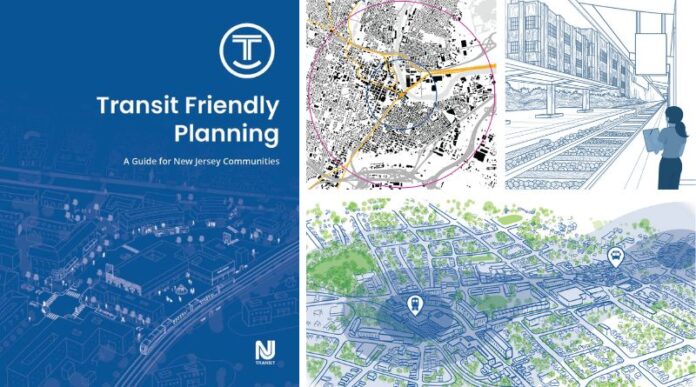

New Jersey is positioning itself for a generational shift in how transportation infrastructure intersects with housing, economic development, and urban planning, and NJ Transit is now at the center of that transformation. With the introduction of its long-range “LAND Plan,” the agency is moving beyond its traditional role as a transportation provider and into a broader strategy that reimagines how land surrounding transit hubs can be activated to drive statewide growth.
At its core, the initiative is both expansive and precise. NJ Transit is targeting approximately 8,000 acres of land under its control—much of it located adjacent to rail stations, bus terminals, and critical transit corridors—and is seeking to convert these underutilized or underperforming assets into fully integrated, mixed-use developments. The goal is to create a new generation of “live-and-ride” communities that align residential, commercial, and transportation access into a single, cohesive framework.
The scale of the plan reflects the urgency of the moment. New Jersey continues to face mounting pressure across multiple fronts, including housing affordability, commuter congestion, and the need for sustainable economic expansion. By leveraging land that is already connected to the state’s transit network, NJ Transit is attempting to address all three simultaneously. The agency projects that the LAND Plan could support the creation of up to 20,000 housing units and generate as many as 50,000 jobs over time, reshaping not just individual municipalities, but the broader regional economy.
The financial implications are equally significant. With an estimated $1.9 billion in potential non-fare revenue, the initiative introduces a new model for how transit agencies can diversify funding streams while reinforcing their core mission. Rather than relying solely on fares and state support, NJ Transit is positioning its real estate portfolio as a long-term economic engine, capable of sustaining operations while also contributing to statewide development goals.
The rollout of the plan has already begun to take shape in tangible ways. At a recent open house held at NJ Transit’s Newark offices, the agency invited developers, investors, and planning partners to engage directly with a curated group of potential project sites. Among them is the Pennsauken Transit Center, a strategically located hub that exemplifies the type of opportunity the agency is seeking to unlock. By opening the process to private and institutional partners, NJ Transit is signaling a collaborative approach, one that relies on both public oversight and private-sector execution to bring these projects to life.
What distinguishes this initiative is its alignment with a broader shift in how communities are designed and experienced. Transit-oriented development is not a new concept, but its application at this scale, across a coordinated statewide portfolio, represents a significant evolution. The emphasis is no longer simply on proximity to transit, but on creating environments where transportation is seamlessly integrated into daily life. Residents are able to live, work, and access services within walking distance of transit options, reducing reliance on cars while enhancing overall quality of life.
In New Jersey, where population density and geographic constraints have long influenced development patterns, this model offers a compelling path forward. Station-adjacent properties, often overlooked or underutilized, become focal points for revitalization. Surface parking lots, vacant parcels, and aging infrastructure can be reimagined as vibrant, multi-use destinations that contribute to both local economies and regional connectivity.
The implications for housing are particularly notable. As the state continues to grapple with affordability challenges, the ability to introduce new residential units in transit-accessible locations creates opportunities for more sustainable growth. By concentrating development near existing infrastructure, municipalities can expand housing supply without overextending resources or compromising open space. At the same time, residents benefit from reduced transportation costs and improved access to employment centers.
Economic development is another critical component of the LAND Plan. The projected creation of tens of thousands of jobs reflects not only construction activity, but also the long-term employment opportunities that emerge from mixed-use environments. Retail, office space, and service industries all stand to benefit from increased foot traffic and proximity to transit, creating ecosystems that are both dynamic and resilient.
From a planning perspective, the success of this initiative will depend on coordination at multiple levels. Local governments, zoning boards, and community stakeholders will play a central role in shaping how these developments are implemented. Balancing growth with community character, infrastructure capacity, and environmental considerations will require a level of engagement that extends beyond traditional development processes. NJ Transit’s approach suggests an awareness of these complexities, emphasizing partnership and adaptability as key components of the plan’s execution.
The transportation benefits are equally important. By concentrating development around transit hubs, the state can reduce traffic congestion, lower emissions, and improve overall system efficiency. Increased ridership supports the long-term viability of NJ Transit’s network, while also reinforcing the value of continued investment in infrastructure. In this sense, the LAND Plan is not just about real estate—it is about strengthening the entire transportation ecosystem.
Within the broader context of New Jersey’s infrastructure strategy, this initiative aligns with ongoing efforts to modernize and expand transit capacity across the state. From rail improvements to bus network enhancements, the focus has increasingly shifted toward creating a system that is both reliable and integrated into the fabric of daily life. The LAND Plan extends that vision, ensuring that the spaces surrounding transit are as functional and forward-looking as the systems themselves.
For readers tracking the evolution of transportation and development across the state, the significance of this initiative cannot be overstated. It represents a coordinated effort to leverage existing assets in a way that addresses multiple challenges simultaneously, from housing and employment to sustainability and fiscal stability. It also reinforces New Jersey’s position as a leader in rethinking how infrastructure can drive long-term growth.
To stay informed on how projects like these are progressing and to explore additional developments shaping mobility and infrastructure across the state, visit the transportation section, where ongoing coverage continues to track the intersection of transit, development, and economic expansion.
As NJ Transit moves forward with its LAND Plan, the vision is becoming increasingly clear. This is not simply an initiative to develop land—it is a comprehensive strategy to redefine how New Jersey grows, how its residents move, and how its communities evolve. By aligning transportation with housing and economic opportunity, the state is laying the groundwork for a more connected, more efficient, and more sustainable future.