



A decade after its founding, the Morris Family Justice Center stands as one of New Jersey’s most effective and quietly essential public service models—an integrated, survivor-centered hub that has redefined how communities respond to domestic violence, sexual assault, and dating abuse. This week in Morristown, that milestone was formally recognized as county officials, law enforcement leadership, and frontline service providers gathered at the Morris County Administration and Records Building to commemorate ten years of impact, collaboration, and measurable progress.
The ceremony carried both symbolic weight and operational significance. Commissioner Director Stephen Shaw and Commissioner Christine Myers issued a formal proclamation on behalf of the Morris County Board of County Commissioners, acknowledging not just the longevity of the center, but the structural innovation it represents. Over the past ten years, the Morris Family Justice Center has functioned as a unified response system—streamlining access to legal advocacy, counseling, law enforcement coordination, and protective services under one roof, eliminating the fragmented and often retraumatizing process survivors previously faced.
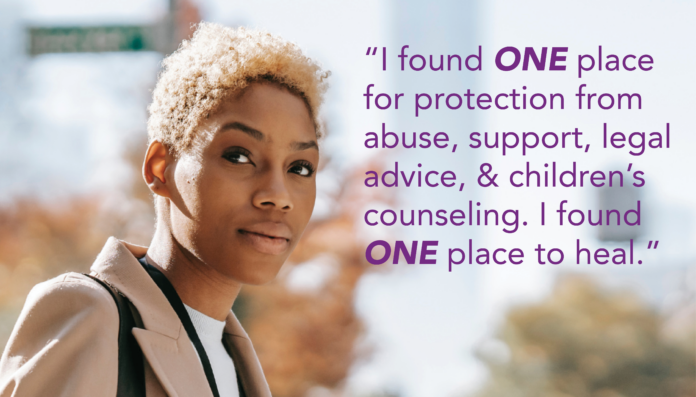
That model—commonly referred to as the “one safe place” approach—has become a national best practice, and in Morris County, it has translated into something tangible: faster intervention, stronger legal outcomes, and a more humane pathway forward for individuals and families navigating crisis. Survivors no longer have to navigate multiple agencies across different locations. Instead, they enter a single, coordinated environment where every service is aligned with a shared objective—stability, protection, and long-term recovery.
The event itself reflected the layered network that powers the center’s success. Leadership from JBWS, the nonprofit organization that operates the facility, delivered key remarks underscoring both the scale and evolution of their work. President and CEO Diane Williams emphasized how the center has become a cornerstone of regional support services, while Maria Lagattuta, Director of Legal Advocacy and Community Partnerships, presented a detailed overview of the center’s operational impact—highlighting how integrated service delivery has improved outcomes across legal, emotional, and social dimensions.
The Morris Family Justice Center officially opened its doors in 2016, built on years of groundwork laid by advocates, public officials, and legal experts who recognized a critical gap in how survivors accessed help. Among those instrumental in its development were former county commissioner Kathy DeFillippo, then operating under the county’s previous governing structure, and Chief Assistant Prosecutor Tia Monachio, whose involvement helped bridge prosecutorial strategy with survivor advocacy. Their efforts were further strengthened by judicial leadership, including Superior Court Judge Marcy McMann, who chaired the Morris County Domestic Violence Working Group for more than a decade and played a key role in shaping the collaborative framework that defines the center today.
Since its inception, the center has operated as a nexus point for multiple agencies, including the Morris County Prosecutor’s Office, Sheriff’s Office, Superior Court system, Legal Services of Northwest Jersey, and a network of nonprofit and community-based organizations. This level of integration is not incidental—it is engineered. By aligning these entities within a single operational ecosystem, the center reduces duplication, accelerates case handling, and ensures that survivors receive consistent, informed support at every stage of their journey.
New Jersey has since expanded this model, with Family Justice Centers now established in Essex, Middlesex, Monmouth, and Union counties. Morris County’s facility was among the earliest adopters, and its sustained performance over the past decade has positioned it as a reference point for how these centers can function at scale without losing their individualized, client-centered focus.
The anniversary event also served as a moment to recognize the broader infrastructure supporting survivors across the county. Director Shaw highlighted complementary programs such as Atlantic Behavioral Health’s Morris County Sexual Assault Center and the Sheriff’s Hope One mobile outreach initiative—both of which extend the reach of critical services beyond fixed locations and into the community. These programs, alongside the Family Justice Center, form a continuum of care that addresses not only immediate crisis response but also long-term stability and prevention.
Legislative and executive recognition further reinforced the center’s importance at the state level. Assemblywomen Aura Dunn and Marisa Sweeney presented a legislative citation on behalf of New Jersey’s 25th Legislative District, while a formal message from Governor Mikie Sherrill’s office was delivered in recognition of the center’s decade of service. These acknowledgments reflect a broader understanding that addressing domestic violence and related offenses is not solely a local responsibility—it is a statewide priority requiring sustained investment and coordination.
Dunn’s remarks captured the lived reality behind the statistics, emphasizing that no two cases are alike and that the center’s value lies in its ability to meet individuals where they are. Her perspective, shaped by firsthand experience responding to crisis situations, underscored the importance of having a centralized, responsive system in place—one that can adapt in real time to the complexities of each case.
Attendance at the event reflected the full spectrum of stakeholders involved in this work, from Morris County Prosecutor Robert Carroll and Sheriff James Gannon to senior administrators, detectives, and human services leaders. Their presence reinforced a central truth about the Morris Family Justice Center: its success is not the result of any single agency or initiative, but of sustained, disciplined collaboration across sectors that do not always naturally align.
At the operational level, that collaboration continues to evolve. JBWS, now marking its own 50th anniversary, has expanded its services well beyond its origins as a grassroots helpline. What began as a network of safe spaces offered within private homes has grown into a comprehensive support system that includes emergency shelter, legal advocacy, counseling, and now even pet-friendly accommodations—an increasingly important consideration for survivors who might otherwise delay seeking help due to concerns about leaving animals behind.
For readers tracking law enforcement, public safety, and community resilience across the state, this milestone sits squarely within the broader coverage found in the Sunset Daily News New Jersey Law & Order section, where ongoing developments in policy, enforcement, and victim support continue to shape how communities respond to crisis.
Ten years in, the Morris Family Justice Center is not simply commemorating its past—it is reinforcing a model that has proven both durable and scalable. In a landscape where fragmented systems often fail the people they are meant to protect, Morris County has built something different: a coordinated, accountable, and human-centered approach that continues to set the standard for what effective intervention looks like in practice.