


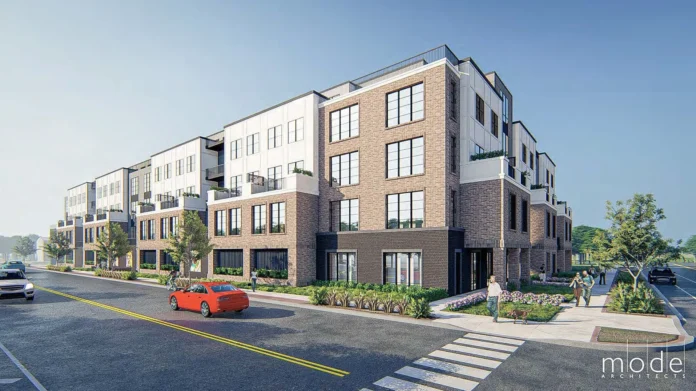

A high-profile redevelopment proposal in Asbury Park is rapidly emerging as one of the most closely watched local planning battles in New Jersey, highlighting the ongoing tension between economic development, urban density, and community preservation in one of the state’s most iconic coastal cities. At the center of the debate is a plan to transform a surface parking lot at 110 1st Avenue—just steps from some of Asbury Park’s most recognizable landmarks—into a multi-level parking structure paired with a new residential development. While the proposal reflects broader trends in maximizing land use in high-demand markets, it has also triggered significant resistance from residents who argue that the project risks altering the character of a neighborhood defined by its history, cultural identity, and oceanfront appeal.
The site itself sits in one of the most strategically valuable and symbolically important areas of Asbury Park. Positioned near the Stone Pony, the Paradise nightclub, and within immediate proximity to the boardwalk, Ocean Avenue, and the city’s beachfront, the parcel represents a convergence point between the city’s entertainment legacy and its ongoing residential transformation. Over the past decade, developments such as The Vive Condominiums, Phillips Seaview Tower, and Wesley Grove have contributed to a shift toward a more residential and mixed-use identity, reshaping how both residents and visitors experience this section of the city.
The current proposal, brought forward by 3904 Garage Urban Renewal, LLC and AP Block 3904 Venture Urban Renewal, LLC, outlines a project that combines infrastructure, housing, and parking in a single integrated development. The plan includes a five-and-a-half-story parking deck with approximately 310 spaces, alongside a six-story residential component containing 54 units. The residential mix is designed to appeal to a range of buyers and renters, with one-bedroom, two-bedroom, and three-bedroom units included in the layout. Additional features include a rooftop amenity space spanning approximately 5,000 square feet and dedicated parking allocations for residents within the structure.
From a planning perspective, the project aligns with elements of the city’s long-standing redevelopment framework. The inclusion of a parking deck responds directly to requirements embedded in Asbury Park’s master plan, which has historically emphasized the need for expanded parking capacity in high-traffic areas. The scale of the proposal, while significant, remains below the maximum height allowances for the site, which could support even larger structures under current zoning regulations. This positioning allows the developer to argue that the project is both compliant and, in relative terms, restrained.
However, compliance with zoning and planning guidelines has done little to quell opposition from residents, many of whom see the proposal as emblematic of broader concerns about overdevelopment and the erosion of neighborhood character. Public comments delivered during the March 25 city council meeting reflected a consistent set of themes: concerns about building height and massing, objections to the proposed architectural design and color palette, and apprehension about the project’s impact on views, light, and the overall aesthetic cohesion of the area.
For residents living in nearby developments, particularly those in The Vive and surrounding properties, the issue of sightlines has emerged as a central point of contention. The proposed structure, they argue, would obstruct existing views of the ocean, altering not only the visual experience but also the perceived value of their properties. In a coastal market where proximity to water and unobstructed views carry significant economic and emotional weight, this concern resonates strongly.
Equally significant is the reaction to the project’s design language. The proposed exterior palette and architectural treatment have been widely criticized as inconsistent with the character of Asbury Park’s waterfront district. For many residents, the issue is not simply aesthetic preference, but a broader question of identity—how new developments integrate with a city that has long balanced its historic roots with contemporary revitalization. The suggestion to incorporate a mural on one of the structure’s large exterior walls, while intended as a creative solution, has not fully addressed concerns about scale and visual impact.
The project’s proximity to culturally significant venues has added another layer to the debate. The Paradise nightclub, in particular, holds a prominent place within the LGBTQIA+ community and the city’s broader cultural landscape. Residents have expressed concern that the scale and positioning of the proposed development could negatively affect the venue’s atmosphere, visibility, and long-term viability. This dimension of the discussion underscores the complexity of redevelopment in areas where cultural institutions play a central role in defining community identity.
In response to these concerns, representatives for the developer have emphasized the project’s benefits, particularly its commitment to infrastructure improvements. A key component of the proposal includes a $5 million investment in upgrades to the flood management system at Wesley Lake, an area that has faced ongoing environmental and resilience challenges. This element of the plan positions the project not only as a real estate development but also as a contributor to broader environmental and infrastructure goals within the city.
Despite these assurances, skepticism remains. Some residents have pointed to other projects in Asbury Park that have experienced delays or remain incomplete, raising questions about execution and accountability. The concern is not limited to this specific proposal, but reflects a broader apprehension about the pace and consistency of development across the city. In this context, the 110 1st Avenue project becomes part of a larger narrative about how Asbury Park manages growth while maintaining trust with its residents.
The city council’s decision not to vote on the redevelopment agreement during the March meeting indicates that the process is far from concluded. As of mid-April, no new vote has been scheduled, leaving the proposal in a state of uncertainty. This pause provides an opportunity for further dialogue, revisions, and potential compromise, but it also underscores the challenges inherent in balancing competing priorities within a rapidly evolving urban environment.
From a legislative and policy standpoint, the situation in Asbury Park reflects broader trends across New Jersey, where local governments are increasingly navigating complex redevelopment proposals that intersect with community concerns, economic pressures, and long-term planning objectives. Ongoing coverage of similar issues, including zoning decisions, redevelopment agreements, and public policy debates, can be followed through the Sunset Daily News Legislation section, where the focus remains on how these decisions shape the future of communities across the state.
The outcome of the 110 1st Avenue proposal will carry implications beyond a single project. It will signal how Asbury Park intends to approach development in one of its most visible and sensitive areas, setting a precedent for future proposals that seek to capitalize on the city’s continued growth. Whether the plan moves forward in its current form, undergoes significant revision, or is ultimately rejected, the debate itself has already highlighted the importance of community engagement, transparency, and thoughtful design in shaping the next chapter of Asbury Park’s evolution.
As the conversation continues, the central question remains clear: how does a city preserve the elements that define its identity while embracing the opportunities that come with growth? In Asbury Park, that question is no longer theoretical—it is playing out in real time, at a site where history, culture, and development converge.