


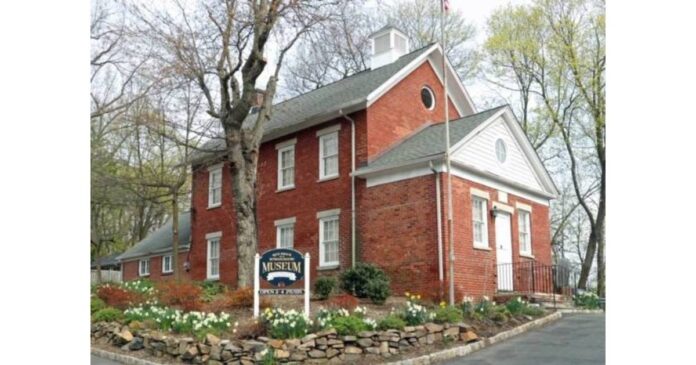

The restoration of the historic Mount Vernon School in Chatham Township represents far more than the rehabilitation of an aging structure. It reflects a broader movement taking shape across New Jersey as communities increasingly recognize the importance of preserving local history before it disappears permanently. In Morris County, where Revolutionary War heritage, early American architecture, and civic preservation continue to shape the identity of towns and neighborhoods, the completion of the Mount Vernon School restoration now stands as one of the region’s most meaningful preservation achievements in recent years.
Known locally as the Red Brick Schoolhouse Museum, the landmark has long occupied a unique place in the fabric of Chatham Township. Generations of residents have passed by the building, attended events there, studied local history within its walls, or experienced it as children during school field trips. Now, following years of restoration work supported through more than $305,000 in grants from the Morris County Historic Preservation Trust Fund, the circa-1860 structure has officially entered a new chapter.
The completed preservation project was recently recognized during a visit by Morris County Commissioner Director Stephen Shaw, who presented a Historic Preservation plaque to Chatham Township Mayor Jen Rowland and representatives of the Chatham Township Historical Society. The presentation came immediately following Morris County’s annual Pathways of History weekend, an event that continues to draw residents and visitors from across New Jersey to historic destinations throughout the county.
The timing of the restoration carries added importance as Morris County and communities throughout the state prepare for the commemoration of America’s 250th anniversary. Across New Jersey, municipalities are increasingly investing in historic preservation projects that connect present-day residents to the stories, institutions, and physical spaces that shaped the nation’s earliest years. While large metropolitan landmarks often dominate discussions surrounding American history, projects like the Mount Vernon School restoration reinforce how deeply local history matters in preserving the broader national narrative.
The Mount Vernon School itself represents multiple eras of New Jersey community life. Originally constructed around 1860, the building evolved over decades as the township changed around it. A vestibule addition was added around 1900, while another rear expansion followed in 1958. Throughout its history, the structure served multiple civic purposes. It functioned as a local schoolhouse and Sunday school through 1928 before later housing township functions and community organizations. Eventually, the building found new purpose as a museum dedicated to preserving Chatham Township’s history.
That layered history became central to the restoration effort. Preservation officials and local historians were not simply repairing an old building. They were stabilizing a structure that reflected multiple generations of educational, civic, and cultural use within the township. The goal was not modernization for the sake of appearance. Instead, the project focused on careful preservation work designed to maintain historical integrity while protecting the building for future use.
Since 2019, Morris County preservation grants have supported nearly every stage of the project. Funding assisted with the building’s National Register nomination, long-term preservation planning, construction documentation, and extensive restoration work focused primarily on the exterior structure. Restoration teams addressed deteriorating brick and mortar conditions that threatened the building’s long-term stability. Repairs included reconstruction work on the northwest vestibule corner, restoration of original stone window lintels and sills, and the installation of interior storm windows intended to improve preservation without compromising the historic appearance of the structure.
Projects like this often unfold quietly over several years, without attracting the attention given to large-scale commercial development or infrastructure expansion. Yet in communities like Chatham Township, the long-term cultural impact can be far more enduring. Historic buildings provide continuity. They create visible links between generations and offer residents something increasingly rare in rapidly changing suburban environments: a tangible sense of place.
That reality was reflected in comments from Chatham Township Mayor Jen Rowland, who emphasized how deeply connected the community remains to the Red Brick Schoolhouse. For many residents, the building is not simply an old structure preserved for historical interest. It is part of childhood memory, local identity, and intergenerational tradition. School field trips continue to introduce students to the site, while families frequently return years later with children and grandchildren.
That ongoing educational role remains one of the most significant aspects of the project. At a time when many communities struggle to maintain local historical engagement among younger generations, the Mount Vernon School continues functioning as an active educational destination rather than a static exhibit space. Students visiting the museum encounter local history directly within the environment where portions of that history originally unfolded. That experience carries a different level of impact than textbooks or digital archives alone can provide.
The Chatham Township Historical Society also played a central role throughout the restoration process. Preservation efforts of this scale rarely succeed through government funding alone. They depend heavily on sustained advocacy, planning, volunteer coordination, and institutional stewardship from local organizations willing to manage projects over extended periods of time. Historical Society President Martha Wells noted that county support remained essential from the earliest planning phases through the completion of the restoration work itself.
The collaboration between Morris County and local historical organizations has increasingly become a defining feature of preservation work throughout the region. Since 2003, Morris County Commissioners have approved more than $56 million in Historic Preservation Trust Fund grants supporting the preservation and restoration of 136 historic sites countywide. That level of investment has positioned Morris County as one of the most active historic preservation leaders in New Jersey.
The scale of those efforts reflects a growing recognition that preservation is not simply about nostalgia. Historic preservation increasingly intersects with tourism, education, economic development, cultural programming, and community branding. Towns that maintain their historic identity often strengthen civic engagement while simultaneously creating destinations that attract visitors interested in regional history and heritage tourism.
That dynamic was especially visible during the recent Pathways of History weekend, which once again transformed Morris County into a regional hub for local history tourism. The Mount Vernon School participated as part of that broader countywide initiative, welcoming visitors interested not only in Chatham Township history but also in New Jersey’s evolving role in the national story surrounding America’s founding era.
As part of the county’s preparations for the nation’s 250th anniversary, the Chatham Township Historical Society also featured the RevolutionNJ “Revolutionary Lives” exhibit during the weekend event. Programs like these continue building momentum toward the upcoming semiquincentennial celebration, which is expected to place renewed attention on New Jersey’s central role during the Revolutionary War period.
For New Jersey communities, the approaching anniversary represents an opportunity to reintroduce local history to new audiences while reinforcing preservation efforts already underway. Historic buildings such as the Mount Vernon School become increasingly important within that context because they provide authentic physical connections to the eras being commemorated.
In many ways, the completed restoration reflects broader questions facing communities throughout the state. As development pressures continue reshaping suburban landscapes, towns increasingly confront difficult choices about what should be preserved, what should be repurposed, and what risks being lost permanently. The successful preservation of the Mount Vernon School demonstrates what becomes possible when local governments, county agencies, preservation advocates, and residents align around a shared commitment to protecting community history.
For Chatham Township, the restored Red Brick Schoolhouse now stands not merely as a preserved landmark, but as an active reminder that local history remains alive when communities choose to invest in it. The building has survived multiple generations, changing civic needs, and the constant evolution of the township around it. Thanks to years of coordinated restoration work and continued public support, it now enters its next era prepared to educate, inspire, and connect future generations to the deeper story of Morris County and New Jersey itself.
For more New Jersey education, preservation, and community stories, visit Sunset Daily News Education



