


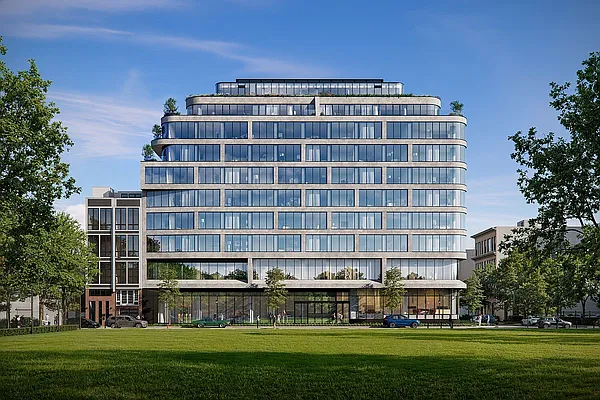

Jersey City’s residential real estate landscape continues evolving at a rapid pace, but one of the most significant shifts currently unfolding inside the market is not happening along the traditional waterfront corridors that have dominated luxury development headlines for years. Instead, a growing wave of attention is now turning toward the city’s established residential neighborhoods, where buyers increasingly seek long-term ownership opportunities, neighborhood identity, architectural quality, and a more integrated urban living experience beyond the high-rise rental boom that has reshaped much of Downtown Jersey City over the last decade. That transformation is now becoming especially visible in Hamilton Park, where closings are officially underway at One Jones Park, a newly completed condominium development positioned directly across from one of Jersey City’s most recognizable and desirable green spaces.
Located at 387 8th Street, One Jones Park enters the market during a uniquely important period for Jersey City real estate. While the city has experienced one of the most aggressive residential development expansions anywhere in the Northeast, much of that construction pipeline has centered heavily around rental inventory. Luxury apartment towers, amenity-driven rental communities, and large-scale multifamily projects have dominated the skyline conversation for years, particularly near transit corridors and waterfront districts connected to Manhattan. Condominium development, however, has remained comparatively limited, especially for larger-scale boutique projects offering newly completed ownership opportunities within established residential neighborhoods.
That imbalance between rental growth and homeownership inventory has quietly created substantial demand among buyers seeking permanent roots in Jersey City rather than temporary occupancy. One Jones Park arrives directly into that environment, offering a newly completed ownership product in a market where high-quality condominium availability remains surprisingly constrained relative to overall residential demand.
Closings now officially beginning at the development represent more than the completion of another residential building. They reflect a broader shift underway within Jersey City’s evolving housing market, where buyers are increasingly prioritizing long-term residential stability, neighborhood character, and architectural permanence over purely transient luxury rental experiences.
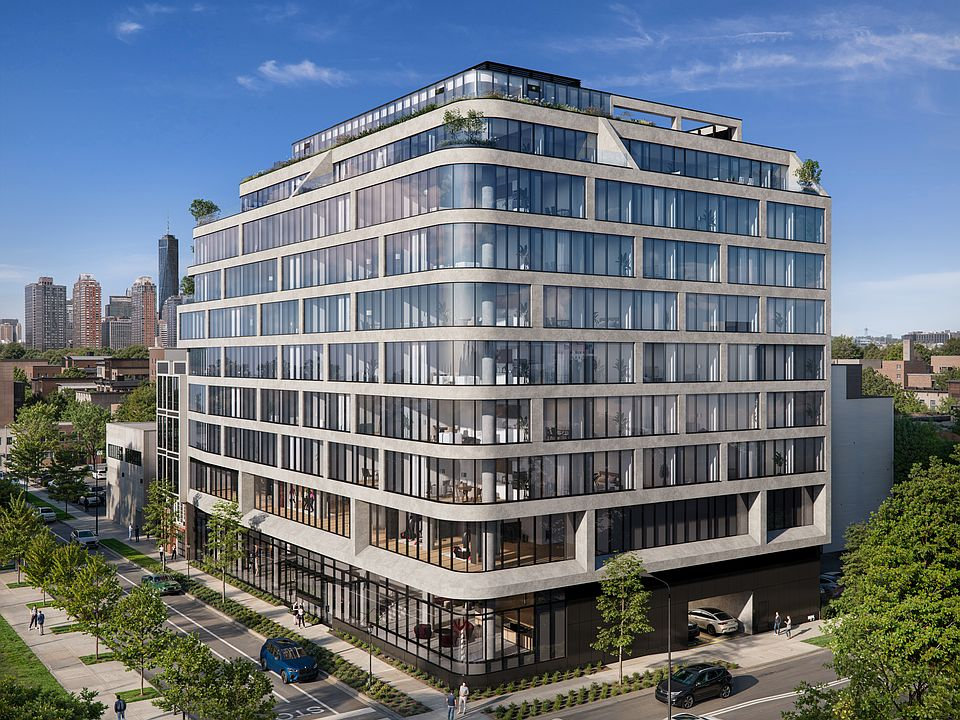
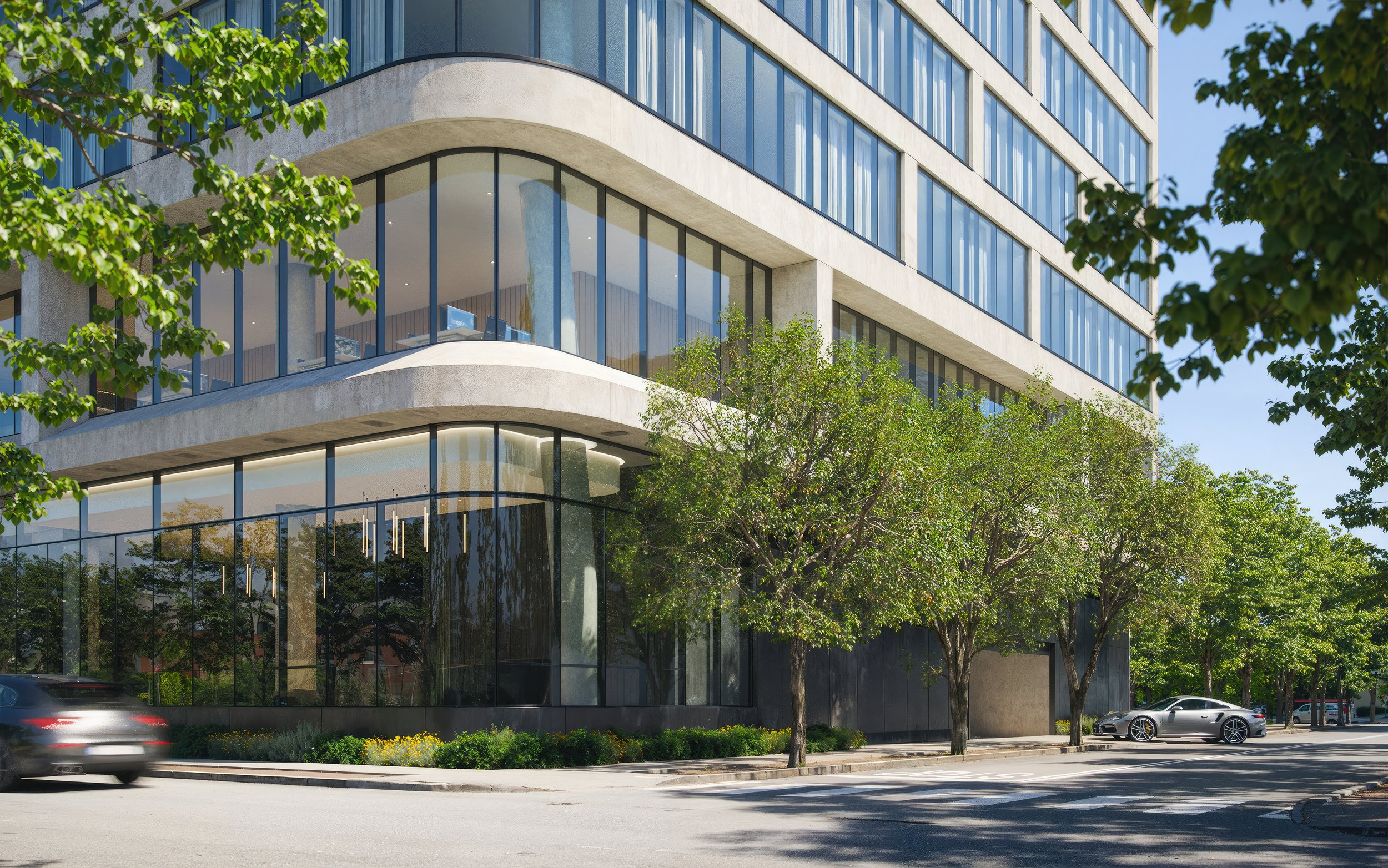
The project introduces 75 newly completed condominium residences into the Hamilton Park neighborhood, an area that has steadily solidified its reputation as one of Downtown Jersey City’s most sought-after residential districts. Hamilton Park itself has become synonymous with tree-lined streets, historic architecture, family-oriented community culture, independent businesses, neighborhood cafés, boutique retail, and proximity to Manhattan without sacrificing local identity. Unlike some of the city’s rapidly transforming high-density waterfront corridors, Hamilton Park maintains a distinctly residential atmosphere that continues attracting buyers seeking both urban access and neighborhood continuity.
Positioned directly across from Enos Jones Park, the building benefits from a location that reinforces many of the qualities currently driving buyer demand throughout Jersey City. Access to green space has become increasingly valuable in urban residential markets, particularly following years in which residents began reevaluating lifestyle priorities surrounding outdoor access, walkability, and community-centered living environments. The location places residents within immediate proximity of neighborhood parks, restaurants, coffee shops, schools, local services, and PATH access into Manhattan, creating the kind of integrated residential setting that continues drawing both longtime Jersey City residents and New York transplants alike.
Developed by EPIRE, a firm known for residential development work in Manhattan, One Jones Park reflects a deliberate effort to introduce a higher level of construction detail and material execution into Jersey City’s non-waterfront condominium market. The project’s positioning within the marketplace emphasizes durability, craftsmanship, and long-term design quality at a time when many buyers have become increasingly selective regarding construction standards in newer residential developments.
One of the building’s defining structural characteristics is its concrete construction, a feature frequently associated with higher-end residential buildings due to benefits involving sound insulation, structural longevity, and overall building stability. In a residential marketplace saturated with wood-frame multifamily construction, the emphasis on concrete development immediately differentiates the project within Jersey City’s increasingly competitive housing landscape.
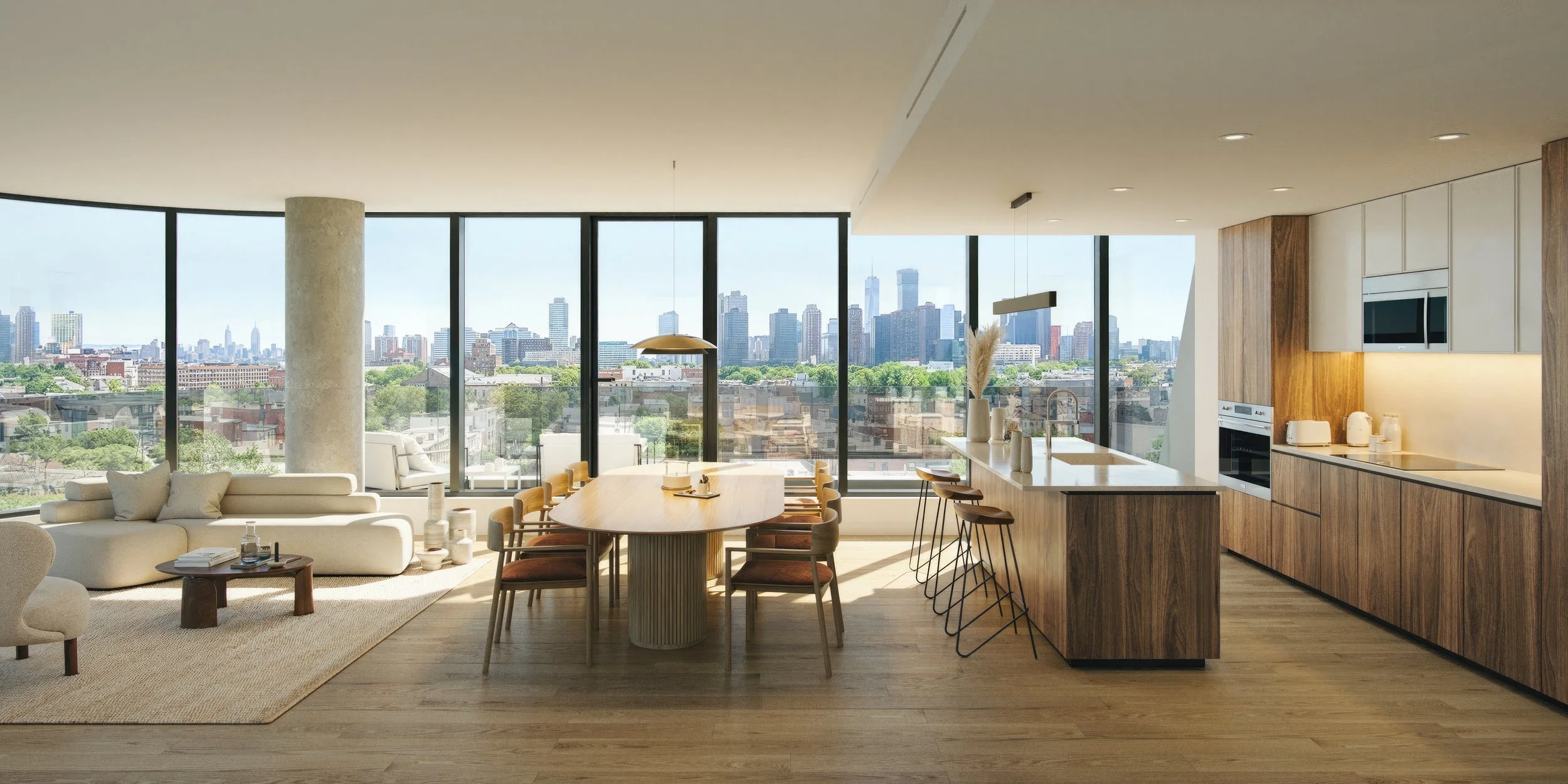
Inside the residences themselves, the project leans heavily into modern European-inspired design aesthetics combined with practical urban functionality. Large Schüco windows maximize natural light throughout the homes, helping create open interior environments that capitalize on both neighborhood and skyline views. The incorporation of Garbelotto engineered oak flooring throughout the residences reinforces the project’s emphasis on material quality and cohesive interior design continuity.
Kitchen spaces continue the development’s focus on refined contemporary finishes. Custom cabinetry by Meson’s paired with quartz countertops and integrated Bosch and Miele appliance packages position the residences squarely within the luxury condominium category while maintaining an understated design language centered more around functionality and material integrity than excessive visual ornamentation. The kitchens reflect a broader trend within modern urban residential design where buyers increasingly value clean architectural cohesion, integrated appliances, and practical layout efficiency alongside luxury presentation.
Bathrooms throughout the building similarly emphasize elevated finish quality through the use of Italian marble tile, Kohler fixtures, and premium architectural door systems from Barausse and Viva. The overall design philosophy appears intentionally calibrated toward buyers seeking a more timeless and durable residential aesthetic rather than trend-driven interiors that may quickly feel dated.
The amenity package at One Jones Park also reflects changing expectations surrounding modern condominium living in Jersey City. While amenity-heavy development has become commonplace throughout the region, the project’s approach appears focused on balancing luxury convenience with neighborhood-scale livability rather than attempting to replicate the oversized resort-style environments often associated with larger waterfront rental towers.
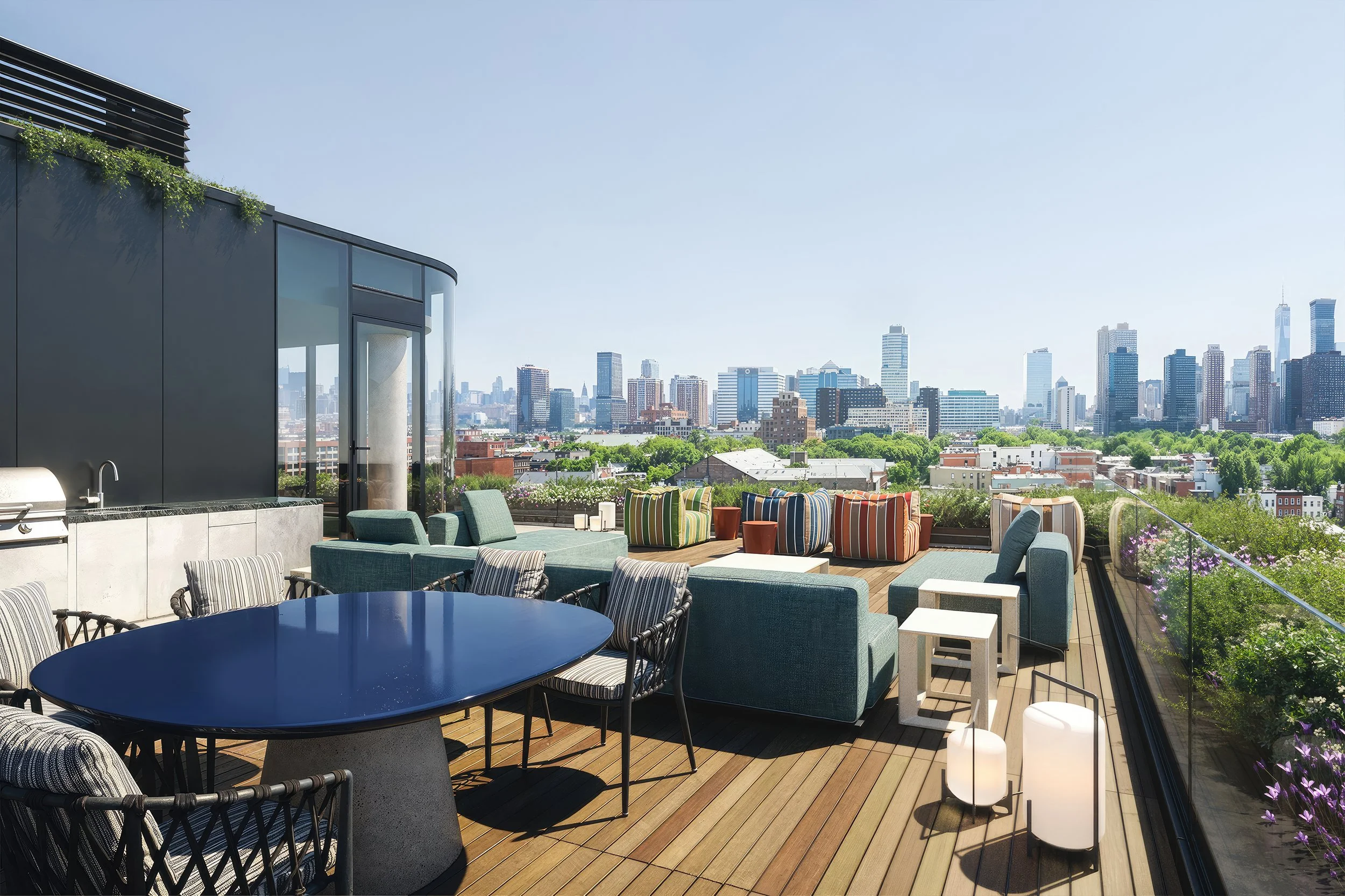
The building includes a 24-hour doorman, fitness center, children’s playroom, rooftop lounge, and preferred on-site parking — amenities increasingly viewed as essential within the upper-tier urban condominium market. The rooftop areas, offering views extending toward Manhattan, Hoboken, and Journal Square, further reinforce the development’s positioning within Jersey City’s growing luxury ownership landscape.
Notably, the shared spaces throughout the building incorporate furnishings from B&B Italia, continuing the project’s broader emphasis on curated European design influence and material quality. The integration of premium furnishings into common spaces has become an increasingly important branding component within luxury residential development, helping establish a cohesive architectural identity extending beyond individual residences themselves.
The market timing surrounding One Jones Park may ultimately prove especially significant. Jersey City’s real estate market continues navigating a complex period defined by elevated interest rates, evolving work patterns, shifting migration dynamics, and changing buyer behavior throughout the broader New York metropolitan region. Despite those pressures, demand for ownership opportunities inside highly walkable, transit-accessible urban neighborhoods remains remarkably resilient.
In particular, Jersey City continues benefiting from its position as one of the few urban markets capable of offering relatively larger residential space, neighborhood diversity, and ownership opportunities while still maintaining direct Manhattan connectivity. As affordability pressures persist throughout New York City itself, many buyers continue viewing Jersey City as a long-term residential alternative rather than merely a commuter extension of Manhattan.
That shift in perception has become increasingly important. Jersey City is no longer simply competing as a lower-cost alternative market. It is increasingly operating as a standalone destination city with its own economic identity, cultural infrastructure, restaurant scene, arts growth, business expansion, and residential prestige. Neighborhoods like Hamilton Park exemplify that transformation because they offer buyers a distinct sense of place that extends beyond proximity to New York alone.
The emergence of projects like One Jones Park also highlights a larger conversation unfolding within New Jersey’s broader housing market regarding the balance between rental growth and ownership opportunities. Across numerous urban municipalities, concerns have grown regarding whether development pipelines are creating sufficient pathways toward long-term homeownership rather than exclusively expanding rental inventory. Ownership opportunities often contribute differently to neighborhood stability, local investment patterns, school enrollment continuity, and long-term civic engagement.
For many buyers currently entering the Jersey City market, particularly professionals, families, and longtime renters seeking permanence, newly completed condominium inventory inside established neighborhoods remains relatively rare. That scarcity may ultimately become one of One Jones Park’s strongest advantages as closings continue moving forward.
The project additionally arrives during a period when luxury buyers are becoming increasingly selective about authenticity within urban residential environments. Rather than purely chasing skyline prestige or oversized amenity lists, many purchasers now prioritize walkability, architectural character, community identity, local retail ecosystems, and overall neighborhood experience. Hamilton Park’s continued popularity reflects precisely those preferences.
As Jersey City continues evolving into one of the Northeast’s most competitive residential markets, developments like One Jones Park signal where portions of the market may increasingly head next: away from exclusively rental-driven expansion and toward more neighborhood-centered ownership opportunities emphasizing permanence, design quality, and integrated urban living.
With residences now completed and immediate move-ins underway, One Jones Park enters the market not simply as another condominium project, but as part of a broader transformation reshaping how luxury residential living is being defined within Jersey City itself.