



Passaic’s reemergence as one of the most compelling turnaround stories in the United States is no longer anecdotal—it is now formally recognized at the national level. In a striking reversal of perception and performance, the city has moved from being labeled among the country’s most challenged municipalities to securing a place inside the top 10 best places to live in the nation, according to the latest 2025–2026 rankings by U.S. News & World Report. For a city once defined by industrial decline, economic contraction, and persistent negative narratives, the shift is not just symbolic. It reflects a measurable recalibration of strategy, investment, and civic identity that is now reshaping how Passaic is viewed both within New Jersey and across the country.
The contrast is stark. In 2019, national rankings placed Passaic near the bottom of urban livability metrics, citing a combination of economic hardship, limited upward mobility, healthcare gaps, and long-standing structural challenges tied to decades of disinvestment. At that time, the data painted a picture of a city still struggling to recover from the loss of its industrial base, the erosion of its middle class, and a shrinking tax foundation that constrained municipal growth. That narrative, widely circulated and frequently repeated, became part of Passaic’s identity in the public sphere.
Seven years later, the data—and the story—have changed.
The city’s rise into the national top tier is not the result of a single project or short-term initiative. It is the outcome of a sustained, multi-layered effort to stabilize core systems, attract targeted investment, and reposition Passaic within the broader regional economy. At the center of that transformation is a deliberate focus on rebuilding the fundamentals: housing, economic opportunity, infrastructure, and public perception.
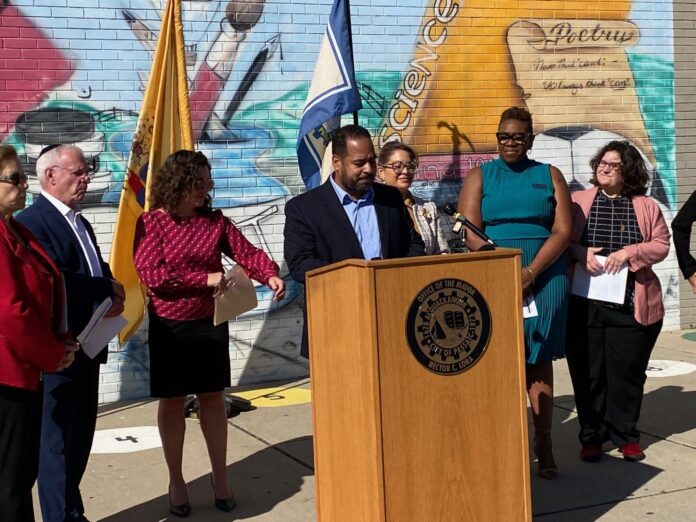
Mayor Hector Lora, who took office in 2016, inherited a city at a critical juncture. The immediate challenge was not simply to improve conditions, but to reverse a trajectory that had been decades in the making. That meant addressing both the structural realities—such as economic stagnation and population shifts—and the narrative surrounding the city, which had become narrowly defined by its challenges rather than its potential. From the outset, the strategy required alignment across municipal leadership, private sector stakeholders, and community organizations, with a clear emphasis on long-term positioning rather than short-term optics.
A key driver of Passaic’s resurgence has been its evolving real estate landscape. The city has increasingly positioned itself as a viable alternative within the North Jersey housing market, offering relative affordability while maintaining proximity to major employment centers. This dynamic has attracted both developers and residents seeking access to the broader regional economy without the cost barriers associated with neighboring markets. Mixed-use developments, residential reinvestment, and strategic infill projects have begun to reshape the city’s physical environment, contributing to both economic activity and neighborhood stability.
This real estate momentum is part of a larger trend unfolding across New Jersey, where cities with strong geographic positioning and available development capacity are experiencing renewed interest. Coverage within the Real Estate section of Sunset Daily News New Jersey continues to track how municipalities like Passaic are leveraging these advantages to drive growth, attract capital, and redefine their market identity. In Passaic’s case, the shift has been particularly pronounced, as new development aligns with broader efforts to improve infrastructure, enhance public services, and create a more cohesive urban environment.
Economic indicators have also played a role in the city’s changing profile. While challenges remain, there has been measurable progress in employment stability, income levels, and access to services. These improvements are not occurring in isolation; they are the result of coordinated efforts to strengthen the local economy while integrating Passaic more effectively into the regional workforce network. Transportation access, proximity to major highways, and connectivity to surrounding job centers have all contributed to this repositioning, making the city more competitive in attracting both residents and businesses.
Equally important is the shift in how Passaic is being discussed and perceived. For years, coverage of the city was disproportionately focused on crime and hardship, creating a feedback loop that reinforced negative perceptions and discouraged investment. Breaking that cycle required not only tangible improvements, but also a sustained effort to highlight progress, opportunity, and momentum. As national rankings begin to reflect those changes, the narrative is evolving—moving from one of decline to one of resilience and reinvention.
The scale of Passaic’s achievement becomes even more significant when viewed in context. Across the United States, there are well over a thousand incorporated places with populations exceeding 20,000. Rising into the top 10 among that group places Passaic in a category that few would have predicted just a few years ago. It signals that the city’s progress is not incremental—it is competitive on a national level.
This transformation also reflects broader shifts in how urban success is defined. Today’s metrics extend beyond traditional economic indicators to include livability, accessibility, community engagement, and long-term sustainability. Passaic’s ability to improve across multiple dimensions simultaneously suggests a model that other cities may look to as they navigate similar challenges. It demonstrates that recovery is not solely about restoring what was lost, but about building something that is aligned with current and future realities.
At the same time, the city’s leadership has remained clear-eyed about the work that remains. Progress does not eliminate underlying challenges, and sustaining momentum will require continued investment, disciplined planning, and responsiveness to changing conditions. Housing affordability, infrastructure demands, and equitable access to opportunity will remain central issues as the city continues to grow. The difference now is that Passaic is addressing those issues from a position of forward movement rather than recovery.
What has emerged is a city that is no longer defined by its lowest moment, but by its capacity to evolve. The turnaround from a “most miserable” designation to a top-10 national ranking is not simply a reversal of fortune—it is a case study in how targeted leadership, strategic development, and sustained effort can reshape both reality and perception. In a state where urban reinvention is an ongoing theme, Passaic has positioned itself at the forefront of that conversation, offering a clear example of what is possible when long-term vision is matched with execution.
As New Jersey’s cities continue to compete for investment, residents, and relevance in a rapidly shifting landscape, Passaic’s trajectory stands out. It is not just a comeback story—it is a blueprint for how cities can reclaim their place, redefine their identity, and move from the margins of national rankings to the center of the conversation.