


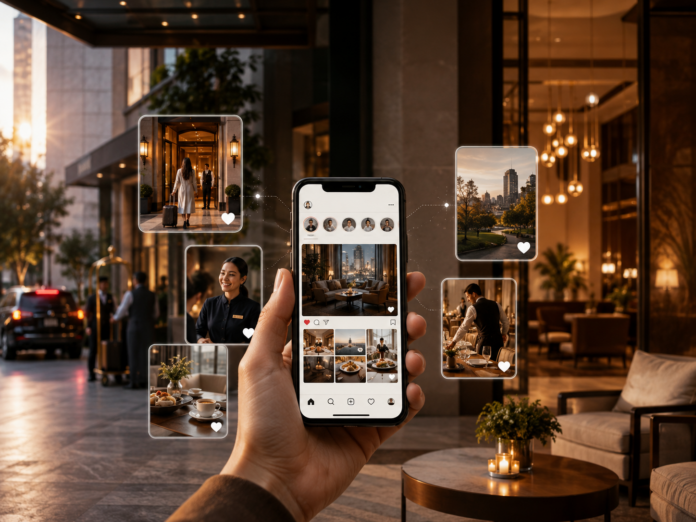

The hospitality industry is entering a new era of digital competition, and New Jersey-based Lodging Interactive is making a calculated move to help hotels adapt to a marketplace increasingly dominated by storytelling, authenticity, and social media engagement rather than traditional advertising alone. The company’s newly announced educational blog series centered on organic social media storytelling for branded hotels reflects a much larger transformation underway across the travel sector, where guest behavior, booking patterns, and online discovery habits are evolving at remarkable speed.
At its core, the initiative is designed to help hotel operators rethink how they present themselves online. Instead of relying exclusively on polished corporate messaging, static amenity lists, or interchangeable marketing language, the series focuses on helping hotels create stronger emotional connections with travelers by showcasing the individuality of each property, its local culture, guest experiences, surrounding neighborhoods, culinary identity, architectural personality, and day-to-day atmosphere. The timing of the launch is significant because hotels are facing mounting pressure to stand out in a crowded digital environment where consumers increasingly make travel decisions based on what they see in their social media feeds long before they ever search a booking engine.
For years, many branded hotels approached social media primarily as a promotional tool. Feeds were often filled with professionally staged room photos, generic hospitality slogans, seasonal discounts, and standardized corporate branding. That formula worked during an earlier stage of digital marketing, but the online behavior of travelers has changed dramatically. Today’s travelers want authenticity, immersion, and personality. They want to understand what makes a property unique before they commit to a reservation. They are increasingly drawn to content that feels spontaneous, local, and experience-driven rather than carefully manufactured.
Lodging Interactive’s new series appears to recognize that modern hospitality marketing is no longer simply about advertising available rooms. It is about building a recognizable identity capable of creating emotional engagement and long-term loyalty. Platforms such as Instagram and Facebook have become visual search engines for travel inspiration, where a hotel’s digital personality can influence booking decisions just as strongly as pricing or location. Travelers scrolling through social feeds are often responding to atmosphere and emotion first. A rooftop at sunset, a chef preparing a regional specialty, a concierge highlighting neighborhood culture, or a behind-the-scenes glimpse into the daily rhythm of a property can generate stronger engagement than traditional promotional messaging.
The launch also underscores how artificial intelligence is changing the economics of online visibility throughout the hospitality sector. As AI-generated content becomes more widespread across digital marketing, consumers are becoming increasingly sensitive to content that feels generic or overly automated. Hotels that depend entirely on templated language or repetitive promotional posts risk blending into an online landscape already saturated with algorithmically generated material. In response, authenticity itself is becoming a competitive advantage. Real stories, real experiences, and genuinely localized content now carry greater weight because travelers are searching for signals that feel human and trustworthy.
That shift is especially important in hospitality-heavy regions connected to New Jersey’s tourism economy. Hotels throughout Atlantic City, Newark, Jersey City, Hoboken, Princeton, Cape May, Asbury Park, and the broader Jersey Shore are operating in an intensely competitive marketplace where digital perception can directly impact occupancy rates. Properties are no longer competing solely against nearby hotels. They are competing for attention against every travel destination appearing in a consumer’s feed at any given moment. In that environment, social storytelling becomes a strategic business function rather than a secondary marketing exercise.
The educational focus of Lodging Interactive’s initiative also reflects broader changes taking place across the hotel industry’s internal operations. Marketing teams are increasingly expected to function as content creators, community builders, brand strategists, and engagement specialists simultaneously. Hotels that once depended heavily on third-party booking platforms are now placing far greater emphasis on direct relationships with consumers. Organic social media storytelling plays an important role in that effort because it allows properties to build familiarity and trust over time while reducing reliance on costly paid advertising campaigns and commission-heavy booking channels.
Equally important is the growing recognition that travelers are purchasing more than accommodations. Modern guests are seeking experiences that align with their personal identities, lifestyles, and aspirations. A hotel’s ability to communicate its atmosphere, local integration, and experiential value online has therefore become central to brand positioning. Travelers increasingly want to know what it feels like to stay somewhere, not simply what the room dimensions are or whether the property has a fitness center. They want to see how a hotel interacts with its community, how it reflects its surroundings, and how it differentiates itself culturally and emotionally from competitors.
Lodging Interactive’s strategy appears particularly aligned with the broader transformation currently reshaping travel media itself. Traditional advertising models are losing some of their influence as consumers rely more heavily on creators, influencers, peer recommendations, experiential visuals, and social discovery platforms. In many cases, a traveler’s first interaction with a destination now occurs passively through scrolling rather than intentionally through search. Hotels capable of capturing attention in those moments often gain a significant advantage in long-term brand recognition.
The company’s focus on organic storytelling rather than purely paid promotion is also notable because it emphasizes sustainability in digital engagement. Paid campaigns can generate temporary visibility, but authentic storytelling creates longer-lasting audience relationships. A compelling social presence encourages repeat interaction, audience sharing, user-generated content, and stronger community identification. Over time, those factors contribute to stronger direct engagement and increased customer retention, both of which have become increasingly valuable as acquisition costs continue climbing across the hospitality sector.
For the broader travel industry, the launch of this new educational series reflects an important reality about where hospitality marketing is heading next. Hotels are no longer simply physical destinations competing on amenities and location. They are now media brands competing for attention in an always-on digital ecosystem where narrative identity matters enormously. The properties that succeed over the next decade are likely to be the ones that understand how to combine hospitality operations with compelling digital storytelling capable of making travelers feel connected before they ever arrive.
Lodging Interactive’s latest initiative positions the company squarely within that evolving conversation. As hotels continue searching for ways to maintain visibility, strengthen guest loyalty, and stand apart from increasingly commoditized competitors, the ability to tell authentic, experience-driven stories may become one of the most valuable tools in hospitality marketing. In an industry where emotional connection often determines consumer behavior, storytelling is no longer a luxury addition to branding strategy. It is rapidly becoming the foundation of it.



