


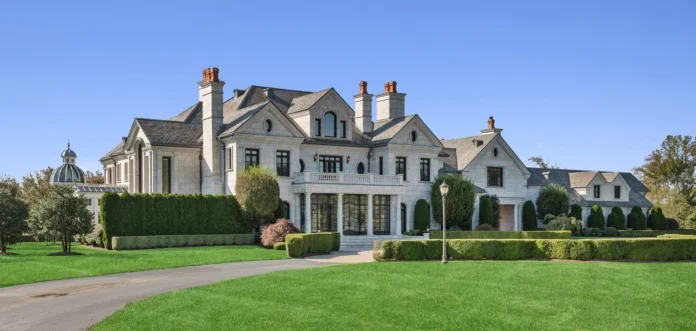

In a move that underscores both the enduring value of New Jersey’s luxury real estate market and the quiet reshaping of elite property portfolios, Bruce Springsteen is finalizing the sale of a sprawling 7.4-acre estate in Rumson—a property he has owned for more than four decades but rarely occupied. The transaction marks the second consecutive divestment of adjacent holdings in one of Monmouth County’s most exclusive enclaves, signaling a deliberate recalibration of assets by one of the state’s most iconic figures.
This latest deal follows the previously completed sale of a neighboring residence, acquired by Randy Foye for $1.737 million, reinforcing a clear pattern: high-profile, legacy-owned properties in coastal New Jersey are being repositioned into the hands of a new class of affluent buyers, many of whom are tied to finance, sports, and investment sectors. The current estate—nearly 6,000 square feet and set deep within a tree-lined private parcel—is now under contract to a New York City-based portfolio manager, reflecting the continued migration of capital from urban centers into premium suburban and coastal real estate markets.
The property itself represents a distinct architectural and historical asset. Built in 1917, the residence is enveloped in mature landscaping, with vine-covered facades and a long, secluded driveway that reinforces both privacy and prestige. Aerial views reveal a composition that is increasingly rare in densely developed regions: expansive open green space, a manicured approach, and a clear separation between main residence and auxiliary structures. The estate includes a guest house and an outdoor pool, both positioned to maintain discretion while enhancing the usability of the property as a private retreat.
Springsteen originally acquired the Rumson estate in November 1983 through trusted collaborators, including his longtime manager Jon Landau, embedding the purchase within a broader strategy of long-term asset ownership during a pivotal era in his career. Over time, however, the property transitioned from a potential residence into more of a legacy holding—one that remained largely off-market and outside the public eye for decades. Its recent emergence through a private transaction, rather than a traditional listing, highlights a growing trend within the upper tier of the real estate market: discreet, relationship-driven deals that prioritize confidentiality over exposure.
Within the broader framework of New Jersey’s real estate landscape, this transaction carries layered significance. Monmouth County, and Rumson in particular, has long been associated with waterfront estates, generational wealth, and proximity to both New York City and the Jersey Shore. In recent years, demand for properties in this corridor has intensified, driven by a combination of lifestyle shifts, remote work flexibility, and sustained interest in high-quality suburban living environments. Properties that offer acreage, architectural character, and privacy—especially those with historical pedigree—have become increasingly scarce and correspondingly valuable.
Coverage across the Real Estate vertical continues to reflect this transformation. The market is no longer defined solely by location, but by a convergence of factors that include land availability, design integrity, and long-term investment potential. Estates like Springsteen’s Rumson property sit at the intersection of these dynamics, offering a combination of tangible and intangible value that extends beyond square footage or assessed price.
The financial dimensions of the current transaction remain undisclosed, though county records place the assessed value at approximately $3 million. In the context of comparable properties and recent market activity, that figure serves more as a baseline than a ceiling. High-end transactions in this segment often reflect premiums tied to privacy, provenance, and the intrinsic appeal of legacy ownership. While the exact sale price may not be publicly confirmed, the underlying narrative is clear: demand for elite New Jersey real estate remains resilient, even as broader market conditions fluctuate.
For Springsteen, the sale represents a continued refinement of a diverse property portfolio that spans multiple regions. He maintains a primary residence in Colts Neck, New Jersey—a horse farm where he lives with his wife, Patti Scialfa—as well as holdings in Florida and California, including a property in Beverly Hills’ Benedict Canyon. This geographic distribution reflects both lifestyle considerations and long-term asset diversification, a strategy increasingly mirrored by high-net-worth individuals navigating complex real estate markets.
At a deeper level, the Rumson estate sale speaks to the evolving relationship between celebrity ownership and regional identity. For decades, properties associated with figures like Springsteen have carried symbolic weight, reinforcing cultural connections between artist and place. As these properties change hands, they transition from personal landmarks into components of a broader economic ecosystem—assets that continue to shape local markets even as their ownership evolves.
For prospective buyers and investors, the transaction offers a case study in how value is constructed and transferred within the luxury segment. It underscores the importance of timing, discretion, and strategic positioning, particularly in markets where supply is limited and demand is highly targeted. It also highlights the role of New Jersey as a competitive player in the national real estate landscape, capable of attracting both legacy owners and new capital at the highest levels.
The Rumson estate, with its century-old architecture, expansive grounds, and layered history, now enters a new chapter. Its transition from a quietly held asset to an actively traded property reflects broader shifts in how high-end real estate is perceived, utilized, and valued. For New Jersey, it is another signal that the state’s most exclusive markets continue to evolve—driven by a combination of heritage, opportunity, and the enduring appeal of place.



