



New Jersey’s fiscal future is moving into sharp focus as Senator Paul Sarlo, chairman of the Senate Budget and Appropriations Committee, formally launches a critical phase of the state’s budget process—public hearings on Governor Mikie Sherrill’s proposed Fiscal Year 2027 budget. With economic uncertainty, affordability concerns, and structural spending pressures all converging, these hearings are expected to become one of the most consequential public policy forums in the state this year.
The hearings, scheduled for March 24 and March 30, are more than procedural checkpoints—they are strategic inflection points where public input, political priorities, and fiscal realities intersect. At stake is not just a spending plan, but a broader vision for how New Jersey navigates competing demands: maintaining essential services, controlling costs, investing in growth, and addressing the persistent affordability challenges facing residents across the state.
Senator Sarlo’s framing of the hearings underscores the gravity of the moment. The state, he notes, is confronting “difficult fiscal challenges,” a phrase that captures a complex budget environment shaped by inflationary pressures, shifting revenue streams, and the long-term obligations that continue to define New Jersey’s financial landscape. From pension liabilities and healthcare costs to infrastructure investment and education funding, the FY2027 budget must balance immediate needs with long-term sustainability.
The first hearing, set for 10:00 a.m. on Tuesday, March 24, will be conducted remotely, reflecting a continued commitment to accessibility and broad civic participation. By leveraging virtual platforms, the Legislature is expanding the reach of the budget process, enabling residents from every corner of the state to engage directly with policymakers. This approach has become an increasingly important tool in modern governance, particularly in a state as geographically and demographically diverse as New Jersey.
The second hearing, scheduled for 10:00 a.m. on Monday, March 30, will take place in person at the New Jersey Institute of Technology’s Campus Center Atrium in Newark. This setting is significant—not only because of its location in one of the state’s key urban centers, but also because it reinforces the importance of direct, face-to-face engagement in shaping public policy. By hosting the hearing in Newark, lawmakers are positioning the budget conversation within a city that embodies many of the economic and social dynamics the state must address.
Together, these two hearings create a hybrid model of participation that reflects the evolving nature of public engagement in New Jersey politics. The remote session lowers barriers to entry, while the in-person event fosters a more immediate, tangible exchange between residents and decision-makers. This dual approach is designed to capture a wide spectrum of perspectives, ensuring that the final budget reflects not only legislative priorities but also the lived experiences of New Jerseyans.
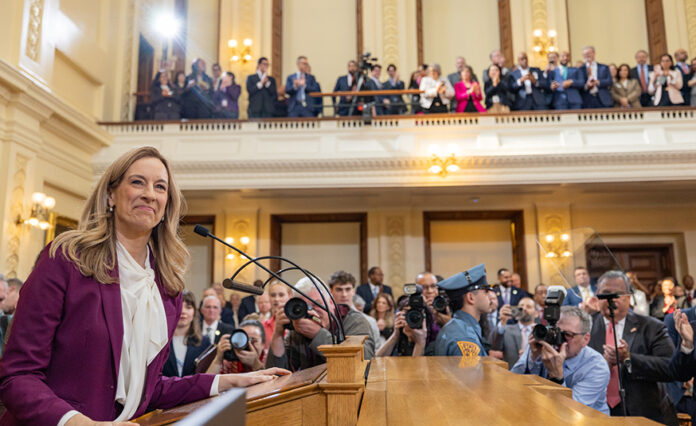
At the core of the discussion is Governor Mikie Sherrill’s FY2027 budget proposal, a document that will undergo intense scrutiny in the weeks ahead. While the specifics of the proposal will be dissected line by line, the broader themes are already emerging: affordability, efficiency, and strategic investment. For many residents, the question is straightforward but urgent—how will the state’s fiscal plan make life more manageable in a region where the cost of living remains among the highest in the nation?
Senator Sarlo has made it clear that taxpayer protection will be a central consideration. In an environment where residents are already navigating rising housing costs, utility expenses, and everyday financial pressures, the ability of the state to deliver services without imposing additional burdens is a defining challenge. This tension between revenue generation and cost containment will likely shape much of the debate during the hearings.
Equally important is the search for efficiencies within the state’s existing spending framework. Identifying areas where resources can be optimized—without compromising essential services—requires a level of fiscal discipline and innovation that goes beyond traditional budgeting. It involves rethinking how programs are delivered, how funds are allocated, and how outcomes are measured.
The public hearings provide a platform for these conversations to take place in real time. Residents, advocacy groups, industry leaders, and policy experts will have the opportunity to present testimony, raise concerns, and propose solutions. This input is not merely symbolic; it plays a substantive role in shaping the committee’s recommendations and, ultimately, the final budget that will be enacted.
From a political standpoint, the hearings also serve as a barometer of broader sentiment across the state. They offer insight into which issues resonate most strongly with the public and where there may be alignment—or divergence—between constituents and policymakers. In a state where political dynamics are continually evolving, this feedback loop is essential for informed decision-making.
The FY2027 budget process is unfolding against a backdrop of heightened attention to fiscal policy nationwide. States are grappling with similar challenges, from managing post-pandemic economic shifts to addressing long-standing structural imbalances. In this context, New Jersey’s approach will be closely watched, both within the region and beyond.
For residents, the message is clear: participation matters. Whether through virtual testimony or in-person engagement, the hearings represent a direct opportunity to influence the direction of state policy. They are a reminder that the budget is not an abstract document—it is a blueprint that affects everything from education and transportation to healthcare and public safety.
As the process moves forward, the Senate Budget and Appropriations Committee will synthesize public input, analyze fiscal data, and work toward a plan that reflects both necessity and ambition. The outcome will shape New Jersey’s trajectory in the coming year, with implications that extend far beyond the confines of Trenton.
For continued updates on the budget hearings, legislative developments, and the evolving political landscape in New Jersey, visit the politics section of Sunset Daily News New Jersey, where in-depth coverage continues to track the decisions defining the state’s future.



