


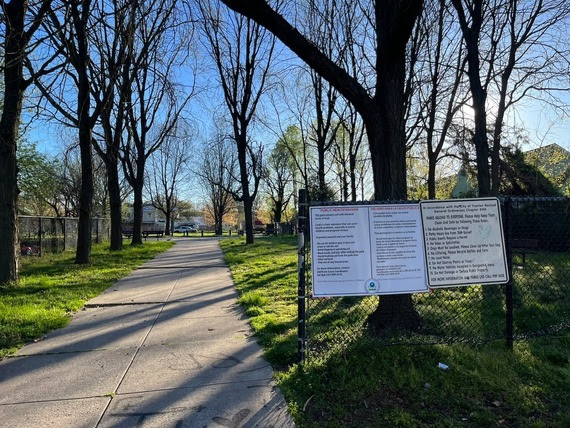

In a state defined by dense infrastructure, historic industry, and layered environmental challenges, the situation unfolding in East Trenton has become a stark and urgent case study in how vulnerable public health systems can become when even a single point of failure disappears. A neighborhood already carrying the weight of contamination as a designated Superfund site is now confronting a new and immediate threat: the departure of its only dedicated lead screening specialist, leaving residents in a precarious position with limited access to one of the most essential environmental health services available.
East Trenton’s designation under the federal Superfund program reflects decades of industrial legacy—soil contamination, aging infrastructure, and the lingering presence of hazardous substances that have yet to be fully remediated. For families living within this environment, exposure risks are not abstract concerns. They are daily realities, particularly for children, who remain most vulnerable to the neurological and developmental impacts of lead.
The role of consistent, localized testing in such communities cannot be overstated. Lead exposure often presents without immediate symptoms, quietly affecting cognitive development, behavior, and long-term health outcomes. Without accessible testing, early detection becomes unlikely, and intervention arrives too late to prevent lasting harm. The departure of East Trenton’s sole lead tester in May represents more than a staffing change—it signals a breakdown in a critical line of defense for public health.
This situation underscores a broader structural weakness that extends beyond one neighborhood or even one state. Across the country, many environmentally burdened communities operate with minimal redundancy in public health services. When a single specialist carries the responsibility for screening, education, and outreach, the system is inherently fragile. Once that individual exits, whether due to funding limitations, burnout, or career transition, entire populations are left without immediate alternatives.
In New Jersey, where industrial history intersects with dense residential development, these vulnerabilities are particularly pronounced. Communities like East Trenton rely heavily on localized programs to bridge gaps that larger systems have not fully addressed. These programs often function with limited budgets, constrained staffing, and inconsistent funding streams, making continuity difficult to sustain over time. The result is a patchwork approach to environmental health—one that can falter at precisely the moment it is needed most.
The implications extend into multiple layers of governance and accountability. Municipal agencies, state health departments, and federal oversight bodies all play roles in managing contaminated sites and protecting residents. Yet the coordination between these entities is frequently uneven, leading to delays, inefficiencies, and, in cases like this, critical service gaps. The absence of a clear, scalable contingency plan for lead testing in a known high-risk area raises significant questions about preparedness and prioritization.
For residents, the impact is immediate and personal. Parents seeking routine testing for their children may now face logistical hurdles, including travel to distant facilities, extended wait times, or navigating complex healthcare systems that are not designed for rapid, community-based screening. These barriers disproportionately affect low-income households, where access to transportation, flexible work schedules, and healthcare literacy may already be limited. In effect, the communities most at risk are often those least equipped to absorb additional burdens.
The broader environmental justice dimension cannot be ignored. Historically, neighborhoods like East Trenton have borne the cumulative effects of industrial zoning decisions, infrastructure neglect, and underinvestment. The loss of a critical health service within such a context reinforces longstanding inequities, raising concerns about whether sufficient safeguards are truly in place for populations living closest to environmental hazards.
At the same time, this moment presents an inflection point for policy and reform. The visibility of this gap creates an opportunity to reassess how lead screening and environmental health services are structured, funded, and delivered across New Jersey. A more resilient system would incorporate redundancy, ensuring that no single departure can disrupt access to essential care. It would also integrate community-based outreach with scalable support from state and federal agencies, creating a more cohesive and responsive network.
Efforts to strengthen this framework must also prioritize transparency and communication. Residents need clear information about where and how to access testing, what resources are available, and how potential exposures are being addressed. Without consistent messaging, uncertainty can erode trust, further complicating public health efforts.
New Jersey has the institutional capacity and policy infrastructure to respond effectively. The challenge lies in aligning these resources with the realities on the ground, particularly in communities that have historically been underserved. Investments in workforce development, targeted funding for high-risk areas, and stronger interagency coordination can transform this moment of vulnerability into a catalyst for long-term improvement.
Within the broader context of the state’s environmental and public health landscape, East Trenton’s situation reflects a recurring theme: the tension between legacy challenges and modern expectations for safety and accountability. As New Jersey continues to address its industrial past, the need for robust, adaptable public health systems becomes increasingly clear.
The departure of one lead tester should not be enough to destabilize access to critical services for an entire community. Yet in East Trenton, that is precisely the risk now facing residents. Addressing this gap is not simply a matter of replacing a position—it requires a systemic response that acknowledges the complexity of environmental health in contaminated areas and commits to building a structure capable of withstanding both expected and unforeseen challenges.
For Sunset Daily News New Jersey readers tracking the intersection of environmental policy, public health, and community impact, this development stands as a defining moment. It highlights the urgent need for proactive solutions, sustained investment, and a renewed focus on protecting the most vulnerable populations across the state.