Believe it or not, I had never actually watched an episode of Catfish until now and it was by mistake. I went into MTV instead of MSNow but anyway, I knew exactly what the show was and is about. I did think that people pretend to be someone they are not online, feelings get involved, the truth eventually comes out, and somebody usually gets hurt. At least that was my assumption. What I did not realize is that some of these stories actually end well.
The episode I watched caught me completely off guard. The woman involved was convinced she was being catfished because the guy could barely leave his house and his behavior simply did not make sense from her perspective. As the story unfolded, it became clear that what looked suspicious on the surface was actually something much sadder and much more human. By the end of the episode, I found myself feeling terrible for the kid. Coming from someone who is not exactly known for loving himself, I understood parts of what he was going through. What surprised me most was that the story ended with what appeared to be a genuinely happy couple. I had no idea Catfish even allowed that to happen. I honestly thought every episode ended with someone getting destroyed emotionally. Read The Full Substack.
Summer House Still Has One Massive Unanswered Question
The Summer House Season 10 Reunion Part III wrapped up this week, and somehow, after three reunion episodes and roughly ten hours of discussion, there still seems to be one question that needs to be asked directly to their faces. I also think that’s what Lindsay was trying to articulate during that commercial break.
By the way, how many times did you think we were actually watching a live segment when it was really during one of their breaks? That Lindsay exchange, in particular, caught me off guard because when Andy suddenly said, “Okay, we’re back,” my immediate reaction was, “Wait, we weren’t on the air?”
Regardless, that’s a pretty innovative television production tactic. I have to believe it’s relatively new, at least in this format. It’s actually a cool idea because it gives viewers the feeling that they’re seeing what normally happens when the cameras aren’t officially rolling and we do not miss anything important. Read The Full Substack.
Amid the Reunion Chaos, Charley Manley and Justin Assad May Be Bravo’s Most Surprising Success Story.
One of the more surprising developments to come out of Southern Hospitality and its Reunion this season has been the relationship between Charley Manley and Justin Assad. In a reality television landscape where relationships often seem designed to implode for ratings, these two appear to be doing the exact opposite. The couple officially hard-launched their relationship earlier this spring and, unlike many Bravo romances, they actually seem happy. Justin frequently posts about Charley on social media and recently referred to her as his “whole heart,” which is about as public a declaration as you can make in the Bravo universe without getting engaged. He professsed his love on this last Reunion Episode. I am actually glad. As long as they are real, I am way into it.
Their relationship became a focal point during the Southern Hospitality reunion after Andy Cohen pressed Justin about lingering questions surrounding the timeline of their romance. Specifically, viewers wanted clarity regarding whether there was any overlap between Justin beginning to see Charley in August 2025 and Charley’s brief involvement with Southern Charm’s Craig Conover. Both Justin and Charley maintained that there was no overlap whatsoever. According to their version of events, Charley and Craig only went on a couple of casual dates before things naturally fizzled out, while her relationship with Justin developed separately and eventually became serious. Whether viewers choose to believe every detail of that timeline is up to them, but the couple appeared united and comfortable discussing it during the reunion. Conversly, the Charley and Craig situation was over before it really started and we watched that unfold last season. Read The Full Substack.
Captain Sandy Hits the Dock, Joe Shows Up Looking Like He Found the Gym, and Below Deck Mediterranean Is Already Off the Rails
The new season of Below Deck Mediterranean is only one episode old, and somehow Captain Sandy Yawn may have already delivered one of the biggest surprises of her entire run on the franchise.
Captain Sandy was involved in striking a dock during the Season 11 premiere. While it occurred during a training exercise, it was still startling to watch.
Despite years at the helm and countless charter seasons, this was the first time viewers have seen Sandy make contact with a dock on the show. The circumstances were almost comically unfortunate. Communication broke down as loud party boats in the area drowned out radio traffic, preventing Sandy from hearing Bosun Nathan Gallagher’s distance calls. Before anyone could properly react, the yacht made hard contact with the dock.
Fortunately, the damage appeared to be cosmetic rather than structural. Nobody was injured, the yacht remained seaworthy, and charter season continued. Still, seeing Captain Sandy involved in a docking incident was startling simply because it is something viewers are not accustomed to seeing. Read The Full Substack.
Tom Schwartz Throws a “James Bond” Party, Brittany Finally Hits Her Breaking Point, and the Best Joke of the Night Wasn’t Even Intentional
Did anything particularly great happen on The Valley this week? Honestly, I found myself wondering that while watching the episode. Plenty happened, of course. Relationships continued falling apart, feelings were hurt, accusations flew, and everyone seemed upset about something. But when the episode ended, the thing I remembered most was Tom Schwartz’s James Bond-themed birthday party.
Or what he believed was a James Bond-themed birthday party.
I have to ask, has Schwartz actually watched more than one James Bond movie?
The entire event felt less like a celebration of the Bond franchise and more like someone watched Casino Royale once and concluded that every James Bond film revolves around tuxedos, poker tables, and high-stakes gambling. There is nothing wrong with that, of course. Casino Royale is one of the best Bond films ever made. But the theme really should have been called a Casino Royale party rather than a James Bond party because that was clearly the inspiration.
The funniest moment of the entire episode, however, had nothing to do with Schwartz.
Kenny’s “Spark” Problem Explodes, Andrea Finally Loses His Patience, and Whitney Deserves Some Answers
One of the more fascinating storylines developing on In the City is not a breakup, a business dispute, or even one of Kyle Cooke’s increasingly desperate attempts to save Loverboy. It is a single word.
Spark.
Unless he was trying to act cool and project that whole “whatever” attitude, why in the world would anyone allow someone to move into their place, especially someone relocating from halfway across the country to New York City, unless they already knew where the relationship stood?
I mentioned Lindsay poking the bear last week regarding the move-in situation because you also don’t get engaged just for the sake of getting engaged. Living together is supposed to help answer those questions before you get engaged or married. If living together implodes, it’s a lot easier to walk away when you’re not yet engaged or married. You move in together to see if the relationship truly works day to day. Read The Full Substack.
Watch What Happens Live Delivers J.Lo, Betty Gilpin, Jesse Solomon, Rachel Lindsay, a Breakup, and One Very Strange Congressional Campaign
Watch What Happens Live had a surprisingly busy week and I only watched it through Wednesday Night.
One of the more entertaining stops on the Office Romance promotional tour took place this week when Jennifer Lopez and Betty Gilpin joined Andy Cohen on Watch What Happens Live. What could have been a routine promotional appearance quickly turned into a revealing look at both stars’ personal lives, career ambitions, and the chemistry that appears to have made Office Romance one of the most talked-about upcoming projects in Hollywood.
Jennifer Lopez arrived with her usual confidence and immediately established one thing, if anyone is interested in dating her, they should probably stop sending direct messages. Lopez made it abundantly clear that social media is not where potential suitors are going to find success. According to JLo, her inboxes are essentially ignored, meaning anyone hoping to catch her attention will have to do it the old-fashioned way.
Lopez also opened up about a much more personal subject, preparing to become an empty nester. With her twins heading off to college this fall, she spoke candidly about the emotional adjustment facing parents when their children begin the next chapter of their lives. She also discussed the methods she used over the years to ensure her children remained grounded despite growing up under extraordinary circumstances.
As if that wasn’t enough, Lopez revealed during the After Show that she remains very interested in eventually taking on a Broadway role. Considering her decades-long career spanning music, film, television, and live performance, Broadway may be one of the few major entertainment worlds she has yet to fully conquer. Read The Full Substack.
Office Romance Takes Flight: Jennifer Lopez, Brett Goldstein, and the Return of the Big-Star Romantic Comedy
For years, industry analysts, studio executives, streaming platforms, and movie fans have debated whether the traditional romantic comedy could ever truly reclaim the cultural relevance it once enjoyed. The genre that dominated theaters throughout the 1980s, 1990s, and early 2000s gradually lost ground as superhero franchises, prestige television, action spectacles, and streaming originals reshaped audience viewing habits. While romantic comedies never disappeared entirely, they rarely generated the kind of mainstream excitement that once turned them into defining entertainment events.
That conversation may have found its latest answer in Office Romance, the new Netflix romantic comedy that has rapidly become one of the most talked-about streaming releases of 2026. Released on June 5, the film pairs global superstar Jennifer Lopez with Emmy-winning actor, writer, and producer Brett Goldstein in a workplace romance that combines executive boardrooms, airline industry drama, corporate politics, sharp humor, and enough romantic tension to remind audiences why the genre continues to endure.
Whether viewers see it as a return to classic romantic comedy storytelling or simply an entertaining escape from increasingly heavy television and film fare, one thing is undeniable: Office Romance has become a major streaming success. The film surged to the top of Netflix’s movie rankings shortly after release, reportedly becoming the number-one film in dozens of countries while generating significant conversation across social media platforms, entertainment circles, and fan communities.
Part of the film’s appeal comes from its understanding of what audiences often want from a romantic comedy. While contemporary entertainment frequently leans toward darker themes, complex antiheroes, and high-stakes conflict, Office Romance embraces the timeless formula of chemistry, attraction, emotional vulnerability, and comedic chaos. It knows exactly what kind of movie it wants to be and commits fully to delivering that experience.
At the center of the story is Jackie Cruz, the driven and highly disciplined president and CEO of Air Cruz, one of the most successful airlines in the world. Jackie has built her career on order, discipline, structure, and professional standards. She runs her company with precision and maintains a strict anti-fraternization policy designed to prevent workplace relationships from interfering with business operations.
Jennifer Lopez plays Jackie as a woman who has spent years building walls around herself in pursuit of success. Her character is ambitious, respected, and unquestionably powerful, but she has also sacrificed much of her personal life in service of professional achievement. Like many successful executives, Jackie has become so focused on maintaining control that she struggles to make room for anything unpredictable.
That unpredictability arrives in the form of Daniel Blanchflower, an international attorney hired to help Air Cruz navigate a series of global legal challenges. Played by Brett Goldstein, Daniel immediately disrupts the carefully ordered world Jackie has created.
What begins as professional disagreement quickly evolves into mutual attraction, creating a dilemma neither character is prepared to handle. The irony is impossible to ignore: the executive responsible for enforcing the company’s strict workplace dating policy suddenly finds herself tempted to break the very rules she demands everyone else follow.
The film mines considerable humor from that contradiction. Every interaction between Jackie and Daniel becomes a balancing act between professionalism and desire, discipline and impulse, logic and emotion. Their attempts to maintain boundaries often create situations that spiral into increasingly absurd and entertaining territory.
Goldstein’s performance represents one of the film’s greatest strengths. Best known to many viewers for his acclaimed work both in front of and behind the camera, he brings a unique blend of intelligence, vulnerability, confidence, and humor to Daniel. Rather than portraying a stereotypical romantic lead, Goldstein creates a character who feels authentic and approachable while still possessing enough charisma to credibly challenge Jackie’s emotional defenses.
The chemistry between Lopez and Goldstein ultimately becomes the engine that powers the film. Romantic comedies live or die based on whether audiences believe the central relationship, and Office Romance succeeds largely because its two leads generate a natural dynamic that feels playful, complicated, and engaging.
Jennifer Lopez, meanwhile, continues demonstrating why she remains one of the defining romantic comedy stars of her generation. Throughout a career spanning decades, Lopez has consistently excelled in stories that combine humor, romance, ambition, and personal growth. Jackie Cruz feels like a character specifically designed to showcase those strengths.
Unlike many traditional rom-com protagonists, Jackie is not searching for validation, career advancement, or self-discovery. She already possesses power, influence, wealth, and professional success. The challenge she faces is learning how to allow personal happiness into a life dominated by control and responsibility. That distinction gives the character greater depth and maturity than many comparable roles within the genre.
Beyond its two leads, Office Romance benefits from a remarkably strong supporting cast that consistently elevates the material. Betty Gilpin delivers what many viewers have identified as the film’s standout comedic performance as Sydney, Jackie’s wildly unpredictable assistant. Pregnant, outspoken, chaotic, and completely unconcerned with corporate decorum, Sydney frequently becomes the source of the film’s funniest moments.
Gilpin possesses an extraordinary ability to transform even minor scenes into memorable highlights. Her character functions as both comic relief and emotional truth-teller, often providing observations that cut directly through the self-imposed complications surrounding Jackie and Daniel.
Veteran performers Bradley Whitford, Amy Sedaris, Tony Hale, Edward James Olmos, Jackie Sandler, and Jodie Whittaker further enrich the ensemble, creating a corporate ecosystem filled with eccentric personalities, competing agendas, and workplace dysfunction. Their collective contributions help transform Air Cruz into a believable and entertaining environment rather than simply a backdrop for the central romance.
The creative team behind the film deserves considerable credit for understanding the mechanics of modern romantic comedy storytelling. Director Ol Parker brings a polished visual style and strong pacing that keeps the film moving even when the narrative follows familiar genre conventions. His previous work demonstrated an understanding of balancing large ensemble casts with emotional storytelling, and that experience serves the project well.
Equally important is the screenplay from Brett Goldstein and Joe Kelly. Rather than attempting to reinvent the romantic comedy genre entirely, the writers focus on executing its fundamentals effectively. The script recognizes that audiences are often less concerned with originality than with execution. Viewers want engaging characters, believable chemistry, memorable humor, and emotional payoff. Office Romance largely delivers on those expectations.
One reason the film has generated so much conversation is its workplace setting. Office romances have always occupied a unique place within popular storytelling because they naturally create conflict. Professional obligations, power dynamics, company policies, reputation concerns, and personal ambition all become obstacles standing between characters and their desires.
By placing the story inside a major airline corporation, the film expands those conflicts onto a larger stage. Decisions affect thousands of employees, public perception matters constantly, and every personal choice carries potential professional consequences. The result is a romantic comedy that feels somewhat larger in scale than many recent entries in the genre.
At the same time, the film understands that audiences come to romantic comedies seeking emotional connection rather than corporate strategy. The airline industry backdrop enhances the story without overwhelming it. Ultimately, the film remains focused on two people attempting to reconcile personal happiness with professional responsibility.
Critical reactions to Office Romance have varied considerably. Some critics have argued that the film relies heavily on established genre formulas and familiar romantic comedy conventions. Others have praised its willingness to embrace those conventions unapologetically rather than attempting to deconstruct them.
Interestingly, audience reactions appear considerably warmer than many professional reviews. Streaming viewers have frequently cited the performances, chemistry, humor, and overall entertainment value as reasons for the film’s popularity. In an era where viewers are often inundated with complex dramas and emotionally exhausting prestige content, many seem perfectly happy to spend two hours watching attractive, charismatic people navigate romantic chaos.
That response highlights an important reality about modern entertainment consumption. Not every successful film needs to redefine cinema. Sometimes audiences simply want stories that entertain, charm, and provide a temporary escape from daily pressures.
The film’s rapid ascent to the top of Netflix’s global charts suggests that Office Romance successfully tapped into that demand. Streaming audiences around the world continue demonstrating an appetite for romantic comedies when the right combination of stars, storytelling, and timing comes together.
The success also reinforces Jennifer Lopez’s enduring appeal within the genre. Few performers possess her ability to anchor romantic comedies while simultaneously bringing credibility to ambitious, professionally accomplished characters. Jackie Cruz feels like a modern evolution of many of the roles that helped define Lopez’s career, updated for contemporary audiences and workplace realities.
Perhaps most importantly, Office Romance arrives during a moment when romantic comedies appear poised for renewed relevance. Streaming platforms have created new opportunities for mid-budget films that might struggle theatrically but thrive through global digital distribution. The genre no longer needs to generate massive opening weekends to succeed. It simply needs to find an audience.
Judging by its performance, Office Romance has found exactly that.
While it may not revolutionize the romantic comedy formula, it accomplishes something arguably more valuable. It reminds viewers why the formula became beloved in the first place. Strong chemistry, charismatic performances, sharp humor, emotional vulnerability, and the promise that even the most carefully organized lives can be transformed by unexpected love remain powerful storytelling ingredients.
In a streaming landscape crowded with crime dramas, dystopian thrillers, franchise extensions, and prestige television, Office Romance succeeds by offering something refreshingly straightforward. It is a star-driven romantic comedy that understands its audience, embraces its genre, and delivers exactly the kind of entertaining experience many viewers are looking for.
For Netflix, it represents another significant streaming success. For Jennifer Lopez, it reinforces her status as one of the genre’s defining stars. For Brett Goldstein, it showcases his growing range as both writer and leading man.
And for audiences searching for a fun, funny, and unapologetically romantic escape, Office Romance proves that the workplace may still be one of Hollywood’s most reliable settings for matters of the heart.
Your Friends & Neighbors Season 2 Finale Delivers Television’s Most Chaotic Cover-Up and Sets the Stage for an Explosive Third Season. One of the most difficult challenges facing any successful television series is figuring out how to raise the stakes without abandoning the qualities that made viewers care in the first place. Too often, writers mistake escalation for excess. Characters become caricatures, storylines become absurd, and the emotional core that originally connected with audiences gets lost beneath increasingly elaborate twists. What makes the second season finale of Your Friends & Neighbors so impressive is that it somehow manages to become completely ridiculous while remaining entirely true to itself. James Marsden’s character may have helped things this season.
By the time the credits roll on “The Night of the Hunter,” the Apple TV+ series has transformed what began as a sharp suburban satire into a darkly comic crime thriller built around panic, bad decisions, and the catastrophic consequences of ordinary people trying to solve extraordinary problems. It is a finale that embraces its own insanity while still grounding every major decision in character. The result is one of the most entertaining season finales television has delivered this year and a setup for Season Three that may ultimately be even stronger than the season that preceded it.
The genius of the finale lies in the fact that almost every problem the characters face is self-inflicted. Owen Ashe’s apparent death at the end of Episode Nine should have resulted in a phone call to emergency services. Instead, it becomes the catalyst for a series of increasingly terrible decisions made by men who convince themselves they are acting rationally. Coop, Nick, and Barney make the classic mistake that fuels so many great crime stories, they believe they can control a situation that has already spiraled beyond their control.
What follows is one of the most darkly hilarious sequences the series has ever attempted. While transporting Ashe’s body, convinced that they are dealing with a corpse, the supposedly dead billionaire suddenly awakens in the backseat and launches a violent attack. The scene works because it fully embraces the absurdity of the premise. Viewers spend several minutes watching grown men engage in what can only be described as a desperate and increasingly ridiculous fight inside a moving vehicle. It is equal parts suspenseful and hilarious, which perfectly captures the tone that Your Friends & Neighbors has spent two seasons refining.
The sequence becomes even more outrageous when Nick swerves to avoid a deer and sends the SUV crashing directly into a lake. At that moment, the story crosses a line from bad decision-making into complete catastrophe. Coop, Barney, and Nick escape the sinking vehicle, but Ashe remains trapped inside and drowns. Ironically, the billionaire survives the original head injury that everyone assumed killed him only to die minutes later in an entirely different manner. It is the kind of narrative twist that sounds absurd when described on paper but works beautifully within the context of the show’s dark comedic worldview and because the actors pull it off.
What truly elevates the finale, however, is what happens next. Instead of recognizing that the situation has become impossible to explain, the trio decides to make it worse. Realizing that finding Ashe’s body in the backseat would immediately raise questions, they swim back into the dark water and reposition his corpse in the driver’s seat to create the appearance of a drunk-driving accident. It is an act of desperation that briefly feels clever until viewers begin considering the overwhelming number of flaws in the plan.
The brilliance of the finale is that it allows the audience to enjoy the cover-up while simultaneously understanding that it has absolutely no chance of succeeding. Even before the episode reaches its conclusion, the cracks in the scheme are already visible. First and foremost, the vehicle belongs to Nick. Investigators are not going to discover a dead billionaire inside his own vehicle. They are going to discover a dead billionaire inside someone else’s vehicle. That fact alone transforms a missing-person case into a major criminal investigation.
The forensic issues become even more problematic. Ashe did not die from the head injury sustained earlier in the evening. He drowned. Any competent medical examiner will quickly determine that he was alive when the vehicle entered the water. Furthermore, the violent struggle inside the SUV almost certainly left physical evidence. DNA, defensive wounds, bruising, and trace evidence do not simply disappear because three frightened men move a body from one seat to another. The cover-up may satisfy the characters, but it would never survive serious scrutiny.
Then there is the simple matter of logistics. Repositioning a body underwater is not as easy as television often suggests. Investigators examine everything from airbag deployment and seating positions to impact trajectories and occupant movement during collisions. The notion that a dead body dragged from the backseat into the driver’s seat would perfectly mimic an authentic accident stretches credibility well beyond its limits. That is precisely why the audience spends the finale waiting for the inevitable collapse.
What makes the aftermath particularly effective is how the series explores guilt. The wealthy suburban community largely assumes that Ashe vanished because of his questionable business dealings, allowing the immediate crisis to fade from public view. Yet while the neighborhood moves on, the men responsible cannot. Nick, in particular, begins unraveling under the weight of what happened. His increasing paranoia, alcohol consumption, and emotional instability transform him into the weakest link in the entire operation.
In many ways, Nick represents the true threat facing the group. Physical evidence can remain hidden. Vehicles can stay submerged. Stories can be coordinated. Human beings, however, are far less reliable. Nick’s drunken confrontation with Barney during the Father’s Day celebration illustrates how fragile their arrangement has become. The fight itself is not merely about Ashe. It is about guilt, fear, resentment, and the growing realization that the secret they share is slowly poisoning every aspect of their lives.
The collateral damage extends far beyond the original cover-up. Barney’s decision to lie to his wife about the altercation destroys what little trust remained in their relationship. Elena’s decision to involve Felix in settling her family’s financial problems creates another dangerous layer of criminality that threatens to engulf everyone involved. Even Coop’s attempts at redemption carry an air of desperation. Returning money, restoring stolen property, and trying to repair past mistakes may ease his conscience, but they cannot erase what happened in the lake.
One of the season’s smartest developments involves Mel. While others spend the finale trying to bury secrets, Mel begins transforming those secrets into something far more dangerous. Her decision to write a book chronicling Coop’s downfall may ultimately become one of the most significant threats facing the entire group. Information has always been power within this series, and Mel suddenly possesses a great deal of it. Whether she intends to expose everything or not almost becomes irrelevant. The mere existence of the manuscript creates a ticking clock hanging over the entire story.
The performances deserve enormous credit for making such an outrageous finale work. Jon Hamm continues to demonstrate why Coop remains one of television’s most compelling protagonists. He balances confidence, panic, intelligence, and self-destruction in ways that consistently keep viewers invested. James Marsden, meanwhile, manages the rare accomplishment of delivering one of the most memorable performances of the season despite spending much of the finale either presumed dead, actually dead, or somewhere in between. The bizarre nature of Ashe’s double death only reinforces how effectively the show embraces dark comedy without losing sight of character.
What separates Your Friends & Neighbors from countless other prestige dramas is its willingness to laugh at the absurdity of its own premise. This is not a show about criminal masterminds. These are not elite operators executing flawless plans. These are deeply flawed people making terrible decisions under pressure. Every attempt to fix a problem creates three new problems. Every lie requires another lie. Every shortcut leads somewhere worse. That constant escalation has become the show’s defining strength.
The final image of the season may be the most important of all. After spending an entire episode watching characters convince themselves they have escaped disaster, the camera returns to the lake. The water appears calm. Peaceful, even. Yet beneath the surface sits the evidence capable of destroying every life connected to the cover-up. When a fisherman’s line catches on something heavy below, the message becomes unmistakable. The secret is not buried. It is merely waiting to be discovered.
That final moment serves as both a cliffhanger and a promise. The vehicle will eventually be found. The body will eventually be examined. Questions will eventually be asked. Whether the investigation begins immediately or unfolds gradually throughout Season Three is almost beside the point. The damage has already been done.
For two seasons, Your Friends & Neighbors has explored what happens when privilege, desperation, and self-preservation collide. The Season Two finale pushes that idea further than ever before. It delivered suspense, comedy, tragedy, and absurdity in equal measure while setting the stage for what could become the series’ most compelling chapter yet. The lake may be quiet for now, but the truth sitting at the bottom of it is anything but. Read on Substack!
Summer House Reunion Part Two: When the Defense Makes the Situation Worse Than the Original Mistake. There are reality television reunions where viewers walk away with a different perspective than they had during the season. There are reunions that provide context, explanations, and occasionally even redemption. Then there are reunions where every attempt at explaining what happened only reinforces why people were upset in the first place.
Part Two of the Summer House reunion fell firmly into the latter category.
The remarkable thing about this reunion is not that Amanda Batula and West Wilson found themselves at the center of criticism. The remarkable thing is that they seemed genuinely surprised by the reaction. Even after months of discussion leading up to the reunion, which was taped more than a month ago, as well as all of the public scrutiny, cast commentary, and fan backlash, there still appeared to be an expectation that everyone would eventually shrug their shoulders and accept the explanation that things simply happened.
The explanation essentially boils down to the idea that two people developed feelings, found themselves together, and followed those feelings wherever they led. In their minds, it seems as though the relationship simply evolved naturally and everyone around them should understand that relationships are complicated and emotions are unpredictable.
The problem is that nobody is arguing that relationships are simple.
The issue has never been whether people are allowed to fall for each other. The issue has always been the circumstances surrounding how it happened and the impact it had on friendships that existed long before the relationship began.
That is why the reunion continued to feel less like a defense and more like an exercise in damage control. Every explanation seemed to circle back to the same place. Every justification somehow reinforced the concerns that were already being raised.
Which brings us to the moment that effectively ended the debate.
Dara.
Without revisiting every detail that has already been discussed repeatedly, there comes a point in a reunion where one person says exactly what needs to be said. No more. No less.
Dara delivered that moment. It was the definition of a mic-drop statement, but not in the traditional sense. She was not attacking anyone or trying to get in someone’s face; she was simply being brutally honest. After she spoke, there was very little left to discuss. The room seemed to recognize it. The cast seemed to recognize it. Even the conversation itself appeared to pause because there simply was not much left to add. There was a brief silence as people essentially shrugged and seemed to say, “I’ve got nothing.” Her point had landed, and there was little anyone could do to argue with it.
Sometimes a reality television reunion spends hours circling a topic before somebody finally cuts through all the noise and reaches the core issue. That was Dara’s contribution. If there is one takeaway from Part Two of the Summer House reunion, it may very well be her comments.
What has become increasingly fascinating, however, is the continuing conversation surrounding Ciara Miller.
At some point, viewers have to ask a question that has absolutely nothing to do with this particular relationship and everything to do with the broader picture.
What exactly is happening?
Because from the outside looking in, it simply does not add up.
Let’s start by removing appearance from the conversation entirely because that is the easiest thing to identify and probably the least important factor. Ciara is unquestionably one of the most strikingly beautiful people ever to appear on reality television, or, frankly, on the planet. That is not a recent observation. It has been true for years. Anyone who has watched Summer House for any significant amount of time understands that her looks alone could be intimidating because they are that extraordinary. I would like to blame that, but let’s be realistic: she dated West. So clearly, her appearance is not creating some impossible barrier that prevents people from approaching her.
What makes the situation increasingly puzzling is that her personality appears to be equally strong.
Throughout multiple seasons she has consistently shown intelligence, emotional awareness, humor, loyalty, and a level of maturity that often stands out in a genre not exactly known for emotional maturity. Even during this reunion she delivered one sharp observation after another. More importantly, those observations landed because they were usually rooted in logic.
Take the Jesse Solomon situation.
Many viewers viewed that storyline through a very simple lens, but Ciara’s perspective added another dimension entirely. While others focused on the comments themselves, she seemed to understand what was happening underneath them. What Jesse was doing, intentionally or unintentionally, felt like a massive defense mechanism.
It was the behavior of someone attempting to test the waters before fully committing. A person trying to find out whether rejection was coming before taking the actual risk.
The irony is that Ciara’s eventual assessment may have been correct. An uncomfortable answer early would have been less damaging than the confusion that followed. Because she addressed it directly, the two ultimately found a way back to their friendship.
The other takeaway is the new talking point that West is a “fraud,” a label that came out of both Kyle’s and Ciara’s mouths during this part of that reunion. That idea is now out there and becoming part of the conversation.
First of all, what exactly does West do for a living? Is he a sports radio host or a podcast personality? Where is that happening? Does he actually cover professional sports? Does he work for a team or an organization in some capacity? The show often labels him as a sports commentator, but I cannot recall ever hearing him speak about sports in any meaningful way. Maybe he does, but it certainly has not been a major part of what viewers have seen on Summer House. Based solely on what has been presented on the show, I would be hard-pressed to identify him as someone deeply immersed in the broader world of professional sports.
What continues to puzzle viewers about Ciara Miller is that the obvious explanations never seem to fit. It would be easy to attribute her dating struggles to unrealistic standards, an inability to trust people, or a personality flaw that viewers simply do not see on camera. Yet season after season, none of those explanations seem particularly convincing. Ciara consistently presents herself as intelligent, emotionally aware, funny, and self-assured. More importantly, she appears willing to invest in relationships even when doing so leaves her vulnerable. That is what made the West situation so surprising. Viewers were not watching someone who seemed unavailable or unwilling to commit. They were watching someone who genuinely appeared invested in making the relationship work.
What makes Ciara’s recent Aroma360 campaign—the one with the backward “R” logo—so noteworthy is not simply that she appears in it. Reality stars land advertising campaigns all the time. What stands out is how naturally she fits within a mainstream advertising environment. The campaign does not feel like a Bravo personality making a guest appearance in a commercial. In fact, I had to look up the credits to make sure it was actually her. It feels like a national advertising campaign featuring someone who could easily transition into broader entertainment, fashion, or lifestyle media. That distinction is important because it raises legitimate questions about what might come next for her career beyond Summer House.
Anyway, what else? Talk about being even more perfect, I absolutely love Caitlin Collins, by the way. I’ve never actually watched her show on CNN, but I have always been impressed whenever I’ve seen her moderate a debate or watched clips of her conducting major interviews over the past several years. I remember thinking that she often asks the extra question that other interviewers don’t ask, and she is willing to press for answers on issues that actually matter. That is becoming increasingly difficult to find in the media today. She was on Watch What Happens Live after the reunion that night.
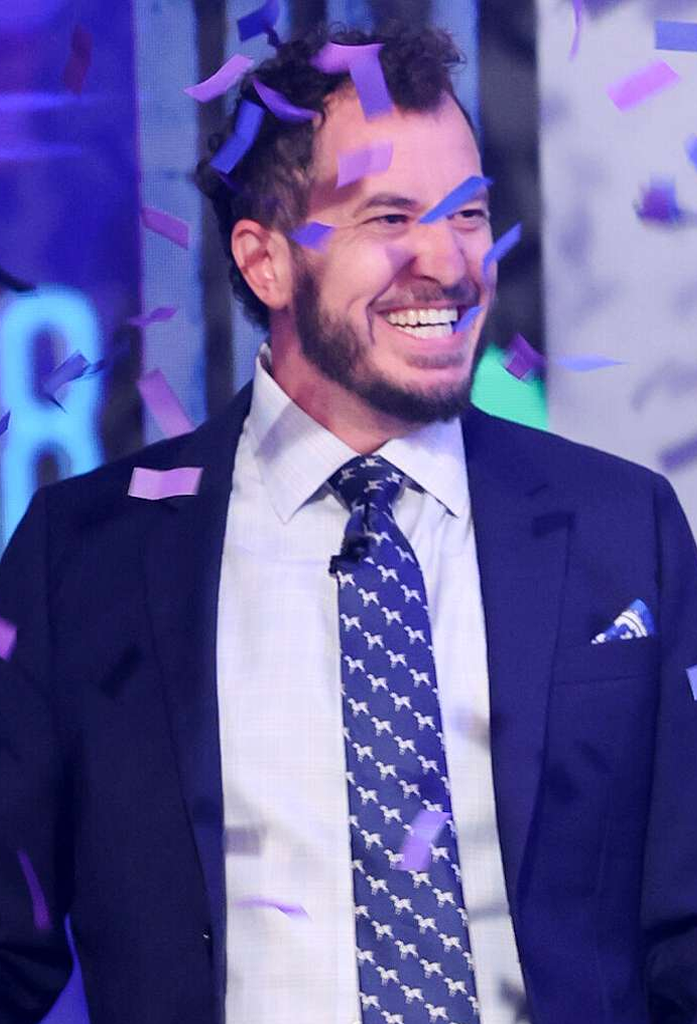
Interestingly, if you think about it, both Caitlin Collins and Simone Sanders have appeared on WWHL recently. In fact, I just realized that Simone Sanders was on Andy Cohen’s show the same night West wore the horsehair tie.
Speaking of which, I assume they brought West’s former girlfriend onto the reunion to confront him about their relationship. That would air this week if she was allowed to be interviewed. What I found most interesting was the fact that Ciara and the woman who had been dating West were able to get on the phone together and actually get along. Considering the circumstances, that may have been one of the more surprising developments to come out of the entire situation so far. I do like it though
Oh, The Southern Hospitality Reunion Part One Proves Why This May Be Bravo’s Most Naturally Chaotic Cast. There is a significant difference between a cast that knows how to manufacture reality television and a cast that simply lives it. After watching Part One of the Southern Hospitality Season Four reunion, it becomes increasingly clear that the Republic crew still falls into the latter category, and that may be the highest compliment a reality show can receive. In an era where many reality personalities appear hyper-aware of public perception, sponsorship opportunities, social media reactions, and future casting decisions, Southern Hospitality continues to operate with a level of unpredictability that feels increasingly rare. These people still make bad decisions, argue about those decisions publicly, double down when they should back down, and somehow manage to create even bigger problems in the process. That authenticity remains the show’s greatest strength.
The first installment of the reunion delivered exactly what longtime viewers expected: confrontations, accountability, shifting alliances, emotional breakdowns, and enough unresolved conflict to carry through the remainder of the reunion. Yet one storyline immediately stood out because, despite an entire season of explanations, accusations, clarifications, and cast commentary, there still seems to be widespread confusion about what actually happened between Trevor and Maddi.
At a certain point during the reunion, I found myself asking not only why everyone kept revisiting last year’s reunion (Including Andy), which seemed to be brought up at least eight different times, but also a much simpler question: Who started this entire mess? Was it TJ? Was it Bradley? Was it someone else entirely?
The storyline, or the lies, depending on how you view it, has evolved so many times that I almost need a flow chart, or better yet, one of Maddi’s PowerPoint presentations, to keep track of the various versions of events. Depending on who is telling the story, the issue involved cheating, emotional infidelity, misunderstandings, rumors, miscommunication, or some combination of all of the above. However, that seems to have been a lie.
At this point, however, I am beginning to wonder whether the entire thing was based on a lie that originated with TJ, Bradley, or perhaps both. Honestly, I am completely lost on that one. The storyline now seems to be less about whether Trevor cheated and more about whether Maddi broke up with Trevor and then, in essence, fell into Joe’s arms because she believed something that wasn’t true.
That raises an even bigger question, Does Maddi still have unresolved feelings for Trevor, especially if he never actually cheated or lied? Don’t get me wrong, Trevor was hardly perfect and often came across as a tool. But if what happened between Trevor, Maddi, and eventually Joe was built on misinformation or outright falsehoods, then that changes the entire story. If a relationship ended because of a lie, that’s not just unfortunate; it’s genuinely unfair to everyone involved. That’s the part of this saga that still doesn’t sit right with me if again, they lied for some odd reason. If there was a reason for the lie, that is also I want to know.
Every time the subject resurfaced during the reunion, the room visibly tightened because everyone appeared to be operating from a slightly different version of the truth. That alone illustrates how messy the entire situation became.
Another major point of discussion involved Emmy Sharrett, who once again found herself at the center of controversy. To be fair, there were moments during the reunion when hearing Emmy explain her perspective provided additional context. Not enough to completely change opinions about some of her actions, but enough to better understand where she was coming from. The larger issue, however, continues to be the way she handles conflict. Time and again, difficult conversations seem to become overshadowed by tears, emotional spirals, dramatic reactions, and attempts to redirect attention toward her feelings rather than the actions being discussed. Whether intentional or not, those moments often come across less as emotional vulnerability and more as an attempt to avoid accountability.
That dynamic was particularly evident during the reunion’s most explosive segment involving Bradley Carter. Much of the discussion centered on Emmy’s use of the word “unsafe” when describing Brad. The criticism was not simply that she was upset. The criticism was that multiple cast members believed she was weaponizing language that carried implications far beyond a disagreement between friends. It was one of the few moments during the reunion where the cast appeared largely united. Regardless of personal loyalties, friendships, or ongoing feuds, there seemed to be broad agreement that Emmy had crossed a line. To her credit, she ultimately acknowledged that possibility. Her apology appeared sincere, and for perhaps the first time in a long while, viewers saw Emmy consider the possibility that she had been wrong rather than merely misunderstood.
The Valley Deep Dive: There is a reason The Valley has quietly become one of the most compelling shows in Bravo’s lineup. Unlike many reality programs that continue to operate as though everyone is permanently trapped in their twenties, The Valley has become a study of adulthood, consequences, and the complicated reality of maintaining relationships when life becomes far more complicated than it once was.
That is why some of the themes this season have nothing to do with relationship drama at all. Instead, they revolve around the amount of screen time devoted to cosmetic procedures, surgeries, enhancements, recoveries, and the seemingly endless conversations that accompany them. Perhaps this is where some viewers will disagree, but there is something exhausting about watching elective cosmetic surgery continually presented as a major empowerment storyline. Everyone has the right to make decisions about their own body, and nobody should be criticized for making personal choices. However, there is a difference between respecting someone’s choices and treating those choices as though they represent some great social achievement.
One of the more interesting developments in modern reality television is the way cosmetic surgery has evolved from something celebrities quietly discussed into something that is now treated almost as a badge of honor. Procedures that once remained private are now storylines. Recoveries become episodes. People look like platypuses, and they wear it proudly today, whereas it once would have been considered a mistake. Consultations become major conversations. Entire seasons can revolve around transformations that are often presented as inspirational journeys. Yet there remains a fundamental question underneath all of it. At what point did elective surgery become something viewers are expected to celebrate rather than simply observe? Set that even aside, watching surgerys are gross. No one wants to see it.
When Dr. Leonard McCoy from a Star Trek film confronts 20th-century neurosurgeons who want to perform surgery on Pavel Chekov, he says, “My God man, drilling holes in his head is not the answer!… put away your butcher’s knives…”.
This episode’s and season’s focus on Brittany Cartwright’s mommy makeover brought that conversation directly into the center of The Valley this week. While many cast members expressed support, concern, or curiosity, the larger discussion often felt disconnected from reality. Surgery is still surgery. Recovery is still recovery. The body still experiences trauma. Yet modern culture increasingly treats these procedures as routine maintenance rather than significant medical events. The Valley deserves credit for showing both sides of the process, but it also unintentionally highlights how normalized cosmetic intervention has become.
Of course, none of this means viewers cannot enjoy the brilliant personalities involved. Lala Kent remains one of the best figures in the Bravo universe, regardless of which side of an argument she happens to be on. Whether people agree with her or not is often irrelevant. For me, she gets a pass on almost anything bercause she is Lala. That includes, metaphorically speaking, sticking her heel into one’s forehead. That said, I do wish she would stop referring to a vagina as a “cookie.” That expression has never made much sense to me, and while she’s at it, she needs to be able to figure out how to deal with women in that way if you get my drift.
Once the surgery conversations fade into the background, however, the season’s most interesting storyline emerges through Danny and Nia Booko. In many ways, they represent the central tension of The Valley itself. On one hand, there is validity to their frustration. Danny and Nia often find themselves surrounded by cast members who spend entire evenings drinking heavily, screaming at one another, making terrible decisions, and creating problems that did not exist a few minutes earlier. Then, somehow, Danny becomes the focus of criticism. It is easy to understand why that feels unfair.
At the same time, Danny continues creating problems for himself that are difficult to ignore. One of the recurring themes this season has been the gap between Danny’s intentions and his behavior. He frequently appears to believe he is being playful, competitive, or entertaining, while everyone around him is reacting to something entirely different. His energy level rises dramatically in social situations. His competitiveness intensifies. His volume increases. What may begin as harmless enthusiasm often transforms into something that feels passive-aggressive, dismissive, or overly intense.
The most revealing moments involving Danny are not necessarily the major confrontations. They are the smaller interactions. They are the moments where he speaks over Nia, minimizes her concerns, or adopts a tone that feels more condescending than supportive. Alcohol often appears to amplify those tendencies, which is why so many discussions eventually circle back to drinking. The issue is not necessarily that Danny drinks. The issue is how dramatically his behavior changes once he does. I am also not saying he acts that way all of the time. His desire to compete, to win, and to dominate situations frequently overrides his ability to recognize how his actions affect the people around him.
What makes the storyline compelling rather than frustrating is Nia. She remains one of the most patient and emotionally intelligent people in the cast. Her ability to navigate conflict without immediately escalating it often highlights the contrast between how she approaches difficult situations and how Danny approaches them. That contrast has become one of the defining dynamics of the season. Viewers are not rooting against Danny. Quite the opposite. Most viewers genuinely like him. The frustration stems from watching someone repeatedly undermine himself when the solution often appears obvious from the outside.
Most of all, take it from me that acting that way eventually comes to a head. She will only tolerate so much before she reacts, lashes out back at you or potentially leave. Then Danny might suddenly realize, “Holy shit, I was married to a former Miss America contestant,” or, more importantly, someone who had been standing by his side the entire time. The condescension is there, and he needs to be very aware of it so he can stop it. It can also be a sign that Danny is not fully satisfied or secure in some aspect of his own life, because people who consistently belittle their spouse or partner are often projecting frustrations of their own.
Elsewhere, The Valley continues exploring the fallout of relationships that never truly end even after the paperwork is signed. Jesse Lally and Michelle Saniei remain locked in a post-divorce conflict that seems to evolve every week. I just heard that she is dating Dr. Dre. The arrival of Lacy Nicole has only intensified an already volatile situation. What makes this storyline fascinating is that it is no longer really about Lacy at all. Instead, it has become a window into years of unresolved resentment, disappointment, and frustration that continue resurfacing through new conflicts.
Michelle’s criticism that Jesse appears to treat Lacy better than he ever treated her struck a nerve because it reflected something deeper than simple jealousy. It reflected a question many people ask after relationships end. However, there is also a logical explanation. If you have just gone through a divorce, the goal is usually to find someone who is more compatible and to learn from the mistakes that contributed to the previous relationship failing.
Lacy also seems very level-headed, which probably helps when it comes to Jesse. Besides, by the time viewers were introduced to Jesse and Michelle, their relationship was already over in many ways. They constantly bickered, competed with one another, and always seemed concerned with who was winning from a perception standpoint. Even on their best days, there was an underlying antagonism between them.
Regardless, Lacy has a calmness about her that makes it difficult not to like her. I almost want to be more skeptical, but for the most part, she comes across as thoughtful, grounded, and emotionally steady. I have no idea whether she and Jesse will ultimately get married, but at the moment they appear to be moving along quite nicely.
Whether Michelle’s perception is accurate or not, it remains a powerful emotional reality for many people after a breakup. To be honest, I had never really thought about it that way. Watching an ex-partner appear happier, calmer, or more successful in a new relationship should, ironically, not be incredibly difficult. In many ways, you should be happy for them because it provides a sense of closure and allows you to move forward with your own life. However, emotions rarely work that cleanly, and The Valley has leaned into that uncomfortable truth throughout the season.
The addition of a cease-and-desist letter to an already complicated co-parenting dynamic only added another layer of absurdity to a situation that already feels like it belongs in a scripted drama. Yet that is one of the strengths of The Valley. The show consistently presents situations that sound unbelievable until viewers remember that real life is often stranger than fiction. I remember her mentioning that cease-and-desist letter, but I had completely forgotten about it until it was brought up again this season.
Meanwhile, Kristen Doute and Luke Broderick continue navigating one of the most significant life transitions anyone can experience. The arrival of their daughter Kaia has fundamentally altered every aspect of their relationship. Parenthood changes priorities, schedules, emotions, and expectations. It introduces exhaustion unlike anything most people have ever experienced. Rather than pretending the transition is effortless, The Valley has shown the genuine challenges that accompany becoming first-time parents. Even though those moments often provide some of the season’s most authentic and relatable content, I am a bit nervous when I see the previews of them in the ads. I just hope Kristen does not push him away for the sake of pushing him away or use it as a way to make a point. He seems like a genuinely good man, so she needs to move forward with her life and avoid playing those kinds of games again. Furthermore, if she committed to working out consistently for six weeks, she would be an absolute machine. Her and Luke should thrive if they deal.
Jason Caperna’s knee injury may not generate the same headlines as some of the relationship drama, but it represents another example of what separates The Valley from many other reality programs. To be honest, he had no business playing basketball if his knee was that unstable. His knee appeared to buckle on what was essentially a routine move to the hoop. There was nothing particularly explosive or athletic about the move that caused the injury. He changed direction. From what we saw, he simply stepped forward and that was it. Boom—he went down. That is why the injury looked so concerning. If a knee gives out during such a basic movement, it suggests the problem was already there long before he stepped onto the court. That was stupid.
As the season continues toward Zack’s planned Mexico getaway and another round of inevitable confrontations, one thing has become increasingly clear. The Valley has evolved beyond being a spin-off. It has become one of Bravo’s most important franchises because it explores territory that many reality shows avoid. It captures the reality of adulthood in all its messy, frustrating, emotional complexity. Some weeks that means divorce. Some weeks that means parenting. Some weeks that means surgery, jealousy, resentment, or friendship. Whatever form it takes, the underlying theme remains the same.
Growing older is complicated. Relationships are complicated. Life is complicated. The Valley understands that better than most shows on television, and that understanding is exactly what makes it worth watching.
You’re in the Sunset Beehive: Buzzing About Today’s Biggest TV Shows, Movies, Reality TV, the Bravosphere, Broadway, Morning Joe, News Programs, and More
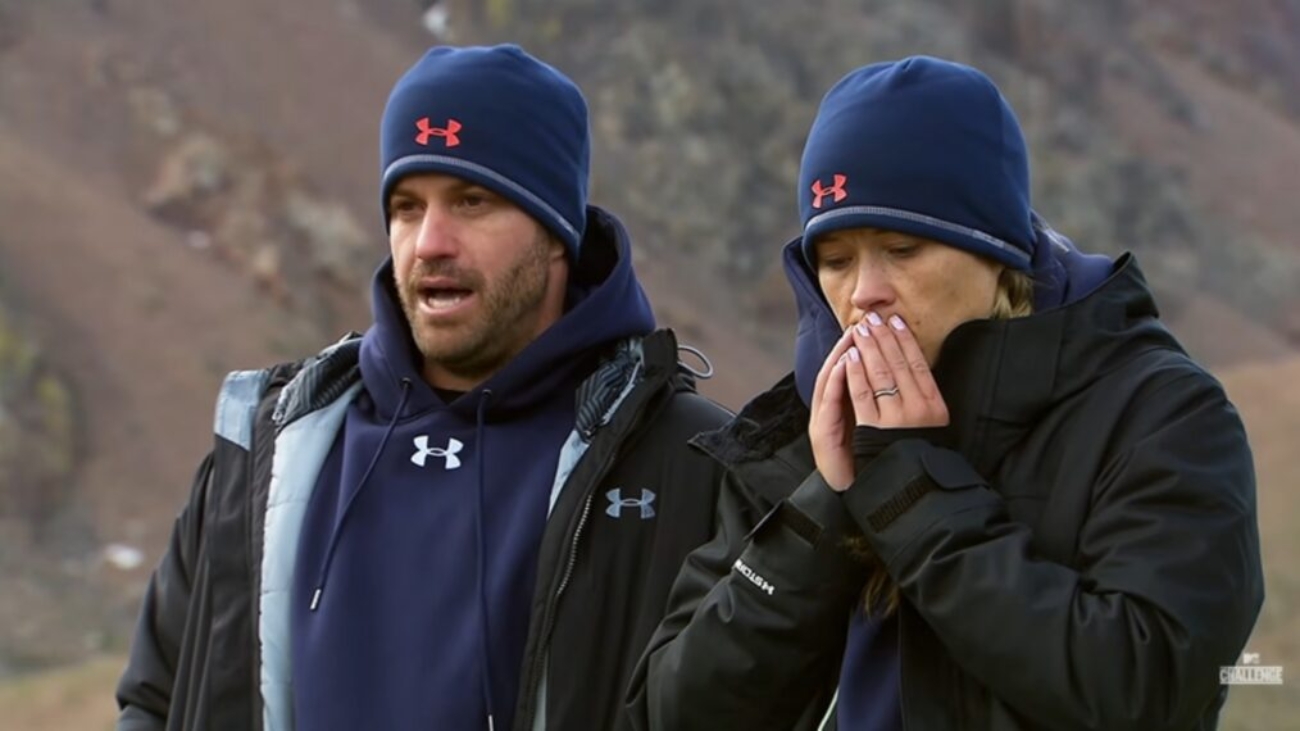
One of the unexpected joys of having an on-demand library is discovering entire corners of television that somehow escaped your radar the first time around. That happened to me recently with The Challenge universe.
Believe it or not, I had never watched The Challenge: World Championship. I also never watched The Challenge Australia, The Challenge UK, or any of the international versions that eventually fed into the global competition. Then they suddenly appeared in the Sunset app’s on-demand library, and what started as casual viewing quickly became a full-fledged binge.
I started with Australia and then moved into World Championship, which I just finished. First things first: if I hear the name “Kiki” one more time, I may lose my mind.
For six years now, it feels like every major achievement somehow circles back to Kiki. Winning The Challenge. Winning The Amazing Race. Surviving a football game. Making breakfast. We get it. The man loves his wife. That’s wonderful. It’s admirable. It’s also become one of the longest-running storylines in reality television history.
Setting that aside, World Championship turned out to be an outstanding season.
By the end, I found myself rooting for the Australian contingent and for Kaycee Clark. I’ve always appreciated competitors who let their performances do the talking, and Kaycee remains one of the most consistently dominant players the franchise has ever produced. What surprised me most, however, was Kaz Crossley.
Kaz quietly navigated one of the toughest formats The Challenge has ever created. She wasn’t the loudest person in the room. She wasn’t constantly inserting herself into every argument. She simply kept advancing. In a franchise that often rewards chaos and volume, there was something refreshing about watching someone win through composure, athleticism, and consistency.
As for Jordan Wiseley, I’ve always been a fan. After Johnny Bananas, Jordan is probably the competitor I’ve enjoyed watching most over the years. Speaking of Bananas, I still hate seeing him eliminated. Whether he’s winning, losing, stirring the pot, or showing up on something completely unrelated like House of Villains, he remains one of reality television’s most valuable characters.
One aspect of the World Championship final still has me scratching my head, though. The train-car eating portion felt strangely disconnected from the rest of the race. I understand the symbolic connection to the seven deadly sins and the notion of gluttony, but honestly, after watching these competitors suffer through multiple food challenges throughout the season, I probably would have been thrilled to sit down and eat a real meal. It felt less like punishment and more like a reward.
Still, the overall season delivered exactly what a global championship should deliver. Elite competitors. Genuine stakes. International pride. And a winner who earned every step of the journey.
Meanwhile, over in the Bravo universe, another season has reached its conclusion as Below Deck Down Under wrapped up what turned out to be one of the stronger recent entries in the franchise.
There is something comforting about a Below Deck finale because fans generally know what they’re going to receive. There will be emotional goodbyes. There will be a final charter packed with last-minute problems. There will be a crew dinner that somehow manages to combine celebration, awkwardness, unresolved tension, and occasionally complete disaster. And, of course, there will be one final tip meeting.
Captain Jason Chambers continues to establish himself as one of the strongest leaders in the entire Below Deck universe. He brings authority without becoming authoritarian. He commands respect without demanding it. More importantly, he understands something many reality television stars forget: viewers respond to authenticity.
What makes the best Below Deck seasons work isn’t the luxury yachts or even the charter guests. It’s watching deeply flawed people learn how to function together under extraordinary pressure. When a fractured interior team finally starts working as a unit or when deck crew members who spent half a season fighting manage to pull together for one final charter, it creates a payoff that feels earned.
The best finales don’t necessarily end with everyone becoming friends. They end with everyone understanding each other a little better.
Tonight, however, the spotlight shifts back to Summer House as Part Two of what has become one of the most explosive reunions in the show’s history arrives.
After watching Part One, I still maintain there is no excuse for much of the behavior that got us here.
The Amanda Batula-West Wilson controversy has completely fractured the cast and transformed what might have been a routine reunion into a full-scale house reckoning. At the center is Ciara Miller, who feels blindsided not only by her former relationship with West but by Amanda’s role in everything that followed.
The reality is that friendships are often judged not during good times but during moments of betrayal. Whether viewers believe Amanda crossed a line or not, the emotional fallout has become impossible to ignore.
What continues to fascinate me is how Bravo has become one of the strangest career accelerators in modern entertainment.
Get your heart broken on a Bravo show, and somehow you end up in national advertising campaigns.
Nobody represents that phenomenon better than Ariana Madix.
Her post-Scandoval trajectory may be one of the most remarkable reality television success stories ever. Hosting Love Island USA, landing acting opportunities, appearing in major campaigns, and building an entirely new career path, Ariana has managed to transform personal heartbreak into professional momentum.
And if anyone doubts her acting ability, watch her appearance on Will Trent.
She didn’t merely show up. She stole the episode.
I genuinely had to double-check that it was her because she was that effective. She also impressed on St. Denis Medical, one of television’s most underrated comedy series. The writing is sharp. The cast chemistry works. And Ariana fit right in.
Now it feels like Ciara may be entering a similar phase. Brand partnerships are arriving. Campaigns are emerging. Opportunities continue to expand.

It has become one of Bravo’s strangest recurring patterns. The people who get hurt often end up winning in the long run.
As for the reunion itself, Part Two should continue exposing the fractures that have split the house into competing factions. The fallout from West’s actions, Amanda’s decisions, and the broader friendship dynamics has become the defining storyline of the season.
Elsewhere in the Bravosphere, Southern Hospitality is preparing for its own reunion, and if Summer House feels explosive, Southern Hospitality often feels like watching a fireworks factory catch fire.
What makes Southern Hospitality work is that the cast hasn’t completely figured out how to be reality stars yet. That sounds like criticism, but it’s actually the show’s greatest strength.
The cast still feels messy. Imperfect. Emotional. Unfiltered.
Joe Bradley continues to feel like a guy standing at a crossroads between adulthood and perpetual chaos. Emmy Sharrett remains one of the most polarizing figures on the show. Every emotional moment seems to generate debate about whether it’s genuine, performative, or somewhere in between.
TJ Dinch remains one of the show’s most naturally likable personalities, while Michols Peña continues to balance humor with some of the franchise’s most vulnerable and personal moments.
Then there’s Grace Lilly.
I continue rooting for Grace Lilly because underneath the “Wavy Baby” persona is someone who is often genuinely funny, surprisingly perceptive, and capable of delivering some of the sharpest observations on the show. The challenge has always been separating the performance from the person.
When she’s comfortable in her own skin, she’s entertaining television.
When she’s trying to become a character, the cracks start showing.
Mia Alario continues to be one of the most interesting cast members because she refuses to simply follow group consensus. Bradley Carter remains one of the few people who consistently seems interested in avoiding unnecessary drama. Molly Moore continues to divide viewers in ways that almost guarantee reunion fireworks.
Collectively, Southern Hospitality succeeds because it reminds many longtime Bravo viewers of an earlier era of reality television. Before everyone became hyper-aware of their social media followings. Before every cast member arrived with a personal brand strategy.
These people still seem capable of making terrible decisions without first consulting a publicist.
That matters.
Looking ahead, we’ll spend more time this week discussing The Valley, which continues operating under the shadow of crossover Bravo drama, and eventually dive deeper into Bravo’s newest addition, The Real Housewives of Rhode Island.
Remarkably, Rhode Island represents the first Housewives franchise I’ve truly committed to following since the earliest years of Orange County. Whether that says more about Rhode Island or my viewing habits remains up for debate.
Outside of reality television, several of my regular scripted shows have wrapped their seasons. FBI, NCIS, Tracker, and much of the network television landscape are heading into summer mode.
One show that deserves significant attention, however, is Your Friends & Neighbors.
The series has quietly become one of the year’s strongest dramas, combining sharp writing, layered characters, and a willingness to explore uncomfortable truths about wealth, status, friendship, and identity. We’ll take a deeper look at that series later this week because it deserves more than a passing mention.
For now, though, that’s what’s buzzing inside the Sunset Beehive.
From international Challenge champions to yacht crews saying goodbye, from Summer House betrayals to Southern Hospitality chaos, from breakout Bravo careers to the next wave of television obsessions, the television landscape remains as entertaining, ridiculous, frustrating, and addictive as ever.
Euphoria Season 3 Ignites a New Era of Prestige Television as HBO’s Defining Generation Drama Evolves Beyond High School and Into the Harsh Realities of Adult Life
Few television series have managed to define an entire cultural moment the way Euphoria has. Since its debut in 2019, the HBO phenomenon has transcended the boundaries of traditional teen drama, evolving into one of the most discussed, analyzed, debated, and visually influential television productions of the modern streaming era. What began as a raw and uncompromising portrait of addiction, identity, sexuality, trauma, friendship, and self-destruction has become something much larger: a generational saga examining what happens when young people raised amid digital chaos are finally forced to confront adulthood.
Now, after years of anticipation and speculation, Euphoria Season 3 has arrived, marking the beginning of the series’ boldest chapter yet. Rather than returning audiences to the familiar hallways and emotional battlefields of adolescence, the new season thrusts its characters into a vastly different landscape. The protective illusions of youth have vanished. Dreams are colliding with reality. Relationships are being tested by ambition. Financial pressures, career uncertainty, fame, addiction, power, and personal accountability now dominate the narrative. The result is a season that feels larger, darker, more mature, and arguably more ambitious than anything the series has attempted before.
For years, Euphoria earned acclaim for its fearless willingness to explore the emotional and psychological realities facing modern teenagers. The series challenged conventions through its visual experimentation, emotionally charged performances, cinematic direction, and willingness to confront uncomfortable truths about contemporary youth culture. It refused to sanitize addiction, mental illness, loneliness, social media influence, sexual identity, and emotional instability. Instead, it presented these realities with a level of intensity rarely seen on television.
Season 3 takes that philosophy and pushes it forward into adulthood.
The passage of time has fundamentally altered the world these characters inhabit. High school no longer serves as the central organizing force in their lives. The social hierarchies that once dictated every interaction have fractured. New environments, new responsibilities, and new temptations now shape their futures. The emotional consequences of earlier decisions linger beneath the surface, creating a season that feels less concerned with youthful experimentation and more focused on reckoning.
At the center of the story remains Rue Bennett, portrayed by Emmy-winning superstar Zendaya. From the very beginning, Rue has served as both narrator and emotional anchor for the series. Her struggles with addiction, depression, self-worth, and survival have defined much of the show’s emotional architecture. Yet Season 3 finds Rue confronting challenges unlike anything she has faced before.
The new season depicts a version of Rue attempting to navigate an increasingly dangerous world where financial obligations, criminal entanglements, and unresolved trauma continue to threaten her fragile progress. As her debts grow and dangerous alliances emerge, Rue finds herself walking an increasingly narrow line between redemption and destruction. Her journey becomes a powerful examination of recovery, personal accountability, and the terrifying realization that adulthood often provides fewer safety nets than adolescence ever did.
Zendaya’s performance continues to serve as one of the most remarkable achievements in contemporary television. What separates her portrayal from many television antiheroes is the extraordinary vulnerability she brings to every moment. Rue remains deeply flawed, often frustrating, and frequently self-destructive, yet audiences remain emotionally invested because her humanity never disappears. Every victory feels earned. Every setback feels devastating.
Season 3 also significantly expands the role of Jules Vaughn, portrayed by Hunter Schafer. No longer confined by the emotional geography of high school, Jules embarks on a journey centered around artistic ambition, self-discovery, and independence. Her enrollment in art school introduces new social dynamics, new opportunities, and new forms of vulnerability. The series uses her storyline to explore creative identity, economic realities, and the sacrifices often required to pursue artistic dreams in an increasingly competitive world.
The evolution of Jules reflects one of the season’s central themes: the tension between aspiration and survival. Like many young adults attempting to build meaningful futures, she discovers that talent alone is rarely enough. Financial pressures, emotional compromises, and difficult decisions become unavoidable components of her journey. The result is one of the most nuanced and emotionally resonant storylines the series has produced.
Meanwhile, the explosive dynamic between Cassie Howard and Maddy Perez reaches entirely new levels. Few relationships in modern television have generated as much audience discussion as the complicated friendship and rivalry between these two characters. Season 3 elevates their conflict into a broader exploration of fame, image, influence, and identity in the digital age.
Sydney Sweeney delivers another compelling performance as Cassie, whose pursuit of attention, validation, and public visibility drives much of the season’s drama. As opportunities emerge that could transform her into an internet celebrity, Cassie becomes increasingly consumed by the seductive promise of online fame. The storyline examines the psychological consequences of living within a culture where visibility often becomes mistaken for self-worth.
Opposite her, Alexa Demie continues to portray Maddy with extraordinary confidence and emotional complexity. Maddy’s journey this season is less about survival and more about control. She understands the mechanics of influence, image management, and public perception better than almost anyone around her. Yet beneath her confidence lies a deeper struggle involving identity, ambition, and the challenge of defining success on her own terms.
Their intertwined narratives become one of the season’s most fascinating examinations of modern celebrity culture. In a world where anyone can become famous overnight, Euphoria asks an important question: what happens after the attention arrives?
The series also continues exploring the psychological complexity of Nate Jacobs, portrayed by Jacob Elordi. Nate remains one of television’s most polarizing characters, a figure whose aggression, insecurity, manipulation, and emotional damage continue to ripple through the lives of everyone around him. As Season 3 unfolds, Nate finds himself confronting challenges that cannot simply be controlled through intimidation or performance. The world beyond high school demands a different form of power, forcing him to adapt or risk becoming irrelevant.
At the same time, Lexi Howard’s story continues evolving in compelling ways. Portrayed by Maude Apatow, Lexi has emerged as one of the series’ most emotionally grounded characters. Her perspective often provides a valuable counterbalance to the chaos surrounding her. Season 3 places her at the center of creative and personal conflicts that challenge her understanding of family, ambition, loyalty, and artistic expression.
One of the defining characteristics of Euphoria has always been its willingness to reinvent itself visually. Season 3 continues that tradition on an even larger scale. The series expands beyond suburban settings and adolescent environments, embracing broader locations, more ambitious cinematography, and increasingly sophisticated visual storytelling techniques. Every frame remains meticulously crafted, reinforcing the show’s reputation as one of television’s most visually distinctive productions.
Yet beneath the visual grandeur lies the true strength of the series: emotional honesty.
What separates Euphoria from many prestige dramas is its refusal to offer easy answers. Characters rarely experience clean redemption arcs. Relationships do not resolve neatly. Trauma cannot be cured through a single breakthrough conversation. Success often creates new forms of suffering. The series consistently acknowledges that growth is messy, nonlinear, and frequently painful.
That authenticity helps explain why the show has remained such a powerful cultural force. Audiences do not simply watch Euphoria for shock value or aesthetic innovation. They watch because the series understands emotional contradiction. It understands that people can be both victims and perpetrators, strong and fragile, hopeful and self-destructive simultaneously. That complexity has always been the foundation of its storytelling.
The supporting cast continues to enrich the narrative as well. Characters who once existed primarily within high-school archetypes now face increasingly adult dilemmas involving careers, relationships, family expectations, economic uncertainty, and personal responsibility. The shift creates a richer and more expansive world while preserving the emotional intensity that made the series a phenomenon.
Thematically, Season 3 may be the show’s most ambitious chapter. It explores addiction, fame, capitalism, artistic ambition, social mobility, identity, loneliness, technology, power, and generational anxiety through interconnected narratives that feel remarkably relevant to contemporary audiences. The characters are no longer asking who they want to become. They are confronting the reality of who they are becoming.
That distinction transforms the entire emotional texture of the series.
What emerges is not merely another season of a successful drama but the evolution of a cultural landmark. Euphoria began as a groundbreaking portrait of modern adolescence. Season 3 expands that vision into a broader examination of adulthood itself, exploring what happens when youthful dreams collide with economic realities, emotional baggage, and the responsibilities of independent life.
In an entertainment landscape increasingly dominated by franchises, nostalgia, and formula-driven storytelling, Euphoria remains refreshingly unpredictable. It continues taking creative risks. It continues challenging viewers. Most importantly, it continues evolving.
As television audiences search for stories that feel emotionally authentic, visually ambitious, and culturally relevant, Euphoria remains in a category of its own. Season 3 proves that the series is not merely surviving beyond its original premise—it is thriving, expanding, and discovering entirely new dimensions of storytelling.
Years after its debut, Euphoria remains one of the defining dramas of the streaming era, and Season 3 stands as powerful evidence that its most compelling chapters may still be ahead.
The Devil Wears Prada 2 Arrives Twenty Years Later as a Razor-Sharp Fashion Industry Epic About Media Power, Luxury Culture, and the Collapse of Old Publishing Empires
Two decades after the original The Devil Wears Prada transformed fashion dialogue, office culture, prestige media, and modern pop culture itself, the long-awaited sequel has finally arrived — and rather than simply recycling nostalgia, The Devil Wears Prada 2 explodes onto the screen as a far more ambitious, contemporary, and culturally relevant film than almost anyone expected. Officially debuting in theaters on May 1, 2026, exactly twenty years after the original 2006 phenomenon, the sequel reunites the legendary creative team and iconic cast that helped define an entire generation of prestige studio filmmaking while simultaneously updating the franchise for a completely different world.
The result is not merely another sequel. It is a sophisticated examination of modern media warfare, luxury branding, digital influence, corporate consolidation, generational ambition, and the rapidly collapsing boundaries between journalism, celebrity culture, technology, and fashion power. At a time when the entertainment industry has become saturated with recycled intellectual property and superficial nostalgia plays, The Devil Wears Prada 2 succeeds because it understands precisely why the original film endured for twenty years in the first place: beneath the couture, glamour, and biting dialogue was always a brutally honest story about ambition, identity, survival, and the emotional cost of success.
Now, in 2026, those themes feel even more urgent.
The return of the original core cast instantly gives the sequel enormous dramatic credibility. Meryl Streep returns as the incomparable Miranda Priestly, once again commanding every scene with icy precision, calculated silence, devastating wit, and terrifying intelligence. Anne Hathaway reprises her role as Andy Sachs, no longer the overwhelmed outsider trying to survive the elite fashion ecosystem but now a fully formed media professional navigating a far more dangerous publishing battlefield. Emily Blunt returns as Emily Charlton, whose evolution from abused assistant to ruthless luxury executive becomes one of the film’s most compelling narrative arcs. Stanley Tucci also returns, grounding the film emotionally with the same warmth, elegance, and razor-sharp observational humor that made the original such a lasting classic.
Equally important is the reunion behind the camera. Director David Frankel and screenwriter Aline Brosh McKenna understand that the sequel cannot simply revisit the rhythms of the 2006 original. The world has changed too dramatically. Fashion has changed. Publishing has changed. Celebrity has changed. Media has changed. Influence itself has changed. The sequel wisely embraces that transformation instead of resisting it.
The central narrative pivots away from Andy’s original “fish out of water” story and instead focuses on the collapse of traditional luxury publishing in the age of algorithmic culture, social media influence, venture-capital media ownership, and digitally accelerated consumer behavior. Miranda Priestly now finds herself confronting a threat she cannot easily control: irrelevance. Not because she has lost her intelligence or authority, but because the structures that once sustained elite magazine publishing are disintegrating around her.
Runway magazine — once the untouchable cathedral of luxury fashion journalism — is now under siege from every direction imaginable. Print advertising revenue is collapsing. Corporate consolidation has hollowed out editorial independence. Viral influencers now shape global trends faster than editorial teams ever could. TikTok personalities with smartphones command more immediate attention than traditional magazine covers. Fashion cycles now move at the speed of algorithms rather than seasonal editorial planning.
For perhaps the first time in her career, Miranda Priestly is no longer the uncontested apex predator of the fashion media world.
That vulnerability gives The Devil Wears Prada 2 a dramatic depth that elevates it far beyond standard sequel territory.
At the center of the film’s conflict is Miranda’s escalating battle with Emily Charlton, now reinvented as an extraordinarily powerful executive within a massive global luxury conglomerate controlling the advertising money Runway desperately needs to survive. Emily’s transformation from anxious assistant to polished corporate assassin becomes one of the film’s defining achievements. Emily Blunt delivers a performance filled with ambition, resentment, confidence, and emotional complexity, crafting a character who has mastered the brutal systems that once nearly destroyed her.
The tension between Miranda and Emily becomes symbolic of the broader industry transformation taking place throughout the film. Miranda represents legacy prestige, editorial authority, curation, and institutional power. Emily represents modern corporate luxury influence — data-driven, aggressive, financially dominant, and emotionally detached. Their scenes together crackle with layered history, passive aggression, strategic manipulation, and mutual recognition.
Meanwhile, Andy Sachs returns to New York as Runway’s new features editor, now operating from a position of confidence and professional authority that sharply contrasts her younger self from the original film. But the sequel wisely refuses to portray her as fully comfortable inside the system. Instead, Andy becomes trapped between competing ideologies: Miranda’s devotion to editorial standards and institutional legacy versus the invasive pressure of corporate technology interests attempting to reshape Runway into another disposable digital content platform.
The film’s primary external antagonist emerges through Justin Theroux, who portrays a calculating tech billionaire determined to strip Runway of its legacy identity and transform it into a hyper-optimized digital commerce machine. His character embodies the modern collision between Silicon Valley disruption culture and traditional creative industries. He does not value fashion journalism as art or cultural preservation. He views it as monetizable intellectual property waiting to be streamlined, automated, and scaled.
That conflict gives the sequel a thematic sophistication rarely seen in mainstream studio films. Beneath the glamour and sharp dialogue lies a serious exploration of what happens when art, journalism, creativity, and institutional identity collide with algorithmic capitalism and technological disruption.
The sequel also expands the world of the franchise considerably through its new supporting cast. Lucy Liu enters the story as an elite socialite and glamour icon whose personal history with the tech billionaire becomes unexpectedly central to the survival of Runway itself. Her scenes bring an additional layer of elegance, strategic intelligence, and old-world sophistication to the narrative.
Simone Ashley represents the emerging generation of fashion power players navigating an industry radically different from the one Miranda once dominated. Kenneth Branagh reportedly brings gravitas to the corporate and publishing side of the story, while comedian Caleb Hearon injects sharp observational humor into the increasingly absurd luxury ecosystem surrounding the characters.
The celebrity cameos lean directly into the franchise’s understanding of cultural spectacle. George Clooney reportedly appears in sequences filmed at his actual Lake Como estate, emphasizing the film’s commitment to authentic luxury environments rather than artificial studio excess. Lady Gaga contributes original music to the film, including the song “Runway,” further cementing the project as both a cinematic event and fashion-industry cultural moment.
Visually, the sequel dramatically expands the scale of the original film. Rather than relying primarily on stylized office interiors and editorial workspaces, The Devil Wears Prada 2 moves through a globe-spanning luxury ecosystem of historic architecture, elite fashion spaces, private estates, couture showrooms, corporate towers, and high-society environments that mirror the increasingly globalized structure of modern luxury power.
Production crews reportedly gained extraordinary access to some of the world’s most iconic locations, including the newly restored Waldorf Astoria New York, Manhattan’s newest Dior flagship environment, and the legendary Galleria Vittorio Emanuele II arcade in Milan. These are not simply glamorous backdrops; they function symbolically within the story as monuments to institutional luxury and cultural permanence in a world increasingly obsessed with speed, disposability, and digital immediacy.
Fashion itself also evolves significantly in the sequel. The original film famously centered Andy’s transformation through visually dramatic fashion evolution and overt luxury symbolism. The sequel moves in a far more nuanced direction, embracing the dominance of “quiet luxury,” precision tailoring, layered textures, minimalist prestige, and restrained wealth signaling that currently defines elite fashion culture in the 2020s.
Andy’s wardrobe reportedly leans heavily into sharply structured menswear-inspired blazers and modern editorial sophistication, reflecting her evolution into a serious publishing figure rather than a fashion outsider. Miranda’s aesthetic becomes even more architecturally refined — built around subtle textures, monochromatic layering, and understated authority rather than overt spectacle. The clothing in the sequel communicates power through confidence and precision rather than obvious branding.
That shift mirrors broader cultural changes within luxury itself. In 2006, conspicuous fashion consumption dominated celebrity culture. In 2026, elite fashion increasingly revolves around exclusivity, restraint, tailoring, texture, and insider recognition. The Devil Wears Prada 2 understands that evolution perfectly.
Perhaps most impressively, the sequel manages to retain the sharp humor, emotional intelligence, and biting social commentary that made the original iconic while simultaneously expanding its thematic ambition. The film understands that modern audiences are not simply nostalgic for designer outfits and sarcastic one-liners. They are nostalgic for sophisticated adult storytelling — films willing to examine ambition, work, identity, status, and institutional collapse through sharp writing and emotionally intelligent performances.
The timing of the sequel’s release also feels remarkably strategic. The entertainment industry itself is currently wrestling with many of the exact same issues explored in the film: corporate consolidation, technological disruption, AI-driven media anxiety, collapsing traditional business models, influencer culture, and the growing tension between artistry and algorithmic monetization. In that sense, The Devil Wears Prada 2 becomes more than a fashion film. It becomes a reflection of the modern creative economy itself.
Twenty years ago, the original The Devil Wears Prada became a defining cultural phenomenon because it captured the hidden machinery behind aspirational industries and revealed the emotional sacrifices buried beneath glamour and success. The sequel expands that concept for an entirely different era — one where legacy institutions are fighting desperately to survive in a digital ecosystem increasingly dominated by speed, disruption, and corporate homogenization.
What emerges is a rare modern sequel that actually justifies its existence artistically, culturally, and emotionally.
The Devil Wears Prada 2 is not content to simply revisit familiar characters. It interrogates what happened to them, what happened to the industries they represented, and what happens when an entire cultural system built around editorial authority collides with technological acceleration and modern influence culture.
In doing so, the film accomplishes something remarkably difficult: it honors the legacy of a beloved classic while evolving into something larger, sharper, more mature, and far more culturally relevant for 2026.
For longtime fans, fashion obsessives, media insiders, and audiences craving intelligent prestige filmmaking with style, sophistication, and genuine substance, The Devil Wears Prada 2 arrives not merely as a nostalgic reunion — but as one of the most unexpectedly compelling cinematic events of the year.
The Pitt Becomes the Defining Streaming Drama of 2026 as HBO Max’s Medical Juggernaut Dominates Television and Redefines Prestige Healthcare Storytelling
In an era where streaming audiences bounce endlessly between superhero franchises, true crime documentaries, nostalgic sitcom libraries, and algorithm-driven content drops, it has become increasingly rare for a grounded dramatic series to completely seize the cultural conversation. Yet that is exactly what The Pitt has accomplished. The HBO Max phenomenon has not only emerged as the most watched streaming series in America, but it has also evolved into one of the most important television dramas of the modern streaming era — a series that has managed to blend emotional realism, institutional critique, human vulnerability, and relentless dramatic tension into a television experience audiences cannot stop watching.
Now officially sitting at the top of the Nielsen Streaming Top 10 overall rankings, The Pitt has transformed from a breakout medical drama into the defining prestige television success story of 2026. The series reached the No. 1 overall position on the streaming charts for three consecutive weeks through the April 19, 2026 reporting period, with its explosive Season 2 finale generating an astonishing 1.39 billion minutes viewed in a single week. In the current streaming landscape, those numbers are not simply impressive — they are dominant. They place The Pitt in elite company while simultaneously proving that audiences still crave sophisticated adult drama when it is executed at the highest level.

Nielsen Streaming Top 10 Overviews According to the latest Nielsen Household TV Streaming Data for April 13–19, 2026, the series dominated the overall leaderboard:
Rank
Program Name
Streaming Provider
Minutes Viewed (Millions)
Number of Episodes
1
The Pitt
HBO Max
1,388
30
2
The Boys
Prime Video
918
36
3
Bluey
Disney+
833
154
4
The Big Bang Theory
HBO Max
753
281
5
Bob’s Burgers
Hulu
654
302
What makes the achievement even more significant is the competition surrounding it. Streaming television is now arguably the most crowded entertainment environment in history. Audiences are flooded with fantasy epics, comic-book universes, true crime franchises, animated nostalgia content, and blockbuster streaming exclusives from virtually every major media corporation on earth. Yet The Pitt surged past all of them. The series comfortably outperformed even the heavily anticipated return of The Boys on Prime Video while holding off perennial streaming giants like Bluey, The Big Bang Theory, and Bob’s Burgers.

The numbers alone tell a remarkable story. During the April 13–19 Nielsen measurement window, The Pitt generated 1.388 billion minutes viewed across its available episodes on HBO Max, dwarfing most competitors in the streaming marketplace. But the real story behind the success is not merely statistical. It is emotional. It is cultural. It is creative. And it speaks directly to where audiences are emotionally in America right now.
At its core, The Pitt succeeds because it does something modern television increasingly struggles to do: it feels real.
Set inside a modern Pittsburgh hospital, the series examines the lives of frontline healthcare professionals as they navigate exhaustion, trauma, bureaucracy, ethical dilemmas, institutional politics, staffing shortages, emotional burnout, and the relentless pressure of trying to save lives in a healthcare system that often appears to be collapsing under its own weight. Rather than glamorizing medicine or romanticizing emergency care, The Pitt embraces realism with remarkable intensity. The series understands that modern healthcare workers are not superheroes. They are human beings operating inside impossible systems while attempting to maintain their humanity in the process.
That emotional authenticity has become the engine behind the show’s extraordinary audience connection.
For many viewers, The Pitt feels less like a traditional television drama and more like a reflection of contemporary American life. The stress. The exhaustion. The institutional dysfunction. The emotional compartmentalization required to survive modern professional life. The tension between compassion and burnout. The struggle to remain emotionally available in systems designed around efficiency and survival. The series captures these themes with startling precision, allowing audiences to connect deeply with characters who feel painfully authentic rather than artificially constructed for television.
Much of that success begins with Noah Wyle, whose presence at the center of the series gives The Pitt an extraordinary level of emotional credibility and dramatic gravitas. Wyle’s performance anchors the show with a nuanced understanding of exhaustion, leadership, empathy, and quiet desperation. Rather than portraying a flawless heroic physician, he delivers a layered performance built around restraint, vulnerability, and realism. It is the kind of mature dramatic acting that has become increasingly rare in a streaming ecosystem often dominated by spectacle over substance.
The brilliance of The Pitt also lies in how effectively it balances large-scale institutional storytelling with deeply intimate human moments. Every episode moves between medical emergencies, workplace conflict, emotional collapse, family strain, ethical crises, and interpersonal relationships with remarkable fluidity. The hospital itself becomes a living organism — chaotic, pressured, emotionally volatile, and constantly evolving. The pacing creates an atmosphere of sustained tension while still leaving room for quiet moments of humanity that resonate long after episodes end.
Audiences have clearly responded to that formula at historic levels.
The series crossed the one-billion-minute threshold during 13 of the 15 weeks Season 2 aired, including an extraordinary streak of 10 consecutive weeks above that benchmark. Those numbers reflect not merely curiosity but sustained audience engagement. Viewers are not sampling The Pitt. They are committing to it. They are binging episodes, returning weekly, discussing storylines online, and emotionally investing in the characters and the world the series has built.
Internal HBO Max data reportedly shows the series averaging 15.4 million viewers during its initial 90-day performance window, representing a staggering 50 percent audience increase over Season 1. That kind of year-over-year growth is exceptionally rare for prestige drama, especially in a fragmented streaming marketplace where viewer attention is constantly divided.
Equally important is the fact that the show’s ratings success has been matched by overwhelming critical acclaim. The Pitt currently maintains a near-perfect 98 percent Rotten Tomatoes rating, placing it among the most celebrated dramas currently airing. Critics have praised the series for its writing, realism, emotional complexity, ensemble performances, and refusal to reduce healthcare professionals into simplistic television archetypes.
The industry has taken notice as well. The series has already secured a renewal for Season 3, solidifying its position as one of HBO Max’s flagship dramatic properties moving forward. Awards momentum is rapidly building around the show, including significant attention surrounding the Primetime Emmy race for Outstanding Drama Series.
But beyond ratings, awards, and streaming metrics, The Pitt represents something even more significant culturally.
The series arrives during a moment in American history when healthcare workers remain emotionally and psychologically exhausted from years of systemic strain, public health crises, staffing shortages, political polarization, and institutional instability. For many viewers — especially those working inside healthcare systems — The Pitt feels validating in a way few television dramas have managed to achieve. It acknowledges the emotional cost of caregiving professions without reducing them to melodrama. It portrays healthcare workers not as flawless heroes or cynical caricatures, but as complicated people trying to survive impossible environments while preserving compassion.
That emotional honesty is precisely why the show has expanded far beyond traditional prestige drama audiences. Medical professionals see themselves in it. Working-class audiences recognize the stress and instability. Older viewers connect with the character-driven storytelling. Younger audiences embrace the realism and emotional intensity. The series has become one of the rare streaming dramas capable of cutting across generational and demographic lines simultaneously.
From a broader industry perspective, The Pitt may also signal an important shift in what streaming audiences are now seeking from prestige television. For years, the streaming wars prioritized spectacle — massive budgets, franchise extensions, fantasy universes, cinematic visual effects, and IP-driven storytelling ecosystems. The Pitt proves there is still enormous demand for grounded, adult-oriented dramatic storytelling centered around character, realism, emotional stakes, and contemporary social relevance.
In many ways, the series feels like a return to the golden age of prestige television while simultaneously updating the genre for a modern audience shaped by streaming behavior and post-pandemic realities. It carries echoes of classic ensemble dramas while feeling unmistakably current in both pacing and thematic focus.
The Pittsburgh setting itself also plays a crucial role in the show’s identity. Rather than relying on the overused backdrops of New York or Los Angeles, the series embraces the industrial character and emotional grit of Pittsburgh as an extension of the story’s atmosphere. The city becomes more than scenery — it becomes part of the emotional framework of the series. There is a working-class realism embedded into the tone of the production that strengthens its authenticity and distinguishes it from more polished network medical dramas.
As streaming platforms continue searching desperately for programming capable of generating long-term subscriber loyalty, The Pitt has become a blueprint for sustainable prestige success. It demonstrates that audiences will still rally around emotionally intelligent, carefully written dramatic storytelling when creators trust viewers enough to engage with difficult themes honestly.
The future now looks enormous for the franchise. With Season 3 officially on the horizon, expectations have skyrocketed. HBO Max clearly understands it has found one of the defining dramatic properties of the decade — a series capable of driving critical conversation, awards attention, subscriber engagement, and sustained audience loyalty simultaneously.
More importantly, The Pitt has achieved something increasingly rare in entertainment: cultural relevance with genuine emotional depth.
In a television environment saturated with disposable content engineered for quick consumption, The Pitt has emerged as something far more lasting. It is prestige television with urgency. It is streaming drama with emotional intelligence. It is a medical series that understands the emotional cost of caregiving in modern America. And judging by its unprecedented streaming momentum, audiences are not just watching — they are connecting with it at a profound level.
That is why The Pitt is not merely the top streaming series in America right now.
Welcome to Wrexham Season 5 Elevates the Club, the Town, and the Global Football Story Into Something Far Bigger Than a Sports Documentary
Few modern sports documentaries have managed to evolve from a curiosity-driven celebrity acquisition story into a globally respected long-form chronicle of civic identity, economic revitalization, and competitive ambition quite like Welcome to Wrexham. What began as an unlikely partnership between two Hollywood actors and one of the oldest football clubs in the world has transformed into one of the most emotionally resonant and commercially successful sports docuseries operating anywhere in streaming television today. Now, with Season 5 officially premiering on May 14, 2026, the series enters its most consequential chapter yet as Wrexham A.F.C. attempts to survive and compete in the brutally demanding environment of the EFL Championship.
Streaming now through Hulu in the United States and internationally through Disney+, the latest season arrives carrying expectations that would have sounded impossible just a few years ago. The club’s rise through the English football pyramid has not merely exceeded projections—it has fundamentally altered the perception of what lower-division football storytelling can achieve in the streaming era. At this point, Welcome to Wrexham is no longer simply documenting a football club. It is documenting the transformation of an entire ecosystem.
Executive stewards Ryan Reynolds and Rob McElhenney remain central figures in the narrative, but one of the defining strengths of the series is its refusal to make them the sole focal point. Their visibility may have ignited the international spotlight, but the series consistently redirects attention toward the people whose lives are intertwined with the club itself: supporters, local business owners, employees, families, players, and residents whose generational connection to Wrexham predates the cameras by decades.
That narrative discipline is what separates the series from celebrity vanity programming. Welcome to Wrexham operates with a distinctly human infrastructure. Football serves as the catalyst, but the real subject matter is belief—how a struggling community rebuilds identity through collective momentum, and how sport becomes a mechanism for regional pride, emotional continuity, and economic optimism.
Season 5 raises the stakes dramatically because the environment itself changes. The EFL Championship is not merely another step upward in competition; it is one of the most unforgiving leagues in professional football. Financial disparities intensify. Match schedules become relentless. Promotion pressure increases exponentially. Clubs operating in the Championship are often positioned either one step away from the financial goldmine of the Premier League or one collapse away from instability. This season captures that reality with far greater tension than previous installments.
The significance of Wrexham achieving three consecutive promotions cannot be overstated. In practical football terms, it borders on historic improbability. The series understands this and treats the accomplishment not as a gimmick, but as an operational miracle requiring constant recalibration. Every success creates larger logistical demands. Every victory raises the club’s profile while simultaneously increasing scrutiny.
What continues to make the series compelling is its refusal to sanitize the complexity of ownership. Reynolds and McElhenney are portrayed not as infallible saviors, but as individuals learning in real time how emotionally consuming football culture can become. Their initial enthusiasm has evolved into genuine responsibility. Season 5 reflects that transition more than any previous chapter. The stakes are no longer symbolic or experimental; they are structural and financial. Decisions now carry consequences that ripple across staff, supporters, infrastructure, sponsorships, and long-term sustainability.
The production quality remains remarkably sophisticated throughout the new season. Cinematically, the series continues to blend broadcast sports intensity with grounded documentary realism. Matchday sequences are edited with escalating tension, while quieter moments inside homes, pubs, offices, and training facilities preserve the intimacy that has become the series’ signature. This balance is essential because it reinforces the core thematic principle driving the show: football clubs do not exist independently from their communities—they reflect them.
Another major factor behind the series’ enduring success is authenticity. In an era where many sports documentaries lean heavily on dramatization or manufactured conflict, Welcome to Wrexham gains power through emotional transparency. The supporters are not presented as background scenery. Their emotional investment becomes part of the architecture of the show itself. The town’s economic resurgence, tourism growth, increased international visibility, and renewed civic energy are not side stories; they are central outcomes of the club’s ascent.
That authenticity has translated directly into industry recognition. The Emmy-winning series has become one of the most critically respected sports documentaries of the streaming era because it transcends football literacy. Viewers do not need deep tactical knowledge of the sport to understand ambition, pressure, heartbreak, or hope. The show’s emotional accessibility has helped transform Wrexham from a historically regional football institution into a globally recognized cultural brand.
Season 5 also arrives with long-term stability already secured. FX and Disney have formally renewed the series through Seasons 6, 7, and 8, guaranteeing continuation through at least 2029. That commitment signals confidence not only in audience performance metrics, but in the sustainability of the broader narrative itself. There is still upward momentum here. The story is still actively unfolding.
Importantly, the club’s evolution mirrors the evolution of the documentary. Early seasons focused heavily on introduction and adjustment. Current seasons are now about maintenance, pressure management, expectation, and institutional growth. The scale is larger. The consequences are greater. The emotional volatility intensifies because the possibility of genuine top-tier football no longer feels theoretical.
The series also continues to succeed because it understands the mythology of football without romanticizing it beyond recognition. Success is never portrayed as automatic. Promotion does not erase operational strain. Momentum does not eliminate risk. Every achievement creates a new threshold that must immediately be defended. That realism gives the documentary its credibility and keeps it grounded even as the club itself becomes increasingly global.
Streaming now on Sunset through Hulu and Disney+, Welcome to Wrexham Season 5 represents the series at its most ambitious, emotionally layered, and culturally significant stage to date. It is no longer simply a documentary about ownership or football promotion. It is a long-form examination of transformation—of a club, a town, a business model, and a global audience discovering that sports storytelling can still feel deeply personal in an era dominated by manufactured spectacle.
At its core, Welcome to Wrexham continues to prove something increasingly rare in modern entertainment: authenticity scales. And as Wrexham steps deeper into one of football’s harshest competitive landscapes, the documentary following that journey becomes even more compelling because the stakes are no longer imagined. They are entirely real.
Running Point Season 2 Arrives on Sunset Streaming: Inside the Sharpest Sports Comedy on Television Right Now
There is a certain precision required to build a sports comedy that actually understands the business it is satirizing, and Running Point has quietly become one of the most structurally sound and culturally relevant series operating in that space. Now, with its second season officially released on April 23, 2026, the Running Point ecosystem expands in a way that feels less like a continuation and more like a controlled escalation. Streaming now through Netflix on Sunset, the series has moved beyond its breakout premise and into something far more ambitious: a character-driven, power-dynamics study wrapped in fast, high-efficiency comedic execution.
At the center of the series remains Kate Hudson’s Isla Gordon, a protagonist who, in Season 1, functioned as both an outsider and an inheritor—an executive thrust into leadership of the fictional Los Angeles Waves basketball franchise under chaotic and highly public circumstances. That initial tension—competence versus perception—has now evolved into something more strategically layered in Season 2. Isla is no longer underestimated by default; she is now actively contested. The shift is subtle but critical. The narrative engine is no longer built on whether she belongs, but whether she can hold power once she has it.
This recalibration is where the series begins to separate itself from more formulaic entries in the genre. Created by Mindy Kaling, Ike Barinholtz, and David Stassen, Running Point operates with a clear understanding of institutional behavior—how organizations fracture internally, how leadership transitions trigger instability, and how personal relationships complicate corporate hierarchies. Season 2 leans directly into that framework, positioning Isla against her brother Cam Gordon, played with calculated volatility by Justin Theroux.
Cam’s off-screen rehabilitation arc in Season 1 initially removed him from operational control, but Season 2 reframes him as a destabilizing force operating in the margins. His objective is no longer recovery—it is reclamation. This creates a dual-axis conflict: public leadership versus private manipulation. Isla is running the team; Cam is attempting to take it back without appearing to do so. That tension fuels nearly every major narrative beat across the season and culminates in a finale that introduces a new rival franchise entering Los Angeles, effectively expanding the competitive landscape both on and off the court.
The ensemble around Hudson and Theroux continues to function as a precision-tuned supporting system. Brenda Song delivers one of the series’ most technically consistent performances as Ali Lee, the team’s chief of staff, balancing operational competence with an understated comedic cadence that grounds the show’s more exaggerated elements. Meanwhile, Drew Tarver and Scott MacArthur, as Isla’s brothers Sandy and Ness, extend the family dynamic into a multi-variable equation of loyalty, incompetence, and opportunism.
Season 2’s most strategically effective addition, however, comes in the form of Ray Romano as Norm Stinson, the Waves’ new head coach. Romano’s performance is deliberately off-rhythm—socially awkward, analytically sharp, and often disconnected from the emotional temperature of the room. It is a casting decision that injects a new tonal layer into the series. Norm is not there to stabilize the team culturally; he is there to optimize it competitively, and that distinction creates friction across every level of the organization.
From a structural standpoint, the show continues to benefit from its real-world adjacency. Executive produced by Jeanie Buss, Running Point draws loosely from the operational realities of managing a high-value NBA franchise. While the Los Angeles Waves are fictional, the pressures they face—media scrutiny, internal politics, ownership expectations, and performance volatility—are grounded in recognizable industry mechanics. This is where the series maintains its credibility. It does not attempt to replicate professional basketball; it mirrors the ecosystem that surrounds it.
Season 2’s finale reinforces that positioning. The introduction of a new rival team in Los Angeles is not just a plot twist; it is a market disruption. In real terms, it represents competition for audience share, sponsorship dollars, and cultural relevance within a saturated sports market. Translating that into narrative stakes allows the series to expand beyond internal conflict and into external competitive pressure, setting a clear runway for future storytelling.
That future is already in motion. While Netflix has not formally confirmed a third season, David Stassen has indicated that a writers’ room is actively developing the next phase of the series. This is not speculative development—it is pre-production momentum. In industry terms, that signals confidence in the show’s retention metrics and long-term viability. The creative team is not waiting for renewal to begin building the next arc; they are engineering continuity in advance.
From a streaming perspective, Running Point aligns precisely with Sunset’s programming thesis: high-engagement, character-driven series that operate across multiple audience segments while maintaining a strong identity. Sports fans recognize the framework. Comedy audiences engage with the pacing and dialogue. Industry observers appreciate the structural authenticity. That overlap is not accidental; it is the result of deliberate design.
The availability of both Season 1 and Season 2 on Sunset creates a complete entry point for new viewers while reinforcing rewatch value for returning audiences. The series is not episodic in a traditional sense—it is cumulative. Character decisions compound. Power shifts carry forward. Relationships evolve with measurable consequence. That continuity rewards sustained engagement, which is precisely the type of viewing behavior that defines successful streaming properties in the current market.
What ultimately defines Running Point at this stage is not just its premise, but its execution discipline. It understands that comedy in this context is not about isolated punchlines; it is about situational escalation within a structured environment. Every episode advances both narrative and character positioning. Every conflict has operational implications. Every resolution introduces new variables.
Now streaming on Sunset via Netflix, Running Point Season 2 represents a decisive evolution for the series—one that transitions it from a compelling debut into a fully realized, strategically layered production. Whether you approach it as a sports series, a workplace comedy, or a study in leadership under pressure, the result is the same: this is a show that knows exactly what it is doing, and more importantly, where it is going next.
Sunset Picks This Week: Roommates Is the Sharp, Unfiltered College Comedy That Quietly Took Over Streaming
There’s a specific kind of comedy that works best when it feels just slightly uncomfortable—where humor is rooted in truth, character friction, and the slow unraveling of relationships that were never built to last. Roommates lands squarely in that space, and it does so with a level of control and confidence that makes it one of the more effective streaming releases currently circulating. Premiering globally on Netflix on April 17, 2026, the film arrives without unnecessary noise and instead builds its reputation through execution, tone, and a cast that understands exactly what kind of story this is.
Produced by Adam Sandler under the Happy Madison banner, the film represents a subtle but notable shift in direction for that production pipeline. While Sandler himself does not appear on screen, his presence is still felt structurally—particularly in how the film balances absurdity with grounded character work. More importantly, Roommates serves as a clear breakout vehicle for Sadie Sandler, who takes on the lead role of Devon Weisz with a performance that is far more controlled and nuanced than typical genre expectations.
Devon is introduced as a reserved, slightly awkward college freshman navigating the unfamiliar terrain of independence for the first time. Her decision to room with Celeste Durand—played with sharp precision by Chloe East—initially feels like a step toward reinvention. Celeste is confident, socially fluent, and everything Devon is not, creating a dynamic that begins with admiration and quickly evolves into imbalance. That imbalance is where the film finds its identity.
Rather than rushing into conflict, the narrative takes its time allowing tension to build organically. Small irritations compound into passive-aggressive exchanges, which then escalate into deliberate acts of retaliation. What begins as a mismatched friendship gradually transforms into a sustained psychological standoff, where neither character is fully right nor entirely wrong. This is where Roommates distinguishes itself from more formulaic comedies—it commits to the discomfort, refusing to simplify the relationship into easy resolutions or predictable arcs.
Director Chandler Levack approaches the material with restraint, allowing scenes to breathe and performances to carry weight without over-direction. The script, written by Jimmy Fowlie and Ceara O’Sullivan—both with roots in Saturday Night Live—leans heavily into character-driven humor rather than relying on punchline density. The result is a tone that feels closer to observational satire than traditional studio comedy, which ultimately gives the film more longevity in a streaming environment.
Supporting performances add another layer of credibility. Nick Kroll and Natasha Lyonne bring a grounded, slightly chaotic energy as Devon’s parents, while Sarah Sherman injects a distinct narrative voice as the university dean who frames the story with a mix of detachment and dry commentary. The extended ensemble—including Storm Reid, Carol Kane, Janeane Garofalo, and Steve Buscemi—adds texture without overwhelming the central dynamic, while the unexpected cameo from Megan Thee Stallion is used with restraint rather than as a distraction.
From a thematic standpoint, Roommates is less about college life itself and more about identity under pressure. The film explores how proximity accelerates both connection and conflict, particularly when individuals are still forming a sense of self. It also examines the subtle ways power shifts within friendships—who defines the terms, who adapts, and what happens when that balance breaks. These are ideas that could easily become heavy-handed, but the film avoids that by keeping its focus tightly on behavior rather than exposition.
What ultimately makes Roommates effective is its discipline. It understands its scope and commits to it fully. There are no unnecessary detours, no tonal whiplash, and no reliance on exaggerated set pieces to compensate for weak storytelling. Instead, it builds tension through repetition, escalation, and character choice, allowing the humor to emerge naturally from increasingly uncomfortable situations.
As a streaming release, the film is positioned perfectly. Its contained setting, performance-driven narrative, and replay value make it ideal for on-demand viewing, where audiences are more attuned to character nuance than spectacle. It also signals a broader evolution within the Happy Madison ecosystem—one that prioritizes structure and storytelling over formula, which could have longer-term implications for future projects coming through that pipeline.
For Sunset, this is exactly the kind of film that earns a place in a weekly spotlight. It’s not chasing trends or leaning on nostalgia. It’s a controlled, well-executed piece of work that understands its audience and delivers with precision. Roommates may present itself as a college comedy, but beneath that surface is a far more deliberate and sharply observed film—one that proves restraint and clarity can still define standout releases in a crowded streaming landscape.