

Sugar: Inside the Neo Noir Mystery That Hides an Alien Detective in Plain Sight
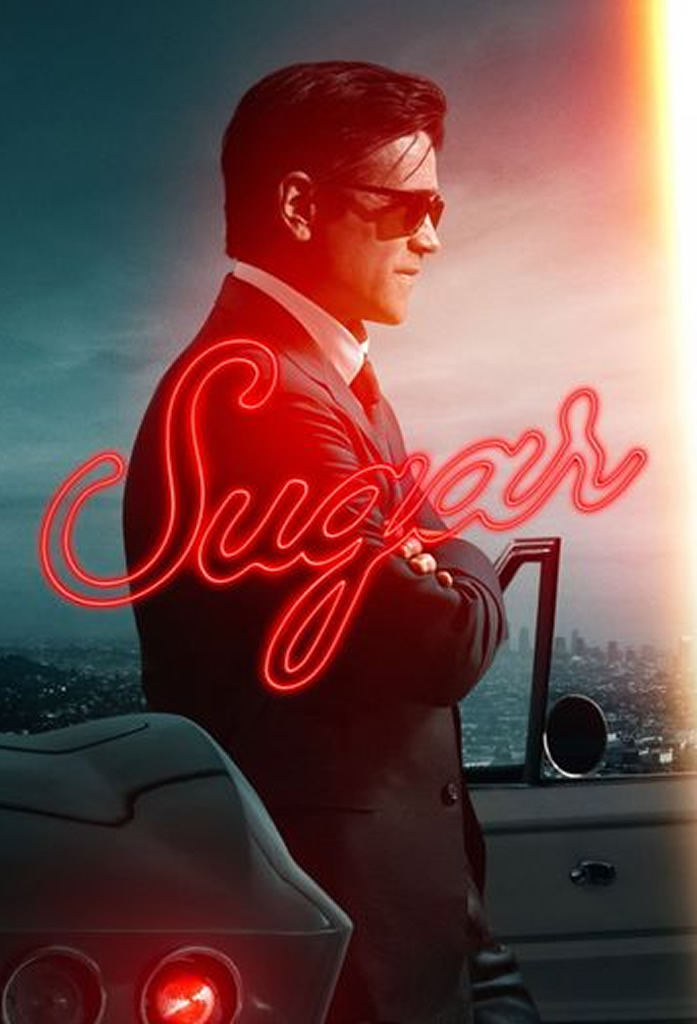
Few television premises have managed to pull off a genre switch as audacious as the one buried inside Sugar, the Apple TV series that spent its opening episodes convincing viewers they were watching a classic Los Angeles detective story before quietly revealing something far stranger underneath. Now heading into its second season, the show has become one of the more distinctive entries in the current streaming landscape, anchored by a lead performance from Colin Farrell that has only grown more assured as the story around him has expanded. What began in 2024 as a moody homage to old school noir has evolved into a genuinely unusual two season arc that blends detective fiction, science fiction, and a surprisingly tender meditation on grief and belonging.
At the center of it all is John Sugar, a private investigator who specializes in tracking down missing people, a professional focus that traces directly back to his own unresolved anguish over a sister who vanished years earlier and has never been found. Farrell plays Sugar with the kind of old fashioned charm that immediately signals a throwback to a bygone era of Los Angeles crime fiction, all tailored suits, classic cars, and a genuine reverence for the golden age of cinema that the character quotes from constantly. For roughly the first half of its debut season, the show plays this atmosphere completely straight, following Sugar as he investigates the disappearance of a young woman named Olivia Siegel and slowly peels back the layers of a wealthy, secretive Hollywood family.
Then, around the midpoint of the season, the story reveals its hand. John Sugar is not human. He is part of an extraterrestrial group sent to observe humanity from the shadows, blending seamlessly into Los Angeles society while quietly studying the species he was assigned to watch. His seemingly superhuman reflexes, his unusual tolerance for alcohol, and the private, unexplained medical routines that punctuate his daily life all suddenly make sense once his true nature comes into focus, and when he drops the human disguise entirely, his skin shifts to a striking shade of blue. It is a swing few detective dramas would dare attempt, and it landed as one of the more divisive twists in recent television memory, splitting audiences between those who felt betrayed by the tonal shift and those who saw it as one of the boldest creative risks a mainstream streaming series had taken in years.
What keeps the reveal from feeling like a gimmick is how thoroughly the show commits to exploring its emotional implications rather than simply using it for shock value. As Sugar’s investigation into Olivia’s disappearance deepens, he discovers that members of his own alien community, sent to Earth under the same quiet observational mandate, have begun to corrupt themselves through prolonged exposure to human vice and violence. By the time the first season reaches its conclusion, Sugar is forced into an extraordinary decision. Rather than returning home with the rest of his people, he chooses to remain on Earth, determined to hunt down a fellow alien named Henry who has been quietly enabling a serial killer, and equally determined to keep searching for answers about his missing sister. It is a finale that reframes the entire series retroactively, transforming what looked like a stylish crime procedural into a story about isolation, empathy, and what it truly means to become part of a world you were only ever supposed to watch from a distance.
Season two picks up on that foundation and pushes it into more personal, more emotionally direct territory. Sugar returns to Los Angeles for a new case that initially looks straightforward on the surface, tracking down the troubled older brother of a rising local boxer named Danny Moon, only to find the investigation spiraling into something far larger and more sinister than a routine missing persons case. As Sugar follows the trail toward a mysterious figure known as Ji, he crosses paths with a dangerous new adversary named Vega and finds himself pulled into the orbit of a citywide conspiracy that forces him to question exactly how far he is willing to go in pursuit of justice. Along the way, the season weaves in an ever expanding web of complications, an unexpected new admirer, a serious falling out with his ally Charlotte, and a tense alliance built inside the inner circle of a powerful player named Pavich, all while Sugar continues chasing the one lead that matters most to him personally, the fate of his sister.
The returning and newly expanded cast gives the season plenty of room to breathe. Farrell remains the clear emotional anchor of the show, but he is joined by a strong supporting ensemble that includes Jin Ha, Raymond Lee, Tony Dalton, Laura Donnelly, Sasha Calle, and Shea Whigham, each bringing a different shade of menace, warmth, or moral ambiguity to the widening conspiracy Sugar finds himself untangling. Structurally, season two keeps things tight and efficient, unfolding across eight episodes released weekly, each running a brisk forty minutes, a pacing choice that suits the show’s noir instincts and keeps the mystery moving without ever overstaying its welcome.
Critical response to the new season has been largely positive, with many reviewers pointing to Farrell’s performance as the show’s most consistent strength, praising the way he continues finding new emotional shading in a character who is technically alien but has become, over two seasons, one of the more quietly human protagonists on television. Some critics have noted that the season pulls back slightly on the boldness of its science fiction premise compared to the first year’s audacious reveal, choosing instead to use Sugar’s extraterrestrial identity more sparingly, often as a thematic parallel to broader questions of displacement and belonging rather than a constant plot engine. Whether that restraint reads as a wise recalibration or a slightly cautious retreat from the show’s original creative risk has become one of the more interesting points of debate among critics covering the season, though virtually all of them agree that the mystery itself, the atmosphere, and Farrell’s central performance remain more than compelling enough to carry the show forward.
Taken as a whole, Sugar has quietly become one of the more original genre experiments in modern streaming television, a series willing to disguise a strange, melancholy story about alienation and grief inside the trappings of a classic detective yarn. Two seasons in, it continues to reward patient viewers willing to follow John Sugar down every winding alley of Los Angeles, blending old Hollywood glamour with a genuinely strange science fiction backbone that gives the show an identity unlike almost anything else currently streaming. As the search for his sister continues and the citywide conspiracy around him deepens, Sugar remains a rare example of a series that took an enormous creative risk early on and has spent every episode since finding new, unexpected ways to make that risk pay off.