Sugar: Inside the Neo Noir Mystery That Hides an Alien Detective in Plain Sight, Jake Johnson and Ben Stiller Serve Up Apple TV’s Pickleball Comeback Comedy
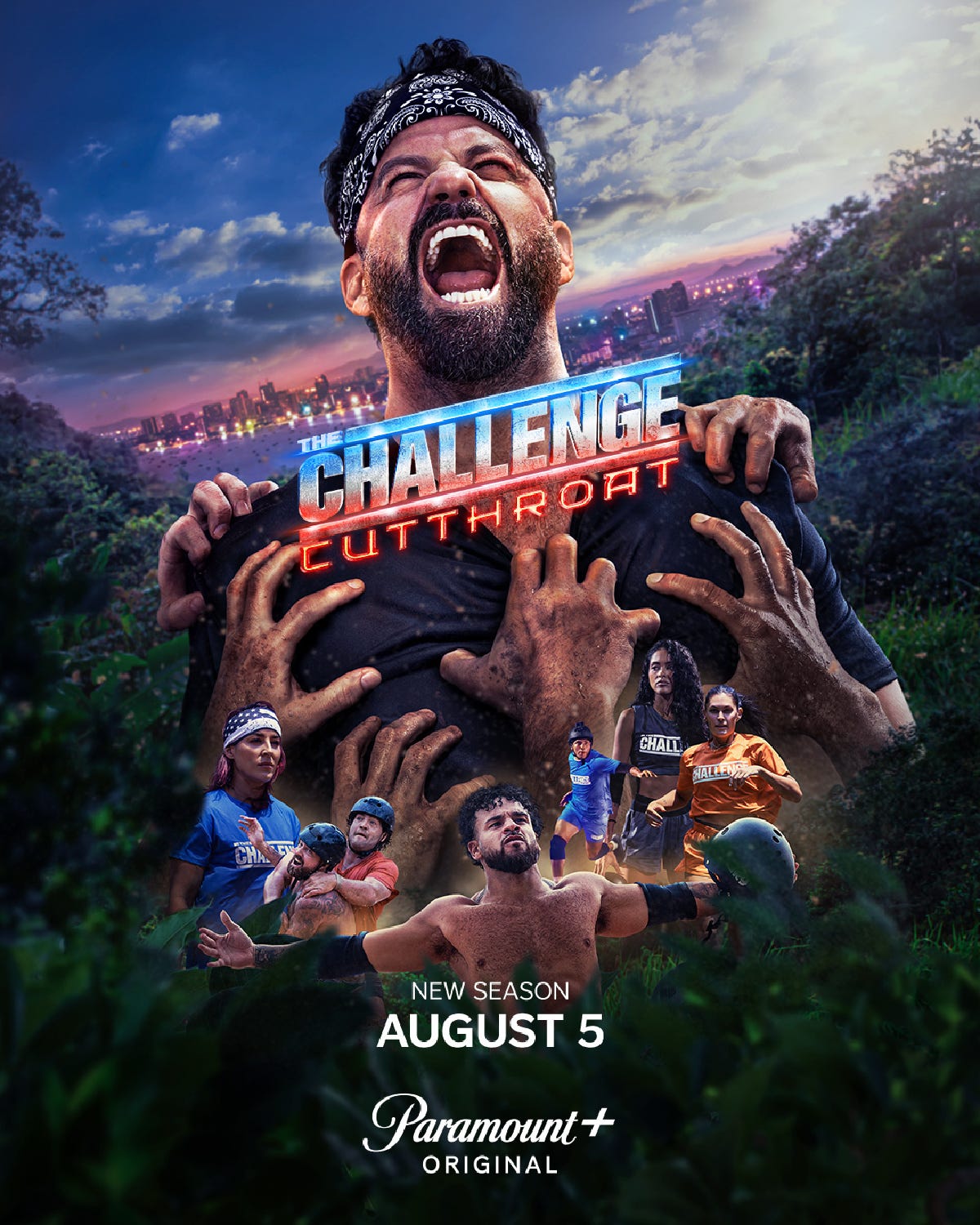
The Challenge: Cutthroat Season 42 Is Back, and the Opening Episodes Waste No Time Getting Vicious
I had no warning that The Challenge was returning, and even less warning that it was returning in its Cutthroat format, yet here we are two episodes into Season 42 with an already loaded cast, a brutal new prize structure, and enough personal history bubbling under the surface to carry an entire season on its own. This is also the first season of the flagship series to leave MTV behind for good and live exclusively on Paramount+, following the lead of this year’s All Stars spinoff, and based on what the first two episodes have delivered, the move to streaming has done nothing to slow the show down. Read The Sunset Daily Substack!
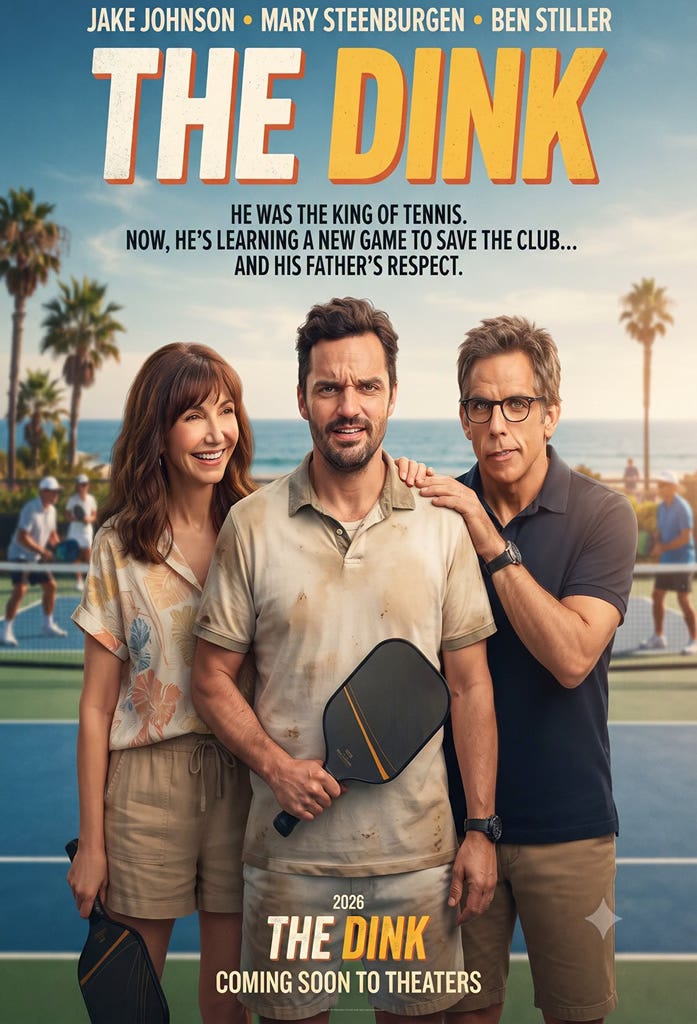
Jake Johnson and Ben Stiller Serve Up Apple TV’s Pickleball Comeback Comedy
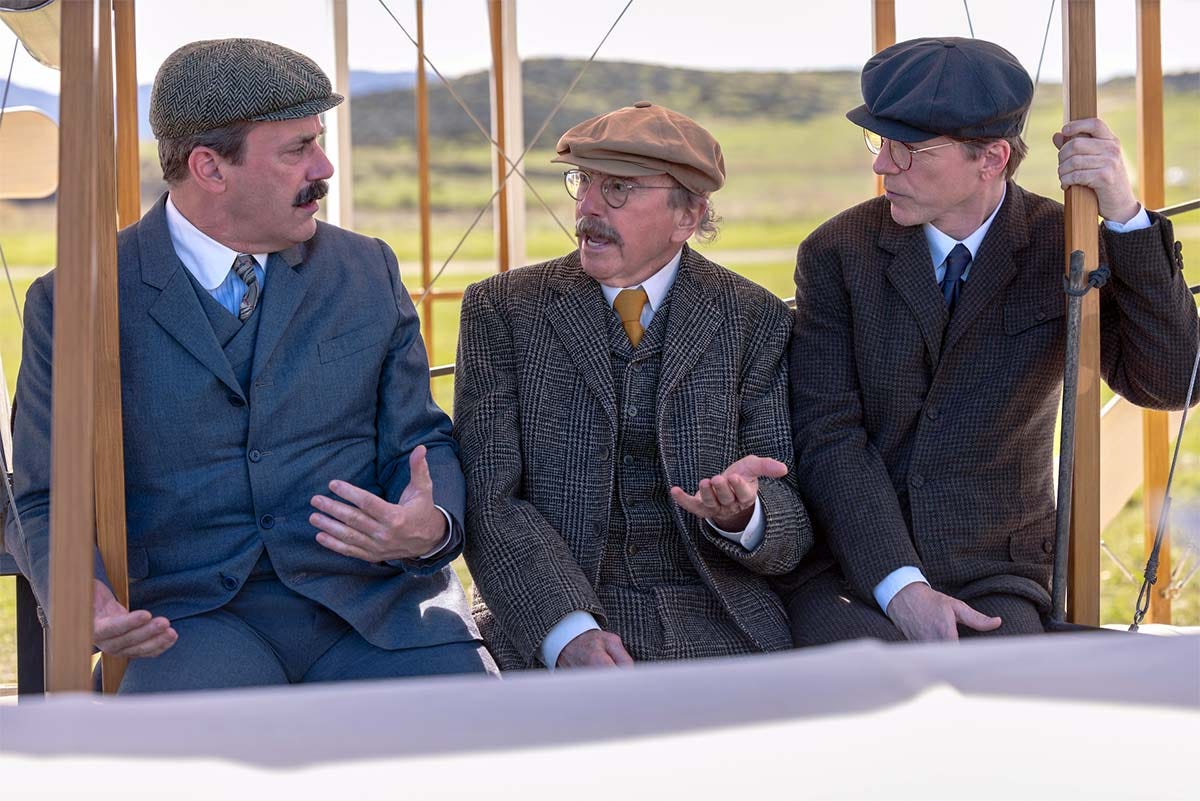
Pickleball has spent the past several years quietly taking over the American backyard, and now the sport finally has the big, broad, unapologetically silly comedy it deserves. Apple Original Films is set to premiere The Dink globally from Apple TV on Friday, July 24, 2026, a summer sports comedy built around the collision of old school tennis pride and the paddle sport that has been steadily eating its lunch. Produced by Ben Stiller, who knows a thing or two about turning an underdog sport into a cultural moment after his work on Dodgeball, and led by a cast stacked with reliable comedic talent, the film arrives with the kind of pedigree that suggests Apple is treating this premise with far more care than a quick punchline about middle aged suburbanites and their paddles. Read More!
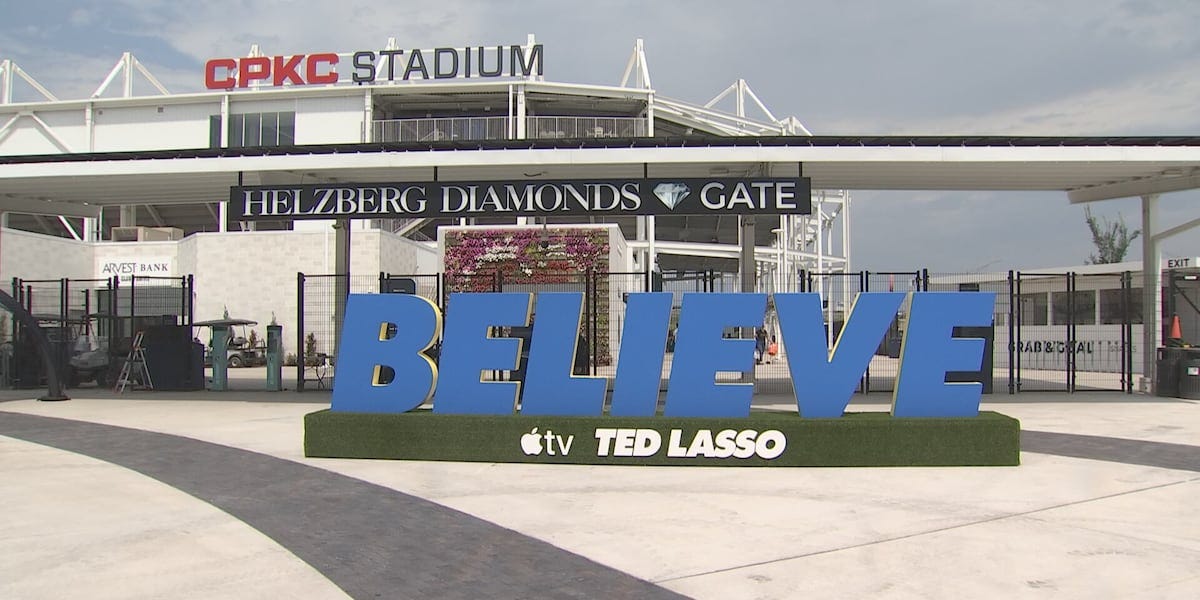
Ted Lasso started back up in Kansas City Missouri or Kansas?
I am a total pushover when it comes to sports and sentiment mixed together, and I’ve known this about myself for a while. Years ago I stumbled onto highlights of the 1980 US hockey team winning gold, the Miracle on Ice, and they had this song playing under the footage, Quincy Jones, “Just Once.” I’d never heard it before, or if I had, it never registered. Next thing I know I’m sitting there crying, looking around like, why am I like this. Nothing about my actual life was even happening in that moment. Just a song and some old footage and I was gone.
I bring that up because it’s exactly what happened watching the Season 4 premiere of Ted Lasso, titled “Home.” I knew the whole thing was engineered to get me right in the chest. I could see the machinery working the entire time. And I cried anyway. Read The Sunset Daily Substack!
Below Deck Mediterranean Season 11 Has Officially Fallen Apart at the Seams, and Somehow That Is Making It Better Television Than Ever
There comes a point in every season of Below Deck Mediterranean when the crew stops functioning as a crew and starts functioning as a group of exhausted people barely holding a very expensive vessel together, and Season 11 has now arrived firmly at that point. Between a stunning midseason departure, a serious medical scare, and a leadership scramble that has exposed just how thin this deck team’s margin for error really is, the back half of this season aboard the M/Y Akira One has become appointment viewing for reasons that have very little to do with the usual charter guest antics and everything to do with the crew itself falling apart in real time. Read The Sunset Daily Substack!
The McBee Dynasty Went to Vegas, a Secret Wedding Happened, and the Fallout Is Still Rippling Through Bravo
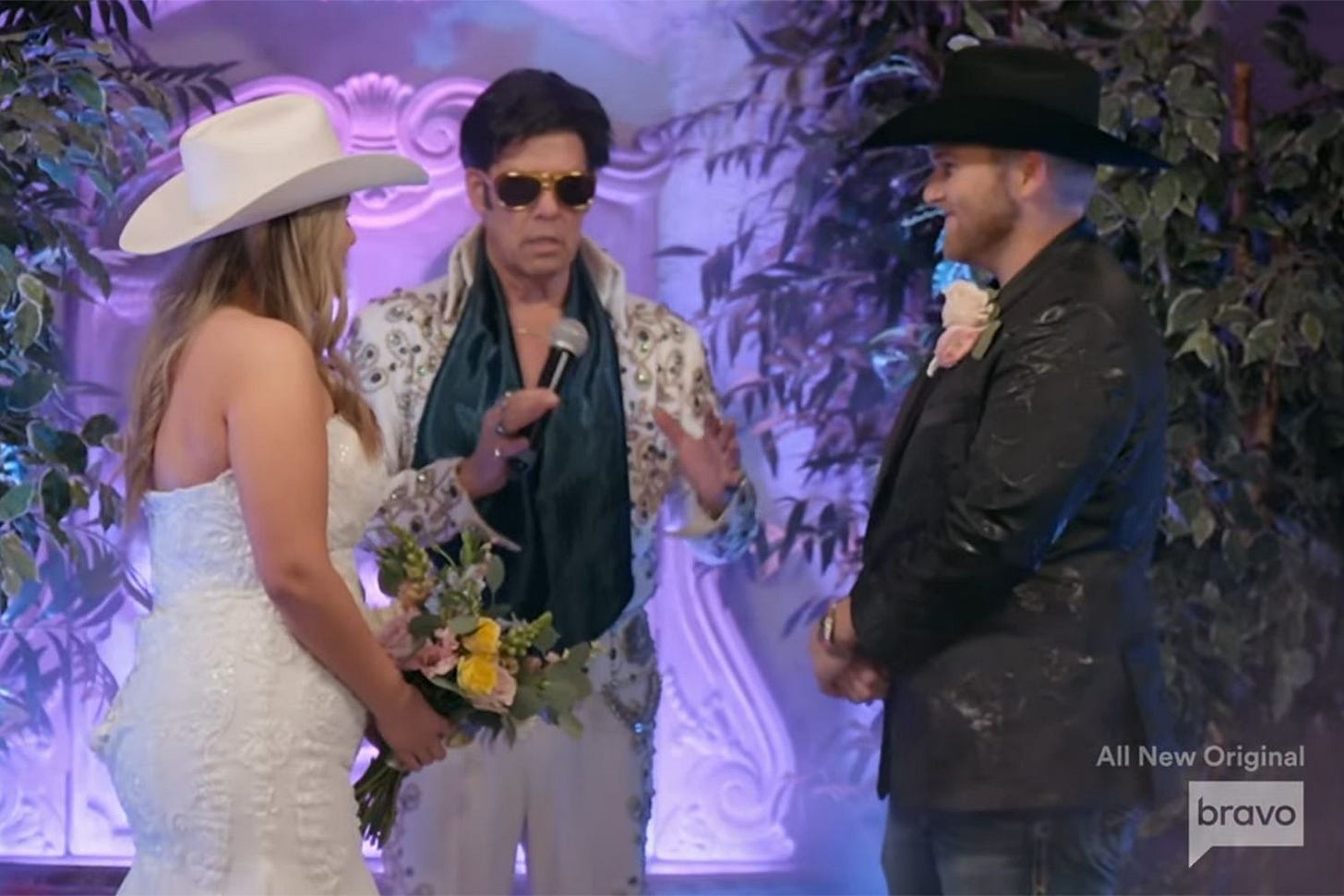
There is a certain irony in admitting you had stepped back from a show only to find yourself pulled right back in the moment it delivers one of its biggest episodes yet, but that is exactly where The McBee Dynasty: Real American Cowboys finds itself this week. Season three, episode eight, titled “What Happens in Vegas…,” sent the extended McBee clan to a joint bachelor and bachelorette trip that was clearly billed as a lighthearted send off before a wedding, and instead turned into one of the more consequential hours the family has filmed. A marriage happened that almost nobody in the audience saw coming, at least one relationship got a long overdue jolt of intimacy back into it, and the fallout from all of it has already started spilling into the real world in ways that connect this show to the wider Bravo universe more than it ever has before. Read The Sunset Daily Substack!
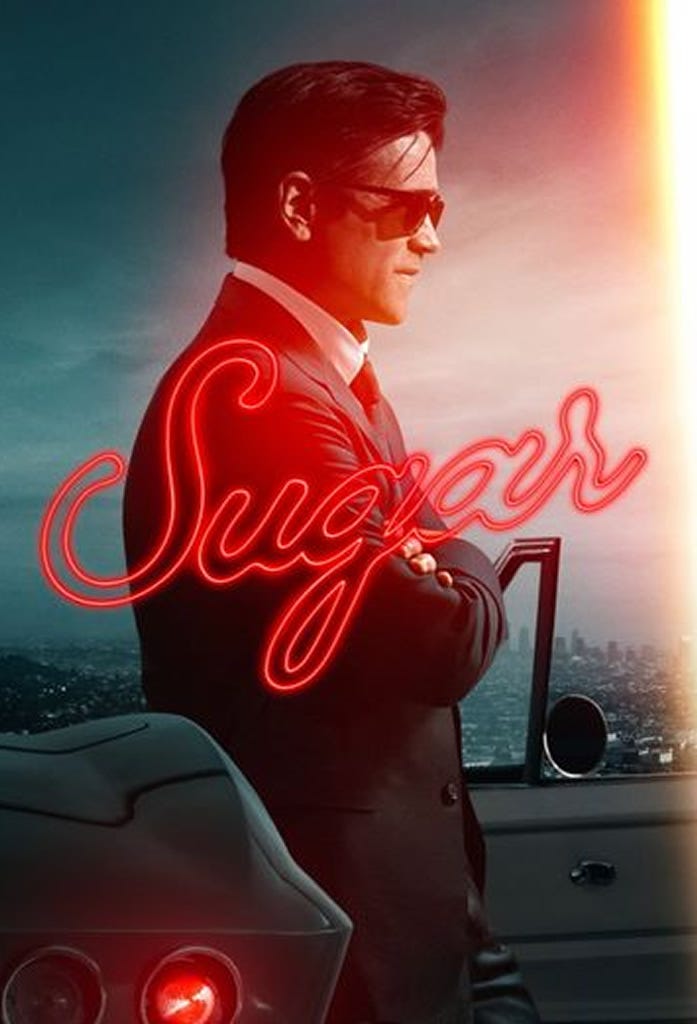
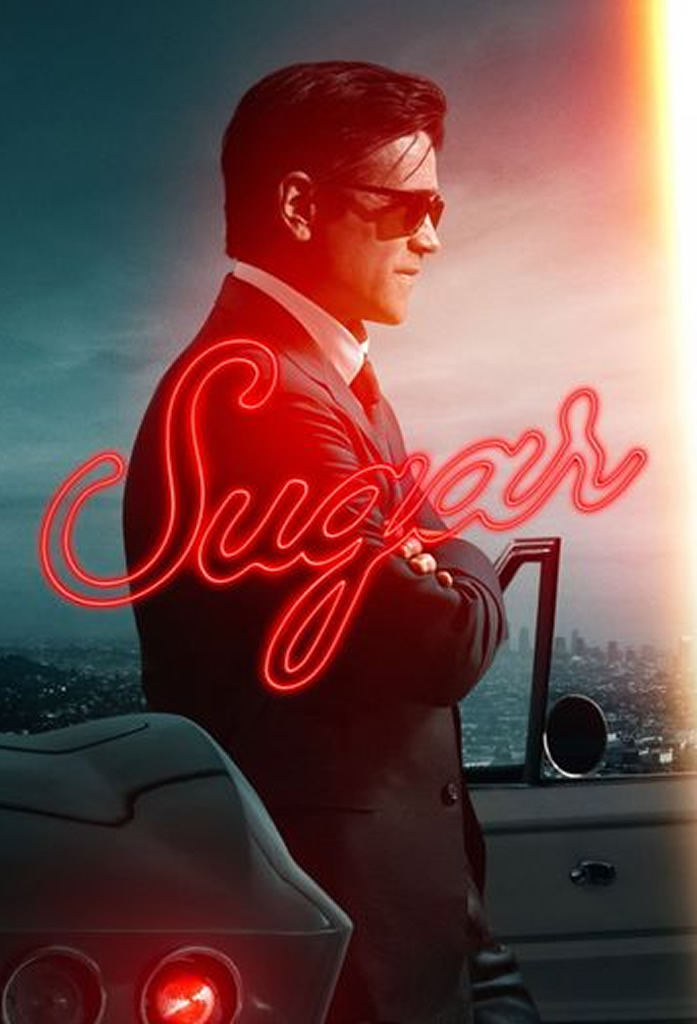
Sugar: Inside the Neo Noir Mystery That Hides an Alien Detective in Plain Sight
Few television premises have managed to pull off a genre switch as audacious as the one buried inside Sugar, the Apple TV series that spent its opening episodes convincing viewers they were watching a classic Los Angeles detective story before quietly revealing something far stranger underneath. Now heading into its second season, the show has become one of the more distinctive entries in the current streaming landscape, anchored by a lead performance from Colin Farrell that has only grown more assured as the story around him has expanded. What began in 2024 as a moody homage to old school noir has evolved into a genuinely unusual two season arc that blends detective fiction, science fiction, and a surprisingly tender meditation on grief and belonging. Read More!
Sugar: Inside the Neo Noir Mystery That Hides an Alien Detective in Plain Sight,The Hawk: Will Ferrell’s Absurd Golf Comeback Comedy Is Splitting Critics and Conquering Netflix’s Charts, Jake Johnson
The Sunset Daily — August 3, 2026
The Sunset Daily · Substack Edition
The Sunset Daily
August 3, 2026 · Full articles on Substack
Streaming & Television
Action · Paramount+
Special Ops: Lioness Season 3 — “The Spider and the Fly” Is the Best TV Premiere of 2026
Taylor Sheridan drops the Lioness team onto the front lines of the Russo-Ukrainian war in Donetsk. One character calls it World War I and Star Wars. That description is correct. The most technically brutal hour of American television action this year, and it is not close.
Sugar: The Neo-Noir That Hides an Alien Detective in Plain Sight
Apple TV+’s Colin Farrell series revealed itself to be something far stranger than moody LA noir. Season 2 is delivering on every promise the first season left open.
The Hawk: Will Ferrell’s Golf Comedy Is Splitting Critics and Conquering Netflix’s Charts
4.8 million views in its first weekend. #2 on Netflix’s US Top 10. Reviews ranging from delighted to deeply disappointed. Both reactions are simultaneously correct.
Bill Maher’s Mark Twain Prize: The Most Politically Loaded Night in the Award’s 27-Year History
The building still has the tarp up. The Kennedy Center is now officially renamed. On June 28, Bill Maher received the nation’s top comedy honor inside it — with Louis C.K., Whitney Cummings, Jay Leno, and a Trump impression that tried to steal the bronze bust. Now streaming on Netflix.
Real Time S24 E21: Erin Brockovich, Scott Galloway & Peter Hamby Deliver the Year’s Sharpest Friday Night
Brockovich on PFAS and AI data center water consumption. Galloway arguing GLP-1 drugs will do more for the deficit than AI. Hamby mapping a Democratic midterm wave. The panel Real Time was built to host.
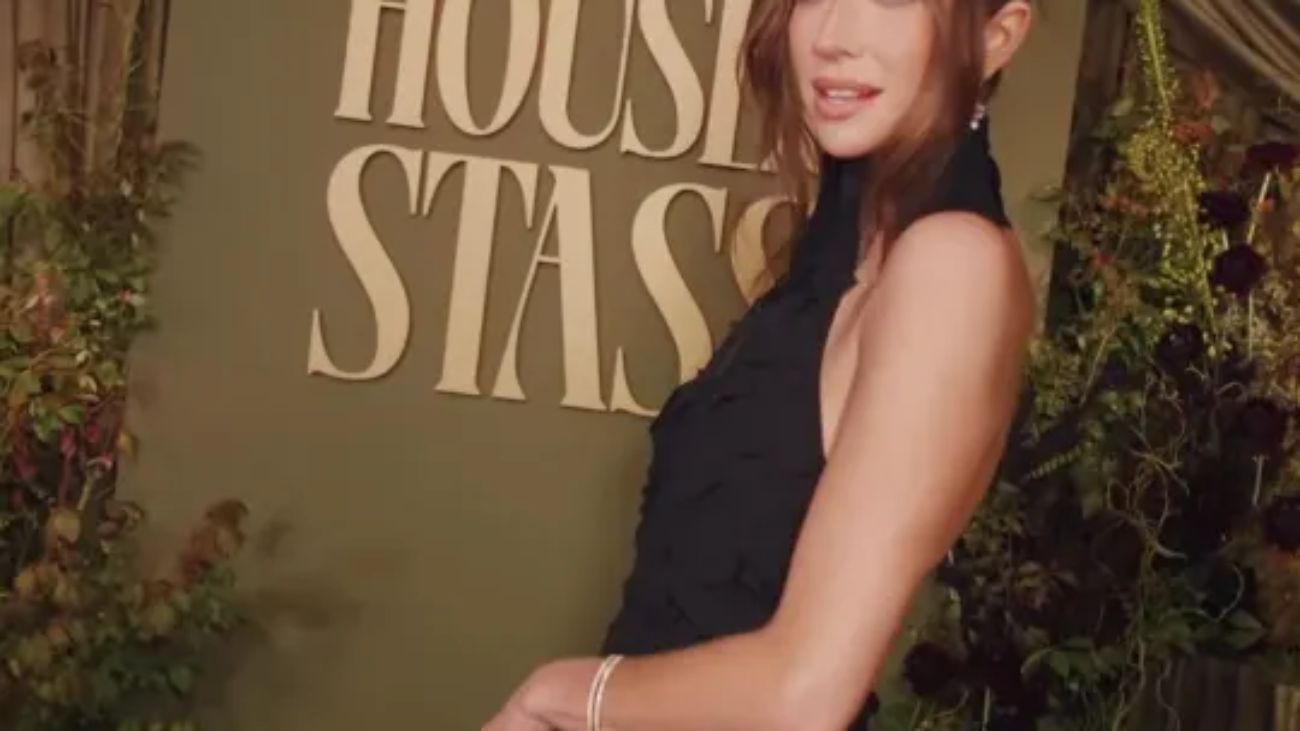
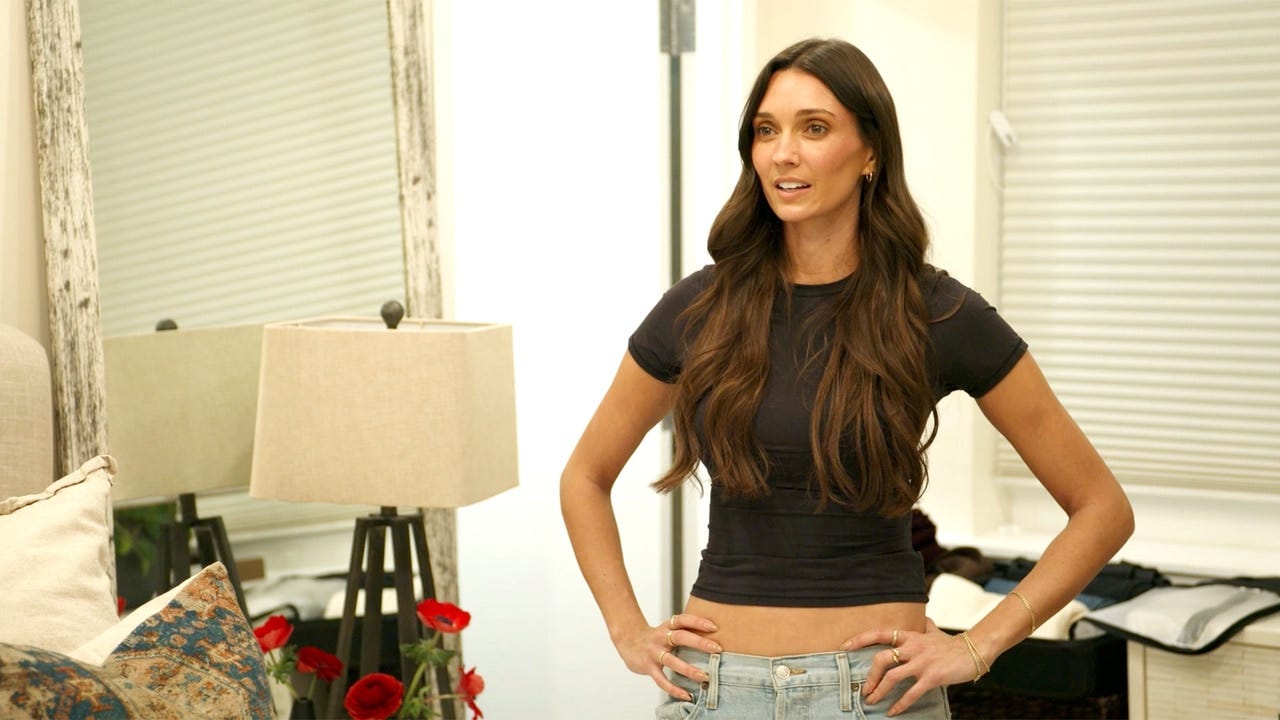
House of Stassi: The Most Self-Aware Reality Premiere in Years — and Its Most Uncomfortable Question
Stassi Schroeder breaks the fourth wall mid-scene, directly to the crew, in the show’s first episodes. Not from a confessional. Live. The question the show keeps circling is whether that makes her Lisa Vanderpump now.
Big Brother 28 Week 4: Drew Doesn’t Know What’s Coming, and Dee Is Sitting on a Secret Nobody Suspects
Taylor won the veto and shattered Haley’s plan. Barrett went rogue and snitched. Drew genuinely believes he is a safe pawn. Dee holds the second Time Capsule power and has told no one. Thursday is going to be brutal.
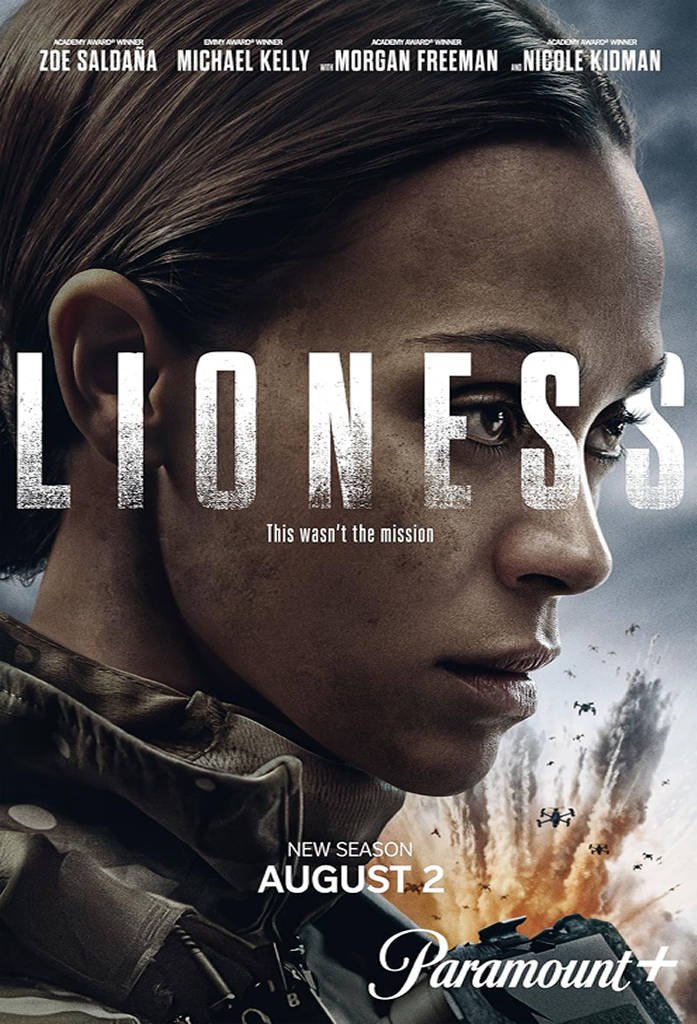
Lioness Season 3 Trades Its Original Mission for a War Zone, and It Might Be Sheridan’s Boldest Bet Yet
Forget everything you thought you knew about how this show works. Lioness built its name on a single, tightly wound premise: send an American soldier undercover, get her close to a target’s inner circle, close the trap. It was intimate. It was surgical. Season 3 blows that formula up entirely and drags the fight straight onto the actual front lines of a real war. That’s not a small creative pivot. It’s Taylor Sheridan betting his most action forward series can survive without the thing that made it distinct in the first place.
Premiering Sunday, August 2 on Paramount Plus, the new season drops CIA case officer Joe McNamara, played once again by Zoe Saldaña with the kind of exhausted, wired intensity that’s become her calling card, into a story that finally lives up to the phrase “worlds colliding.” Instead of embedding a new lioness inside a cartel or a terror cell, this season sends the entire operation barreling into the Russia and Ukraine conflict, weaving in hidden networks, foreign operatives, and covert missions that eventually trace their way back to American soil. And just when Joe should be locked in on the most volatile theater of her career, the danger follows her home. Straight to her daughters. Straight to her front door.
That’s the real engine of the season, according to the official logline: a woman stretched between two impossible jobs, running an overseas operation with global stakes while a threat closes in on the family she barely has time to protect. It’s a version of Joe we haven’t fully seen before, one where the professional and the personal aren’t just overlapping, they’re actively at war with each other.
Here’s where things get interesting structurally. Early reviews describe a season that opens with Joe already in danger, then rewinds to show exactly how everything fell apart. It’s a dual timeline gamble, and depending on who you ask, it either sharpens the tension or muddies the pacing. Reviewers who caught the first two episodes flagged a torture sequence early in the run that’s genuinely difficult to sit through, the kind of scene Sheridan seems to specialize in: morally messy, uncomfortably staged, and clearly meant to needle at the audience rather than let them off easy.
The returning cast is doing a lot of the heavy lifting here, and honestly, that’s probably the season’s biggest safety net. Saldaña anchors things as Joe. Nicole Kidman is back as the icy, calculating Kaitlyn Meade. Michael Kelly returns as Byron Westfield, and multiple early reviews single him out this season, calling his work some of the sharpest the show has produced. Morgan Freeman, Laysla De Oliveira, Genesis Rodriguez, and Dave Annable all slide back into their established roles, giving the season a sense of continuity even as the plot itself veers somewhere entirely new.
New blood arrives too. Yellowstone alum Ian Bohen joins as a series regular playing a character named Grady, and Mayor of Kingstown’s Elizaveta Neretin has been added in a role Paramount Plus is keeping deliberately, almost stubbornly vague. Read into that what you will. Sheridan loves a mystery hire, and this one has already sparked speculation that she could end up being the next lioness in spirit, even if the show never says so outright.
And then there’s the twist nobody saw coming: Sheridan himself steps in front of the camera this season, playing a character named Cody. The man who’s spent years building an entire streaming universe from behind the scenes is now acting in one of his own shows, which is either a fun bit of stunt casting or a sign that Sheridan simply can’t resist being everywhere his empire touches down. Either way, it’s the kind of detail that gets people talking before a single episode airs.
So does the gamble pay off? Reviews so far are landing somewhere between cautiously impressed and openly conflicted, which, for what it’s worth, is fairly normal territory for this show. One critic called the shift away from the original lioness concept a genuine loss, arguing the season turns what used to be a distinctive spy drama into something closer to a generic thriller, just with a bigger budget and higher stakes. Another take was blunter still, noting the show has never quite figured out how to make its morally complicated action sequences land the way Sheridan clearly intends them to. Fair criticism, honestly. Lioness has always struggled with that particular tightrope.
But plenty of other reviewers are calling this the strongest season yet, praising the way the story finally widens its lens beyond a single undercover mission to explore the broader machinery of modern warfare, the drone strikes, the AI powered decision making, the sheer speed at which conflict now moves. One review pointed to a scene involving swarming combat drones as some of the most unsettling modern warfare imagery the show has ever put on screen. That’s not a small compliment for a series that’s built its entire identity around visceral, boots on the ground tension.
Where does that leave things heading into Sunday? Split, but leaning positive. The season currently sits at a strong 86 percent on Rotten Tomatoes, built admittedly on a small early batch of reviews, and even the more skeptical takes tend to concede the performances, particularly Kelly’s, are worth the price of admission alone. Whether the war torn, geopolitically ambitious version of Lioness ends up being remembered as the show’s boldest evolution or its most identity confused detour is genuinely still up for debate. What isn’t up for debate is that Sheridan swung hard this time. No half measures, no safe retread of what worked before.
Episodes will roll out weekly rather than all at once, starting with the premiere “The Spider and the Fly” on August 2, followed by “No Sorrow Like the Survivor” on August 9, with new installments landing every Sunday through the season finale on September 20. Eight episodes. Eight weeks. A slow burn toward whatever Joe McNamara’s breaking point actually looks like this time around. Given how far this season is willing to push its own format, that finale is shaping up to be one of the most unpredictable endings Sheridan has delivered across his entire streaming universe.
Summer House Season 11 is currently filming in New York City and the Hamptons, and the season is set to premiere next year.
First things first, I just found House of Stassi, and I’m on the second episode. We will get to all three or four by this weekend.
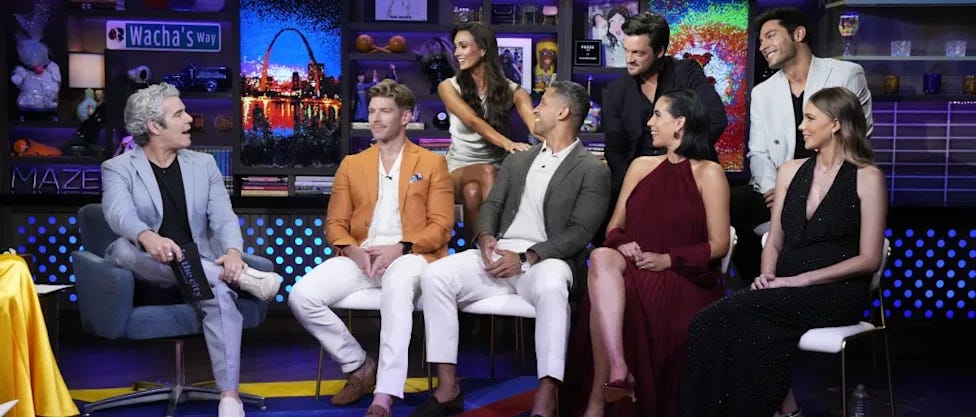
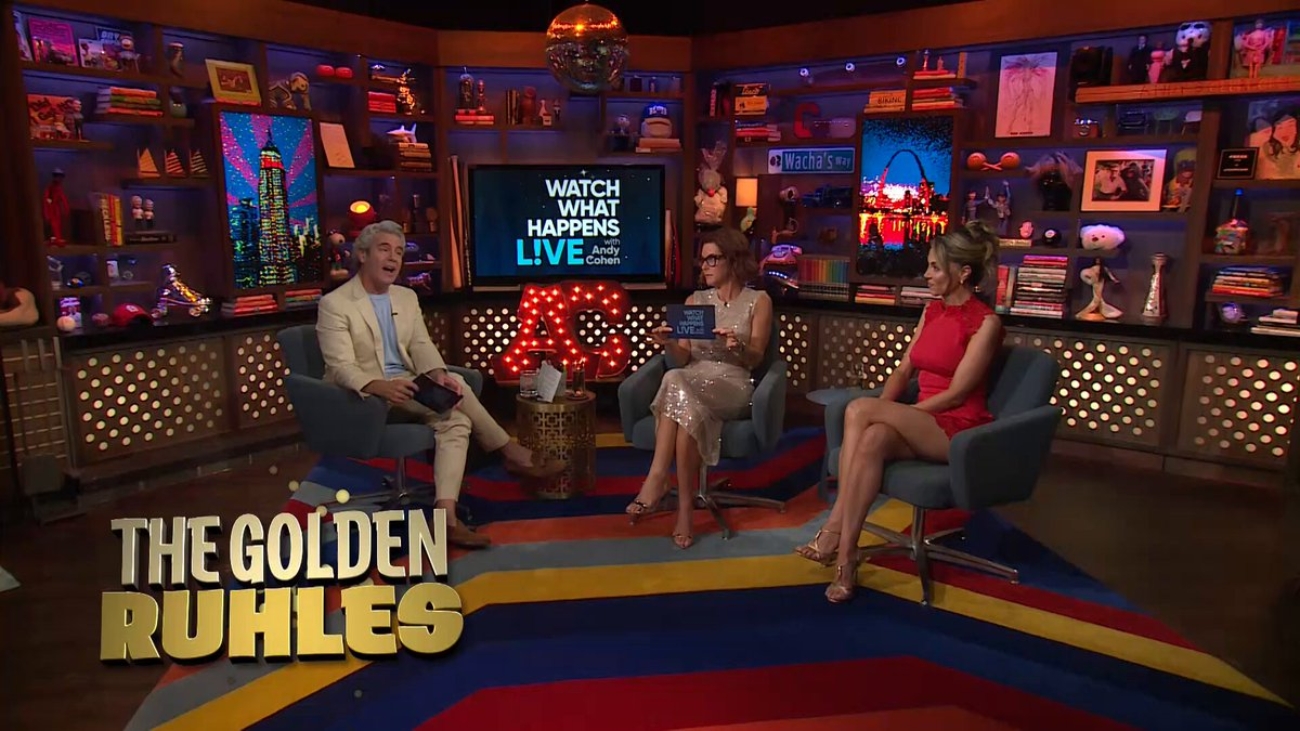
WWHL I sorta watched it once or twice this week, either way I kind of caught the episodes where they were with Love Island’s winners I believe, which I’ve never seen, but I like that Ariana Madix is hosting it. I really hope she keeps acting because, if you haven’t seen her in St. Denis Medical or Will Trent she has some pretty great acting skills that I didn’t know she had until I saw her on Will Trent. All the same, the WWHL episode with Kevin Hart and the SNL guy was pretty hard for me to watch.
Summer House Season 11 is currently filming in New York City and the Hamptons, and the season is set to premiere next year. This year, Kyle Cooke is single, Lindsay Hubbard and Carl Radke are back as full-time residents, and Ciara Miller, Jesse Solomon, Mia Calabrese, KJ Dillard, and Bailey Taylor are all returning to the fold. However, Amanda Batula and West Wilson have exited the franchise, and it is hard to blame them after the reunion aired on Bravo. Paige DeSorbo is absent again for the summer season as well, pursuing her comedy writing career through Amy Poehler’s production company as part of a larger career shift, and the summer season will see the group get together to film what is sure to be an intriguing season. The show’s cameras will capture the group as a social unit transformed by the events of this past season with more drama and more conflict, and their interactions with the Hamptons house will surely prove to be entertaining.
Anyway, we now have The Larry David thing (The Larry Pursuit of Happiness) tonight, and we will get to Big Brother this weekend as well, which this post is going to be long enough as it is, and with multiple big brother episodes to recap, it’s going to be a book. I think that’s it for now, we will get to all of this, and more. Read the Sunset Daily Substack!
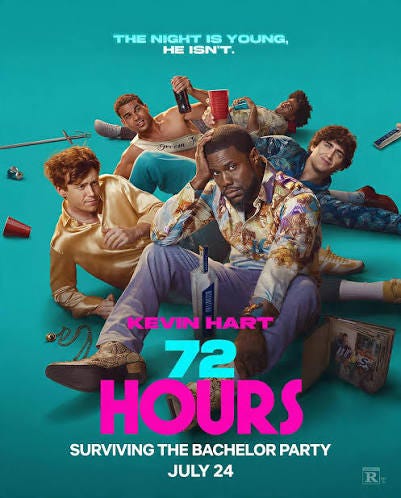
Kevin Hart’s 72 Hours Is the Comedy That Had Every Possible Advantage and Wasted Them All
Some movies are disasters because the concept never worked. Some collapse because the filmmaking is simply poor. And then there are the truly baffling ones, the films that seem to have every ingredient for success but still end up as exhausting, incoherent messes that make you wonder what went wrong in the editing room and why no one stopped to fix it before it landed on Netflix.
Kevin Hart’s new comedy, 72 Hours, was released on Amazon Prime on July 25, and it falls into the third category, perhaps the saddest of them all. The setup is odd in itself. I thought, or at least assumed, that he was married until about three-quarters of the way through the film, and I just did not understand how it all came together. If there was ever a way to make a story feel completely unbelievable, this was it. It made no sense.
Joe (Hart) is a forty-year-old ad executive who is informed by his bosses that he has lost the connection to youth culture that made him successful in his career. He is mistakenly added to a bachelor party group chat, which made no sense to me, and quickly accepts the invitation, which also made no sense to me. He decides to use the weekend in Miami to research youth culture, which made no sense to me, but soon finds himself fascinated by this strange group of twenty-somethings, which made no sense to me, while getting caught up in a series of increasingly ridiculous situations that, quite honestly, made no sense to me either. Read the Sunset Daily Substack!
The WWHL Appearance That Matched the Movie’s Energy Perfectly. Kevin and Marcello were on the show to promote 72 Hours, while Kam Patterson was at the bar, as if to complete the movie’s promotional family. The appearance was, by all accounts, exactly like the movie, extremely loud, extremely fast, extremely confusing, and operating at such a frantic energy level that it left me wondering, “What is going on here?”
They could barely describe the movie, let alone speak about it with any enthusiasm or exuberance.
Hart yells a joke about Hernandez sneaking his phone into Taylor Swift’s wedding, which makes much more sense once you know that Hernandez was a guest at the Taylor/Kelce wedding, and that photos apparently leaked in some way that made people think he took them. Hernandez was asked to address the accusation on the air, and he made it more confusing, while Hart was already on to the next bit before anyone in the room registered that there was a bit to be had. It seemed like there were little digs here and there. I thought he got angry with him once or twice. It didn’t come across as jovial to me. Andy Cohen, who has seen plenty of difficult interview situations during his twenty-plus years hosting this program, had the look of a man who was committed to finding the fun in whatever was happening. At times, he was touching his nostril, and while they did get through some games, or at least one game, it was still difficult to watch. Read the Sunset Daily Substack!
The Dead and Company Documentary That Had a Better Story and Told a Different One
The film that came up on Sunset was not the Chloe Sevigny-produced Summer Dead & Co. Tour video she made, which I had hoped it would be. Based on her involvement alone, it sounded like something I want to see. The film I actually had available, which gave me eighteen minutes of viewing time before I had to stop watching for good, was My Dead Summer, directed by Bill Brennenstuhl and co-written with Zeke F. Carlton III and Paul Stenerson, who also stars in it. Read the Sunset Daily Substack!
The Valley Season 3 Finale Is a Season-Long Argument That Ended With a Drink in Someone’s Face and Nobody’s Mind Changed
“The Valley of the Damned.” That’s the name of the Season 3 finale of The Valley , and whomever named it was not wrong. The episode, which aired Bravo on July 29 as part 18, was a fitting end to the season, serving as the convergence point for all of the season’s many subplots and the places where they could either be laid to rest or further intensified. It did not do the latter in any significant way, though. All that throwing ended up on the floor. (The drink, too.)
Let me be first to acknowledge that the entire mess between Janet and Danny has been thoroughly, hilariously complicated by the responses from the peanut gallery, but the reality is that it’s actually quite simple. Read the Sunset Daily Substack!
Sugar: Inside the Neo Noir Mystery That Hides an Alien Detective in Plain Sight
Few television show premises have such audacity to flip the script as dramatically as was done in Sugar, the Apple TV+ series that ran its first season. It started by making viewers believe that they were watching a typical Los Angeles detective story, but it revealed many twists about the case that the protagonists were investigating. The second season has been running in 2025, making it one of the most unique shows of the current ecosystem. It features a performance by Colin Farrell that continues to gain steam as much as his character’s storyline develops. The series started in 2024 as an atmospheric noir-tinged drama and has grown into a two-season piece that combines detective genres, science fiction, and an oddly uplifting exploration of grief and belonging. Read More!
The Hawk: Will Ferrell’s Absurd Golf Comeback Comedy Is Splitting Critics and Conquering Netflix’s Charts
Every so often a show comes along that exemplifies the growing disconnect between critics and audiences, and Will Ferrell’s new Netflix comedy, The Hawk, is proving to be the definitive example of the summer of 2026. The ten-episode golf farce, which debuted on July 16, has been a huge hit for the streaming service, garnering 4.8 million views in its first few days and climbing to number 2 on the U.S. Top 10 chart on Netflix, just behind some of the service’s most popular titles. It is, without a doubt, one of the most-watched shows each month, and it has also been one of the most disappointing comedic turns of the year, according to critics. Both statements are correct. Read More!
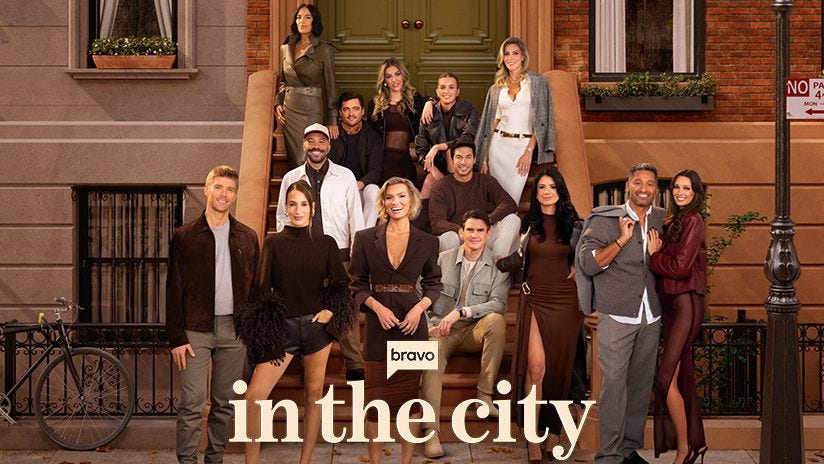
The In the City Reunion Was Surprisingly Mature, and Also More Devastating Than Anyone Expected
The In the City Season 1 reunion, hosted by Andy Cohen on July 28 in two parts, ended in a significantly more mature fashion than most Bravo reunions have the unfortunate tradition of doing – one where everyone is ready to go home, not needing therapy after they have to spend a few hours staring at the same group of loud, opinionated people.
This does not mean that nothing eventful transpired, quite the opposite in fact, as there were several specific things which occurred that merit mentioning before moving on to the “surprisingly mature” conclusion that framed the entire affair:
The Kyle and Amanda Accounting: What They Said That Actually Mattered. As expected from a show about a group of people whose lives are being documented for the purpose of entertainment, the most substantial content of the reunion was devoted to the Kyle Cooke and Amanda Batula storylines, which have dominated the first season of In the City.
The most noteworthy addition to the already complicated tale of their marriage’s demise was the specific, concrete revelation that, in spite of four years of living together and a seemingly endless number of romantic entanglements, Kyle and Amanda physically expressed their affection for each other only three times during their marriage: Read the Sunset Daily Substack!
Summer House Season 11: The House is Filling Up Again.
The official cast members currently filming Summer House Season 11 are:
Kyle Cooke
Lindsay Hubbard
Carl Radke
Ciara Miller
Jesse Solomon
Mia Calabrese
Bailey Taylor
KJ Dillard
With the In the City reunion concluded and the entire Season 1 accounted for, the news from the world of Bravo that is genuinely worth mentioning concerns the Summer House Season 11 reunion, which is currently filming right now, with a premiere date set to be announced soon. The cast that has been confirmed to be returning includes most of the people who remained in the house following the events of Season 10. As far as the rest of the cast goes, the news is exciting for everyone except, possibly, Paige DeSorbo, who has decided to take a break from Summer House to work on her comedy writing project with Hannah Berner, under the Amy Poehler production company, which is, arguably, the right decision, if it works out, nobody will ask Paige when she is planning on returning to the Hamptons. Read the Sunset Daily Substack!
Jake Johnson and Ben Stiller Serve Up Apple TV’s Pickleball Comeback Comedy
Pickleball has been steadily invading the American suburbian landscape over the last few years, and now the sport has the broad, dumb, middle-aged comedy it so desperately needs. Apple Original Films will debut The Dink this summer (Friday, July 24, 2026) on Apple TV+, a sports comedy about middle-aged tennis players who get into a pickleball war, as a way to honor the sport’s rise to popularity. The film was produced by Ben Stiller, who knows a thing or two about bringing a niche sport to mainstream popularity after Dodgeball, and features a star-studded comedic cast, and Apple clearly thinks quite highly of this concept, as they’ve invested a considerable amount of money to make it the heart-warming, uplifting film that we all want it to be. Read More!Read the Sunset Daily Substack!
Jake Johnson and Ben Stiller Serve Up Apple TV’s Pickleball Comeback Comedy Begins Streaming on Friday,“Deepthroat”: Life, Larry and the Pursuit of Unhappiness Episode 4 Goes After RFK Jr., Henry Ford
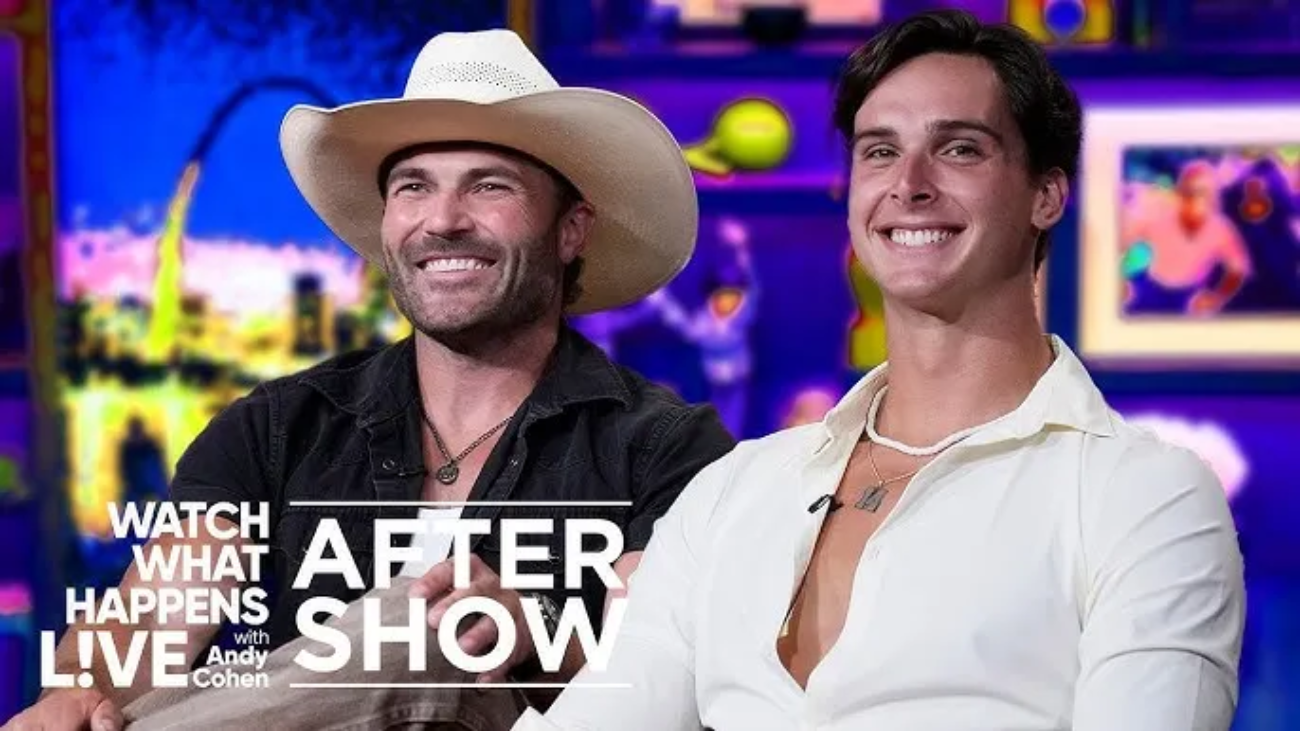
Steven McBee Jr. and Cooper Dawson Make the Most of Their WWHL Moment: Accountability, Boatmance Loyalty, and a Crush List That Makes Sense
That’s right, folks. This so-called after show is now about to talk about an after show. Watch What Happens Live with Andy Cohen Season 23, Episode 119, which aired on July 20, brought together two cast members from very different corners of the Bravo universe. Cooper Dawson, the Below Deck Mediterranean deckhand whose relationship with Kat Johnson has become my season’s favorite storyline, and Steven McBee Jr., the oldest McBee brother carrying the full operational and emotional weight of his family’s ranch business while his father serves a federal sentence, are on the show tonight. They complemented each other in the way that WWHL sometimes manages when the booking decision turns out to be a real conversation rather than just two people sitting next to each other playing funny games. I did feel that Dawson was looking to Steve for acceptance, but at the same time, it wasn’t obvious, so it gets a pass. Plus, I get it. Chef Dave by the way, from an earlier Below Deck was at bar last night.
Steven McBee Jr. and the Allie Eklund Reckoning was great for me at least. The Allie Eklund situation has been one of the more complicated personal storylines running through The McBee Dynasty Season 3, and Steven Jr.’s willingness to address it directly on WWHL without deflecting or minimizing is the most significant thing to come out of his Clubhouse appearance. He and Allie Eklund broke up in April 2026, and the circumstances of that breakup included Steven publicly posting about cheating allegations on social media, a decision that produced a significant wave of fan backlash once the private texts involved became more widely known. He was asked about it on WWHL, and he did not try to relitigate the cheating question or reframe the public blowup as a reasonable response. He said directly that he regrets publicly insulting Allie, named it as the kind of thing hindsight makes obvious, and acknowledged the fan backlash as fair. The problem is an obvious one. They will never feel real if he approaches them that way. Read the Full Article on the Sunset Daily Substack!
The McBee Dynasty Season 3 Episode 6 Is the Season’s Most Consequential Hour — and It Exposes Everything the Show Has Been Avoiding Saying Out Loud
The episode is titled “First Impressions and Final Farewells,” and it earns both halves of that title in ways that are genuinely difficult to watch, not because the production has done anything wrong, but because the actual events documented in this hour carry real weight. I also did not know of so called break up when I watched this episode last night. Steve McBee Sr. reported to federal prison on this episode. His family drove five hours through a bleak, wintry stretch of Missouri and South Dakota to bring him there. Steven Jr. cried on camera and called it “a top three hardest day in my life.” And before the family got on the bus, Steve Sr. called a company-wide meeting and unveiled an organizational chart that nobody in the room expected, naming his ex-wife Kristi McBee as interim president of McBee Farm and Cattle Co., the company his sons had been running under the assumption that one of them was going to take over.
That is the episode. Before getting into the review, though, there is a broader context worth establishing, because the episode cannot be separated from the specific industry the McBee family built their lives around, and that industry is the one that makes the entire viewing experience complicated in a way the show does not acknowledge. It is why I wanted to stop watching it and talking about it but I did not articulate it properly last week. Read the Full Article on the Sunset Daily Substack!
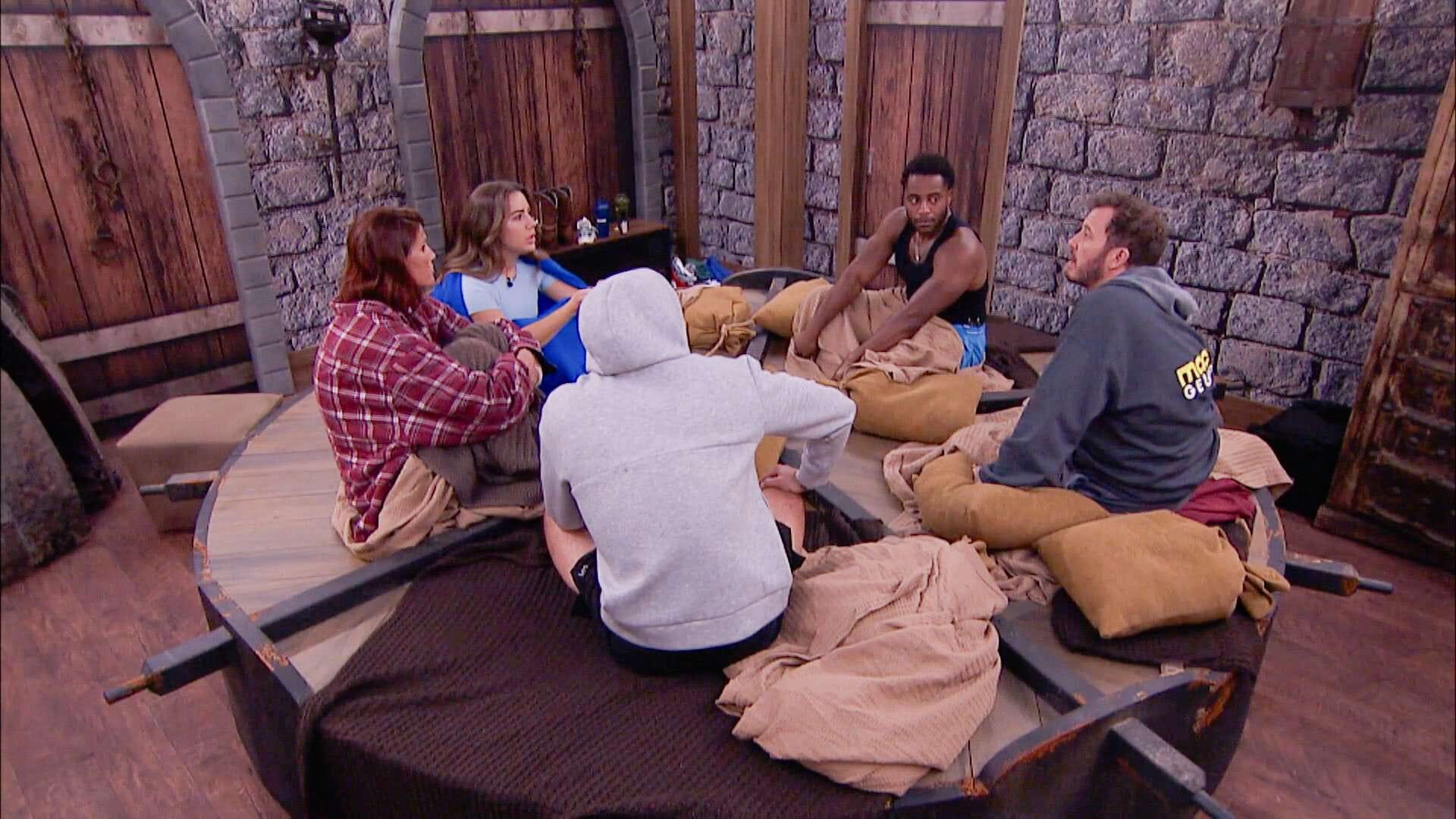
SPOILER ALERT: Big Brother 28 Week 2 & Live Feeds Through Tuesday Late Afternoon: Rick Devens Holds Both the HOH and the Veto, Rome Seymour Is Walking Out Thursday, and Sunday’s Nomination Ceremony Was Already One for the Books
Live feed spoilers follow throughout this piece. If you are watching exclusively through the CBS broadcast and want to be surprised, stop here and return after Thursday’s eviction episode.
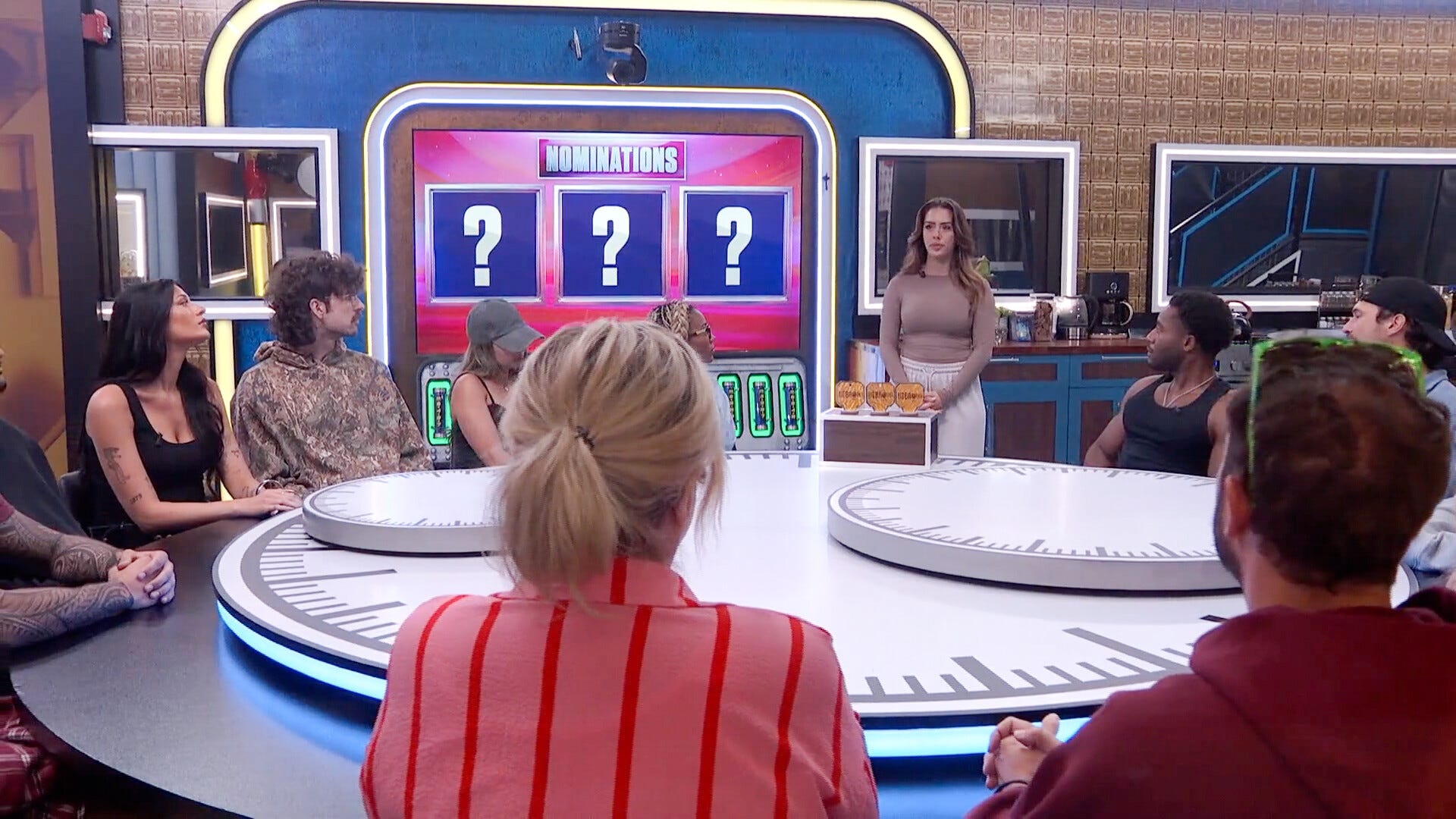
Sunday’s Episode 6 of Big Brother 28 delivered something that felt genuinely old-school in the best possible way, a nomination ceremony that turned into a screaming match, an egg detective costume, a backdoor plan that was already locked in by the time the cameras rolled back to their broadcast positions, and the specific chaotic energy of a house that has divided itself cleanly and is no longer pretending otherwise. By the time the episode ended and the live feeds delivered the subsequent days of fallout, Week 2 had produced more compacted drama than most Big Brother seasons manage in a month.
Rick Devens won the Week 2 Head of Household competition, a Wild West-themed endurance challenge that aired in Sunday’s episode, securing back-to-back power for the Toolshed alliance after Dee Valladares won Week 1. Devens described himself in the Diary Room as a “chaos missile,” which is both accurate and the kind of self-assessment that makes you wonder whether the man is entirely aware of what a chaos missile does to everything in its path, including the people on the launcher’s side. He is aware. He just does not appear to find it concerning. Read the Full Article on the Sunset Daily Substack!
Jake Johnson and Ben Stiller Serve Up Apple TV’s Pickleball Comeback Comedy
Pickleball has spent the past several years quietly taking over the American backyard, and now the sport finally has the big, broad, unapologetically silly comedy it deserves. Apple Original Films is set to premiere The Dink globally from Apple TV on Friday, July 24, 2026, a summer sports comedy built around the collision of old school tennis pride and the paddle sport that has been steadily eating its lunch. Produced by Ben Stiller, who knows a thing or two about turning an underdog sport into a cultural moment after his work on Dodgeball, and led by a cast stacked with reliable comedic talent, the film arrives with the kind of pedigree that suggests Apple is treating this premise with far more care than a quick punchline about middle aged suburbanites and their paddles. Read More!
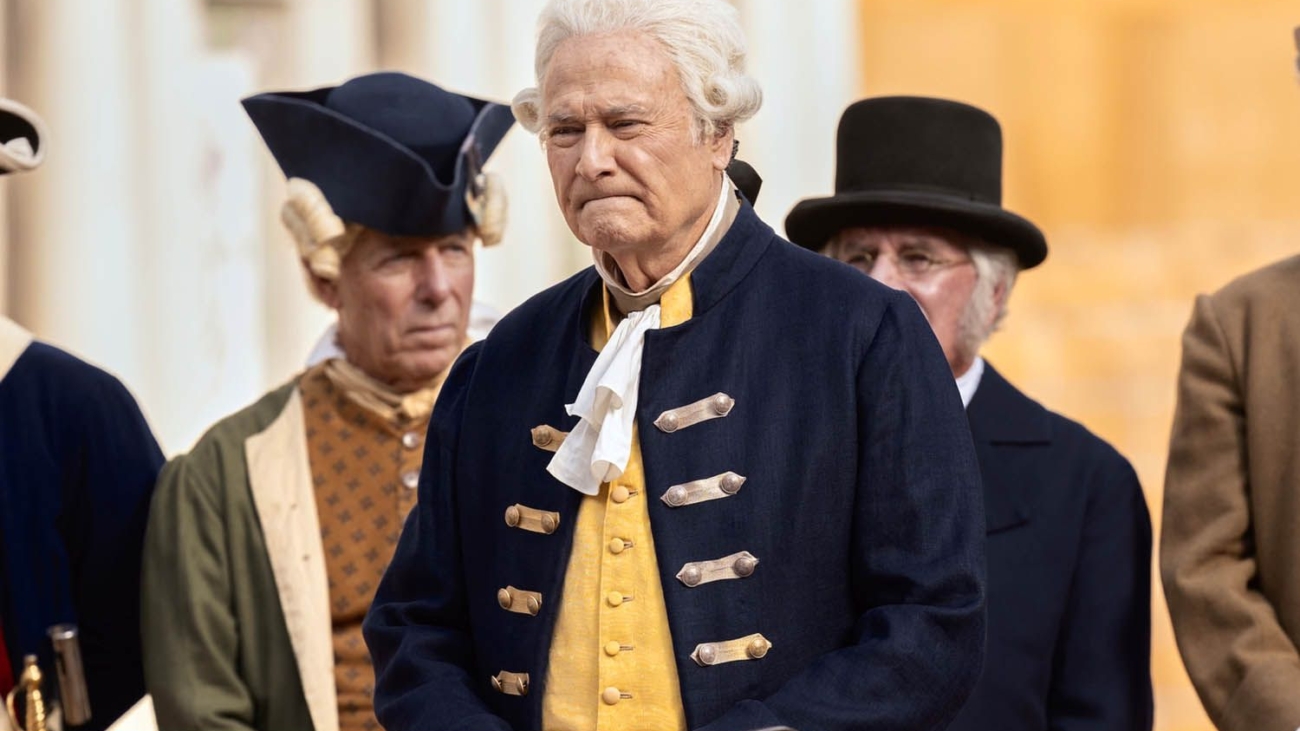
“Deepthroat”: Life, Larry and the Pursuit of Unhappiness Episode 4 Goes After RFK Jr., Henry Ford, Bob Woodward, and James Buchanan in Its Most Politically Pointed Hour
The fourth episode of Life, Larry and the Pursuit of Unhappiness, which aired Friday July 17 on HBO under the title “Deepthroat,” arrives as the season’s most explicitly political half-hour tonight, and it saves its sharpest material for last. The episode moves through four sketches covering four distinct periods of American history, and three of them do exactly what the show has been doing all season, place Larry David’s persona in a consequential historical setting and observe what happens when the most important thing going on around him is not, as far as he is concerned, the most important thing going on around him. The fourth sketch does something different. It uses the historical setting not as a frame for David’s social grievances but as a direct vehicle for contemporary political commentary, and the target is specific, the parody is unambiguous, and the personal dimension underneath it is genuinely complicated in ways the episode does not shy away from.
Before getting to that closing sketch and the full weight of what it contains, it is worth accounting for the first three, because “Deepthroat” is the show’s most balanced episode in terms of distributing its material across all four segments rather than building toward a single centerpiece. Read the Full Article on the Sunset Daily Substack!
Below Deck Mediterranean Season 11 Episode 7 Recap: Luke’s Exit, Cooper’s Medical Crisis, and the Charter Where Everything Went Wrong Simultaneously
“Match Me If You Can” is the official title of Below Deck Mediterranean Season 11 Episode 7, and it refers to the charter guest’s primary objective for the week. Suzanne arrived aboard the M/Y Akira One with a matchmaker, an elaborate preference sheet, and the goal of finding love for herself and, separately, for her dog. These are the stated priorities. What actually happened during the episode was a medical emergency involving anaphylactic shock, a formal marine report filed against a deckhand for an incident involving a bosun’s bedsheets, and a tearful resignation speech delivered to Captain Sandy that cut to black before she could respond. The matchmaker storyline is, relative to everything else, the most straightforward part of the episode.
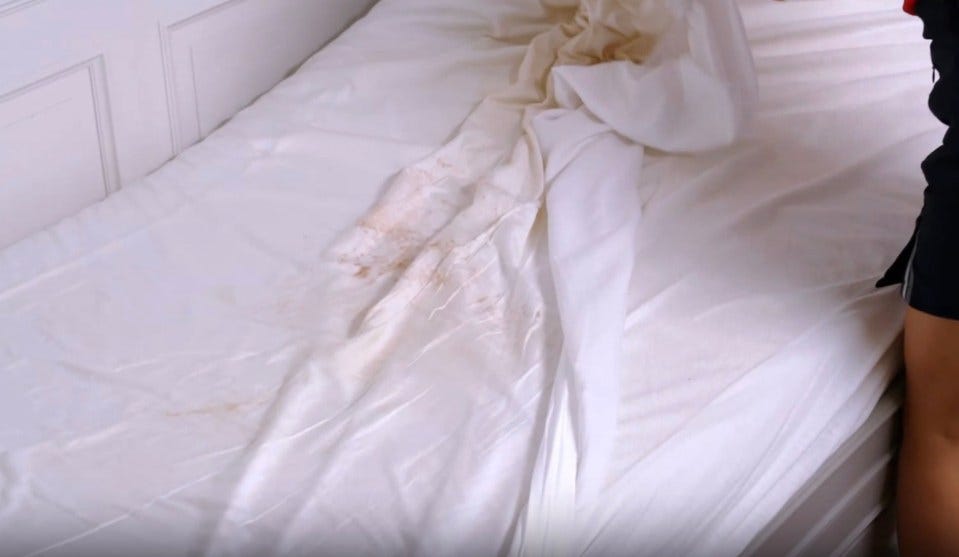
Nathan, the Sheets, and the Formal Report. The episode opened in the immediate aftermath of what happened last week, Nathan Gallagher learning, definitively and in specific detail, what Luke Brumer and Gen had done in his bed. The Bravo Daily Dish coverage confirmed that Nathan described to Captain Sandy what he had found in terms that left no ambiguity about the nature of the contamination. His sheets were not simply slept in without his permission. He woke up sick. He had been sleeping in a contamination Luke and Gen left behind and did not clean up, did not mention, and made no move to address until the situation became unavoidable. Read the Full Article on the Sunset Daily Substack!
Sugar: Inside the Neo Noir Mystery That Hides an Alien Detective in Plain Sight
Few television premises have managed to pull off a genre switch as audacious as the one buried inside Sugar, the Apple TV series that spent its opening episodes convincing viewers they were watching a classic Los Angeles detective story before quietly revealing something far stranger underneath. Now heading into its second season, the show has become one of the more distinctive entries in the current streaming landscape, anchored by a lead performance from Colin Farrell that has only grown more assured as the story around him has expanded. What began in 2024 as a moody homage to old school noir has evolved into a genuinely unusual two season arc that blends detective fiction, science fiction, and a surprisingly tender meditation on grief and belonging.
At the center of it all is John Sugar, a private investigator who specializes in tracking down missing people, a professional focus that traces directly back to his own unresolved anguish over a sister who vanished years earlier and has never been found. Farrell plays Sugar with the kind of old fashioned charm that immediately signals a throwback to a bygone era of Los Angeles crime fiction, all tailored suits, classic cars, and a genuine reverence for the golden age of cinema that the character quotes from constantly. For roughly the first half of its debut season, the show plays this atmosphere completely straight, following Sugar as he investigates the disappearance of a young woman named Olivia Siegel and slowly peels back the layers of a wealthy, secretive Hollywood family.
Then, around the midpoint of the season, the story reveals its hand. John Sugar is not human. He is part of an extraterrestrial group sent to observe humanity from the shadows, blending seamlessly into Los Angeles society while quietly studying the species he was assigned to watch. His seemingly superhuman reflexes, his unusual tolerance for alcohol, and the private, unexplained medical routines that punctuate his daily life all suddenly make sense once his true nature comes into focus, and when he drops the human disguise entirely, his skin shifts to a striking shade of blue. It is a swing few detective dramas would dare attempt, and it landed as one of the more divisive twists in recent television memory, splitting audiences between those who felt betrayed by the tonal shift and those who saw it as one of the boldest creative risks a mainstream streaming series had taken in years.
What keeps the reveal from feeling like a gimmick is how thoroughly the show commits to exploring its emotional implications rather than simply using it for shock value. As Sugar’s investigation into Olivia’s disappearance deepens, he discovers that members of his own alien community, sent to Earth under the same quiet observational mandate, have begun to corrupt themselves through prolonged exposure to human vice and violence. By the time the first season reaches its conclusion, Sugar is forced into an extraordinary decision. Rather than returning home with the rest of his people, he chooses to remain on Earth, determined to hunt down a fellow alien named Henry who has been quietly enabling a serial killer, and equally determined to keep searching for answers about his missing sister. It is a finale that reframes the entire series retroactively, transforming what looked like a stylish crime procedural into a story about isolation, empathy, and what it truly means to become part of a world you were only ever supposed to watch from a distance.
Season two picks up on that foundation and pushes it into more personal, more emotionally direct territory. Sugar returns to Los Angeles for a new case that initially looks straightforward on the surface, tracking down the troubled older brother of a rising local boxer named Danny Moon, only to find the investigation spiraling into something far larger and more sinister than a routine missing persons case. As Sugar follows the trail toward a mysterious figure known as Ji, he crosses paths with a dangerous new adversary named Vega and finds himself pulled into the orbit of a citywide conspiracy that forces him to question exactly how far he is willing to go in pursuit of justice. Along the way, the season weaves in an ever expanding web of complications, an unexpected new admirer, a serious falling out with his ally Charlotte, and a tense alliance built inside the inner circle of a powerful player named Pavich, all while Sugar continues chasing the one lead that matters most to him personally, the fate of his sister.
The returning and newly expanded cast gives the season plenty of room to breathe. Farrell remains the clear emotional anchor of the show, but he is joined by a strong supporting ensemble that includes Jin Ha, Raymond Lee, Tony Dalton, Laura Donnelly, Sasha Calle, and Shea Whigham, each bringing a different shade of menace, warmth, or moral ambiguity to the widening conspiracy Sugar finds himself untangling. Structurally, season two keeps things tight and efficient, unfolding across eight episodes released weekly, each running a brisk forty minutes, a pacing choice that suits the show’s noir instincts and keeps the mystery moving without ever overstaying its welcome.
Critical response to the new season has been largely positive, with many reviewers pointing to Farrell’s performance as the show’s most consistent strength, praising the way he continues finding new emotional shading in a character who is technically alien but has become, over two seasons, one of the more quietly human protagonists on television. Some critics have noted that the season pulls back slightly on the boldness of its science fiction premise compared to the first year’s audacious reveal, choosing instead to use Sugar’s extraterrestrial identity more sparingly, often as a thematic parallel to broader questions of displacement and belonging rather than a constant plot engine. Whether that restraint reads as a wise recalibration or a slightly cautious retreat from the show’s original creative risk has become one of the more interesting points of debate among critics covering the season, though virtually all of them agree that the mystery itself, the atmosphere, and Farrell’s central performance remain more than compelling enough to carry the show forward.
Taken as a whole, Sugar has quietly become one of the more original genre experiments in modern streaming television, a series willing to disguise a strange, melancholy story about alienation and grief inside the trappings of a classic detective yarn. Two seasons in, it continues to reward patient viewers willing to follow John Sugar down every winding alley of Los Angeles, blending old Hollywood glamour with a genuinely strange science fiction backbone that gives the show an identity unlike almost anything else currently streaming. As the search for his sister continues and the citywide conspiracy around him deepens, Sugar remains a rare example of a series that took an enormous creative risk early on and has spent every episode since finding new, unexpected ways to make that risk pay off.
In the City Season 1 Finale Recap: The Perfect Ending That Wasn’t, a Reunion That Promises Fire, and an After Show That Exposed Whitney and Kenny’s Ceiling
There is a specific kind of annoyance that comes from watching people perform curiosity without possessing it. You recognize it immediately. The affect is there, the posture is there, the vocabulary of worldliness is present in every outfit and every Instagram caption and every casual reference to places they have been, but the actual substance of a curious mind, the restlessness to know things, the willingness to be ignorant about something long enough to actually learn it, is completely absent. That is the what that Next Gen NYC Season 2 generates, and it reaches another point this week when the cast encountered “The Rocky Horror Picture Show” and collectively demonstrated that they had no idea what they were looking at.
I am not saying every homan should know this musical, or better yet, they should have at least heard of it. “The Rocky Horror Picture Show,” for any reader who somehow needs this established, is not an obscure footnote in film history. Released in 1975 and based on the 1973 British stage musical, it is one of the longest-running theatrical releases in cinema history, having played continuously in midnight screenings at theaters across the United States and the world for half a century. It is a foundational text of camp culture, queer culture, theatrical participatory experience, and the specific tradition of turning a film screening into a communal social event. It has been a rite of passage for multiple generations of young people in every major American city, including and perhaps especially New York City, which has been hosting midnight screenings at venues like the Village East since the film’s original release. For a group of twenty-something New Yorkers who present themselves as sophisticated, culturally literate, worldly and plugged into the creative identity of Manhattan, not knowing what “Rocky Horror” is represents a failure of such basic cultural literacy that it almost circles back to being impressive. They are not even trying. Read The Full Article on the Sunset Daily Substack!
Jake Johnson and Ben Stiller Serve Up Apple TV’s Pickleball Comeback Comedy
Pickleball has spent the past several years quietly taking over the American backyard, and now the sport finally has the big, broad, unapologetically silly comedy it deserves. Apple Original Films is set to premiere The Dink globally on Apple TV on Friday, July 24, 2026, a summer sports comedy built around the collision of old school tennis pride and the paddle sport that has been steadily eating its lunch. Produced by Ben Stiller, who knows a thing or two about turning an underdog sport into a cultural moment after his work on Dodgeball, and led by a cast stacked with reliable comedic talent, the film arrives with the kind of pedigree that suggests Apple is treating this premise with far more care than a quick punchline about middle aged suburbanites and their paddles. Read More!
In the City Season 1 Finale Recap: The Perfect Ending That Wasn’t, a Reunion That Promises Fire, and an After Show That Exposed Whitney and Kenny’s Ceiling
If Bravo had rolled the credits on the In the City Season 1 Finale and not alerted us to a reunion because, honestly, considering how the production was ending, I thought this was it. No reunion. Read The Full Article on the Sunset Daily Substack!
They literally went through every couple and every issue, all of which ended on such a beautifully positive note. Pregnancies, people seeming happy, and then, boom. The trailer for the reunion gets shown, and it seemed ugly. Then the after-show revealed even more information, which wasn’t ugly per se, but it also wasn’t happy, and I want happiness with these people.
The show would have closed on something genuinely rare in the Bravo universe, a warm, earned, emotionally satisfying conclusion. The Connecticut Friendsgiving drama got resolved. Whitney Fransway and Lindsay Hubbard had it out directly and arrived somewhere that at least resembled a peace treaty. Kenny Martin and Gavin Moseley worked through the tension their friendship had accumulated across the season. People hugged. The car rides back to New York City had that specific bittersweet quality of a group of adults who survived something together and knew it. Read The Full Article on the Sunset Daily Substack!
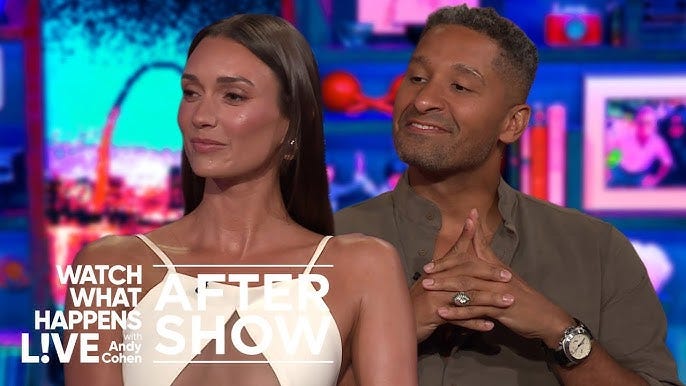
Whitney and Kenny on WWHL
Watch What Happens Live with Andy Cohen Season 23 Episode 115, airing July 15.
Closet Case and the Lexi Question
Andy wasted no time going after the material that matters, which is what Closet Case is designed to do. The segment surfaced the question of Whitney’s current trust level with Lexi Sundin, Andrea Denver’s wife and In the City cast member who was responsible, on camera, for introducing the “single mom card” comment into the group conversation in a way that made its full impact visible to everyone in the house. Whitney’s response made clear that her trust in Lexi has not recovered. That answer was honest, which is a point in its favor, and it also confirmed that the alliance damage done during the Connecticut Friendsgiving has not been repaired by the weeks between filming and the WWHL appearance.
The “mom card” comment itself, in which Whitney accused Lindsay and Georgina of claiming the primary suite by leveraging their status as mothers, had already been processed extensively in public by the time of the WWHL appearance. What the Closet Case segment did was confirm that Whitney has not arrived at a meaningfully different relationship to the comment than the one she had when she made it. She characterized it as a response to Lindsay’s pattern of behavior rather than an isolated misstep, described Lindsay as someone who deliberately positions herself as a victim to manufacture audience sympathy, and noted that Kyle Cooke’s behavior this season constitutes a “massive red flag,” which is a not particularly bold take given that Kyle’s behavior had been the subject of multiple episodes of analysis by that point. She also remarked that Amanda Batula’s apartment, as shown on the finale, was notably messy. The remark about the apartment landed with the energy of someone looking for additional ways to establish that people around them are not as put-together as perceived, which is a specific social move that audiences recognize immediately and rarely receive warmly. Read The Full Article on the Sunset Daily Substack!
The Valley Season 3 Just Got Its Biggest Off-Camera Storyline: Jax Taylor, His Publicist, and the Betrayal That Forced Bravo Back Behind the Camera
Bravo had wrapped production on The Valley Season 3. The season was complete, the reunion had been filmed on schedule, the editing was underway, and the network was preparing to close the book on one of the most dramatic and emotionally dense chapters in the franchise’s young history. Then Jax Taylor went to Puerto Vallarta for his 47th birthday, and TMZ published photographs of him chest-to-chest in an infinity pool with Lori Krebs, the woman who has served as both his and Brittany Cartwright’s personal publicist for more than a decade.
By July 15, Deadline and The Hollywood Reporter had confirmed that Bravo was scrambling to resume filming. The season was not over after all.
The specific nature of what the photos documented is worth understanding clearly, because the subject of these photographs is not simply Jax Taylor’s romantic life, which has never been anyone’s idea of stable territory. The subject is Lori Krebs, and the particular category of trust she occupied in Brittany Cartwright’s life, which makes the photographs something considerably more serious than a straightforward post-divorce dating story.
SPOILER ALERT: Big Brother 28 Week 2 Live Feed Update: Ashley Is Out, Rick Devens Is Running the House, and Rome Seymour Is Walking Into a Trap
Stop reading immediately if you are watching Big Brother 28 exclusively through the CBS broadcast and want to experience the season unspoiled. Everything below comes directly from the live feeds that happened minutes ago, which are running days ahead of the television schedule. The nominations revealed here will not air until Sunday’s episode. The eviction result is from Thursday night. If you want to be surprised, close this tab and come back after Sunday. For everyone who is already refreshing the feeds and wants the complete picture of what has happened since Thursday came and went, here is everything. Read The Full Article on the Sunset Daily Substack!
Ashley Trail is gone. Rick Devens has the HOH key. The nominations just dropped. And the house, which had been maintaining a fragile illusion of social cohesion through the first week, is now in open fracture.Read The Full Article on the Sunset Daily Substack!
The Live Feed Revolution: How to Watch Everything This Season, Season’s Most Divided Hour — and Also Its Most Honest, Big Brother 28 Is Back, More Chaotic Than Ever!
Big Brother 28 Is Back, More Chaotic Than Ever, and the Season Premiere Just Threw a Legend Into a Volcano
Big Brother has never been confused about what it is, and Season 28 arrived on CBS on July 9, 2026, with the specific energy of a show that has been doing this for twenty-six years and has decided, on the occasion of its 1,000th original episode, to go absolutely unhinged. That milestone, the 1,000th episode of any primetime show, is genuinely historic, and honestly, I for some reason thought other shows had more. The only thing the show used to do was start in late June. We were at the farmers markets a few times, including the first time, when the participants entered CBS Studios next door. Evidently, after checking on these stats, that is a number no other program in the genre has reached, this was the occasion CBS chose for premiering what may be the most maximally chaotic season opener in the franchise’s history. Dinosaurs. A volcano. A legend murdered by a velociraptor. I went from being so excited that the show brought this legend back to watching them get rid of her just minutes later. Jeff Probst in a cameo. A Survivor winner running the first Head of Household competition. And a cast of seventeen that the network assembled by reaching into its CBS and Paramount vault and pulling out every returning player who could theoretically justify a “Time Trip” framing.
Welcome back to the Big Brother house. History is being rewritten. Or in Rachel Reilly’s case, permanently ended by a prop dinosaur on a jungle set in Los Angeles.
“McCarthy”: Life, Larry and the Pursuit of Unhappiness Episode 3 Is the Season’s Most Divided Hour — and Also Its Most Honest
The third episode of Life, Larry and the Pursuit of Unhappiness, titled “McCarthy,” arrived on July 11 with the specific burden that all middle chapters carry, “McCarthy” has to stand on its own as four sketches, the strength of whatever specific combinations it produces, and the increasingly pointed question that critics and viewers alike are asking after three episodes of the same format, how far can four sketches of Larry David behaving badly in historically significant settings stretch before they start repeating themselves rather than expanding?
The answer Episode 3 provides is, it depends entirely on which sketch you are watching. “McCarthy” is the season’s most inconsistent episode and, counterintuitively, its most revealing, because the gap between what lands and what labors tells you something precise about where the format’s true strengths and real limits actually live. Read The Full Article on ther Sunset Daily Substack!
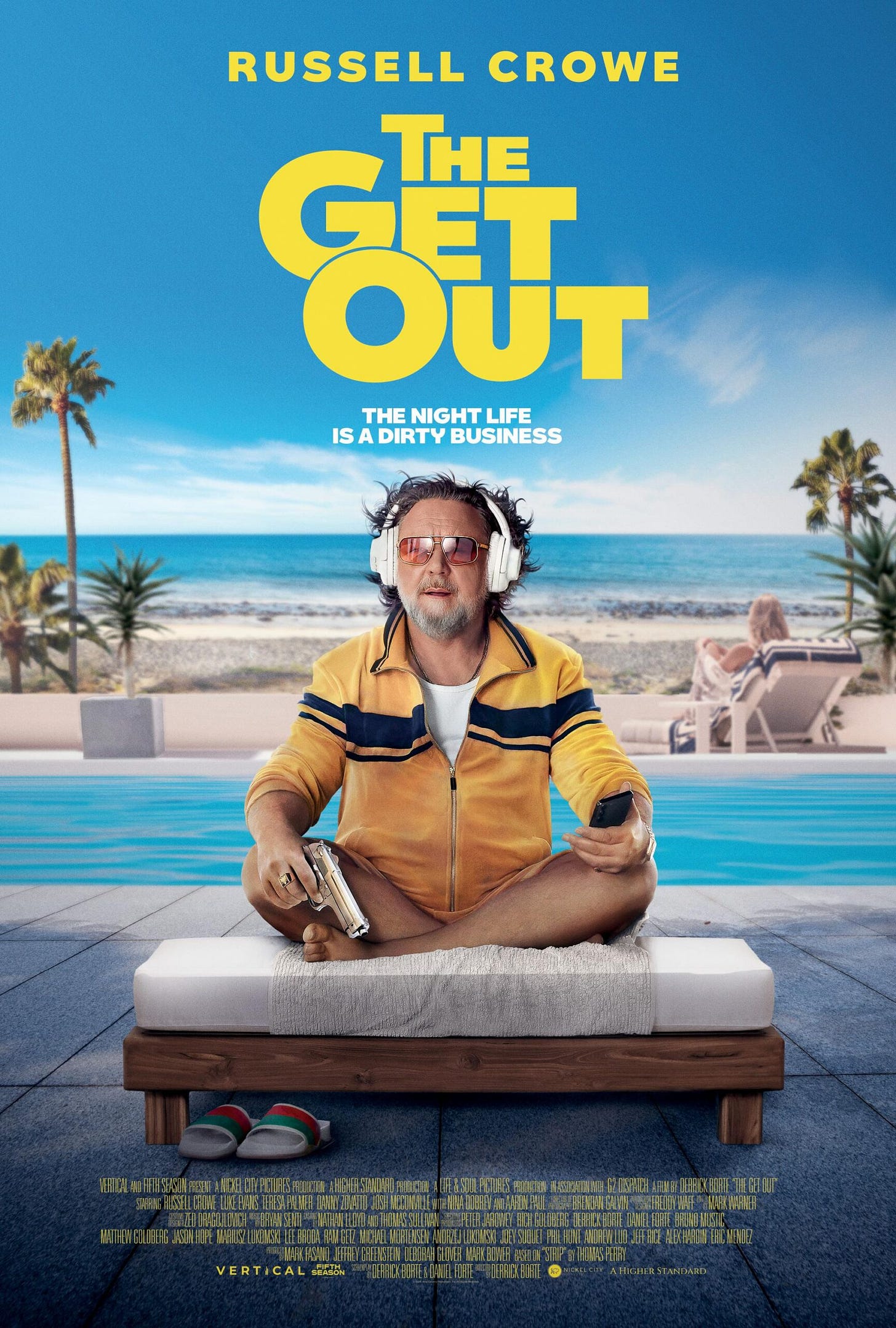
Russell Crowe Turns Nightclub Owner Into Cartel Target in Derrick Borte’s Neon-Lit Crime Comedy
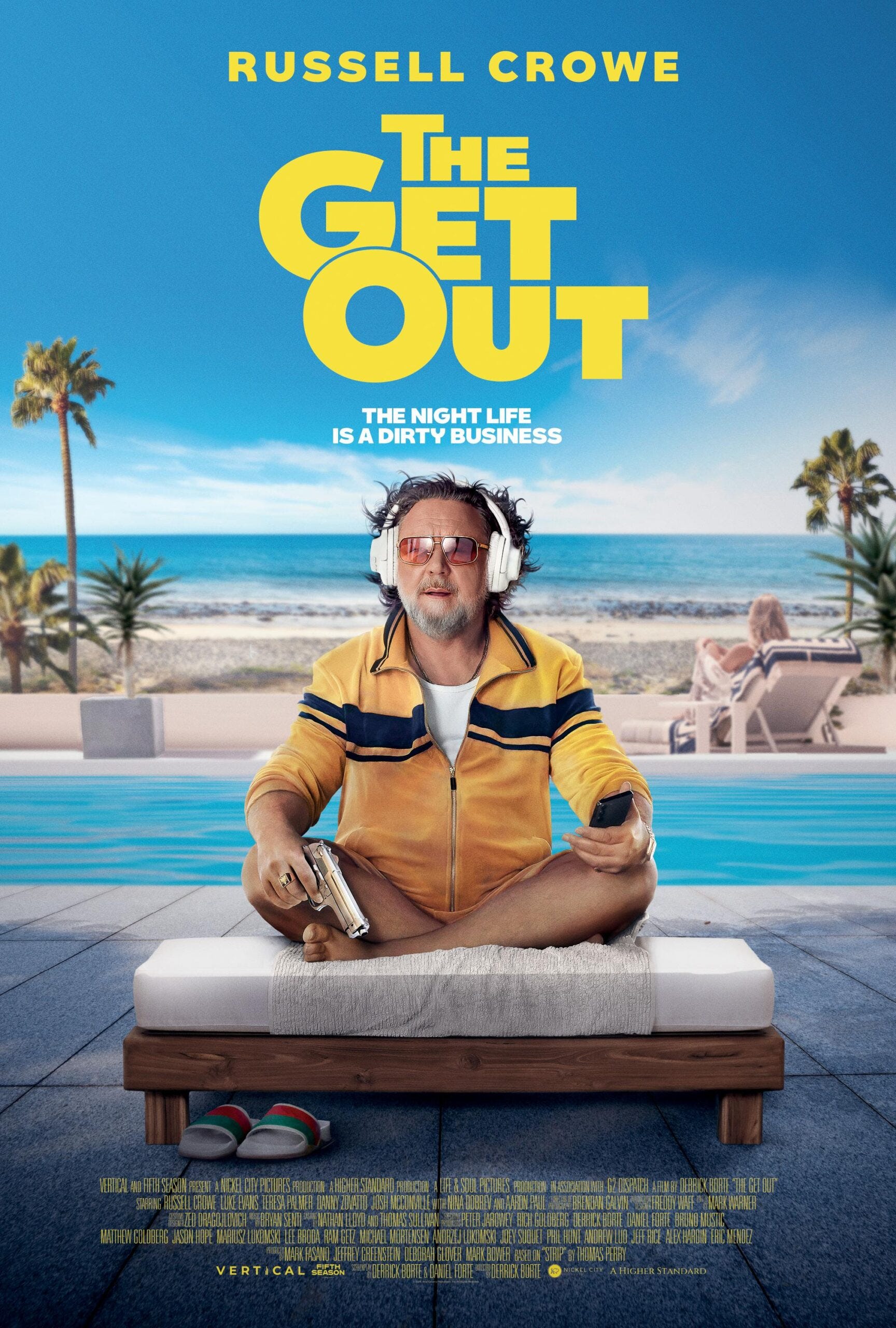
Russell Crowe has spent the back half of his career quietly building one of the most entertaining second acts in modern movie stardom, trading the weighty prestige dramas that once defined him for a string of gleefully unpredictable genre swings, and his latest, The Get Out, slots comfortably into that run. Released in select theaters on June 26, 2026 before moving to digital and video-on-demand platforms just four days later, the film reunites Crowe with director Derrick Borte for a neon-soaked Los Angeles crime story that trades the white-knuckle road rage of their previous collaboration for something looser, funnier, and considerably more chaotic. The result is a film built almost entirely around Crowe’s easy charisma, one that critics have described as a mixed bag on the whole but a showcase for an actor clearly enjoying himself in a genre he has quietly mastered over the past few years. Read More!
Big Brother 28 Live Feed Week 1 Spoilers: Dee Valladares Is Running the House, Mallory Just Saved Herself, and the Season Is Already on Fire
Fair warning before you read a single word further, everything below this sentence comes from the Big Brother 28 live feeds, which are days ahead of what has aired on CBS. If you are watching exclusively through the televised episodes on Sunday, Wednesday, and Thursday nights and you want to be surprised, stop here. Come back after Thursday’s live eviction, when the television broadcast catches up to what has been happening inside the house since the feeds went live on Friday, July 10. For everyone else, the feed watchers, the spoiler seekers, and the people who consider live feed access an essential companion to the broadcast — here is a complete accounting of Week 1, what Dee Valladares has done with her power, what went wrong with her original plan, and where things stand as of Saturday night.
Before getting into the Week 1 mechanics, it is worth sitting with what Dee Valladares is actually attempting. When she entered the house on Friday’s Big Brother: Unlocked broadcast as the season’s 17th and final houseguest, she told the cameras exactly what she wanted: “I want to be the first person to win Survivor and Big Brother.”
That sentence is not an ambition. It is a historical statement. No person has ever won both franchises. Rick Devens, her fellow veteran competitor in the house, came close , he was the dominant story of Survivor 38, made it to the final four, and lost in firemaking rather than the jury vote, a result that the Survivor fanbase still debates. Angela Murray, the other returning veteran, is a Big Brother champion from Season 26. Neither of them is playing for the historical achievement that Dee is. She is in this house to do something that has never been done, and she is not pretending otherwise. Read The Full Article on ther Sunset Daily Substack!
Inside Sam Raimi’s Wickedly Twisted Return to Form with Send Help (2026)
Seventeen years is a long time to wait for a filmmaker to come home to the genre that made him famous, but that is precisely the gap Sam Raimi closed with Send Help, the pitch-black survival comedy that has quickly become the standout theatrical event of 2026. Equal parts corporate satire, jungle survival thriller, and gleefully gruesome horror comedy, the film marks a genuine full-circle moment for the director who first terrified audiences with a cabin in the woods decades ago and now strands two office rivals on a nightmare island instead. The result is not a tidy return to any single lane. It is something stranger, funnier, and considerably bloodier than a simple nostalgia play, and it has given Raimi one of the most talked-about and financially successful films of his career. Read More!
Big Brother 28 Episode 3 Recap: Dee Valladares Wins the Fire Puzzle, Builds Two Alliances, and Puts the House on Notice
Sunday night’s 90-minute broadcast of Big Brother 28 picked up where the season premiere left off, with Angela Murray, Rick Devens, and the newly arrived Dee Valladares standing at their respective fire puzzles, platforms wobbling beneath them, while fourteen strangers held on to ropes and tried to figure out which veteran they wanted to help win the first Head of Household competition of the summer. By the time the episode ended, the season’s opening power structure was firmly established, three houseguests were in tears, and Dee Valladares had confirmed something that anyone who watched her win Survivor 45 probably already suspected, she came to Big Brother to win, and she is not waiting for anyone to catch up.
The HOH Competition: “Time to Build” and the Fire Puzzle That Ended the Debate. The competition that carried over from the Big Brother: Unlocked premiere on Friday was called “Time to Build,” and its mechanics were both physically demanding and strategically loaded in ways that became clearer as the episode progressed. Read The Full Article on ther Sunset Daily Substack!
The Nomination Ceremony: One From Each Group, and Three Reactions
Dee’s stated rationale for her nominations was clean and consistent: she picked one person from each of the three teams that competed in the HOH competition, framing the choice as the most equitable approach available to someone who had been in the house for only a few days and had not had enough time to form independent impressions of fourteen new people.
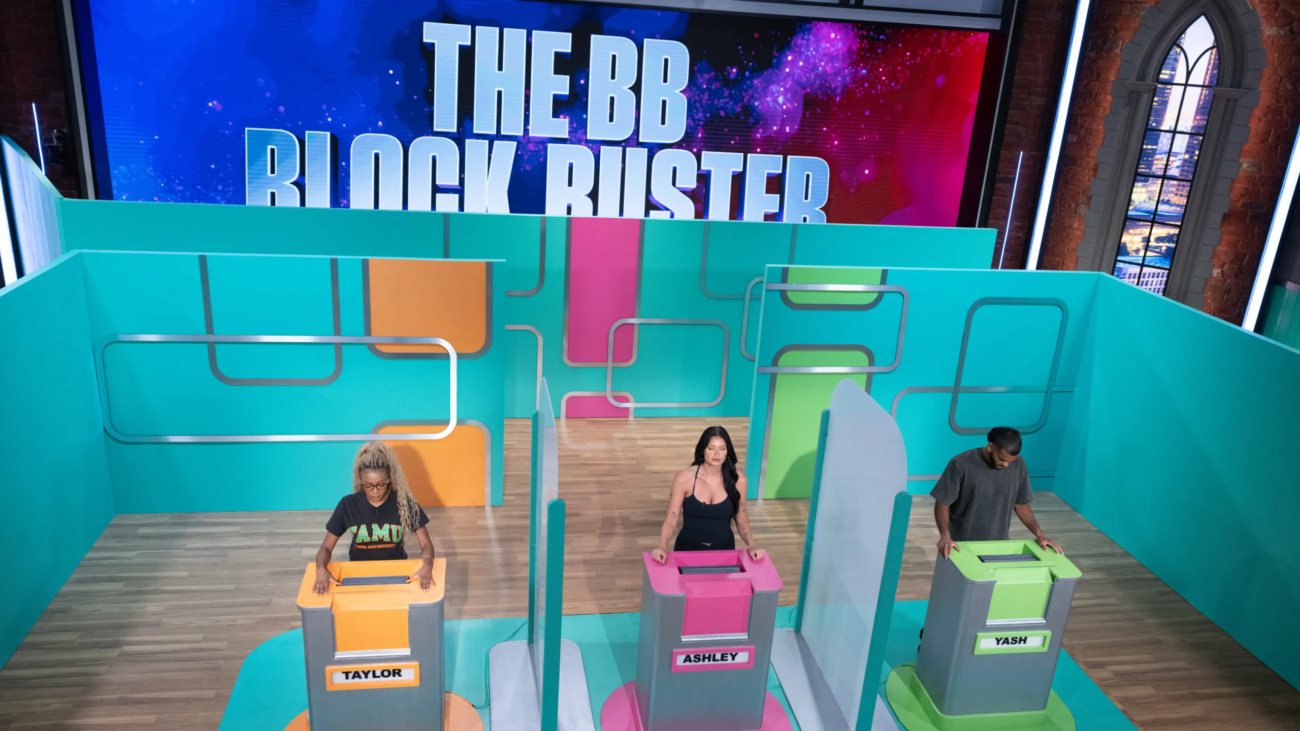
That framing is partially true and partially protective cover. Mallory Aurichio was her genuine target — a read supported by the live feeds, where Dee had already identified Mallory as a threat after Mallory attempted to pitch herself to Dee in the HOH room and the conversation went badly for Mallory. Taylor Brown was a secondary nomination, a pawn who got caught in the crossfire of the team structure. Yash Patel, who had been on Dee’s rope-team and had helped her win the HOH competition, was nominated in part because his lower level of interaction with Dee in the days before the ceremony registered as suspect rather than neutral. Yash’s post-nomination reaction — telling Rome that Dee made a mistake by nominating someone who helped her win, and that he was confident he could get himself off the block — captured the specific frustration of someone who did something useful and was rewarded with a nomination. Read The Full Article on ther Sunset Daily Substack!
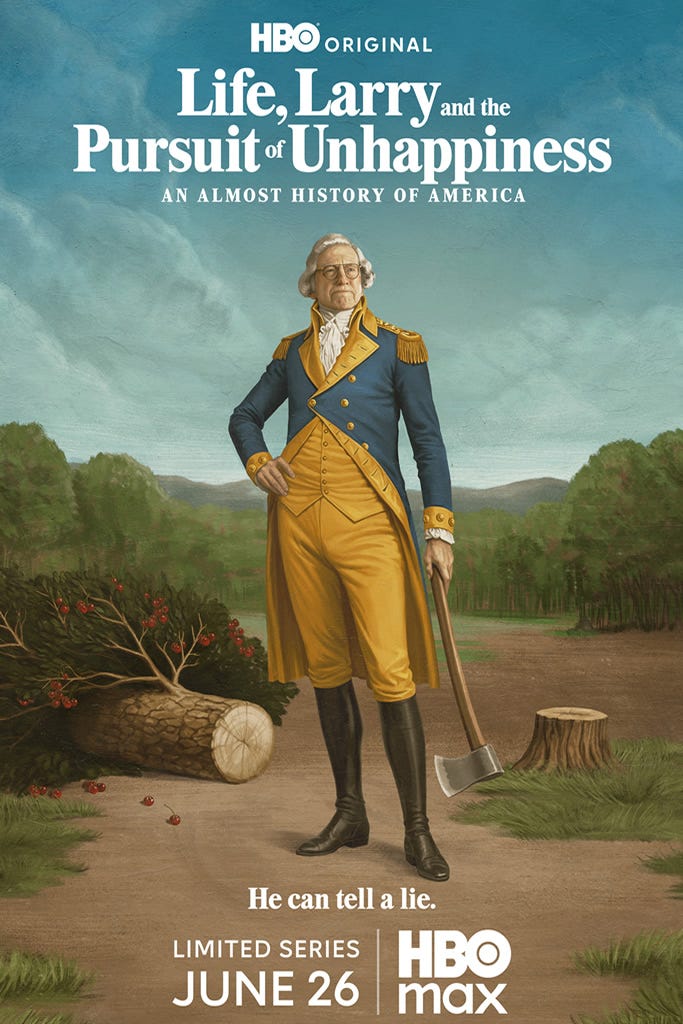
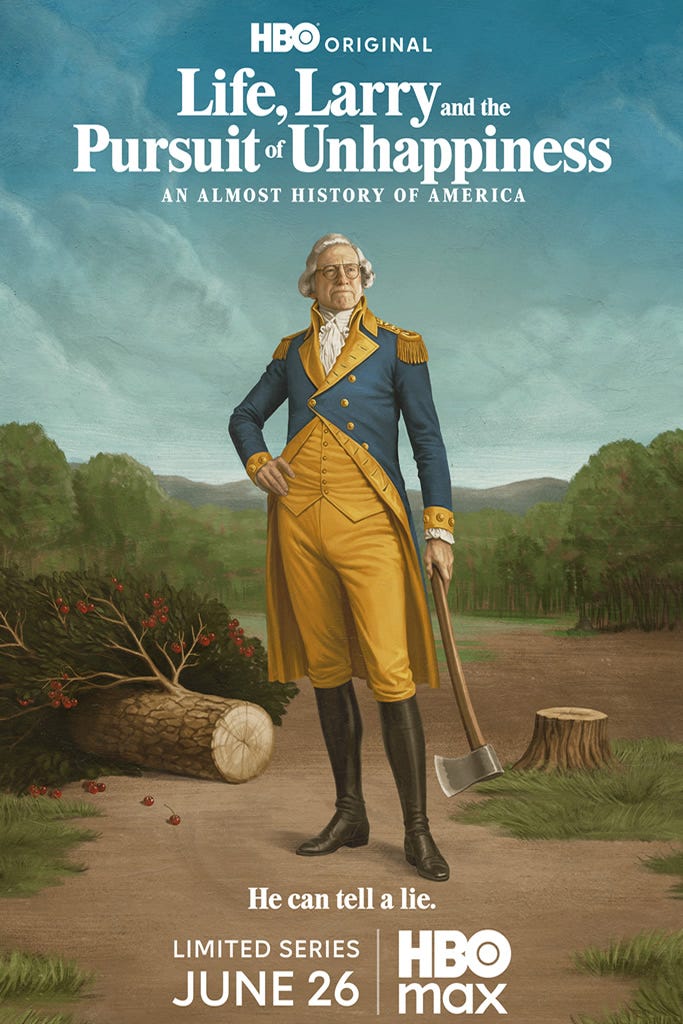
Life, Larry and the Pursuit of Unhappiness: How Larry David Just Rewrote 250 Years of American History — And Got Away With It
There is a version of America’s 250th birthday that involves soaring orchestral music, Ken Burns-style dissolves between sepia photographs, and a narrator who sounds like he is personally apologizing for the passage of time. And then there is the version where Larry David crashes the party, refuses to sit where he’s told, complains that nobody used a coaster on the wooden table of liberty, and accidentally derails the entire democratic experiment.
Guess which version HBO chose.
Life, Larry and the Pursuit of Unhappiness: An Almost History of America arrived on June 26, 2026 — today, on the very cusp of the nation’s Semiquincentennial — and it is exactly as audacious, as bizarre, and as only-on-HBO as that premise suggests. Seven episodes. Four historical sketches per half-hour. One relentlessly cantankerous protagonist. And an official logline that reads like a warning label: “Those who don’t know history are doomed to watch Larry David repeat it.”
Welcome to the most unexpected birthday present America has ever received.
The Origin Story: When the Obamas Called Larry David….Read More!
Russell Crowe Turns Nightclub Owner Into Cartel Target, Wickedly Twisted Return to Form with Send Help (2026), How Larry David Just Rewrote 250 Years of American History — And Got Away With It
In the City Episode 8 “Caught in the Crossfire”: Kyle and Amanda Are Done, a DJ Tour Confirms It, and Connecticut Cannot Handle This Group
There comes a point in any dissolving relationship where the pretense of trying becomes more painful to watch than the dissolution itself would be. Kyle Cooke and Amanda Batula reached that point weeks ago on In the City, and Episode 8 — “Caught in the Crossfire,” set at a Connecticut Friendsgiving that was friendly in name only, made it official in the way these things become official on Bravo, through a dinner table conversation where one person learns something enormous about the other’s future and realizes they were never part of it.
Kyle has a $250,000 DJ tour booked. Fourteen dates. Amanda found out about it when Gavin Moseley brought it up at dinner, in front of the entire group, under the apparent assumption that she already knew. She did not. She had not been told. Her husband announced a fourteen-date performing tour with a six-figure price tag to the room at large and to his wife simultaneously, and the cameras caught her face in the moment she understood what she was hearing.
“This man is planning his future without me in it,” she said in confessional. “No matter how many times he tells people he’s making efforts, his actions prove otherwise.” And then, “There’s something in my gut that tells me this is the end.”
That sentence is the episode. Everything else, the primary suite dispute, the Yvonne-Lindsay fallout, the revelation of additional indiscretions, is context. The center of “Caught in the Crossfire” is a woman sitting at a dinner table learning that her husband has built an entire future around something and at no point thought to mention it to her first. Read The Full Article on the Sunset Daily Substack!
Russell Crowe Turns Nightclub Owner Into Cartel Target in Derrick Borte’s Neon-Lit Crime Comedy
Russell Crowe has spent the back half of his career quietly building one of the most entertaining second acts in modern movie stardom, trading the weighty prestige dramas that once defined him for a string of gleefully unpredictable genre swings, and his latest, The Get Out, slots comfortably into that run. Released in select theaters on June 26, 2026 before moving to digital and video-on-demand platforms just four days later, the film reunites Crowe with director Derrick Borte for a neon-soaked Los Angeles crime story that trades the white-knuckle road rage of their previous collaboration for something looser, funnier, and considerably more chaotic. The result is a film built almost entirely around Crowe’s easy charisma, one that critics have described as a mixed bag on the whole but a showcase for an actor clearly enjoying himself in a genre he has quietly mastered over the past few years. Read More!
The Valley Season 3 Episode 15: Nobody Is Good Here, and This Week Proved It in Ways Nobody Expected
Episode 15 of The Valley Season 3, titled “It’s My Birthday and I’ll Cry If I Want To,” is that episode, not because it resolves anything, or because the drama reaches a satisfying climax, but because it drops three storylines onto the table in the same hour that together obliterate whatever remained of any character’s “good person” status in the Santa Clarita friend group. By the time Danny Booko sat alone at a bar after chasing away his wife and most of his friends on his own birthday and exclaimed “Best birthday ever!” to no one in particular, the season’s thesis was complete. There is nobody left to root for in any uncomplicated way. Everyone is a mess. Everyone is reacting to their own wounds and inflicting new ones. The Mexico trip is not a backdrop. It is the pressure cooker that forced all of it into the open.
Inside Sam Raimi’s Wickedly Twisted Return to Form with Send Help (2026)
Seventeen years is a long time to wait for a filmmaker to come home to the genre that made him famous, but that is precisely the gap Sam Raimi closed with Send Help, the pitch-black survival comedy that has quickly become the standout theatrical event of 2026. Equal parts corporate satire, jungle survival thriller, and gleefully gruesome horror comedy, the film marks a genuine full-circle moment for the director who first terrified audiences with a cabin in the woods decades ago and now strands two office rivals on a nightmare island instead. The result is not a tidy return to any single lane. It is something stranger, funnier, and considerably bloodier than a simple nostalgia play, and it has given Raimi one of the most talked-about and financially successful films of his career. Read More!
Next Gen NYC Season 2 Episode 3 Is Already a Disaster
Next Gen NYC Season 2, Episode 3, titled “The Man in the LED Mask” and airing July 8 on Bravo, delivers an experience with a level of thoroughness that would be admirable if the experience itself were more enjoyable. I want to like these people, but honestly, it is becoming increasingly difficult. I also feel like it gets worse with every episode.
Seeing Georgia on WWHL showed me how much she, and honestly most of the cast, seem uninterested in anything outside of their own world. At the same time, it reminds me of Bam Bam from The Flintstones because they all seem to crave and require an incredible amount of attention. I have never seen anything quite like it. While many younger generations can sometimes come across as self interested, this group takes it to another level.
Georgia having notes about the people she was on the show with is incredibly condescending. You cannot even take an interest in another show on Bravo, or better yet, simply have a conversation without acting like you need cheat notes? Jennifer Lopez and many guests make no effort to hide that they do not know certain people or shows within the Bravo world. I understand that some people try to appear cool, detached, and unaffected by pretending not to know anyone or acting like they have forgotten names. Sometimes that is used as a way to project dominance or make themselves appear above others, but if it is not genuine, it becomes obvious. Read The Full Article on the Sunset Daily Substack!
Life, Larry and the Pursuit of Unhappiness: How Larry David Just Rewrote 250 Years of American History — And Got Away With It
There is a version of America’s 250th birthday that involves soaring orchestral music, Ken Burns-style dissolves between sepia photographs, and a narrator who sounds like he is personally apologizing for the passage of time. And then there is the version where Larry David crashes the party, refuses to sit where he’s told, complains that nobody used a coaster on the wooden table of liberty, and accidentally derails the entire democratic experiment.
Guess which version HBO chose.
Life, Larry and the Pursuit of Unhappiness: An Almost History of America arrived on June 26, 2026 — today, on the very cusp of the nation’s Semiquincentennial — and it is exactly as audacious, as bizarre, and as only-on-HBO as that premise suggests. Seven episodes. Four historical sketches per half-hour. One relentlessly cantankerous protagonist. And an official logline that reads like a warning label: “Those who don’t know history are doomed to watch Larry David repeat it.”
Welcome to the most unexpected birthday present America has ever received.
The Origin Story: When the Obamas Called Larry David….Read More!
Two Nights, Two Worlds: Stephanie Ruhle Runs the Bravo Clubhouse While Georgia McCann Reminds Us Why Reality TV Can Be Its Own Worst Enemy
Tuesday night on Watch What Happens Live gave us Stephanie Ruhle, MSNBC anchor, former Wall Street executive, and a woman who is constitutionally incapable of not reading a situation with perfect accuracy. Wednesday night gave us Georgia McCann, Next Gen NYC cast member, twenty-something New Yorker, and a person who used her time on a national talk show to shoe how much she dpoes not care along side, Jesse Lally and Lacy Nicole from The Valley.
The contrast between these three people was obvious. Georgia acting like she had no clue about Jesse and Lacy, The Valley, or even Vanderpump Rules was stupid. Compounding the issue was her writing notes to remind herself who they were rather than making an effort to, you know, use her brain and remember something. Or, if she had never watched the shows, she should not have tried to hide it. Just act accordingly.
Now I understand why people do not take her seriously and why Riley contorted her face the way she did. Episodes 110 and 111 of Season 23, airing July 7 and July 8, are being written about together. I hope that’s cool. If it runs too long, I’ll split it up, but I want to discuss both episodes at the same time and get the hell outta here. Read The Full Article on the Sunset Daily Substack!
Wednesday Night: Georgia McCann and the Art of Inadvertent Self-Exposure. The Wednesday episode brought in Jesse Lally and Lacy Nicole from The Valley, alongside Georgia McCann from Next Gen NYC, and the dynamic between Ruhle’s Tuesday performance and Georgia’s Wednesday appearance is the kind of thing that becomes more instructive the longer you sit with it.
Georgia came to the Clubhouse with an agenda, which is not in itself a problem, most Bravo guests do. The agenda, unfortunately, was entirely focused on positioning herself as the authoritative voice on Ava Dash’s motivations, specifically regarding the Hamptons photos of Ava and Kyle Cooke that circulated and became a significant conversation point.
She also acted like a floozy or something, pretending she did not know easy and obvious things, which I think was an attempt to make herself seem casual or laid back. Let alone trying to make it seem endearing that she needed to write notes on her hand in black magic marker, mind you, I noticed it the second she said hello. It felt like she wanted attention, so she acted clueless or something. It was odd. Read The Full Article on the Sunset Daily Substack!
Russell Crowe Turns Nightclub Owner Into Cartel Target in Derrick Borte’s Neon-Lit Crime Comedy, Inside Sam Raimi’s Wickedly Twisted Return to Form with Send Help
Two Worlds, One Clubhouse with Aesha Scott and Cole McBee Culminating an Unforgettable Night on Watch What Happens Live
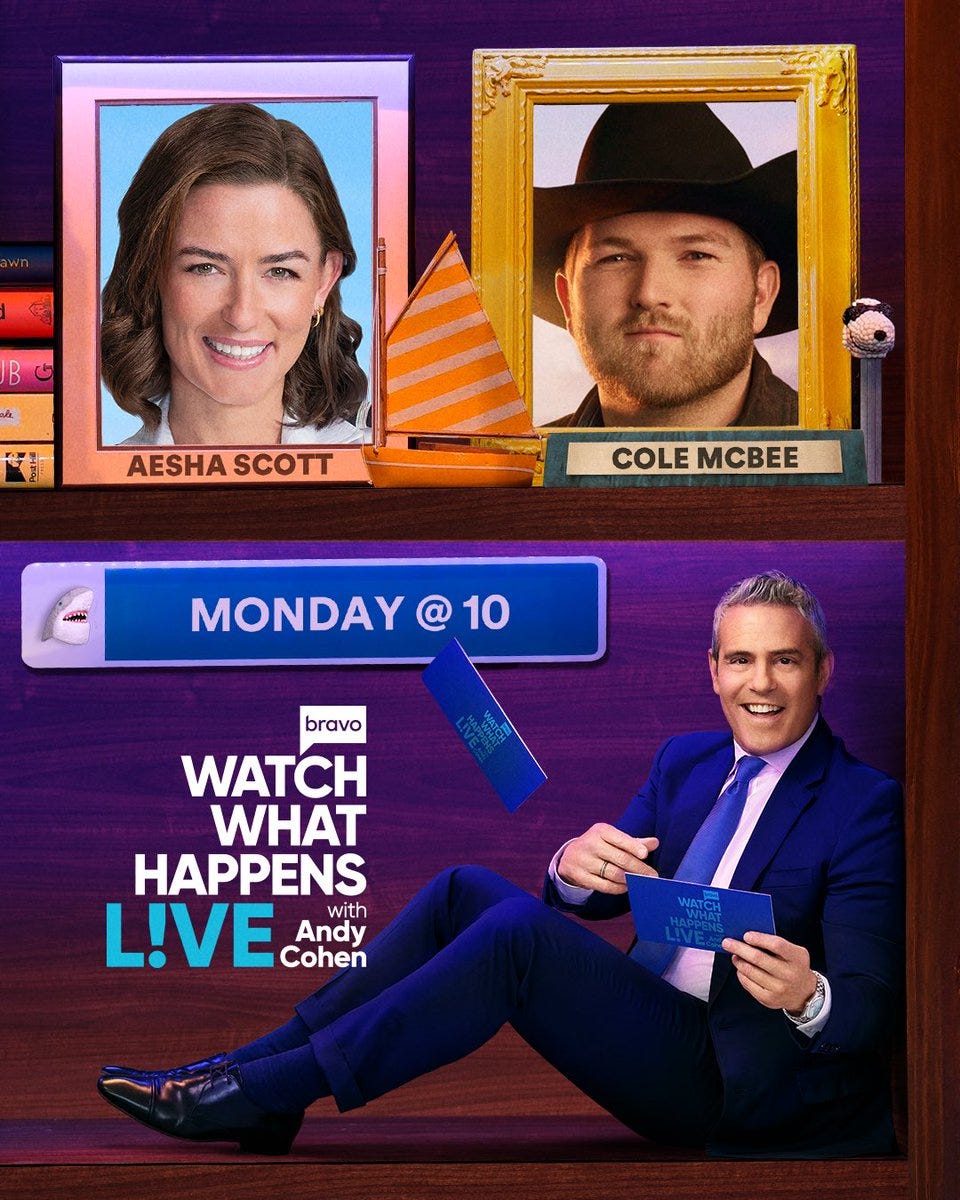
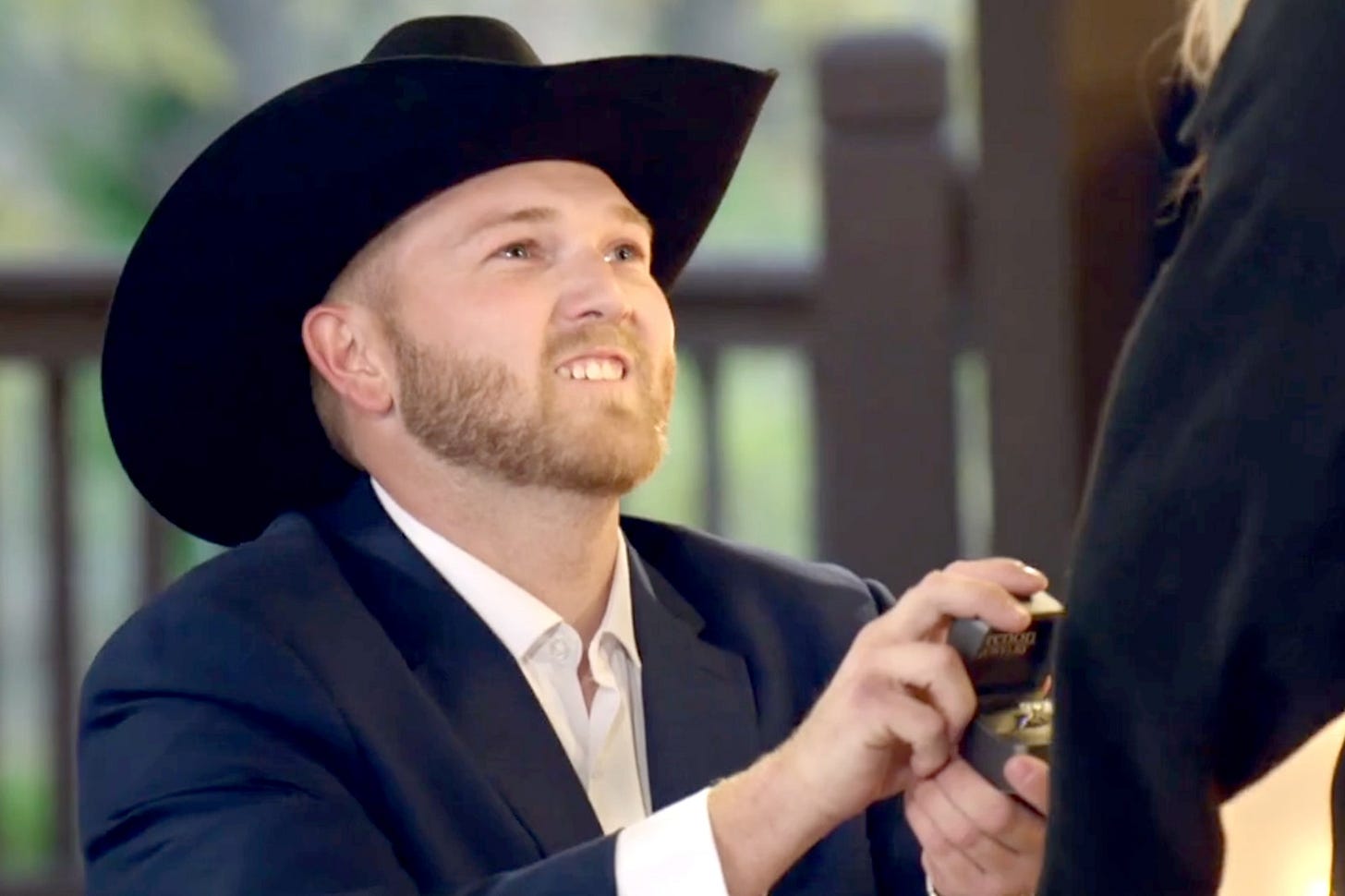
The Bravo Clubhouse has hosted some unusual pairings over its twenty-three seasons, but July 6 produced one of the more genuinely charming combinations in recent memory. Then again, I think Aesha Scott makes every social situation a great one, however, on one side of Andy Cohen’s couch sat Aesha, the indomitable Chief Stew of Below Deck Mediterranean Season 11, three months into her marriage to Scott Dobson and in the middle of one of the more chaotic charter seasons the franchise has ever documented. On the other side sat Cole McBee, the Missouri rancher and McBee Dynasty: Real American Cowboys star who had just asked Kacie Adkison to marry him on national television earlier this same evening. The conversation that followed, Season 23, Episode 109 of Watch What Happens Live with Andy Cohen, moved between yacht drama and ranch life, between engagement ring specifications and family crisis, and between laughter and genuine emotional weight with the particular ease that only Bravo’s most candid personalities can manage. I am also glad to hear that Steven Sr. will be getting out in less than half a year. To me, his sentencing and punishment seem to be moving by pretty quickly. Then again, I can only look at those things in quarterly increments, which makes my time with them move faster than it does in real life. Read the Full Article on the Sunset Daily Substack
Russell Crowe Turns Nightclub Owner Into Cartel Target in Derrick Borte’s Neon-Lit Crime Comedy
Russell Crowe has spent the back half of his career quietly building one of the most entertaining second acts in modern movie stardom, trading the weighty prestige dramas that once defined him for a string of gleefully unpredictable genre swings, and his latest, The Get Out, slots comfortably into that run. Released in select theaters on June 26, 2026 before moving to digital and video-on-demand platforms just four days later, the film reunites Crowe with director Derrick Borte for a neon-soaked Los Angeles crime story that trades the white-knuckle road rage of their previous collaboration for something looser, funnier, and considerably more chaotic. The result is a film built almost entirely around Crowe’s easy charisma, one that critics have described as a mixed bag on the whole but a showcase for an actor clearly enjoying himself in a genre he has quietly mastered over the past few years. Read More!
The McBee Dynasty: Real American Cowboys Season 3 Episode 4 — When Joy and Crisis Occupy the Same Room
The McBee Dynasty: Real American Cowboys Season 3, Episode 4, titled “Love and War,” arrives as one of the most emotionally complete hours of unscripted television the series has delivered since its debut. Now streaming on Sunset, Peacock and airing Mondays at 9 p.m. ET on Bravo, the fourth episode of the season does what the best installments of this show do consistently and the worst ones only attempt, it refuses to simplify. It does not ask you to choose between the joy of a marriage proposal and the weight of a family business hemorrhaging money. It does not separate the happiness of new parenthood from the exhaustion and relational distance that new parenthood produces. It puts all of it in the same room, at the same time, and trusts the viewer to hold the complexity without a narrator telling them how to feel. Read the Full Article on the Sunset Daily Substack
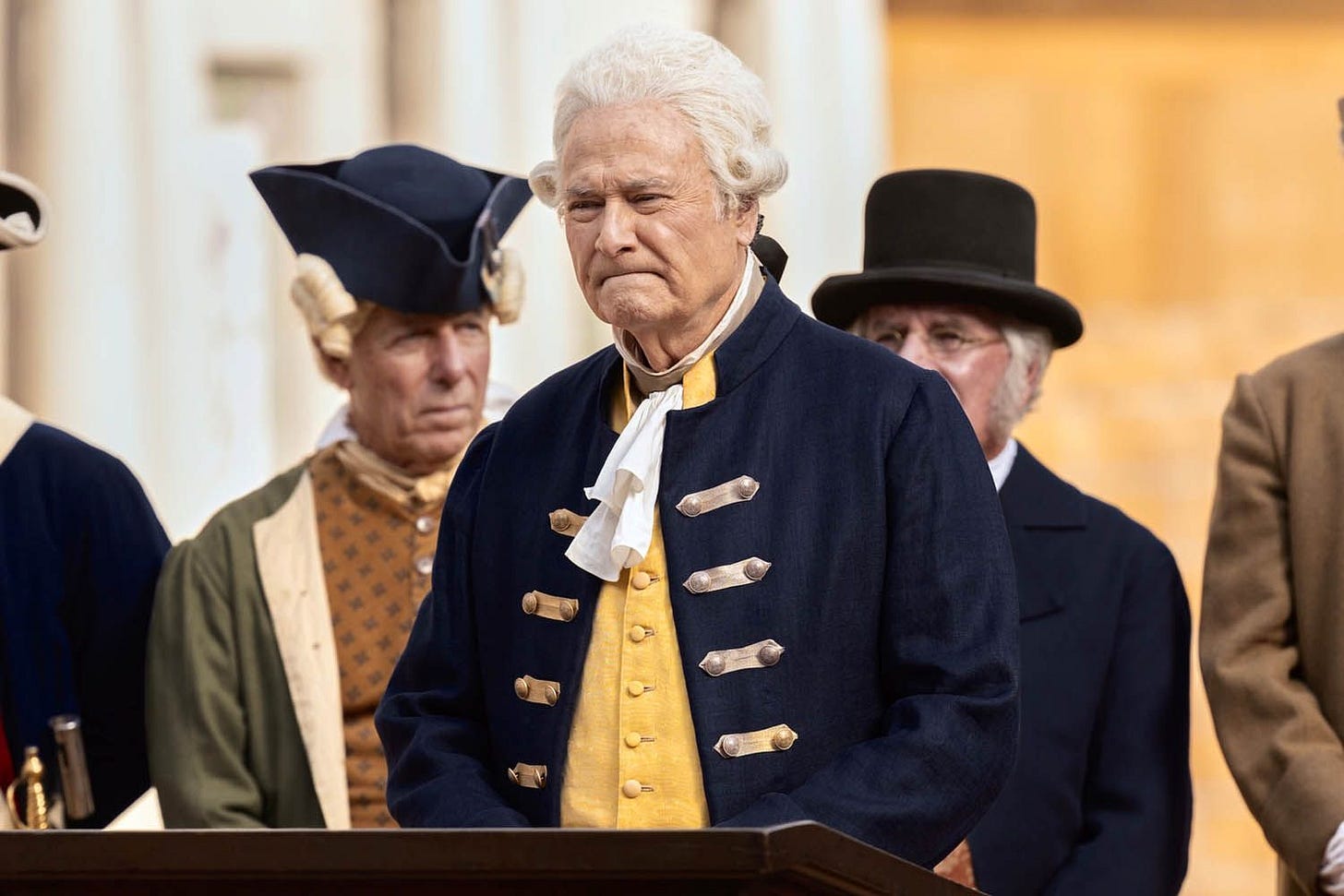
Larry David’s Life, Larry and the Pursuit of Unhappiness Continues Its Brilliant Historical Satire with an Unforgettable Rob Reiner Performance
The second episode of Life, Larry and the Pursuit of Unhappiness is called “Farewell,” and the title earns its weight in ways that were not visible when the episode was filmed, in October 2025, and that have only become apparent in the months since. What looks, across its first three sketches, like a confident and entertaining expansion of the format established in the premiere — more historical chaos, a spectacular pairing of Jerry Seinfeld and Larry David in period costume, and Kaley Cuoco matching David beat for comedic beat across a Depression-era soup kitchen scene — arrives at its final sketch and becomes something different. Something heavier. Something that the July 3, 2026 air date, falling three days before the nation’s 250th anniversary celebration, amplifies into the most talked-about stretch of television the series has yet produced.
Inside Sam Raimi’s Wickedly Twisted Return to Form with Send Help (2026)
Seventeen years is a long time to wait for a filmmaker to come home to the genre that made him famous, but that is precisely the gap Sam Raimi closed with Send Help, the pitch-black survival comedy that has quickly become the standout theatrical event of 2026. Equal parts corporate satire, jungle survival thriller, and gleefully gruesome horror comedy, the film marks a genuine full-circle moment for the director who first terrified audiences with a cabin in the woods decades ago and now strands two office rivals on a nightmare island instead. The result is not a tidy return to any single lane. It is something stranger, funnier, and considerably bloodier than a simple nostalgia play, and it has given Raimi one of the most talked-about and financially successful films of his career. Read More!
Below Deck Mediterranean Turns Crew Cabin Drama Into the Season’s Biggest Talking Point During an Eventful Dubrovnik Charter
Even posting that picture above is nausiating but anyway, Episode 5, titled “The Deckhand Cometh,” delivers an entertaining combination of spectacular Croatian scenery, an unforgettable themed charter inspired by one of television’s biggest fantasy franchises, evolving crew dynamics, shifting romantic relationships, and a late-night cabin incident that quickly became one of the episode’s most talked-about moments. Read the Full Article on the Sunset Daily Substack
In the Eye of the Storm Recreates the Terror of Hurricane Idalia in One of Television’s Most Intense Disaster Documentaries Yet
There are disaster documentaries that explain what happened, and then there are programs that place viewers directly inside the event as it unfolds. Discovery Channel’s In the Eye of the Storm has built its reputation on the latter approach, relying on extraordinary real-world footage captured by ordinary people who suddenly find themselves facing extraordinary circumstances. The latest episode of the acclaimed survival series, Season 4, Episode 2, titled “That Car’s Flying!”, delivers one of the most gripping installments in the show’s history, reconstructing the devastating impact of Hurricane Idalia through firsthand video that reveals the storm’s astonishing power from ground level. Read the Full Article on the Sunset Daily Substack
Life, Larry and the Pursuit of Unhappiness: How Larry David Just Rewrote 250 Years of American History — And Got Away With It
There is a version of America’s 250th birthday that involves soaring orchestral music, Ken Burns-style dissolves between sepia photographs, and a narrator who sounds like he is personally apologizing for the passage of time. And then there is the version where Larry David crashes the party, refuses to sit where he’s told, complains that nobody used a coaster on the wooden table of liberty, and accidentally derails the entire democratic experiment.
Guess which version HBO chose.
Life, Larry and the Pursuit of Unhappiness: An Almost History of America arrived on June 26, 2026 — today, on the very cusp of the nation’s Semiquincentennial — and it is exactly as audacious, as bizarre, and as only-on-HBO as that premise suggests. Seven episodes. Four historical sketches per half-hour. One relentlessly cantankerous protagonist. And an official logline that reads like a warning label: “Those who don’t know history are doomed to watch Larry David repeat it.”
Welcome to the most unexpected birthday present America has ever received.
The Origin Story: When the Obamas Called Larry David….Read More!