MV5BZjhkMzcyMDktNjY0ZC00NjQxLTgyMjYtMTA1ODE4OGVkMDk1XkEyXkFqcGc@._V1_

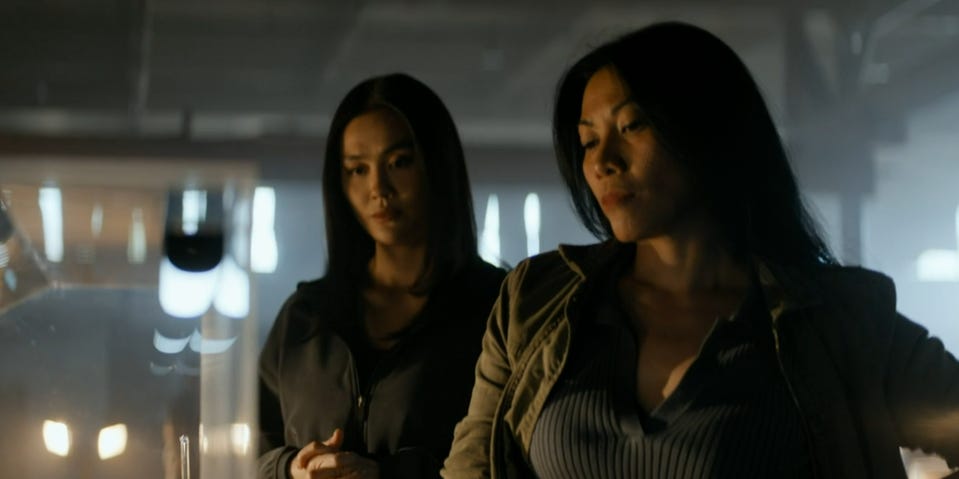
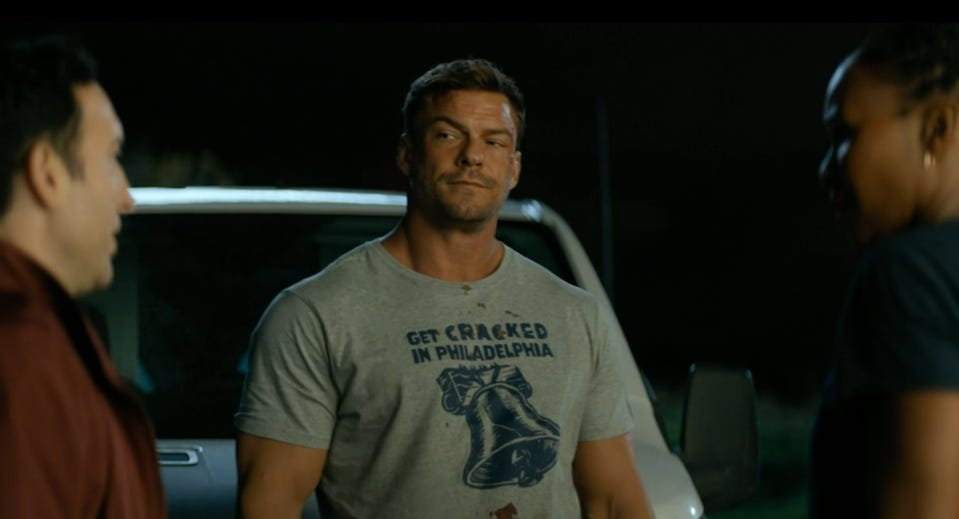
The Get Out (2026)

Russell Crowe Turns Nightclub Owner Into Cartel Target in Derrick Borte’s Neon-Lit Crime Comedy

Russell Crowe has spent the back half of his career quietly building one of the most entertaining second acts in modern movie stardom, trading the weighty prestige dramas that once defined him for a string of gleefully unpredictable genre swings, and his latest, The Get Out, slots comfortably into that run. Released in select theaters on June 26, 2026 before moving to digital and video-on-demand platforms just four days later, the film reunites Crowe with director Derrick Borte for a neon-soaked Los Angeles crime story that trades the white-knuckle road rage of their previous collaboration for something looser, funnier, and considerably more chaotic. The result is a film built almost entirely around Crowe’s easy charisma, one that critics have described as a mixed bag on the whole but a showcase for an actor clearly enjoying himself in a genre he has quietly mastered over the past few years.

A Retirement Plan That Refuses to Cooperate

The Get Out centers on Manco Kapac, played by Crowe as an aging Albanian immigrant who arrived in Los Angeles decades earlier and built himself into the kind of only-in-America success story that looks flawless from the outside. He owns one of the city’s most sought-after nightclubs, lives comfortably, and has a devoted younger girlfriend named Sammy, played by Teresa Palmer. The wrinkle, as these stories tend to have one, is that his club doubles as a laundering operation for a ruthless cartel, a secret life that has quietly worn him down for years. After a health scare forces him to confront his own mortality, Manco decides the time has finally come to walk away from both the club and the criminal entanglements attached to it, cash out, and disappear into a quieter, safer chapter of life with the woman he loves.

Naturally, none of it goes according to plan. On a routine night making one of his usual cash runs, Manco is robbed at gunpoint by a masked amateur, a moment that sets off a chain reaction he cannot control. The cartel, unnerved by the disruption to their money and suspicious that Manco himself might be responsible, begins tightening the screws on him just as he is trying to extricate himself entirely. Compounding the pressure, an eccentric and slightly too-charming businessman named Joe Carver, played by Luke Evans, surfaces out of nowhere with a tempting offer to buy the club outright, arriving at precisely the moment Manco can least afford any more uncertainty in his life. As it turns out, the masked thief responsible for kicking off the entire mess is not some hardened professional but a small-time, in-over-his-head opportunist played by Aaron Paul, working alongside an equally underprepared accomplice played by Nina Dobrev. What follows is a tangle of overlapping schemes, mounting suspicion, and rising body counts as multiple factions with competing interests all converge on Manco at once, forcing him to talk, negotiate, and occasionally fight his way through a Los Angeles underworld that no longer has any patience left for his retirement plans.

Familiar Genre DNA With a European Update

The source material traces back to Thomas Perry’s 2010 crime novel Strip, and the finished film wears its genre lineage openly, evoking the loose, character-driven crime comedies that filmmakers like Elmore Leonard’s adaptations and Shane Black’s ensemble capers made popular in decades past. Borte and co-writer Daniel Forte lean into that tradition rather than away from it, building a story that thrives less on tight plotting than on the collision of colorful, morally compromised personalities all scrambling for the same pile of money. It is the kind of setup that lives or dies almost entirely on its cast’s chemistry, and the film leans heavily on Crowe’s ability to anchor a story that keeps threatening to spin off into several different directions at once.

What sets Manco apart from the typical world-weary crime boss archetype is a surprising thread of decency running through the character. Rather than meeting every threat with escalating violence, Manco is written as someone who reaches for his gun reluctantly, tries to de-escalate confrontations where he can, and treats even his own employees’ mistakes with more patience than the genre typically allows. It is an unusual choice for a story built around cartel pressure and armed robbery, and it gives Crowe’s performance a warmth that stands out amid the film’s darker, more comedic instincts.

Crowe Leans Into His Late-Career Comedic Streak

If there is a consistent throughline in how critics have responded to The Get Out, it is genuine enthusiasm for what Crowe is doing with the role. Building on the comedic instincts he first showcased opposite Ryan Gosling and has continued refining in a series of gonzo genre performances over recent years, Crowe plays Manco with a distinct, deliberately theatrical accent and a loose, self-amused energy that several reviewers singled out as the film’s most reliable pleasure. He is not chasing awards-season gravitas here; he is clearly having fun, and that enjoyment reads clearly on screen even when the surrounding material grows uneven.

The supporting cast brings its own texture to the chaos. Paul and Dobrev, playing the two amateur thieves whose bungled robbery sets the entire plot in motion, share a lived-in rapport that multiple critics noted as some of the film’s strongest material, even suggesting the pair had enough spark between them to headline a spinoff of their own. Evans, meanwhile, gets to indulge in some of the film’s most memorably eccentric touches as the mysterious would-be buyer, conducting business in unconventional settings and throwing himself into the character’s more theatrical flourishes with evident relish. Palmer rounds out the core ensemble as Manco’s girlfriend, providing a grounded emotional anchor amid the surrounding mayhem, while Daniel Zovatto brings a coiled menace to the cartel figure applying pressure from the shadows.

Shot on the Gold Coast, Set in the Heart of Los Angeles

Despite unfolding entirely within the geography of Los Angeles, from its Koreatown-adjacent nightlife scene to the tense back-alley confrontations that punctuate the back half of the story, The Get Out was actually filmed on Australia’s Gold Coast, a now-common production choice that speaks to the economics of contemporary studio filmmaking as much as anything else. The production team worked to recreate the specific texture of Los Angeles nightlife convincingly, and the finished film largely succeeds in selling its setting despite the geographic sleight of hand behind the camera.

This marks the second collaboration between Crowe and Borte, following their 2020 road-rage thriller that became a surprise hit during an unusual moment for theatrical releases. Where that earlier film built its tension through relentless, almost single-minded pursuit, The Get Out asks Borte to juggle a much wider ensemble and a considerably lighter tone, alternating between genuine crime-thriller stakes and broader comedic beats. Critics have been split on how successfully that tonal balancing act comes together, with some praising the film’s game cast and unexpectedly good-natured worldview, and others feeling the shifts between dark comedy and straight crime drama never fully resolve into a consistent identity. What nearly everyone agrees on, however, is that Crowe’s committed, clearly enjoyable performance provides more than enough reason to watch, particularly for audiences who have come to appreciate the actor’s willingness to poke fun at his own dramatic reputation in recent years.

Where the Film Lands in Crowe’s Ongoing Genre Renaissance

Taken as a whole, The Get Out fits neatly into the increasingly interesting late-career pattern Crowe has carved out for himself, one built on a genuine willingness to chase weird, high-concept genre material rather than coast on his earlier prestige-drama reputation. Whether audiences discover it in its brief theatrical window or, more likely, stumble onto it while scrolling through VOD offerings looking for something to fill an evening, the film offers exactly the kind of breezy, star-driven entertainment that has become something of a specialty for Crowe in this stage of his career. It may not be destined for major awards conversations, and even its most sympathetic reviews describe it as more reliably entertaining than truly memorable, but as a showcase for an actor who continues finding new, unexpected registers to play in, The Get Out delivers exactly what it promises: a loose, colorful, occasionally messy crime caper elevated by a star clearly enjoying every accented, over-the-top minute of it.

Send Help

Send Help (2026)

Inside Sam Raimi’s Wickedly Twisted Return to Form with Send Help (2026)

Seventeen years is a long time to wait for a filmmaker to come home to the genre that made him famous, but that is precisely the gap Sam Raimi closed with Send Help, the pitch-black survival comedy that has quickly become the standout theatrical event of 2026. Equal parts corporate satire, jungle survival thriller, and gleefully gruesome horror comedy, the film marks a genuine full-circle moment for the director who first terrified audiences with a cabin in the woods decades ago and now strands two office rivals on a nightmare island instead. The result is not a tidy return to any single lane. It is something stranger, funnier, and considerably bloodier than a simple nostalgia play, and it has given Raimi one of the most talked-about and financially successful films of his career.

A Corporate Nightmare That Becomes a Literal One

At its center, Send Help tells the story of Linda Liddle, played with astonishing range by Rachel McAdams, a chronically overlooked strategist who has spent years being the smartest person in every room she is never invited to lead. When the company’s longtime CEO passes away, the position Linda was quietly promised goes instead to his son, Bradley Preston, portrayed by Dylan O’Brien as a walking case study in inherited confidence and zero earned competence. Bradley hands the promotion Linda deserved to a newer, more agreeable hire, dismisses her value to his face, and then, in a half-hearted attempt to smooth things over, invites her along on a business trip to Thailand, largely so he can quietly reassign her out of his sight once they land.

The flight never lands. A violent storm rips the plane apart mid-air, killing everyone aboard except Linda and an injured, barely mobile Bradley, who wash ashore on a remote, unmapped island somewhere in the Gulf of Thailand. What follows is where the film sheds any pretense of being a straightforward survival drama. Away from boardrooms and org charts, the professional hierarchy the two of them lived under instantly collapses. Bradley cannot start a fire, cannot find food, and cannot do a single thing to keep himself alive. Linda, it turns out, is a lifelong devotee of televised survival competitions and has spent years quietly absorbing the exact skill set the moment demands. The power dynamic does not just shift, it detonates, and the film spends its back half tracking the psychological unraveling that follows as two people who despised each other in an office now depend on one another to survive a jungle that seems just as hostile to both of them.

Sam Raimi’s Fingerprints Are Everywhere

What elevates Send Help above a clever premise is the unmistakable hand guiding it. Raimi built his reputation on a very specific alchemy of dread and slapstick, the kind of filmmaking where a scene can turn from genuinely unsettling to laugh-out-loud absurd within a single cut, and that instinct is on full display here. Longtime fans will catch the visual language immediately: a predatory point-of-view tracking shot borrowed almost directly from his earliest cabin-in-the-woods work, now repurposed for a rampaging wild boar stalking the island instead of a supernatural force in the trees. It is a wink rather than a retread, evidence that Raimi is not simply recycling old tricks but reinterpreting them inside a new story.

Even the film’s supporting mythology carries his signature touch. Bradley’s late father, the former head of the company, is never seen on screen in the flesh, appearing only in framed photographs and a painting hanging in the corporate office, played in likeness by Raimi’s frequent creative partner. It is a subtle piece of stunt casting that longtime followers of the director’s work will recognize instantly and that newcomers can simply enjoy as a strange, memorable detail. Composer Danny Elfman’s score, cinematographer Bill Pope’s sun-scorched island photography, and editor Bob Murawski’s relentless pacing all reinforce a film that feels unmistakably like a Raimi production even as it operates in genre territory he has rarely visited.

The Performances Driving the Chaos

None of this works without two actors willing to commit fully to characters who are, by design, deeply unlikable at the outset. McAdams disappears almost completely into Linda, trading her typical polish for a physically demanding, emotionally volatile performance that critics have repeatedly singled out as among the finest of her career. She plays the character’s awkwardness and simmering resentment with total conviction in the film’s opening stretch, then pivots into something far more ferocious and unpredictable once the island setting strips away every social convention keeping her in check. It is the kind of transformation that tends to define an actor’s year, and reviewers coming out of early screenings made a point of noting how thoroughly she reinvents her screen persona from scene to scene.

O’Brien, for his part, walks a difficult tightrope with Bradley. He is written as thoroughly punchable from his first line, a boss who inherited his title rather than earning it and who cannot resist reminding everyone around him of that fact, yet the performance never tips into cartoonish villainy. Instead, O’Brien plays him as pathetically, believably human, a man whose ego has never once been tested until the exact moment his survival depends entirely on the person he spent years underestimating. Watching that ego dismantle itself, hour by hour, stranded, injured, and useless, is where much of the film’s dark comedy lives, and O’Brien mines it for everything it is worth.

The two actors reportedly underwent extensive physical preparation ahead of production, working with wilderness survival specialists to authentically perform the shelter-building, fire-starting, and foraging sequences that anchor the film’s island scenes. That commitment shows on screen. The survival mechanics never feel like Hollywood shorthand; they feel earned, which only heightens the tension once things start to go wrong.

Shot Across Three Continents

Production values matter enormously in a story built around isolation, and Send Help delivers a genuinely immersive sense of place. Filming took the production across Los Angeles, Sydney, and Thailand, with the island sequences shot on location to capture the kind of raw, humid, unforgiving terrain that a soundstage simply cannot replicate. The result is a film that looks and feels expensive without ever losing the claustrophobic intimacy that a two-hander story demands. Costume design, makeup, and hair all play a quiet but essential role in tracking the characters’ physical deterioration as the days on the island stretch on, reinforcing just how far both of them have fallen from the polished, buttoned-up people we meet in the film’s opening scenes.

A Certified Box Office and Critical Win

The commercial and critical response to Send Help has been resounding. The film opened as the top movie at the domestic box office and went on to gross roughly ninety-four million dollars worldwide against a comparatively modest forty million dollar production budget, a genuinely strong return for an original, R-rated genre picture in an era when studios rarely bet on anything without existing intellectual property behind it. Critics were similarly enthusiastic, awarding the film an overwhelmingly positive “Certified Fresh” score and praising it as one of the smartest, most purely entertaining theatrical releases of the year.

The reaction has consistently circled back to two things: the fearlessness of McAdams’ performance and the sheer unpredictability of Raimi’s storytelling instincts. Multiple reviewers have described the film as an unclassifiable genre mashup, drawing comparisons to everything from workplace comedies about insufferable bosses to classic desert-island survival dramas to darker psychological two-handers about power and dependency. That refusal to sit neatly inside one genre box is precisely what critics and audiences alike have responded to. It is a film that keeps recalibrating its own rules, so that just when a viewer thinks they understand who to root for, the story yanks the ground out from under that assumption again.

Why Send Help Matters Right Now
Beyond the numbers and the reviews, Send Help represents something increasingly rare in the current theatrical landscape: an original story, built around movie stars rather than franchise machinery, that trusted audiences to show up for a filmmaker’s specific voice. Raimi reportedly pushed back on early studio interest in sending the project straight to streaming, insisting instead on a full theatrical release, a bet that paid off handsomely once the film became a genuine word-of-mouth hit. In a marketplace saturated with sequels, reboots, and known properties, the success of a wholly original horror-comedy survival thriller carries weight well beyond its box office total. It is a reminder that audiences will still turn out for a distinctive directorial voice paired with movie stars willing to take real creative risks.

For longtime fans who have followed Raimi from his earliest genre work through his years shepherding blockbuster franchises and prestige studio pictures, Send Help reads like a homecoming that never once feels backward-looking. It borrows the tone, the instincts, and the fearless tonal whiplash that built his reputation in the first place, then applies all of it to a story that could not exist in any of his earlier films. Paired with two lead performances that rank among the best of both actors’ careers, it stands as not just Raimi’s most purely entertaining film in years, but one of the defining theatrical surprises of 2026. Whether experienced in a packed theater or now at home, Send Help is a rare thing: a genuinely original studio release that earns every bit of the acclaim it has received, and a strong argument that Sam Raimi has never lost the spark that made him essential viewing in the first place.

deec1b34c63e5944b8537a614896c6fc0b13d91f13dd80c1f55e802de8391f68._SX1080_FMjpg_

“Livingston”: Life, Larry and the Pursuit of Unhappiness, In the Eye of the Storm Is Back, In The City Is Summer House All Grown Up, Below Deck Mediterranean Season 11 $50,000 Tip, Welcome to Wrexham!

Life, Larry and the Pursuit of Unhappiness: How Larry David Just Rewrote 250 Years of American History — And Got Away With It, Welcome to Wrexham Season 5 Elevates the Club, the Town

Jul 02, 2026

In the Eye of the Storm Is Back, and Season 4 Is the Most Harrowing Television on Air Right Now
In the Eye of the Storm (TV Series 2024–2026) - News - IMDb

There is a moment in certain kinds of extreme weather footage where the scale of what you are watching becomes so overwhelming that the brain briefly refuses to process it as real. A funnel cloud wide enough to swallow a town. A semi-truck lifting off an interstate as casually as a leaf. A sky that has turned the color of old bruises, illuminated from inside by lightning that the thunder cannot keep pace with. The visual language of the tornado is so far outside ordinary human experience that even when you are watching it in real time, on a phone screen, captured by someone who cannot be more than a few hundred yards away from something that could kill them, part of your mind keeps insisting it must be CGI.


In the Eye of the Storm has built its identity on that specific dissonance, on footage so raw and so close that the distance between viewer and disaster collapses entirely, and Season 4, which returned to Discovery on June 28, 2026 with the premiere episode “Nightmare in May,” is the most intense iteration of the format yet. Eleven states. Hundreds of pieces of civilian and storm-chaser footage. Multiple death-rated tornadoes, including an EF3 that tore through a small Kansas town of 260 people and threw semi-trucks off an interstate like they were made of cardboard. And for the first time in the series’ short but remarkable run, the footage carries the unmistakable weight of events where people did not make it out. Read The Full Sunset Beehive on Substack!


In The City Is Summer House All Grown Up — And the Latest Episodes Prove the Franchise’s Most Interesting Chapter Is Just Beginning

In The City - Official Site | Bravo

There is a specific Bravo formula that has driven the Summer House universe for years: beautiful people in their late twenties and early thirties, a shared house, too much alcohol, romantic chaos, and the reliable combustion that comes from combining intimacy and cameras in a confined space. It works. It has worked for ten seasons. And it has produced some of the most genuinely compelling relationship television in the network’s history, not because the drama is sophisticated, but because these specific people, trapped in this specific environment, have a remarkable tendency toward honesty about what is falling apart in their lives.

In the City takes all of that energy and relocates it from the Hamptons beach house to the streets of Manhattan, and the results are something different in ways that matter. These are not young adults figuring out whether they want to commit. These are people who already committed, to careers, to marriages, to apartments, to the specific version of themselves they thought they were becoming, and are now living inside the complicated aftermath of those decisions. The drama is not about who is going to hook up with whom. It is about who is going to survive the version of their life they built.

The most recent episodes have delivered more genuine emotional content than most reality television produces in an entire season. Read The Full Sunset Beehive on Substack!

“Livingston”: Life, Larry and the Pursuit of Unhappiness Episode 1 Breaks Down Every Sketch — And Proves the Premise Works

Life, Larry and the pursuit of unhappiness' review: Larry David show

The title card for the first episode of Life, Larry and the Pursuit of Unhappiness reads “Livingston,” and if you spent a moment wondering which Livingston, that confusion is itself the first joke. The show is named for Robert R. Livingston, Founding Father, member of the Committee of Five, co-drafter of the Declaration of Independence, and a man who has been largely overlooked by history in favor of his more famous co-authors. The choice of that specific historical figure as the entry point for Larry David’s tour through American history is not accidental. Livingston is the guy who was in the room, who contributed substantially to one of the most consequential documents ever written, and who did not get enough credit for it. He is, in other words, the Founding Father most likely to be deeply, vocally aggrieved about the situation.

Larry David could not possibly be a better fit.

The premiere establishes the show’s format from the very beginning. Before watching, all I had seen were the promotional ads featuring him and Obama, which had my interest at its peak. However, the premiere immediately reveals the show’s tone, its governing logic, and its limitations, all within the first half hour. It does so with a structural clarity that makes even its weaker moments feel purposeful. Samuel L. Jackson arrives as the narrator, dry, authoritative, slightly amused, in the specific register of someone who knows he is introducing something historically significant and also knows that significance is about to be thoroughly undermined, and sets the table for each sketch with enough real history to make the subsequent chaos land. Barack Obama provides the opening framing, invoking the genuine weight of the nation’s 250th anniversary with the measured, almost ceremonial delivery that his public voice carries. And then Larry David appears in a powdered wig, and the dignity leaks out of the room like air from a punctured tire.

Four sketches. Four centuries of American history. One man and his grievances. Here is what actually happened in each. Read The Full Sunset Beehive on Substack!


Life, Larry and the Pursuit of Unhappiness: How Larry David Just Rewrote 250 Years of American History — And Got Away With It

There is a version of America’s 250th birthday that involves soaring orchestral music, Ken Burns-style dissolves between sepia photographs, and a narrator who sounds like he is personally apologizing for the passage of time. And then there is the version where Larry David crashes the party, refuses to sit where he’s told, complains that nobody used a coaster on the wooden table of liberty, and accidentally derails the entire democratic experiment.

Guess which version HBO chose.

Life, Larry and the Pursuit of Unhappiness: An Almost History of America arrived on June 26, 2026 — today, on the very cusp of the nation’s Semiquincentennial — and it is exactly as audacious, as bizarre, and as only-on-HBO as that premise suggests. Seven episodes. Four historical sketches per half-hour. One relentlessly cantankerous protagonist. And an official logline that reads like a warning label: “Those who don’t know history are doomed to watch Larry David repeat it.”

Welcome to the most unexpected birthday present America has ever received.

The Origin Story: When the Obamas Called Larry David….Read More!


Below Deck Mediterranean Season 11 Is Already Delivering the Most Chaotic Charter in Franchise History — And a $50,000 Tip to Go With It

Below Deck Mediterranean Season 11 Crew Gets Record-Breaking Tip

Nathan Gallagher and Joe Bradley built a real friendship across their previous season together, one of the warmer dynamics the show had produced in recent memory. But the Season 11 premiere arrives with that friendship visibly strained. The roots of the breakdown go back to last season and to Joe’s behavior toward Gael Cameron, Nathan’s girlfriend and the mother of his son Kayden. What happened between Joe and Gael has not been laid out in exhaustive on-camera detail, but the outlines are clear that Joe, operating in the behavioral mode that the show has historically documented as his default in social settings, said things about Gael to people in the group that Nathan eventually heard. Whether the specific content was malicious or simply Joe being characteristically indiscreet, the impact on the friendship was real and lasting. Nathan confronted Joe directly and personally about it, not as a professional correction from a bosun to a deckhand, but as a man telling another man that he crossed a line involving someone Nathan loves.

The professional dimension of that confrontation is what makes the situation so loaded going forward. Nathan cannot pretend the personal doesn’t exist, because it shapes how much he trusts Joe’s judgment, which is directly relevant to whether Joe can actually function as his Lead Deckhand in high-stakes situations. Joe cannot simply agree to leave the personal at the dock, because the personal is the reason Nathan doubts him in the first place. Captain Sandy, watching this from the bridge with the practiced eye of someone who has managed this specific kind of drama for eleven seasons, has already signaled concern about Nathan’s readiness to lead, she has noted openly that she is worried about whether he can separate the personal from the professional and perform as bosun without letting the Joe situation contaminate his judgment. Read The Full Sunset Beehive on Substack!


Welcome to Wrexham

Welcome to Wrexham (TV Series 2022– ) - IMDb

Welcome to Wrexham Season 5 Elevates the Club, the Town, and the Global Football Story Into Something Far Bigger Than a Sports Documentary

Few modern sports documentaries have managed to evolve from a curiosity-driven celebrity acquisition story into a globally respected long-form chronicle of civic identity, economic revitalization, and competitive ambition quite like Welcome to Wrexham. What began as an unlikely partnership between two Hollywood actors and one of the oldest football clubs in the world has transformed into one of the most emotionally resonant and commercially successful sports docuseries operating anywhere in streaming television today. Now, with Season 5 officially premiering on May 14, 2026, the series enters its most consequential chapter yet as Wrexham A.F.C. attempts to survive and compete in the brutally demanding environment of the EFL Championship.

Streaming now through Hulu in the United States and internationally through Disney+, the latest season arrives carrying expectations that would have sounded impossible just a few years ago. The club’s rise through the English football pyramid has not merely exceeded projections—it has fundamentally altered the perception of what lower-division football storytelling can achieve in the streaming era. At this point, Welcome to Wrexham is no longer simply documenting a football club. It is documenting the transformation of an entire ecosystem.

Executive stewards Ryan Reynolds and Rob McElhenney remain central figures in the narrative, but one of the defining strengths of the series is its refusal to make them the sole focal point. Their visibility may have ignited the international spotlight, but the series consistently redirects attention toward the people whose lives are intertwined with the club itself: supporters, local business owners, employees, families, players, and residents whose generational connection to Wrexham predates the cameras by decades. Read More!

The Bear

The Bear Season 5, Next Gen NYC Season 2, Nia Booko Goes It Alone on WWHL, Life, Larry and the Pursuit of Unhappiness, The Valley Season 3, Jersey Shore Family Vacation & Guy Ritchie’s In the Grey

The Bear Season 5 Is Deliberately Exhausting — And That’s Exactly the Point

The Bear' Season 5 Review: Emotion, Laughs and a Touch of Caution

Let’s get one thing straight right out of the gate, if you are sitting in front of your television watching the first four episodes of The Bear Season 5 and feeling like you are being slowly lowered into a pit of existential despair, you are not alone, and you are not missing something. That slow-burn suffocation you are experiencing? That is entirely intentional. I felt like the first twenty minutes consisted of watching the green purée pour from its tube while we watched it set. I have also seen into the 5th episode so I am still behind this week. Regardless, this show did that to us on purpos, which I knew, but man, whether you find that brilliant or deeply annoying depends almost entirely on your personal tolerance for watching incredibly talented people be miserable in a restaurant kitchen while a rainstorm tries to swallow Chicago whole.

The Bear returned for its fifth and final season on June 25, 2026, with all eight episodes dropping at once on Hulu and FX, and creator Christopher Storer has made one of the boldest structural choices in recent television history. The majority of this final season takes place over a single day. I had no clue until I looked it up during it and also, it is not a particularly dramatic day involving hurricanes or natural disasters or anything that would qualify as externally cinematic. A rainstorm. A bad one, sure, the kind that floods basements and bursts pipes and turns every exterior shot of Chicago into something resembling a dystopian science fiction film, but fundamentally just rain. You are watching an entire Emmy-winning series finale stretch across a single soggy Tuesday in Illinois, and the people involved are not storming a beach or negotiating world peace. They are trying to get through one dinner service.

And somehow, the show makes it feel like the most desperate thing you have ever witnessed. Read the Full Article on Substack!

The Bear Season 5 is now streaming in full on Sunset, Hulu and Disney+. New episodes also air weekly on FX through August 6, 2026. You can also buy official The Bear Merchandise in The Vending Lot!

Next Gen NYC Season 2 Is Back, and the Wealthy Are Pretending to Struggle Again

Next Gen NYC' Returning for Season 2 After Dramatic Finale, Ariana and  Hudson Split - AOL

There is a very specific feeling that Bravo reality television produces in a certain kind of viewer, a feeling where you look up from whatever you were actually doing, realize an entire episode has passed, and genuinely cannot pinpoint whether anything happened or whether you simply watched beautiful people have conversations in expensive apartments for forty-five minutes. That sensation is not a bug. It is the feature. It is the entire architecture of the genre, refined over two decades of Housewives franchises and spinoffs into something almost scientifically calibrated to hold your attention while delivering the minimum possible quantity of actual plot development. Next Gen NYC has fully mastered this formula, and Season 2, which premiered June 24 on Bravo, wastes no time proving it.

You are watching things happen. There is constant noise, constant motion, constant drama-adjacent energy. Friendships shift. Relationships combust. Business ambitions get announced with enormous fanfare. The camera is always moving, the music is always doing something, and somebody is always about to say something they probably should not say. And yet at the end of the episode, the fundamental reality of everyone on screen has not materially changed. Nobody is actually in danger. Nobody is actually going to fail. The stakes are manufactured with tremendous skill, but they are manufactured nonetheless. That queasy paradox of everything and nothing happening simultaneously is not your imagination. It is the show.

What the Show Is and Who These People Are. Next Gen NYC launched its first season in June 2025 and positioned itself as the next generational extension of Bravo’s long-running Real Housewives universe, not the parents this time, but their children, the kids who grew up watching their families become television characters and are now stepping into the spotlight themselves. The premise is both logical and slightly absurd, follow a group of young adults in their twenties navigating careers, relationships, and the particular pressures of coming of age when your last name is already a brand. Read the Full Article on Substack!

Next Gen NYC airs Wednesdays at 9 p.m. ET on Bravo, with episodes streaming that night on Sunset and the following day on Peacock.

Life, Larry and the Pursuit of Unhappiness: How Larry David Just Rewrote 250 Years of American History — And Got Away With It

There is a version of America’s 250th birthday that involves soaring orchestral music, Ken Burns-style dissolves between sepia photographs, and a narrator who sounds like he is personally apologizing for the passage of time. And then there is the version where Larry David crashes the party, refuses to sit where he’s told, complains that nobody used a coaster on the wooden table of liberty, and accidentally derails the entire democratic experiment.

Guess which version HBO chose.

Life, Larry and the Pursuit of Unhappiness: An Almost History of America arrived on June 26, 2026 — today, on the very cusp of the nation’s Semiquincentennial — and it is exactly as audacious, as bizarre, and as only-on-HBO as that premise suggests. Seven episodes. Four historical sketches per half-hour. One relentlessly cantankerous protagonist. And an official logline that reads like a warning label: “Those who don’t know history are doomed to watch Larry David repeat it.”

Welcome to the most unexpected birthday present America has ever received. Read More!

The Valley Season 3 Episode 13 Recap: “Liked and Loaded” Turns a Mexico Birthday Trip Into a Full Group Implosion

The Valley' Recap, Season 3, Ep. 13: Liked and Loaded

Mexico trips on Bravo have a sacred and unbroken tradition of producing the most spectacular group meltdowns of any given season, and The Valley Season 3 Episode 13 — titled “Liked and Loaded” — did not come to play around with that legacy. What was supposed to be a sun-soaked birthday celebration for Tom Schwartz in one of Mexico’s most picturesque destinations became, within the span of a single hour of television, a referendum on social media loyalty, hidden drinking, friendship betrayal, and the precise moment when the group’s most patient peacekeeper finally reached her limit. By the time the credits rolled, nearly every major relationship in this cast had sustained some form of new damage, and the few that entered Mexico already fractured — Kristen and Luke, specifically — had simply continued their slow-motion deterioration with a scenic backdrop.

This is what a Bravo vacation episode is built to deliver, and “Liked and Loaded” delivered it with the efficiency and ruthlessness of a season that has been slowly coiling tension since its earliest episodes. Read the Full Article on Substack!

The Valley airs Wednesdays at 8/7c on Bravo, with episodes streaming on Sunset and Peacock.


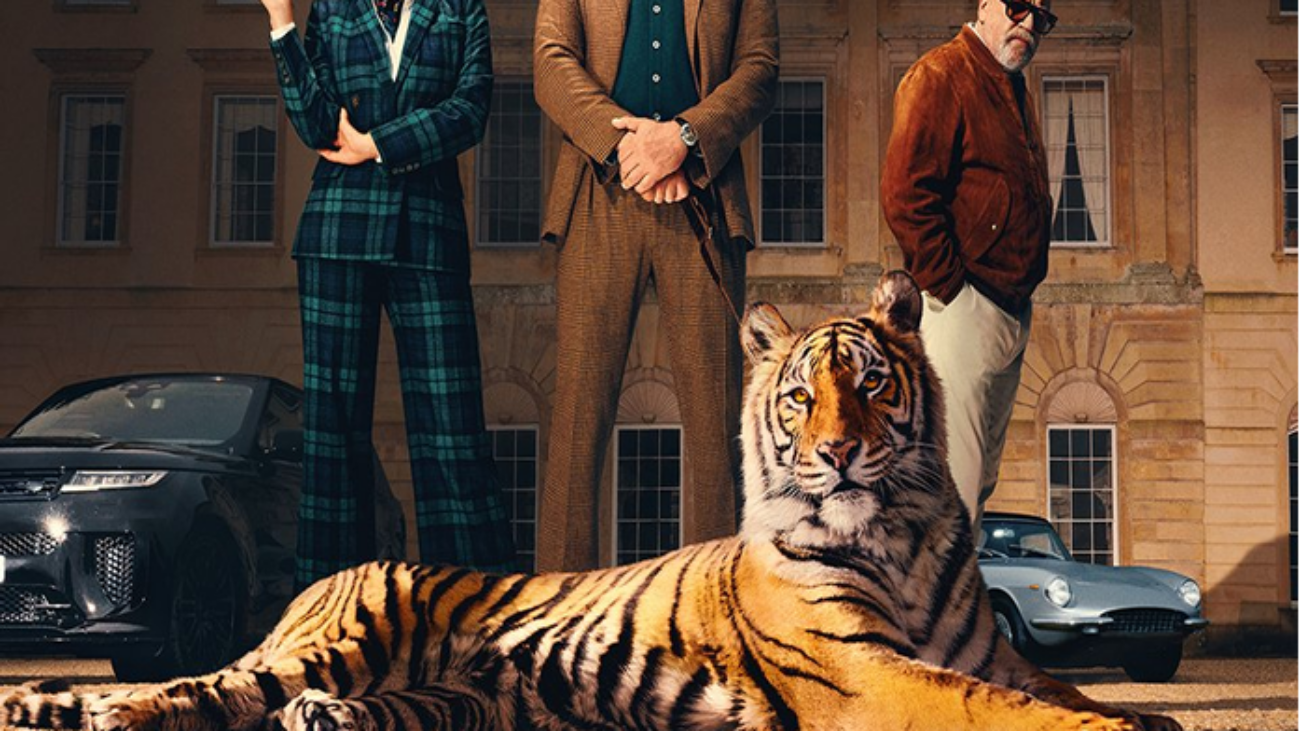
Guy Ritchie’s In the Grey Brings Precision, Firepower, and Old-School Action Cool Back to the Big Screen

For more than two decades, filmmaker Guy Ritchie has occupied a unique space in modern cinema. While countless directors have attempted to replicate his blend of razor-sharp dialogue, intricate criminal underworlds, fast-paced storytelling, and stylish visual flair, few have managed to capture the distinct energy that has become synonymous with his name. From crime capers and gangster dramas to espionage thrillers and globe-trotting adventures, Ritchie has consistently delivered films that feel unmistakably his own. In 2026, he returns with what may be one of his most ambitious projects yet: In the Grey, a high-stakes action thriller that combines elite covert operations, billion-dollar criminal conspiracies, international intrigue, and a powerhouse ensemble cast into a relentlessly entertaining cinematic experience.

Positioned as a spiritual successor to many of the director’s most beloved action-driven productions, In the Grey represents both an evolution and a return to form. The film embraces the hallmarks audiences expect from a Guy Ritchie production—rapid-fire banter, morally ambiguous heroes, intricate plotting, and meticulously crafted action sequences—while simultaneously expanding its scope into a larger global arena. The result is a film that feels contemporary without sacrificing the character-driven storytelling and stylish confidence that have defined the director’s career.


Nia Booko Goes It Alone on WWHL: “Like-Gate,” Death Threats, and the Uncomfortable Truth About Social Media on Reality TV

When The Valley Season 3 Episode 13 aired on June 24, it delivered the kind of wall-to-wall group implosion that the Mexico trip format was always going to produce. And when the episode ended and Watch What Happens Live came on, there was Nia Sanchez Booko — alone, without her husband Danny, fielding every question the audience and Andy Cohen could throw at her about a season that has put her family through one of the ugliest public gauntlets in recent Bravo history.

Danny Booko was originally announced to appear on WWHL alongside Luke Broderick following the episode. Then Andy Cohen announced from his clubhouse that Tom Schwartz would be stepping in for Danny, and the internet immediately drew its own conclusions. Speculation erupted across Bravo fan accounts that Danny had been quietly pulled from the appearance by the network as backlash against his behavior reached levels that had even former reality television stars piling on. The timing, many observed, looked like damage control dressed up as scheduling.

Nia addressed it directly. Danny had landed a last-minute acting opportunity on a major film project that conflicted with the taping, she explained — and she added, pointedly, that she told him afterward he absolutely should have posted proof from the set so the internet could see he was actually working and not hiding. “I told him, I was like, ‘You should’ve posted from work, like posted a Story so people see you’re actively there,’” she said. Whether you believe the explanation or not, the advice was savvy, and the fact that she gave it reveals exactly how closely this family has been tracking the online conversation around them — because that conversation has gone to places that no one who signed up to appear on a Bravo spinoff should ever have to navigate. Read the Full Article on Substack!

The Valley airs Wednesdays at 8/7c on Bravo, with episodes streaming on Sunset and on Peacock


Jersey Shore Family Vacation’s Final Season Is a Masterclass in Growing Up — And “Double Booked” Proves It

There is a version of the Jersey Shore story that ends badly. You can see it if you squint at the original run — the excess, the volatility, the specific kind of self-destruction that comes with being young, famous, and surrounded by people handing you everything you want and nothing you need. That version of the story existed, and it was real, and a lot of people watched it unfold in real time with a mix of fascination and genuine concern. And then something unexpected happened: most of these people grew up. Not performed growing up. Not claimed to have grown up while doing the same things with better PR. Actually grew up — into parents, into entrepreneurs, into people who know how to sit with each other through grief and not just through chaos.

Episode 26 of the final season, titled “Double Booked,” is the kind of television that makes you feel the full weight of fifteen years in a single hour. It is an episode that holds grief and laughter in the same room without letting either one swallow the other, and in doing so it captures exactly what this franchise became when nobody was quite paying attention to the transformation. Read the Full Article on Substack!

Jersey Shore: Family Vacation airs Thursdays at 8 p.m. ET on MTV, with episodes streaming on Sunset and Paramount+.

Life, Larry and the Pursuit of Unhappiness an Almost History of America

Life, Larry and the Pursuit of Unhappiness: An Almost History of America (2026)

Life, Larry and the Pursuit of Unhappiness: How Larry David Just Rewrote 250 Years of American History — And Got Away With It

There is a version of America’s 250th birthday that involves soaring orchestral music, Ken Burns-style dissolves between sepia photographs, and a narrator who sounds like he is personally apologizing for the passage of time. And then there is the version where Larry David crashes the party, refuses to sit where he’s told, complains that nobody used a coaster on the wooden table of liberty, and accidentally derails the entire democratic experiment.

Guess which version HBO chose.

Life, Larry and the Pursuit of Unhappiness: An Almost History of America arrived on June 26, 2026 — today, on the very cusp of the nation’s Semiquincentennial — and it is exactly as audacious, as bizarre, and as only-on-HBO as that premise suggests. Seven episodes. Four historical sketches per half-hour. One relentlessly cantankerous protagonist. And an official logline that reads like a warning label: “Those who don’t know history are doomed to watch Larry David repeat it.”

Welcome to the most unexpected birthday present America has ever received.

The Origin Story: When the Obamas Called Larry David

In television, the phrase “passion project” gets thrown around so casually that it has lost almost all meaning. But the origin story of Life, Larry and the Pursuit of Unhappiness is genuinely unusual — the kind of development deal that sounds like a pitch comedian’s bit before you realize it actually happened.

It started with Barack and Michelle Obama. Their production company, Higher Ground Productions, had been quietly building a premium content portfolio since the former president left the White House, with a focus on stories that reflect America’s complexity and humanity. When the milestone of the nation’s 250th anniversary began appearing on the horizon, they wanted to mark the occasion in a way that was thoughtful, meaningful — and maybe a little fun.

Then Larry David called.

That sentence has essentially become the unofficial tagline of the entire series, and it is entirely earned. According to HBO’s own promotional materials, the show’s setup is essentially: “President and Mrs. Obama wanted to honor America’s 250th anniversary and celebrate the unique history of our nation on this special occasion… But then Larry David called.” Both Barack Obama and Michelle Obama serve as executive producers on the series alongside David, his longtime creative partner Jeff Schaffer, and producers Ethan Lewis and Vinnie Malhotra. The Obamas are not passive names on a credit roll — they were instrumental in bringing Larry David back to television, and Barack Obama appears in the series himself, both as its Rod Serling-esque host and as a full-blown comedy sketch partner.

At the premiere event on June 23 at the Hollywood Legion Theater, HBO’s Executive Vice President of Comedy Programming Amy Gravitt captured the improbability of the whole thing perfectly from the stage: no one, she said, had “historical sketch comedy” on their bingo card for what Larry David would do next. She credited the Obamas directly for making it happen.

The series was first announced in July 2025, when HBO confirmed an untitled half-hour sketch comedy had been ordered from David and Schaffer. The title was revealed alongside a teaser trailer in May 2026, with a full trailer dropping the following month. By then, the sheer scope of the guest roster had begun to leak out, and what looked like a quirky limited experiment started to feel like an event.

The Creative Architecture: Schaffer, Improvisation, and the Curb DNA

To understand Life, Larry and the Pursuit of Unhappiness, you have to understand the creative machinery that built it — and that machinery is almost identical to the one that ran Curb Your Enthusiasm for twelve seasons across twenty-four remarkable years.

Larry David co-created and executive produced the series alongside Jeff Schaffer, who also directs every episode. Schaffer is not a casual collaborator — he is one of the architects of the Curb universe, a veteran of both Seinfeld and the later seasons of Curb, and the co-creator of The League. The two men share a creative language built on years of working in the same uncomfortable comedic key. Their shorthand is instinctive and their sensibilities are almost frighteningly aligned: both are obsessed with the granular injustices of social interaction, the tyranny of unspoken rules, and the specific misery of being a person who notices everything wrong with the world and cannot stop saying so out loud.

Crucially, the dialogue in Life, Larry is largely unscripted. Like Curb Your Enthusiasm, the show operates from structural outlines rather than fully written scripts, allowing the actors to improvise within the framework of each scenario. This is a signature of David’s approach to comedy — the idea that genuine awkwardness and genuine surprise cannot be fully manufactured in advance, that the funniest moments happen in the gap between intention and reality. Placed in a historical context, this method creates something genuinely strange and consistently entertaining: you are watching actors with deep comedic instincts navigate situations they could not have fully rehearsed, wearing period costumes, attempting to serve a story that is already inherently absurd.

The format itself — four sketches per half-hour episode, seven episodes in total, airing weekly from June 26 through the August 7 finale — gives the series a structure that feels more like a variety show from another era than a prestige drama. That is intentional. Before David built his reputation on Seinfeld and then spent twenty-four years redefining American sitcom comedy with Curb, he cut his teeth in sketch television. He was a performer and writer on Fridays, ABC’s early-1980s late-night sketch show, and he served a notably turbulent stint as a writer at Saturday Night Live, a tenure more famous for the legend of him quitting and returning two days later than for any particular sketch. Life, Larry is in many ways a return to that format — the same Larry David, now operating at the peak of his powers, doing the thing he was doing before anyone quite knew what to make of him.

The Concept: America’s Most Embarrassing Moments, Finally Told Honestly

The premise is simple enough to explain in one sentence, and rich enough to sustain seven half-hours of television: what if Larry David had been present for the most pivotal, most mythologized, most sacred moments in American history?

Each episode plants that irresistible misanthrope — that fussy, well-meaning, socially catastrophic man who cannot let anything go and cannot resist saying the thing that absolutely no one wants him to say — into a new chapter of the American story. Sometimes David portrays a real historical figure. Other times he appears as a fictional presence inserted into the margins of an actual event — a third Wright brother nobody invited, say, squeezed into the middle seat between Orville and Wilbur on the first flight of 1903, complaining vocally about the situation. The sketches visit moments ranging from the writing of the Declaration of Independence to Alexander Graham Bell’s first telephone call to Rosa Parks refusing to move to the back of the bus — at least, until she meets Larry David. The series reportedly includes a sequence with Abraham Lincoln and Mary Todd on a fateful night at the Ford Theatre, with Larry David along for what should have been a pleasant evening at the theater. It visits the Boston Tea Party, which Larry was apparently not invited to attend, because he is such terrible company. It follows the Lewis and Clark expedition, with Jerry Seinfeld appearing as William Clark while David portrays Meriwether Lewis, the pair abandoning their put-upon wives to go gallivanting across the continent together. It looks at Susan B. Anthony’s dinner party, which Larry manages to ruin — made even more surreal by the fact that Anthony is played by Susie Essman, so David spends the entire sketch calling her Susie.

The series does not shy away from the darker and more uncomfortable textures of American history either. Racism, antisemitism, and misogyny are consistent presences in the sketches, not glossed over or softened for palatability. David takes pointed aim at historical figures who deserve scrutiny, with particular relish reportedly directed at the antisemitic industrialist Henry Ford and the red-baiting senator Joseph McCarthy. Samuel L. Jackson narrates the proceedings with a sharpness that sets an expectation for each sketch before David arrives to upend it entirely. And while the show is not a political screed, it does not pretend to be apolitical either — there is apparently at least one sketch that offers a very direct and very pointed commentary on contemporary American life, one that critics have been instructed not to detail but have uniformly described as genuinely bold.

Obama closes the series with a reflection on the nature of American progress — that it has never been smooth or steady, but that sustained investment in the American experiment is what keeps it alive. It is a sentiment that the show earns in its own bizarre, cantankerous way. If the United States at 250 is a work in progress, Life, Larry is its most honest mirror: chaotic, funny, occasionally infuriating, and impossible to look away from.

The Cast: A Murderers’ Row of Comedy Talent

Even setting aside the extraordinary novelty of a former president serving as both executive producer and on-screen host, the ensemble assembled for Life, Larry and the Pursuit of Unhappiness is staggering in its depth. HBO has essentially called in every favor Larry David has ever earned across five decades in television comedy, and the result reads like a dream cast assembled by someone with extremely specific and deeply personal taste.

The Curb Your Enthusiasm family is heavily represented. Susie Essman, who spent twelve seasons torturing and being tortured by Larry David on that show, appears as Susan B. Anthony. Jeff Garlin and J.B. Smoove both turn up. The reunion element of the series gives it an immediate warmth and chemistry that a group of strangers could never replicate — these are performers who have spent years learning to push each other’s buttons in precisely the right ways.

Beyond the Curb veterans, the guest roster expands into genuinely surprising territory. Bill Hader plays Abraham Lincoln, with Kathryn Hahn as Mary Todd Lincoln alongside him — a pairing that sounds extraordinary on paper and presumably delivers something even better on screen. Jon Hamm and Sean Hayes portray the Wright brothers, which is one of those casting choices so specific and so inspired that it immediately makes you wish you had thought of it yourself. Jerry Seinfeld appears as William Clark of the Lewis and Clark expedition. Greg Kinnear, Lin-Manuel Miranda, Chris Parnell, Joe Manganiello, Essence Atkins, Vince Vaughn, Rita Wilson, Isla Fisher, Jane Krakowski, Henry Winkler, Kaley Cuoco, Rob Huebel, and Fred Melamed all appear across the seven episodes. Krakowski’s casting carries a particular meta-textual richness — she recently portrayed Mary Todd Lincoln in the Broadway production Oh, Mary!, which means she has now played in two very different comedic takes on the same tragic figure.

Barack Obama’s role in the series goes considerably beyond a brief cameo or a knowing wink at the camera. He serves as the show’s host, introducing each episode in a manner consciously evoking Rod Serling’s role in The Twilight Zone — a calm, authoritative guide walking the audience into territory that is about to become very strange. Beyond that framing device, Obama also appears in a full comedic sketch alongside Larry David himself. In a now-famous story from the promotional tour, David described the creative negotiation between them: when the former president reportedly offered script notes, David told him, “When you were president, if somebody had a good idea, you would listen to it. Well, I’m the president here.” That dynamic — two extraordinarily accomplished men, each entirely confident in his own authority, navigating who actually gets to be in charge — sounds like it produces exactly the kind of comedy that could not be scripted in advance.

David himself has said that one of his favorite roles in the series is his portrayal of Jonas Salk, the scientist who developed the polio vaccine. That choice — Larry David as the man who saved millions of children from paralysis — tells you everything you need to know about the tone this show is going for.

The Critical Conversation: What the Reviewers Are Saying

Life, Larry and the Pursuit of Unhappiness arrived with enormous expectations and a genuinely unusual premise, and the critical response has been — fittingly — a little bit Larry David about the whole thing. Split, slightly aggravated, occasionally delighted, and unable to fully commit to either enthusiasm or dismissal.

The show launched with a 62% score on Rotten Tomatoes on its premiere day, with critics divided fairly cleanly between those who find Larry David’s persona so reliably funny that any vehicle for it is inherently worthwhile, and those who feel the sketch format exposes weaknesses that Curb‘s longer-form storytelling was able to conceal. The Metacritic score settled around 65, placing it in the solidly-good-but-not-transcendent territory that honest sketch comedy tends to occupy.

The most consistent praise centers on the underlying concept and on David himself. Richard Roeper, writing for RogerEbert.com, called the series “clever, insightful, and politically savvy,” describing the premise as “virtually foolproof” and the result as “pretty, pretty, pretty funny” — deliberately deploying David’s own signature verbal tic to deliver the verdict. For longtime Curb devotees who mourned the 2024 finale, Roeper essentially framed the show as the next best thing: the same Larry, the same sensibility, wearing a wig and a waistcoat and complaining about the same things two hundred years earlier.

TV Insider’s Matt Roush offered a similarly warm take, calling it a “rollicking romp through American history” that reveals the influence of Mel Brooks in its broad, irreverent tone. Roush observed that David takes particular glee in targeting figures who have historically escaped full scrutiny, and noted that even when the show’s aim is imprecise, David’s sheer comedic presence remains the most dependable thing on screen.

IndieWire landed on a more complicated position: the reviewer found the show’s lengthy sketches occasionally tiring, its recycling of familiar David grievances undeniably repetitive, and some of the treatment of nagging wives tedious even by the show’s own internal logic. But the conclusion was nevertheless an enthusiastic endorsement, grounded in a simple observation: Larry David is a timeless character. His perspective does not require the correct century. He is who he is whether he is arguing with a modern parking lot attendant or a colonial-era founding father, and that consistency — that absolute commitment to the persona across every conceivable context — is inherently funny. “Watching the Larry we know and love shuffling through time, arguing with presidents and generals, is funny,” the review concluded, “and during the roughest sketches, he’s still funny enough.”

Variety’s take was somewhat more measured, framing the show as Curb Your Enthusiasm in period drag rather than a genuinely distinct creative work. The review noted that the strongest segments are the ones that use the historical setting to make a point about human nature rather than simply transplanting familiar gags into a new backdrop — that the most effective sketches argue that history is driven not by great men and high-minded idealism, but by the same petty failings and social catastrophes that David has been cataloging his entire career. When the show commits to that thesis, it lands. When it defaults to recycling specific Curb bits — the chat-and-cut, the “Happy New Year” expiration date, the coaster on the wooden table — it starts to feel like a highlight reel rather than new territory.

The Hollywood Reporter’s Daniel Fienberg called it “formulaic and familiar, but not without high points,” identifying the extended Abraham Lincoln episode as the clearest success of the season — a sketch that is given enough room to develop genuine momentum rather than arriving at its punchline and moving on. TVLine’s review was the harshest of the major outlets, describing the writing as “uninspired” and accusing David and Schaffer of outright self-theft in their reuse of specific Curb gags. The consensus view from critics, stripped of all its qualifications, is probably something like: if you love Larry David, you will enjoy this, because Larry David is still Larry David; if you were hoping for something genuinely new, you may find the familiarity more frustrating than comforting.

One thread that runs through almost every review is the importance of weekly viewing over bingeing. Multiple critics recommended consuming the series at its intended pace — one episode per Friday — rather than consuming all seven hours at once. The repetition that some found exhausting across the full season reportedly lands very differently when each installment is given a week to breathe. That note feels worth heeding.

Larry David’s Return and What It Means

It is impossible to discuss Life, Larry and the Pursuit of Unhappiness without acknowledging the emotional weight of Larry David returning to television at all. Curb Your Enthusiasm ended in April 2024 after twelve seasons and twenty-four years, a run so long and so consistent that it had effectively become a permanent fixture of American comedy culture. The finale was watched by enormous audiences and received as a true cultural event. When it was over, many assumed — reasonably — that David was done. That he had said everything he had to say, wrung every last drop of discomfort from every conceivable social situation, and would retire to wherever grumpy comedy geniuses retire to when they have done enough.

Instead, the Obamas called. And rather than say no, David apparently decided that the one place he had not yet taken his particular misery was the past — all of it, from the founding of the republic to the twentieth century, twenty-eight historical moments spread across seven half-hours and waiting to be disrupted by the most reliably disruptive man in the history of American television comedy.

That he made this choice in collaboration with a former president who is his ideological opposite in almost every imaginable way — in terms of temperament, in terms of grace under pressure, in terms of their fundamental relationship with social interaction — is the great creative irony at the heart of the project. Obama is famously measured, famously deliberate, famously in control. David is famously none of those things. Their on-screen dynamic, from what critics have described, is exactly as good as that contrast suggests.

The series also represents something quietly significant in terms of David’s legacy as a sketch comedian. His brief, chaotic time at Saturday Night Live in the early 1980s has always been a footnote in his biography — a period he did not particularly distinguish himself in, famous more for the mythology of his resignation than for any memorable work. Life, Larry is, in a sense, his answer to that chapter: the sketch comedy show he might have made at SNL if he had been Larry David then the way he is Larry David now. The persona was always there. It just needed forty more years of refinement, an HBO budget, a former president, and the occasion of a national birthday.

Where to Watch, When It Airs, and What to Expect

Life, Larry and the Pursuit of Unhappiness is streaming now on HBO and HBO Max, with the first episode available beginning at 9 p.m. ET on June 26. New episodes drop weekly every Friday through August 7, 2026, when the seventh and final episode closes the series. The weekly release cadence is not accidental — as multiple critics have observed, the show is built to be savored one chapter at a time, its rhythms better suited to anticipation and weekly discussion than to a single weekend marathon session.

The series is a seven-episode limited run, meaning there is a defined endpoint and a complete story to experience. Whether HBO revisits the format with a second season remains to be seen — one critic memorably noted that they would probably be ready for more in about 250 years — but for now, the show exists as a standalone piece of work, a birthday card to the United States written in the only language Larry David knows: barely concealed irritation, an acute sensitivity to the absurdity of social norms, and the absolute refusal to pretend that anything is fine when it very clearly is not.

For viewers who loved Curb Your Enthusiasm and have spent two years wondering what David would do next, this is the answer. It is not a reinvention. It is not a departure. It is Larry David doing what Larry David has always done, pointed at a larger and more consequential target than usual, surrounded by some of the funniest people working in American comedy today, and produced by a man who once negotiated nuclear arms treaties and is apparently capable of surviving the experience of receiving script notes from the creator of Seinfeld.

America turns 250 this summer. It did not ask for this birthday present. But honestly — given the current state of things — it might be exactly what the country needs: a look back at two and a half centuries of history, with all the sacred mythology stripped away, filtered through the consciousness of a man constitutionally incapable of letting anything slide.

Pretty, pretty, pretty American.

Life, Larry and the Pursuit of Unhappiness: An Almost History of America airs Fridays at 9 p.m. ET on HBO, with new episodes through August 7, 2026. All episodes are also available to stream on HBO Max, Sunset and On-Demand after the Episode Airs

images (11)

Johnny Damon on Below Deck Mediterranean, Guy Ritchie’s In the Grey, Paige DeSorbo, Hannah Berner, Not Suitable for Work, The McBee Dynasty Season 3

Johnny Damon, Below Deck Mediterranean, and One of the Most Unhinged Charter Guests the Franchise Has Ever Seen

Below Deck Med 11 episode 3 recap: worst guest ever? – reality blurred

Every season of Below Deck Mediterranean seems to produce at least one charter guest who leaves viewers wondering how they function in normal society. Season 11 may have already found its winner.

The latest episode was supposed to be a luxury Croatian getaway featuring former Major League Baseball star Johnny Damon and his wife, Michelle Damon, returning as primary charter guests aboard the M/Y Akira One. Instead, what unfolded was a master class in how one person can completely hijack an otherwise enjoyable charter before the yacht even had a chance to leave the dock. Read The Sunset Beehive on Substack!

The Real Housewives of Rhode Island Reunion Put Faces to Names, Then Turned Into Complete Chaos

When is 'The Real Housewives of Rhode Island' reunion? How to watch for  free - masslive.com

One of my biggest takeaways from Part One of The Real Housewives of Rhode Island reunion had nothing to do with the screaming, the accusations, or even the legal drama. It was something much simpler. I finally started figuring out who everybody actually is.

That may sound ridiculous, but it is true.

This is the first season of Rhode Island, and unlike long-running Housewives franchises where viewers have spent years with the cast, this group is still introducing itself to the audience. For most of the season, I found myself recognizing faces before I remembered names. Even now, if you asked me to recite the entire cast from memory, I would probably struggle. The funny part is that if someone mentioned a name, I would immediately know exactly who they were talking about. That is part of what makes a first-season reunion interesting. Viewers are still getting acquainted with the personalities while simultaneously watching those personalities completely unravel on national television.

And unravel they did. Read The Sunset Beehive on Substack!

Guy Ritchie’s In the Grey Brings Precision, Firepower, and Old-School Action Cool Back to the Big Screen

For more than two decades, filmmaker Guy Ritchie has occupied a unique space in modern cinema. While countless directors have attempted to replicate his blend of razor-sharp dialogue, intricate criminal underworlds, fast-paced storytelling, and stylish visual flair, few have managed to capture the distinct energy that has become synonymous with his name. From crime capers and gangster dramas to espionage thrillers and globe-trotting adventures, Ritchie has consistently delivered films that feel unmistakably his own. In 2026, he returns with what may be one of his most ambitious projects yet: In the Grey, a high-stakes action thriller that combines elite covert operations, billion-dollar criminal conspiracies, international intrigue, and a powerhouse ensemble cast into a relentlessly entertaining cinematic experience. Read More!

Paige DeSorbo, Hannah Berner, and Why Not Suitable for Work May Be Hulu’s Next Workplace Comedy Hit

Paige DeSorbo & Hannah Berner Make 'Not Suitable For Work' Appearance In  Season 1 Finale

One of the unexpected television moments this week came from seeing Paige DeSorbo and Hannah Berner pop up in the season finale of Not Suitable for Work. I have to admit, I was curious about how that appearance would play out because crossing over from reality television and podcasting into scripted comedy is not always as easy as people think.

The funny thing is that I walked away more impressed than I expected.

Paige, in particular, seemed surprisingly comfortable in the environment. Her timing felt natural, her delivery worked, and she looked completely at ease playing a heightened version of herself. Ironically, I thought she came across much better here than she does in some of the commercial work that has become familiar to Bravo viewers over the last few years. There was a confidence and rhythm to her appearance that fit seamlessly into the show’s comedic style. Read The Sunset Beehive on Substack!

The McBee Dynasty Season 3 Finds a Family Fighting for Its Future While Chaos Erupts on Every Front

The McBee Dynasty' Season 3 Cast Photos, Trailer & Premiere Date Set At  Bravo

One of the first things that stood out to me while watching the latest episodes of The McBee Dynasty was Steven McBee Jr.’s new relationship. So far, I actually like Allie Eklund. Whether that opinion changes over time remains to be seen, but she comes across as grounded, likable, and surprisingly calm considering the environment she is stepping into. The funny part is watching everyone around Steven react with shock at how quickly the relationship appears to be moving. To me, that reaction feels a little misplaced. This is a man who spent part of his public life participating in The Bachelor universe, a television environment built around the idea that people can become engaged after only a few weeks of knowing one another. Given that background, it should not be particularly surprising that Steven occasionally approaches relationships at a different speed than most people.

That does not mean his family is entirely wrong to be skeptical. Season 3 introduces Allie as Steven’s latest serious relationship at a time when the McBees are facing challenges far more significant than romance. The family business is under pressure. Financial uncertainty hangs over nearly every major decision. Steve McBee Sr.’s legal troubles continue to cast a shadow over the operation. Against that backdrop, Steven is already discussing long-term plans and a future together. The family appears divided between those who are willing to support him and those who wonder whether he has learned anything from previous relationships. Regardless of where viewers land on that debate, the storyline adds another layer to a season already overflowing with tension. Read The Sunset Beehive on Substack!

In The Grey

In the Grey (2026)

Guy Ritchie’s In the Grey Brings Precision, Firepower, and Old-School Action Cool Back to the Big Screen

For more than two decades, filmmaker Guy Ritchie has occupied a unique space in modern cinema. While countless directors have attempted to replicate his blend of razor-sharp dialogue, intricate criminal underworlds, fast-paced storytelling, and stylish visual flair, few have managed to capture the distinct energy that has become synonymous with his name. From crime capers and gangster dramas to espionage thrillers and globe-trotting adventures, Ritchie has consistently delivered films that feel unmistakably his own. In 2026, he returns with what may be one of his most ambitious projects yet: In the Grey, a high-stakes action thriller that combines elite covert operations, billion-dollar criminal conspiracies, international intrigue, and a powerhouse ensemble cast into a relentlessly entertaining cinematic experience.

Positioned as a spiritual successor to many of the director’s most beloved action-driven productions, In the Grey represents both an evolution and a return to form. The film embraces the hallmarks audiences expect from a Guy Ritchie production—rapid-fire banter, morally ambiguous heroes, intricate plotting, and meticulously crafted action sequences—while simultaneously expanding its scope into a larger global arena. The result is a film that feels contemporary without sacrificing the character-driven storytelling and stylish confidence that have defined the director’s career.

At the center of the narrative is an audacious mission that immediately raises the stakes beyond conventional action-thriller territory. A powerful lawyer assembles a clandestine team of elite operatives known only within the shadows of international power circles. These specialists are not government agents, soldiers, or traditional mercenaries. They are fixers—highly trained professionals capable of solving problems that official institutions cannot touch. Their latest assignment involves recovering a stolen fortune worth one billion dollars that has fallen into the hands of a ruthless criminal empire and an increasingly dangerous authoritarian figure whose influence stretches across multiple continents.

From the outset, the film establishes itself as something more sophisticated than a standard action spectacle. Rather than relying solely on explosive set pieces and large-scale destruction, In the Grey builds tension through strategy, deception, intelligence gathering, and calculated risk. Every move carries consequences. Every alliance remains uncertain. Every operation unfolds within a world where legal loopholes, financial systems, political influence, and covert networks often prove more powerful than weapons alone.

That emphasis on intelligence and tactical problem-solving gives the film a distinctive identity within the crowded action genre. The operatives at the center of the story are not superheroes. They are highly skilled professionals forced to navigate a labyrinth of competing interests, hidden agendas, and dangerous adversaries. Their success depends as much on planning and adaptability as it does on physical capability.

Leading the cast is Henry Cavill, whose commanding screen presence continues to make him one of the most compelling action stars working today. Cavill has spent the last decade building a reputation for portraying characters who combine physical authority with intelligence and restraint. In In the Grey, he delivers another performance that balances charisma, tactical precision, and understated humor. His character functions as both strategist and field operator, anchoring the film’s increasingly complex web of operations.

Opposite him is Jake Gyllenhaal, who brings a completely different energy to the film. Where Cavill projects control and discipline, Gyllenhaal introduces unpredictability, wit, and occasional recklessness. The chemistry between the two actors quickly becomes one of the film’s greatest strengths. Their relationship thrives on constant friction, mutual respect, and relentless verbal sparring. Every mission briefing, tactical discussion, and high-pressure situation becomes an opportunity for the pair to challenge one another.

The dynamic recalls some of the greatest action partnerships in cinema history, where friendship and rivalry exist simultaneously. Their interactions provide humor without undermining the stakes and create an emotional core that keeps audiences invested throughout the increasingly dangerous mission.

Adding further depth to the ensemble is Eiza González, whose role introduces another layer of complexity to the operation. González continues to establish herself as one of the most versatile performers in contemporary action cinema, bringing intelligence, confidence, and emotional nuance to every scene. Rather than functioning as a supporting accessory to the central mission, her character becomes instrumental to its success, operating within spheres of influence inaccessible to the rest of the team.

The supporting cast elevates the project even further. Rosamund Pike delivers her trademark sophistication and unpredictability, while Kristofer Hivju brings physicality and presence to the ensemble. Veteran performer Fisher Stevens contributes additional intrigue, helping create a world populated by individuals whose motives remain uncertain until the very end.

One of the film’s most notable achievements is its commitment to grounded action. Modern blockbuster filmmaking often relies heavily on increasingly elaborate visual effects and large-scale destruction. While there is certainly no shortage of excitement in In the Grey, the action sequences are designed around realism, tactical movement, and practical execution. Every confrontation feels purposeful. Every operation unfolds with precision. Rather than overwhelming viewers with constant chaos, the film focuses on creating suspense through planning, execution, and adaptation.

This approach gives the action greater impact because audiences understand what is at stake. Characters cannot simply punch their way through every obstacle. They must outthink opponents, anticipate betrayals, and solve problems in real time. The result is a level of engagement that many contemporary action films struggle to achieve.

The film’s visual presentation reflects Guy Ritchie’s continued evolution as a filmmaker. The cinematography embraces sleek international settings, sophisticated urban environments, remote operational zones, and luxurious power centers where enormous fortunes are controlled behind closed doors. Each location serves a narrative purpose, reinforcing the global scale of the mission while maintaining the intimate focus necessary for character-driven storytelling.

Ritchie’s pacing remains one of his greatest strengths. The film moves quickly, but never feels rushed. Information is revealed strategically, allowing viewers to piece together the larger conspiracy while remaining emotionally connected to the characters. Dialogue-heavy sequences crackle with energy, providing moments of humor and tension before seamlessly transitioning into action-oriented set pieces.

What ultimately separates In the Grey from many modern action releases is its understanding of consequence. The billion-dollar fortune at the center of the story is not merely a plot device. It represents influence, power, corruption, and control. Every faction pursuing it has legitimate reasons for doing so, creating a morally complex landscape where the distinction between hero and villain becomes increasingly blurred.

That ambiguity has long been one of Guy Ritchie’s greatest storytelling strengths. His characters often operate within gray areas where ethics become negotiable and survival requires compromise. The title itself reflects this philosophy. The world of In the Grey is populated by individuals who rarely fit neatly into categories of good or evil. Instead, they navigate a complicated reality shaped by loyalty, self-interest, and necessity.

Thematically, the film explores power structures that extend beyond traditional criminal enterprises. Financial networks, political influence, international business interests, and covert operations intersect throughout the story, creating a narrative that feels remarkably relevant to contemporary audiences. The villains are dangerous not simply because they possess weapons or armies, but because they understand how modern systems can be manipulated for personal gain.

This deeper layer of commentary gives the film additional weight without sacrificing entertainment value. Audiences seeking a fast-paced action thriller will find plenty to enjoy, but those looking for a more intelligent and layered narrative will discover a story that rewards attention and engagement.

The film also arrives during a period when audiences appear increasingly receptive to action movies built around competence and professionalism rather than invincibility. Viewers have embraced stories featuring highly skilled individuals solving difficult problems under pressure, and In the Grey fits squarely within that trend. The characters succeed not because they are superhuman, but because they are exceptionally capable.

As a result, every victory feels earned. Every setback feels meaningful. Every twist carries genuine consequences.

For Guy Ritchie, In the Grey represents another impressive addition to an already distinguished filmography. It combines the wit and style that first made him a household name with the larger scale and technical sophistication he has developed throughout his career. The film demonstrates a filmmaker who remains confident in his creative voice while continuing to evolve.

For audiences, it delivers exactly the kind of intelligent, character-driven action adventure that has become increasingly rare in an era dominated by franchise filmmaking and formulaic spectacle. It understands that excitement comes not only from explosions and gunfire but from strategy, personality, tension, and unpredictability.

In the Grey ultimately succeeds because it knows precisely what it wants to be. It is a globe-spanning heist thriller, a covert operations adventure, a character-driven ensemble piece, and a showcase for some of today’s most charismatic performers. Most importantly, it is a reminder that when action cinema is built around strong characters, sharp writing, and genuine craftsmanship, it can still deliver some of the most satisfying entertainment experiences available.

For fans of Guy Ritchie, elite-team thrillers, international conspiracies, and sophisticated action storytelling, In the Grey stands as one of the most compelling cinematic releases of 2026 and further proof that stylish, intelligent action movies remain very much alive.

2e3fc8ae-bf17-4aa4-8c63-0b92fa2c9371_1000x667

The Real Housewives of Rhode Island Season Ends, The McBees are Back, Next Gen NY Begins Soon, Office Romance Takes Flight are This Week in The Beehive!

Prison Sentences, Arrests, Financial Survival, Family Loyalty, Restraining Orders, Allegations Involving Other Women, New Romances, New Babies and More This Week in The Beehive!

The Real Housewives of Rhode Island Reeled Me Into Housewives—and Now the Reunion Looks Completely Unhinged

Real Housewives of Rhode Island' Season 1 Reunion Looks & Trailer Revealed  - Watch Now! - Just Jared - Celebrity News and Gossip | Entertainment

The Real Housewives of Rhode Island Has My Attention—and That Is Exactly Why the Reunion Could Be Bravo Gold. Before The Real Housewives of Rhode Island premiered, I had not watched a Housewives franchise in any meaningful way since the early days of Orange County. I am talking about the original season were the only ones I ever saw. Vicki Gunvalson. Her daughter. That guy named Slade (Smiley) for gods sakes with the hottie, Jo De La Rosa were part of that cast.

Back when reality television felt less manufactured and more like somebody accidentally left cameras rolling in affluent neighborhoods. The funny thing is that, at the time, I remember thinking my houses in Los Angeles were nicer than some of the townhomes those people were living in. Then life happened. They got richer. I got poorer.

So when Bravo announced Rhode Island, I was not exactly rushing to clear my schedule.

Then the trailers started airing. Read The Full Article on Substack!


The McBee Dynasty Returns With Real Stakes: Prison Sentences, Financial Survival, Family Loyalty, and the Future of an American Empire

McBee Dynasty' star says father's prison sentence was family's blessing |  Fox News

There is a major difference between reality television that manufactures drama and reality television that simply documents it.

The McBee Dynasty has always operated closer to the second category.

While many reality franchises revolve around social conflicts, petty feuds, and arguments that are forgotten a week later, the McBee family is currently navigating challenges that carry genuine consequences. Businesses can fail. Assets can disappear. Relationships can fracture. Families can lose everything they spent decades building.

That reality is what makes the Season 3 premiere of The McBee Dynasty feel different from almost everything else currently airing in the reality television landscape. Read The Full Article on Substack!


Office Romance Takes Flight: Jennifer Lopez, Brett Goldstein, and the Return of the Big-Star Romantic Comedy

Office Romance

For years, industry analysts, studio executives, streaming platforms, and movie fans have debated whether the traditional romantic comedy could ever truly reclaim the cultural relevance it once enjoyed. The genre that dominated theaters throughout the 1980s, 1990s, and early 2000s gradually lost ground as superhero franchises, prestige television, action spectacles, and streaming originals reshaped audience viewing habits. While romantic comedies never disappeared entirely, they rarely generated the kind of mainstream excitement that once turned them into defining entertainment events. Read The Full Story!


Next Gen NYC May Be Bravo’s Smartest New Idea in Years

Next Gen NYC (TV Series 2025– ) - IMDb

I am actually looking forward to this season. Bravo’s newest reality series, Next Gen NYC, follows a group of young influencers, entrepreneurs, creators, and social personalities as they navigate life, careers, friendships, and relationships in Manhattan. What separates the series from countless other New York-based reality shows is that several cast members arrive with recognizable last names and established connections to the Bravo universe.

The cast includes Gia Giudice, daughter of Teresa Giudice from The Real Housewives of New Jersey; Ariana Biermann, daughter of Kim Zolciak-Biermann from The Real Housewives of Atlanta; Brooks Marks, son of Meredith Marks from The Real Housewives of Salt Lake City; and Riley Burruss, daughter of Kandi Burruss from The Real Housewives of Atlanta. Joining them are Ava Dash, daughter of Rachel Roy and Damon Dash, along with influencer and fashion personality Emira D’Spain.

Season 2 is not just bringing back the familiar faces from the inaugural season. Bravo is also introducing several new cast members who appear poised to make an immediate impact on the group’s dynamic. The additions blend celebrity connections, ambitious young professionals, and lifelong New Yorkers, creating even more opportunities for new friendships, alliances, and inevitable conflicts. Read The Full Article on Substack!

COVER_TITLE_TALL

Summer House, Below Deck Mediterranean, The Valley, Watch What Happens Live, In the City, Southern Hospitality, More

Catfish: The TV Show (TV Series 2012– ) - IMDb
Send it (to the group chat). #SummerHouse
Charley Manley Dating Justin Assad From Southern Hospitality
Below Deck Med's Captain Sandy Hits the Dock for the First Time - Reality  Tea
The Valley' Season 3 Trailer: Bravo Announces April 1 Premiere
Kenny Martin Addresses His Controversial “Spark” Comment with GF Whitney  Fransway
Jesse Solomon & Rachel Lindsay React To Jennifer Lawrence Solving The  Reunion Leak | WWHL
Office Romance

Office Romance (2026)

Office Romance Takes Flight: Jennifer Lopez, Brett Goldstein, and the Return of the Big-Star Romantic Comedy