


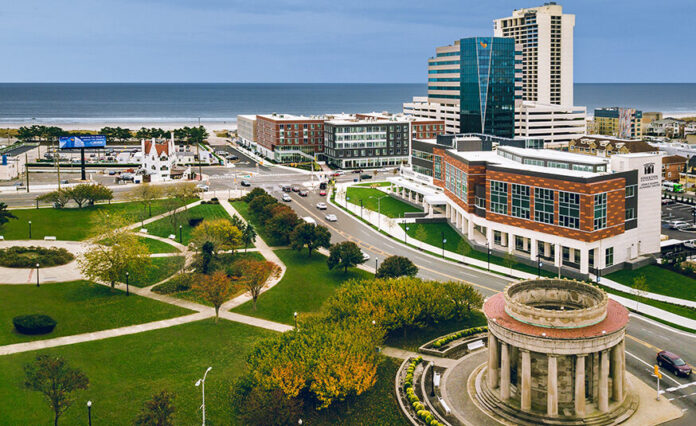

Atlantic City’s long-term transformation into a regional center for healthcare, higher education, workforce development, and medical innovation took a major step forward this week as AtlantiCare and Stockton University announced a sweeping strategic alliance that will create the new Stockton-AtlantiCare College of Community Health in Atlantic City. Backed by an initial $15 million investment from AtlantiCare, the initiative represents one of the most ambitious healthcare education and workforce development projects undertaken in South Jersey in years and could significantly reshape the future of medical training, allied health education, and regional economic development across southeastern New Jersey.
The announcement reflects a growing recognition among healthcare systems, universities, policymakers, and regional leaders that workforce shortages, healthcare access challenges, and long-term economic sustainability are increasingly interconnected. Rather than treating healthcare staffing shortages as isolated hiring problems, the new alliance is structured around building an integrated education-to-employment pipeline designed to train, retain, and develop healthcare professionals directly within the communities where they are most needed.
For Atlantic City specifically, the initiative represents another significant signal that the city’s economic identity continues evolving beyond gaming and tourism alone. Increasingly, healthcare, education, research, and workforce training are becoming central components of Atlantic City’s redevelopment strategy as regional institutions seek to create year-round economic engines capable of supporting long-term stability and professional opportunity throughout South Jersey.
The newly announced Stockton-AtlantiCare College of Community Health will expand Stockton University’s existing healthcare-related academic programs while creating new undergraduate and graduate pathways connected directly to high-demand medical and allied health professions. The partnership is designed to create stronger alignment between classroom education, clinical training, workforce needs, and eventual employment opportunities throughout the region’s healthcare system.
Officials from both organizations emphasized that the alliance is intended not simply to expand educational offerings, but to fundamentally strengthen the regional healthcare workforce infrastructure itself. The collaboration will focus heavily on connecting academic instruction with hands-on clinical experience, professional development opportunities, and direct career pathways tied to real-world healthcare demands facing South Jersey communities.
AtlantiCare President and CEO Michael Charlton framed the partnership as part of a broader effort to build long-term healthcare capacity within the region while helping students and professionals establish careers without leaving South Jersey.
“This is a proud moment for AtlantiCare because it reflects the work we are doing to build a stronger healthcare future,” Charlton said. “Through this alliance with Stockton University, we can help more students and professionals learn here, train here and build careers here, strengthening the communities they call home.”
That emphasis on retaining talent locally may ultimately become one of the initiative’s most important long-term impacts. South Jersey, like many regions across the country, continues facing significant healthcare workforce shortages spanning nursing, respiratory therapy, behavioral health, laboratory science, radiology technology, rehabilitation therapies, and other allied health professions. Simultaneously, many students pursuing healthcare careers often leave the region for training opportunities elsewhere and do not return professionally.
The new alliance is designed specifically to address that challenge by creating clearer educational and employment pipelines rooted directly within southeastern New Jersey. Leaders behind the project believe stronger local training infrastructure can improve workforce retention while simultaneously helping address growing shortages across multiple healthcare disciplines.
The College of Community Health will significantly expand Stockton’s academic offerings in areas including nursing, public health, social work, and health sciences. At the same time, the partnership will introduce new educational programs tailored toward some of the healthcare industry’s most urgent staffing demands.
Respiratory therapy is expected to become one of the first major additions under the new alliance. Officials also identified physician assistant studies, radiology technology, medical laboratory science, behavioral health, rehabilitation therapies, speech-language therapy, health leadership, and additional allied health fields as major future growth areas under consideration.
The expansion comes during a period of extraordinary strain on healthcare workforce systems nationwide. Hospitals, healthcare networks, rehabilitation centers, behavioral health providers, and long-term care facilities throughout New Jersey continue confronting severe staffing shortages intensified by aging populations, burnout within healthcare professions, increasing patient demand, and long-standing workforce pipeline gaps that became even more pronounced following the COVID-19 pandemic.
Healthcare systems are increasingly recognizing that solving those shortages requires much deeper collaboration with educational institutions. The traditional separation between academic training and workforce placement is rapidly disappearing as hospitals and universities develop integrated partnerships focused on accelerating professional readiness, clinical experience, and long-term retention strategies.
Stockton University President Joe Bertolino described the alliance as a direct reflection of Stockton’s broader institutional mission centered on regional service, educational access, and community advancement.
“By partnering with AtlantiCare to establish the Stockton-AtlantiCare College of Community Health, we are creating a powerful model that connects education directly to workforce needs,” Bertolino said. “Together, we are opening new pathways for our students and for working professionals to learn, train and serve right here in our region.”
That concept — connecting education directly to workforce needs — has become one of the defining trends reshaping higher education nationally. Universities increasingly face pressure to demonstrate stronger career alignment, workforce responsiveness, and economic relevance as industries struggle to fill specialized professional roles. Healthcare education, in particular, has become one of the fastest-growing areas for institutional partnerships tied to direct workforce outcomes.
The South Jersey focus of the initiative is especially important because healthcare access and workforce availability remain major issues throughout portions of the region. Rural and suburban communities alike continue facing shortages in key healthcare professions, particularly in nursing, behavioral health services, rehabilitation specialties, and primary care support roles. Expanding educational pathways locally could help stabilize portions of the healthcare workforce pipeline over the long term.
The alliance also carries substantial economic development implications for Atlantic City itself. While the city remains internationally associated with gaming and tourism, leaders throughout the region have increasingly emphasized the importance of diversifying Atlantic City’s economy through healthcare, education, research, technology, and workforce training investment.
Healthcare systems have already emerged as some of the region’s most significant employers and economic anchors. Expanding healthcare education infrastructure deepens that role while potentially creating new professional pathways for local residents and students throughout South Jersey.
State Sen. Vince Polistina described the initiative as part of a larger transformation taking shape in Atlantic City’s long-term economic future. He linked the announcement to broader efforts involving medical education expansion and healthcare workforce development already underway within the city.
“Between Temple and now Stockton, we’re starting to build something in Atlantic City,” Polistina said. “We’re talking about medical education, health care training, good jobs and more reasons for young people to stay in South Jersey.”
That statement reflects a broader strategic vision increasingly visible throughout Atlantic City redevelopment discussions. Rather than relying exclusively on tourism-driven economic cycles, regional leaders are attempting to position Atlantic City as a year-round center for healthcare services, medical education, research partnerships, and professional workforce development.
The timing of the announcement is particularly notable because it arrives only days after AtlantiCare revealed another major educational partnership involving Temple University’s Lewis Katz School of Medicine. That agreement is expected to establish a new regional medical school campus in Atlantic City, further accelerating the city’s emergence as a growing medical education hub within southern New Jersey.
Taken together, the Stockton alliance and Temple partnership suggest a coordinated long-term strategy aimed at creating a substantial healthcare education ecosystem rooted directly within Atlantic City. Such an ecosystem could eventually influence workforce retention, research collaboration, regional healthcare access, and broader economic redevelopment efforts throughout the region.
The Stockton-AtlantiCare initiative additionally builds upon years of existing collaboration between the two institutions involving internships, academic affiliation agreements, clinical rotations, and workforce partnerships. The formal creation of the College of Community Health significantly expands that relationship into a much larger institutional alliance centered on regional healthcare transformation.
Current healthcare workers are also expected to benefit substantially from the partnership. Officials indicated that the alliance will support professional advancement opportunities for existing healthcare employees, including those already working within AtlantiCare’s system. Shared curriculum development, continuing education initiatives, professional training programs, and expanded clinical education opportunities are all expected to become central components of the collaboration.
The long-term implications extend far beyond academics alone. Workforce shortages remain one of the greatest threats facing healthcare systems nationwide. Expanding educational capacity, improving local retention, strengthening clinical training pipelines, and aligning workforce development with actual regional healthcare needs may ultimately determine how effectively healthcare systems can continue meeting patient demand over the next decade.
Stockton Provost and Vice President for Academic Affairs Michael Palladino described the initiative as one of the university’s most consequential healthcare and workforce projects in recent memory.
“This is one of the most consequential initiatives Stockton University has undertaken to shape the future of health care education and workforce development in our region,” Palladino said.
That assessment may prove increasingly accurate as South Jersey continues redefining its healthcare infrastructure and workforce strategy in response to changing demographic realities, rising patient demand, and long-term economic transformation. The creation of the Stockton-AtlantiCare College of Community Health positions Atlantic City directly within that evolving landscape, where healthcare education, workforce development, and regional redevelopment are becoming deeply interconnected drivers of future growth.
As the partnership expands and new programs launch, the initiative could ultimately become a defining piece of South Jersey’s next-generation healthcare economy — one designed not only to train professionals, but to create lasting career pathways, strengthen regional healthcare access, and anchor a new era of educational and economic opportunity throughout Atlantic City and beyond.
For more New Jersey education, workforce development, and higher education coverage, visit Sunset Daily News Education