


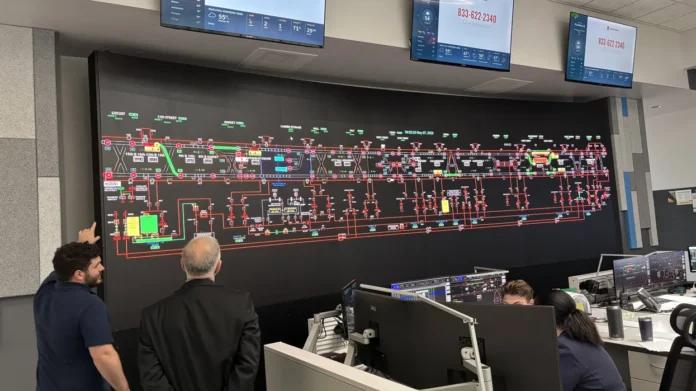

A major modernization effort inside one of South Jersey’s most critical transportation systems is now officially operational as PATCO’s newly completed Center Tower facility in Lindenwold begins reshaping how train dispatching, rail oversight, communication systems, and customer service coordination function across the regional transit network. The $19.4 million investment represents far more than a new operations building. It signals a broader transformation in how transportation agencies throughout New Jersey are adapting to rising ridership expectations, aging infrastructure demands, real-time operational pressures, and the increasingly technological nature of modern public transit systems.
Described by officials as the “nerve center” of PATCO’s rail operations, the newly centralized facility consolidates multiple operational functions into a modernized command environment designed to improve efficiency, strengthen communication, streamline service management, and support faster operational response across the transit line connecting South Jersey to Philadelphia. The project reflects a growing recognition throughout the transportation industry that operational coordination itself has become just as important as physical infrastructure upgrades when it comes to delivering reliable transit service in densely traveled metropolitan corridors.
For commuters throughout Camden County and the greater Delaware Valley region, the impact may eventually be felt less through visible changes and more through operational consistency — smoother dispatch coordination, improved communication between departments, faster responses to service disruptions, and more integrated oversight of daily train operations. While customers may never physically enter the facility itself, its role behind the scenes could substantially influence how efficiently PATCO functions moving forward.
The Center Tower project arrives during a period when transportation infrastructure modernization has become one of the defining public policy and economic development priorities throughout New Jersey and the broader Northeast corridor. Transit systems across the region continue confronting overlapping pressures involving aging infrastructure, workforce coordination, modernization demands, cybersecurity concerns, rising ridership expectations, and increasing dependence on real-time operational technology.
PATCO’s investment in a centralized operations facility reflects how rail transit itself has evolved. Modern transit systems no longer rely solely on physical track infrastructure and rolling stock management. They increasingly depend on integrated digital oversight systems capable of coordinating dispatching, safety monitoring, communications management, passenger information systems, maintenance coordination, and operational analytics simultaneously.
The Lindenwold facility is designed to centralize many of those functions into one coordinated environment, improving operational visibility and reducing communication fragmentation between departments that historically may have functioned more independently. Officials believe that operational consolidation should ultimately improve both internal efficiency and the customer experience itself.
The significance of the investment extends beyond PATCO alone because the rail line serves as one of the most important commuter transportation links between South Jersey and Center City Philadelphia. Thousands of riders depend on the system daily for access to employment centers, educational institutions, healthcare facilities, entertainment districts, sporting events, and regional transportation connections. Reliable service along the PATCO line plays a substantial role in the broader economic integration between South Jersey and the Philadelphia metropolitan region.
Lindenwold itself has long occupied a strategically important role within that system. As one of PATCO’s primary operational hubs and a major station along the Speedline corridor, the community functions as both a commuter anchor and operational center for the broader network. The placement of the new Center Tower facility there further reinforces Lindenwold’s importance within the regional transit ecosystem.
The modernization effort also highlights how transportation agencies are increasingly prioritizing centralized command structures designed around operational resilience and real-time responsiveness. Transit systems today operate in far more technologically demanding environments than in previous decades. Weather events, infrastructure disruptions, cybersecurity threats, passenger communication demands, and increasingly complex scheduling coordination all require sophisticated operational oversight capabilities.
By consolidating train dispatching and rail operations oversight into one modern workspace, PATCO is effectively repositioning itself to better manage those challenges moving forward. Improved coordination between operations personnel, dispatchers, maintenance management, and customer service teams can substantially affect how quickly systems respond when disruptions occur.
That operational responsiveness has become critically important for transit agencies nationwide as passengers increasingly expect real-time service information, rapid communication during delays, and greater system reliability overall. Public transportation systems are now evaluated not only on whether trains physically run, but on how efficiently agencies manage the passenger experience during both normal operations and service disruptions.
Transportation infrastructure itself is also becoming more interconnected with broader regional economic competitiveness. Throughout New Jersey and the greater Northeast corridor, reliable transit systems remain essential to workforce mobility, downtown economic activity, housing development patterns, and regional growth planning. Transit-oriented development continues reshaping portions of Camden County, South Jersey, and neighboring areas as municipalities increasingly focus on infrastructure-connected growth strategies.
PATCO’s modernization investments therefore intersect with larger redevelopment and economic planning conversations already unfolding throughout the region. Transportation infrastructure improvements often influence residential development, commercial investment, property values, and long-term regional planning decisions. Reliable commuter connectivity remains a major factor shaping how communities compete for residents and business growth within increasingly interconnected metropolitan economies.
The Center Tower project also arrives amid broader efforts nationwide to modernize aging transit infrastructure systems originally developed decades ago. Across the country, rail systems are investing heavily in operational technology upgrades, signal modernization, dispatch integration, communications infrastructure, and digital management systems designed to improve both reliability and safety.
For agencies like PATCO, those upgrades are no longer optional. The increasing complexity of transportation operations, combined with rising passenger expectations and infrastructure demands, requires more centralized and technologically integrated operational environments. Modern rail systems depend on continuous coordination between dispatching systems, track management, train movement oversight, maintenance scheduling, and customer communication networks.
The facility’s emphasis on communication streamlining is especially notable. In large transit systems, fragmented communication between operational departments can create delays in response times, service restoration efforts, and customer information dissemination. Centralized command environments are designed specifically to reduce those inefficiencies while improving coordination across operational teams.
The project additionally reflects broader public-sector infrastructure investment priorities tied to modernization and long-term resilience. Transportation agencies throughout the Northeast continue pursuing capital projects aimed not simply at maintaining systems, but fundamentally upgrading them for future operational demands. The post-pandemic transportation environment has intensified those efforts as agencies seek to improve reliability, rebuild ridership confidence, and modernize legacy infrastructure.
For South Jersey specifically, transportation modernization remains deeply tied to regional economic growth. PATCO’s role within the Delaware Valley transportation network extends beyond commuting convenience alone. The line helps connect South Jersey residents to employment opportunities, educational institutions, healthcare systems, and cultural destinations throughout Philadelphia while simultaneously supporting reverse commuting and regional business activity.
Infrastructure reliability therefore carries substantial economic implications. Operational disruptions, delays, and communication breakdowns affect not only passengers, but broader workforce productivity and regional mobility patterns. Investments like the Center Tower are increasingly viewed as long-term economic infrastructure projects rather than merely transportation maintenance expenses.
The modernization effort also arrives during a period of increasing public scrutiny surrounding transit system performance nationwide. Riders across major metropolitan regions are demanding improved reliability, cleaner systems, stronger communication, enhanced security, and more efficient service management. Transit agencies are responding by investing not only in tracks and trains, but in operational technology and oversight systems capable of improving overall service delivery.
PATCO’s decision to centralize rail operations within a modernized command environment reflects that evolving philosophy. Operational efficiency itself has become a form of infrastructure investment. The ability to monitor, coordinate, communicate, and respond effectively in real time is now central to how successful transit systems function.
The facility’s completion may also represent an important psychological milestone for the agency itself. Major infrastructure modernization projects often serve as visible demonstrations of institutional commitment toward long-term system improvement and operational investment. For employees, passengers, and regional stakeholders alike, projects like the Center Tower reinforce broader confidence in the future stability and modernization of the transit system.
As South Jersey continues growing and regional transportation demands evolve, operational infrastructure investments are likely to become increasingly important throughout the Delaware Valley. Transit systems must now balance traditional infrastructure maintenance with advanced operational technology integration, workforce coordination modernization, cybersecurity preparedness, and increasingly sophisticated passenger communication demands.
PATCO’s new Center Tower stands directly at the intersection of those evolving priorities. While riders may primarily notice smoother operations and improved communication over time, the larger significance of the project lies in what it represents: a recognition that the future of public transportation depends not only on tracks and trains, but on highly coordinated operational systems capable of managing increasingly complex transit environments in real time.
The $19.4 million Lindenwold facility ultimately symbolizes a broader shift occurring across New Jersey transportation infrastructure itself — one where modernization increasingly means building smarter operational ecosystems capable of supporting faster decision-making, stronger coordination, and a more reliable passenger experience throughout one of the country’s most interconnected regional transit corridors.
For more New Jersey transportation, transit infrastructure, and regional mobility coverage, visit Explore New Jersey Transportation