


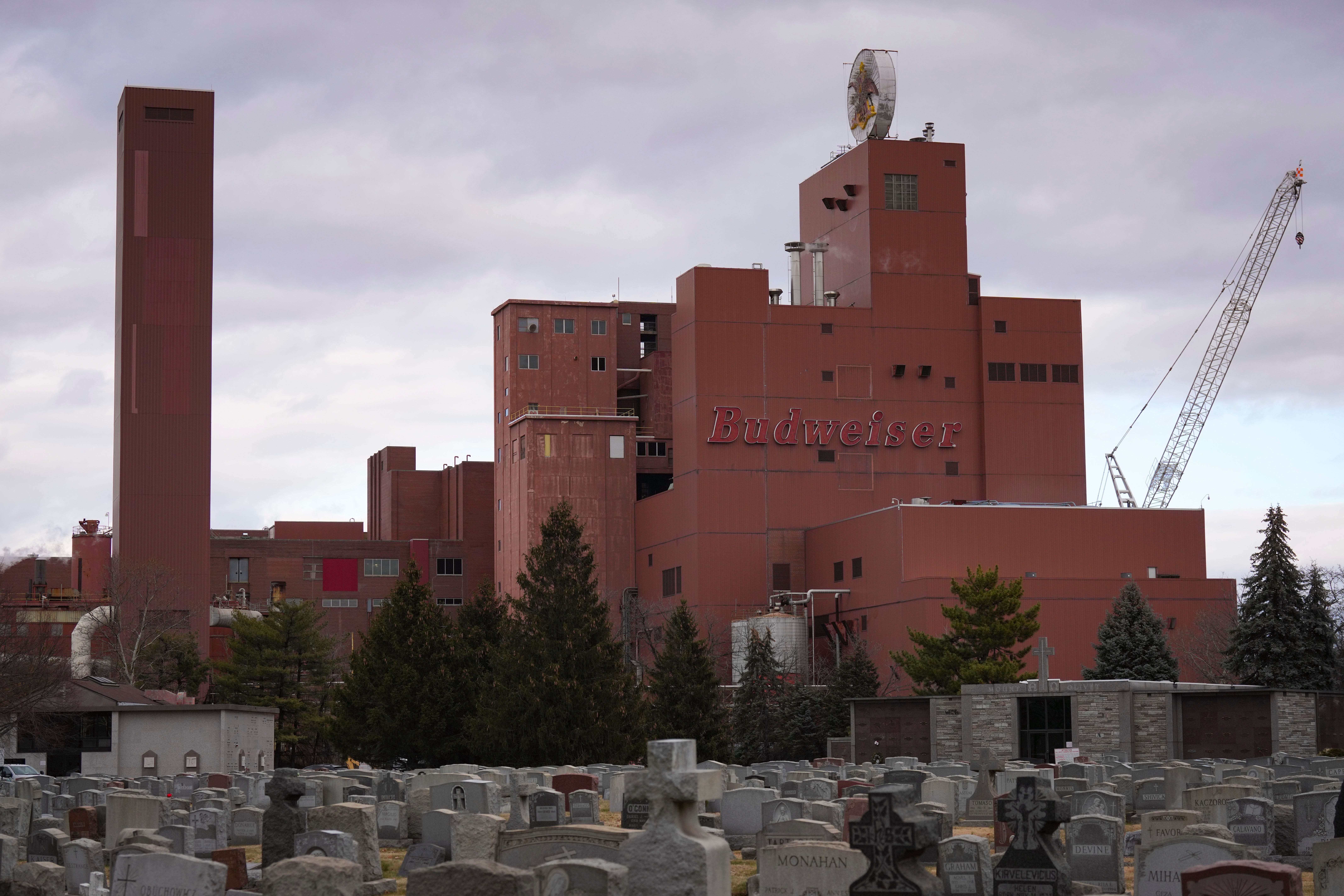

One of New Jersey’s most historically recognizable industrial properties is entering an entirely new era as the former Anheuser-Busch brewery complex in Newark has officially been sold in a blockbuster $360 million transaction that could dramatically reshape a critical section of the state’s logistics and industrial infrastructure landscape. The massive property, which served as a brewing hub for nearly 75 years, now stands poised to become one of the most significant industrial redevelopment opportunities anywhere in the New York metropolitan region.
Newmark Group Inc. announced that it advised Anheuser-Busch in the sale of the sprawling Newark facility to Goodman Group, an international industrial real estate and digital infrastructure powerhouse whose growing global portfolio increasingly focuses on logistics, industrial manufacturing, and infrastructure connected to the rapidly evolving digital economy. The transaction immediately ranks among the most consequential industrial real estate deals in New Jersey in recent years and underscores the extraordinary value being placed on large-scale logistics-adjacent properties throughout the Northeast corridor.
The sale also represents a symbolic turning point in Newark’s industrial identity. For generations, the brewery served as part of the city’s historic manufacturing backbone, connecting Newark to a broader brewing legacy that once helped define portions of the region’s economic landscape. The closure announcement in December 2025 marked the end of an era for the city, where brewing operations had long been intertwined with Newark’s industrial and working-class history.
Now, the site’s future appears tied not to traditional manufacturing, but to the next generation of logistics infrastructure, supply chain operations, industrial redevelopment, and potentially even digital infrastructure expansion. The transition reflects the broader economic transformation occurring across Northern New Jersey, where aging industrial facilities are increasingly being repositioned for modern logistics, warehousing, distribution, data infrastructure, and advanced industrial uses tied to e-commerce growth and global supply chain modernization.
The scale of the property itself is staggering. Spanning approximately 86 acres with more than 1.7 million square feet of existing structures, the former brewery occupies one of the most strategically valuable industrial locations in the entire Northeast. Situated adjacent to Newark Liberty International Airport and less than one mile from Port Newark and Port Elizabeth, the property exists within one of the most critical freight and logistics corridors in the United States.
That geographic positioning alone helps explain the extraordinary valuation attached to the site. Very few remaining properties anywhere in the New York metro region combine this level of acreage, multimodal transportation access, industrial zoning flexibility, rail connectivity, and proximity to major population centers. In today’s industrial real estate market, those characteristics are increasingly viewed as premium assets as developers and institutional investors aggressively compete for logistics-oriented properties near major ports and transportation infrastructure.
Newmark Executive Vice Chairman Adam Doneger emphasized the site’s unique combination of scale and strategic location while describing the broader redevelopment potential associated with the property.
“Few sites offer this level of scale, connectivity and zoning flexibility,” Doneger said. “These characteristics, combined with its location within one of the nation’s most critical logistics corridors, position it to support the next generation of industrial and infrastructure users.”
That phrase — “next generation of industrial and infrastructure users” — may ultimately define the significance of the transaction. The industrial real estate market has evolved dramatically over the past decade. Warehousing and logistics facilities are no longer viewed merely as storage centers supporting regional commerce. Increasingly, they function as core infrastructure supporting global supply chains, e-commerce fulfillment systems, advanced manufacturing operations, cold storage distribution, transportation networks, and data-driven logistics ecosystems.
Northern New Jersey sits directly at the center of that transformation. The region’s industrial market continues benefiting from sustained port activity, proximity to New York City, extensive highway infrastructure, rail connectivity, airport access, and one of the nation’s largest consumer populations concentrated within a relatively compact geographic radius. As supply chain systems continue modernizing and reshoring conversations expand nationally, demand for strategically positioned industrial space throughout the region remains exceptionally strong.
According to Newmark Research, Northern and Central New Jersey entered 2026 with continued momentum in the industrial sector, posting a third consecutive quarter of positive net absorption while vacancy rates tightened to approximately 6.3%. Demand remains heavily concentrated in Class A logistics facilities, particularly those capable of supporting sophisticated distribution operations tied to e-commerce, retail logistics, freight management, and last-mile delivery infrastructure.
The former brewery property aligns almost perfectly with those broader market trends. The site’s direct access to the New Jersey Turnpike, Interstate 78, Newark Liberty International Airport, and the Port Newark-Port Elizabeth complex places it inside one of the most supply-constrained logistics markets in America. Few remaining properties offer immediate access to all of those transportation assets simultaneously.
The demographics surrounding the property further reinforce its strategic value. More than 20 million consumers live within a 15-mile radius of the site, while more than 150,000 warehouse and transportation workers reside within a 30-minute drive. In the logistics economy, that combination of labor access and population density has become increasingly critical as companies seek facilities capable of supporting rapid delivery systems and large-scale distribution operations.
Goodman Group’s involvement only intensifies speculation surrounding the long-term potential of the property. The company has increasingly positioned itself as a major global player within industrial real estate and digital infrastructure development, focusing heavily on logistics-oriented properties tied to modern commerce and data infrastructure needs. The company’s public statements surrounding the acquisition indicate plans to repurpose the site for industrial manufacturing and logistics-related uses.
That vision fits squarely within broader redevelopment patterns unfolding across Northern New Jersey. Throughout the region, older industrial sites are increasingly being transformed into high-capacity logistics centers, advanced manufacturing facilities, distribution hubs, and infrastructure-oriented developments designed to serve modern supply chain demands.
At the same time, digital infrastructure itself is becoming a growing component of industrial redevelopment conversations. Industrial properties with extensive power access, transportation connectivity, and large-scale footprints are increasingly attracting interest not only from logistics operators, but also from data center developers and technology infrastructure investors seeking strategic locations near major population centers.
The Newark brewery site’s proximity to transportation infrastructure, energy networks, and dense consumer markets makes it potentially attractive for multiple forms of industrial redevelopment far beyond traditional warehousing alone. The future of industrial real estate is increasingly interconnected with digital commerce, automation systems, artificial intelligence infrastructure, robotics, cloud computing expansion, and advanced distribution technologies.
The sale also highlights how dramatically Newark’s economic landscape continues evolving. Once synonymous primarily with heavy manufacturing and industrial production, the city has increasingly become one of the Northeast’s most strategically important logistics, transportation, and redevelopment hubs. Billions of dollars in investment continue flowing into warehouse development, port infrastructure, airport modernization, multifamily housing, commercial projects, and mixed-use redevelopment throughout Newark and surrounding portions of Essex County.
Yet the emotional significance of the brewery closure itself cannot be ignored. For many residents, the Anheuser-Busch facility represented more than industrial real estate. It was part of Newark’s identity, employment history, and manufacturing legacy. The brewery’s closure marked the end of decades of operational history tied to generations of workers and the city’s long-standing brewing tradition.
That emotional complexity mirrors larger economic shifts affecting cities throughout the Northeast. Traditional industrial sectors continue giving way to logistics, distribution, infrastructure, and technology-oriented redevelopment as the modern economy evolves. The Newark site therefore stands as both a symbol of industrial decline and a reflection of industrial reinvention simultaneously.
The scale of the transaction also reinforces how aggressively institutional capital continues pursuing industrial assets throughout New Jersey. Industrial real estate remains one of the strongest-performing sectors in commercial property markets nationally, particularly in regions connected to major transportation infrastructure and consumer density. Large-scale redevelopment opportunities in supply-constrained locations are becoming increasingly rare, driving valuations higher for strategically positioned sites like the former brewery complex.
For Newark, the redevelopment possibilities tied to the property could have enormous long-term economic implications. Industrial manufacturing, logistics operations, infrastructure investment, and potential technology-oriented uses could generate substantial employment opportunities, tax revenue, and regional economic activity depending on the ultimate redevelopment strategy pursued.
The site’s future redevelopment will likely be closely watched not only by the commercial real estate industry, but also by economic development officials, infrastructure planners, logistics companies, labor organizations, and technology investors throughout the region. Properties of this scale and strategic significance rarely become available within such tightly constrained urban logistics corridors.
Ultimately, the $360 million sale of Newark’s former Budweiser brewery property represents far more than a commercial real estate transaction. It reflects the continuing reinvention of New Jersey’s industrial economy itself — a transformation driven by logistics expansion, global supply chain evolution, infrastructure modernization, and the rapidly growing demands of a digitally connected commerce system reshaping how goods, data, and economic activity move throughout the modern world.
For more New Jersey real estate, redevelopment, logistics, and infrastructure coverage, visit Sunset Daily News Real Estate