


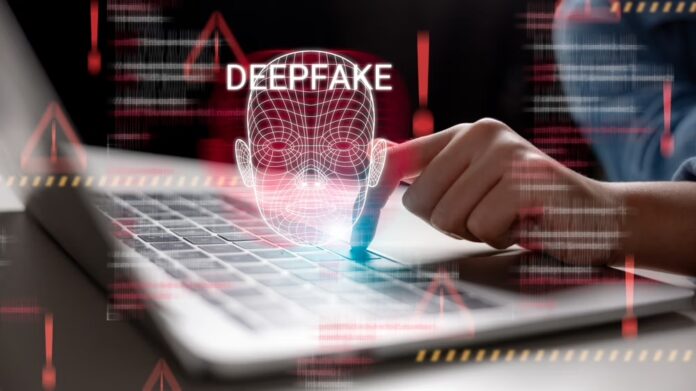

New Jersey is moving deeper into the rapidly intensifying national debate surrounding artificial intelligence regulation as lawmakers push forward with proposals that could significantly reshape how AI-generated content, voice replication technology, and digital likeness systems are governed across the state. The legislation under discussion represents one of the clearest signs yet that state governments are no longer treating artificial intelligence as an emerging future issue, but as an immediate legal, economic, technological, and public safety challenge demanding formal oversight.
At the center of the proposed measures are requirements that would mandate disclosures on certain AI-generated content while also creating new legal pathways allowing individuals to sue over unauthorized use of their voice, likeness, or digitally replicated identity. The effort reflects growing concern among lawmakers, creators, business leaders, educators, media organizations, technology professionals, and privacy advocates who increasingly view artificial intelligence as a transformative force capable of dramatically altering communication, commerce, entertainment, political messaging, and personal privacy.
For New Jersey, the push signals the beginning of what could become one of the state’s most consequential technology policy battles in years. Artificial intelligence has rapidly evolved from a niche innovation discussion into a central issue touching nearly every sector of modern society. Government officials nationwide are now racing to determine how existing legal systems can adapt to technologies capable of generating hyper-realistic synthetic audio, photorealistic imagery, AI-generated video, automated writing, cloned speech, and digital impersonation tools that often blur the line between authentic and fabricated content.
The urgency surrounding the issue has escalated dramatically over the past two years as generative AI platforms have become increasingly accessible to the public. Technologies once limited to advanced research environments are now available to ordinary consumers, businesses, political campaigns, marketing agencies, content creators, and bad actors alike. The ability to recreate a person’s voice, image, or likeness with astonishing realism has created entirely new legal and ethical concerns that lawmakers across the country are struggling to address.
New Jersey’s proposal reflects that broader national anxiety while placing particular emphasis on transparency and personal identity protection. Under the framework being discussed, certain AI-generated content would require disclosure requirements designed to inform viewers, listeners, or consumers when material has been artificially generated or manipulated. Simultaneously, the legislation would strengthen legal protections surrounding unauthorized digital replication of individuals’ identities, particularly involving voice cloning and likeness misuse.
Those concerns are no longer theoretical. Artificial intelligence systems capable of generating realistic synthetic voices have already sparked alarm across industries ranging from entertainment and broadcasting to politics and cybersecurity. Deepfake technology and voice replication systems are increasingly sophisticated, allowing users to simulate speech patterns, facial movements, and digital appearances with startling accuracy. As the technology improves, the risk of fraud, misinformation, impersonation, reputational harm, and unauthorized commercial exploitation continues growing.
For lawmakers, the challenge is enormous. Artificial intelligence is advancing at a pace far faster than traditional regulatory systems were designed to accommodate. Legislators are now forced to confront complicated questions involving free speech protections, intellectual property rights, digital identity ownership, technological innovation, platform accountability, and consumer protection all at the same time.
New Jersey’s involvement in that conversation carries particular significance because of the state’s deep connections to technology, media, healthcare, telecommunications, finance, logistics, and research industries. The state sits directly within one of the nation’s most influential economic corridors, surrounded by New York and Philadelphia while hosting a substantial concentration of pharmaceutical companies, data infrastructure, financial services operations, higher education institutions, and corporate technology networks.
As artificial intelligence becomes increasingly integrated into business operations and public life, New Jersey is likely to face mounting pressure to establish legal frameworks capable of balancing innovation with accountability. The proposed legislation reflects an early attempt to define those boundaries before AI-generated identity misuse becomes even more widespread.
The issue of voice and likeness protection has become especially sensitive within entertainment, media, and creative industries. Actors, musicians, broadcasters, journalists, influencers, and public figures are increasingly concerned that AI systems may eventually allow companies or individuals to replicate their voices, facial appearances, or speaking styles without consent. Those fears intensified after multiple high-profile examples emerged nationally involving synthetic celebrity voices, AI-generated political messaging, and unauthorized digital reproductions circulating online.
The legal questions surrounding digital identity ownership remain far from settled. Existing laws regarding publicity rights, intellectual property, privacy protections, and defamation were largely created before modern generative AI systems existed. Legislators nationwide are therefore attempting to modernize legal frameworks to address technologies capable of producing synthetic media at scale.
New Jersey’s proposed approach appears aimed at giving individuals greater legal standing to challenge unauthorized AI-generated misuse involving their identities. That could potentially open new litigation avenues involving commercial exploitation, deceptive content, reputational damage, or unauthorized synthetic replication. Supporters argue such protections are increasingly necessary as AI systems continue evolving faster than existing legal safeguards.
The disclosure requirements under discussion also reflect broader concern surrounding transparency in the AI era. Policymakers increasingly worry that without clear labeling standards, the public may struggle to distinguish between authentic and AI-generated content. That concern extends well beyond entertainment and social media. Election officials, cybersecurity experts, educators, law enforcement agencies, and national security analysts have all warned about the risks posed by realistic synthetic media capable of spreading misinformation or manipulating public perception.
Political deepfakes have become an especially urgent concern nationwide as election cycles intensify. Artificial intelligence now allows the creation of fabricated speeches, manipulated video footage, and cloned voice recordings that can appear highly convincing to average viewers. Lawmakers in multiple states are already considering or implementing regulations designed to prevent deceptive AI-generated political content from undermining election integrity.
The New Jersey proposal arrives amid broader national fragmentation surrounding AI regulation. While federal agencies continue debating national frameworks, states are increasingly moving independently to address specific concerns involving privacy, consumer protection, algorithmic accountability, employment discrimination, and synthetic media disclosure. That state-by-state approach is rapidly creating a patchwork regulatory environment likely to become increasingly complicated for technology companies operating across multiple jurisdictions.
At the same time, lawmakers face substantial pressure not to overregulate emerging technologies in ways that could suppress innovation or economic growth. Artificial intelligence is expected to become a massive driver of future economic activity, productivity gains, medical research, automation systems, cybersecurity operations, logistics optimization, and enterprise infrastructure modernization. Technology companies and business advocates frequently warn that overly aggressive regulation could slow development or push innovation activity into less restrictive markets.
That balancing act sits at the heart of nearly every AI policy discussion unfolding nationally. Policymakers are attempting to encourage technological advancement while simultaneously preventing misuse severe enough to damage public trust, privacy rights, or democratic institutions. The complexity of that challenge increases daily as AI capabilities continue expanding.
The proposal in New Jersey also reflects growing recognition that artificial intelligence regulation is no longer only a federal issue. States increasingly understand that they may need to establish legal protections independently while broader national standards remain uncertain or incomplete. Privacy law, consumer protection enforcement, civil litigation frameworks, and commercial regulation often operate substantially at the state level, giving state legislatures powerful roles in shaping how AI technologies ultimately function within society.
Universities, law schools, technology companies, media organizations, and public policy experts throughout New Jersey are likely to become increasingly involved in those debates moving forward. The state’s strong higher education and research ecosystem positions it to become an important participant in national conversations surrounding AI governance, ethics, innovation policy, and digital rights protection.
The broader economic implications are enormous. Artificial intelligence is expected to reshape industries ranging from healthcare and finance to transportation, entertainment, manufacturing, education, and communications. Questions surrounding liability, disclosure, intellectual property ownership, digital identity rights, and consumer protection will increasingly determine how those industries adapt to AI integration over the next decade.
For consumers, the stakes are equally significant. The ability to protect one’s voice, image, identity, and reputation in a world of rapidly advancing synthetic media technology is becoming an increasingly urgent concern. As AI-generated content becomes harder to detect, legal protections surrounding consent and disclosure may ultimately become foundational components of digital-era civil rights.
New Jersey’s push toward AI regulation therefore represents more than a narrow technology bill. It marks the beginning of a much larger conversation about how government, business, and society intend to navigate a future increasingly shaped by artificial intelligence systems capable of altering communication, identity, trust, and reality itself.
As lawmakers continue debating disclosure requirements, digital likeness protections, and legal accountability frameworks, New Jersey is positioning itself directly within one of the defining policy battles of the modern technological era. The decisions made now may ultimately shape how artificial intelligence operates across media, business, politics, entertainment, and public life for years to come.
For more technology, innovation, and digital policy coverage from across New Jersey and beyond, visit Sunset Daily News Technology & Tech