


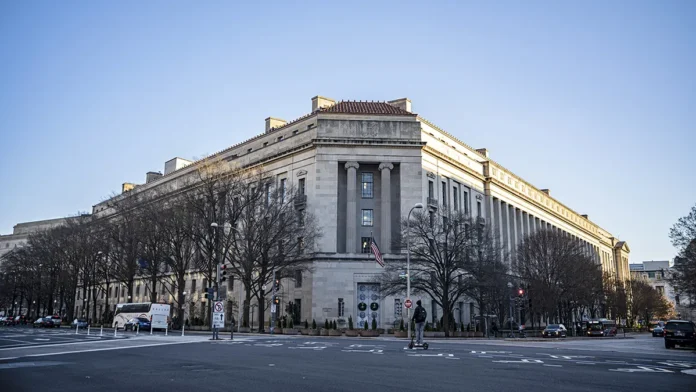

A significant legal confrontation is now unfolding in New Jersey, as the U.S. Department of Justice has formally filed a lawsuit challenging the state’s longstanding policies that allow certain undocumented students to access in-state tuition rates and state-funded financial aid. The case, filed in the U.S. District Court for the District of New Jersey on April 30, 2026, introduces a consequential test of how far state governments can go in structuring education policy within the boundaries of federal immigration law.
At the center of the dispute are two cornerstone legislative actions that have shaped New Jersey’s higher education access framework over the past decade. The first is the 2013 Tuition Equality Act, enacted under former Governor Chris Christie, which allows undocumented students who attended a New Jersey high school for at least three years to qualify for in-state tuition rates at public colleges and universities. The second is the 2018 expansion signed by Governor Phil Murphy, which extended eligibility to include state financial aid programs, scholarships, and other forms of institutional support.
Together, these measures established New Jersey as one of the more expansive states in the country when it comes to educational access for undocumented residents, aligning with a broader movement often referred to as “Dream Act”-style policy at the state level. For years, these laws have operated as part of the state’s higher education infrastructure, shaping enrollment patterns and access pathways for thousands of students.
The federal government’s lawsuit challenges the legal foundation of these policies on multiple fronts. According to statements from the Department of Justice, the central argument is that New Jersey’s framework creates an unequal system in which certain noncitizens are granted benefits not equally extended to all U.S. citizens, particularly those who reside out of state. Brett A. Shumate has articulated the position that such policies effectively place some American students at a disadvantage, raising constitutional questions around equal protection and fairness.
Beyond the discrimination argument, the DOJ is asserting that New Jersey’s laws conflict with federal immigration statutes. The claim is that by offering state-level benefits tied to residency rather than citizenship status, the policies may inadvertently undermine federal immigration enforcement priorities and create incentives for unauthorized residency. This legal framing elevates the case beyond a simple education policy dispute, positioning it as part of a broader federal-state jurisdictional conflict over immigration authority.
The timing and scope of the lawsuit suggest it is part of a coordinated national strategy. This marks the ninth such legal action brought forward as part of a wider federal effort to challenge similar laws across the country. Comparable cases are currently active in states including California, Virginia, and Illinois, while previous legal battles in Texas, Kentucky, and Oklahoma have resulted in rulings or settlements that curtailed or eliminated comparable tuition and aid provisions. The cumulative effect of these cases is reshaping the legal landscape, creating a patchwork of outcomes that vary significantly by jurisdiction.
New Jersey officials are expected to mount a robust defense. The state’s legal position is likely to emphasize that eligibility for in-state tuition and financial aid is based on residency criteria rather than immigration status, a distinction that has historically been central to the defense of such laws. By framing the policy as an extension of state authority over education and residency classification, officials will argue that the state is operating within its rights to determine how public resources are allocated to residents who have established meaningful ties to the community.
Governor Mikie Sherrill and Attorney General Jennifer Davenport are expected to play leading roles in defending the statutes, positioning the laws as part of a broader commitment to educational access, workforce development, and economic inclusion. From the state’s perspective, these policies are not only about tuition rates—they are about building a skilled, educated population capable of contributing to New Jersey’s economy over the long term.
The implications of this case extend well beyond the courtroom. For higher education institutions across New Jersey, the outcome could directly impact enrollment strategies, financial aid distribution, and long-term planning. Colleges and universities have, for more than a decade, integrated these policies into their admissions frameworks, often viewing them as essential tools for expanding access and diversity within their student bodies. A reversal or modification of the laws would require a recalibration of those strategies, potentially affecting both institutional budgets and student demographics.
For students, the stakes are immediate and personal. Access to in-state tuition rates can significantly reduce the cost of higher education, often determining whether enrollment is financially viable. The availability of state aid further shapes those decisions, influencing not only initial access but also retention and completion rates. Any disruption to these benefits would introduce a new layer of uncertainty for students currently enrolled or planning to attend New Jersey institutions.
From a policy standpoint, the case underscores a fundamental tension that has defined much of the national conversation around immigration and education. States have long sought to address local needs—whether economic, demographic, or educational—through targeted policies that reflect their unique circumstances. The federal government, meanwhile, maintains authority over immigration law, creating an overlapping jurisdiction that can lead to legal conflict when state initiatives intersect with federal priorities.
This tension is not new, but the scale and coordination of recent legal challenges suggest a renewed focus on defining the boundaries of state authority. The outcome of the New Jersey case could therefore serve as a precedent, influencing how similar laws are interpreted and enforced across the country. A ruling in favor of the federal government could accelerate efforts to dismantle comparable policies elsewhere, while a decision upholding New Jersey’s framework could reinforce the ability of states to design education systems that reflect their own policy goals.
Within the broader Sunset Daily News legislative landscape, this development reflects a growing pattern of high-impact legal challenges that intersect with core issues of governance, equity, and economic strategy. Education policy, in particular, has become a focal point for these debates, as states seek to balance access with compliance in an increasingly complex legal environment.
As the case moves forward in the U.S. District Court for the District of New Jersey, it will draw close attention from policymakers, educators, and legal experts nationwide. The proceedings are expected to delve deeply into statutory interpretation, constitutional principles, and the practical implications of state-level decision-making in areas traditionally influenced by federal oversight.
What is certain is that the outcome will carry weight far beyond New Jersey. It will help define how states navigate the intersection of education and immigration policy in the years ahead, shaping not only legal frameworks but the lived realities of students and institutions across the country.